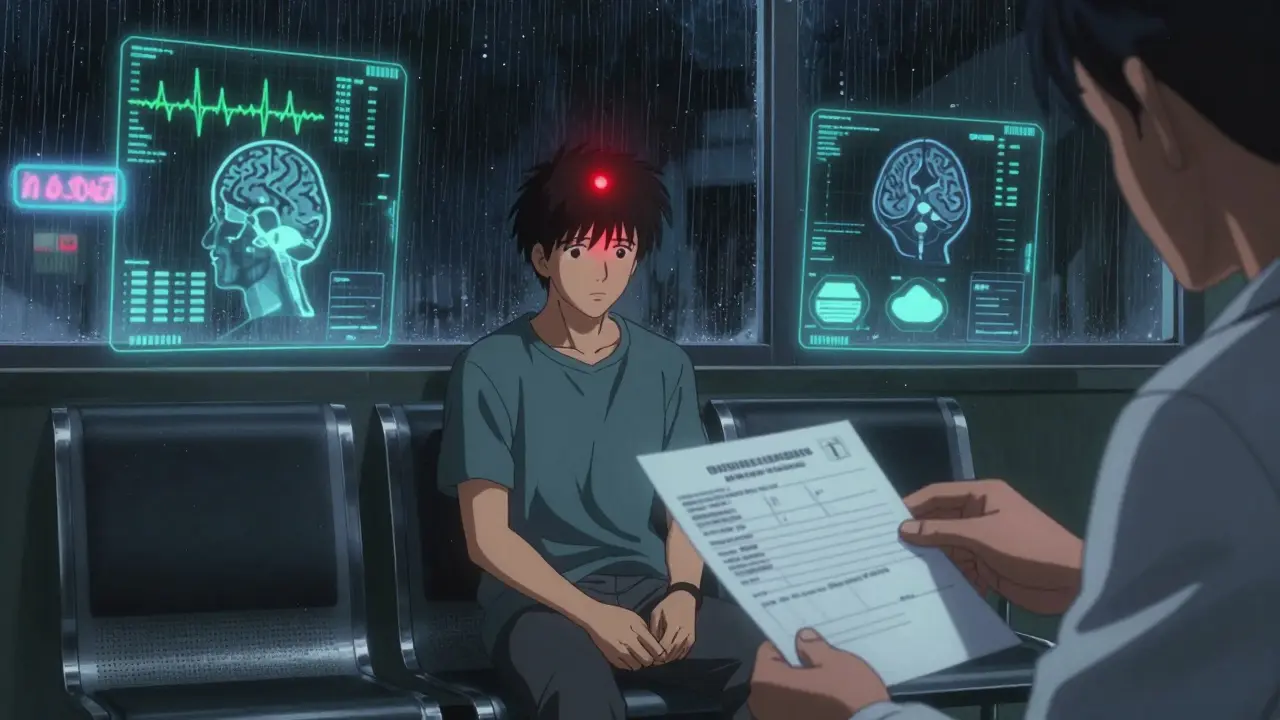
When Medications Stop Working, Surgery Becomes an Option
If you’ve been taking antiseizure meds for over a year and still have seizures every week-or worse, every day-you’re not alone. About 1 in 3 people with epilepsy don’t respond to medication. That’s not a failure on your part. It’s a medical reality. When two properly chosen drugs don’t work, the condition is called drug-resistant epilepsy. And at that point, surgery isn’t a last resort-it’s the next logical step.
For decades, doctors waited years before even considering surgery. Now, guidelines from the International League Against Epilepsy say: evaluate as soon as drug resistance is confirmed. No need to wait two years. No need to try five drugs. If seizures are controlling your life, it’s time to talk to a specialist.
Who Is a Candidate for Epilepsy Surgery?
Not everyone with epilepsy can have surgery. But many more people than you think qualify. The key is finding where seizures start. If they begin in one clear spot-like the temporal lobe-and that spot can be safely removed, surgery has a high chance of success.
Here’s who typically qualifies:
- You’ve tried at least two appropriate antiseizure medications without lasting control
- Your seizures are disabling-meaning they interrupt work, driving, school, or social life
- Imaging (MRI) shows a structural cause, like hippocampal sclerosis, a tumor, or scar tissue
- EEG and other tests pinpoint a single seizure origin
- You understand the risks and want to pursue treatment
Children are included too. If a child has infantile spasms, tuberous sclerosis, or Rasmussen’s encephalitis, surgery isn’t just an option-it’s often the only way to prevent lifelong disability. Age doesn’t automatically disqualify you either. People up to 70 are now routinely evaluated.
What Tests Happen Before Surgery?
Before cutting into the brain, doctors need to be absolutely sure where the seizures start-and that removing that area won’t take away your speech, memory, or movement. This isn’t a quick process. It usually takes 2 to 6 weeks.
You’ll go through:
- Video-EEG monitoring: You’ll stay in the hospital for 5-7 days while cameras and electrodes record your seizures. This helps link brain activity to what you’re doing when you have a seizure.
- High-resolution MRI: A 3T scanner takes 1mm slices of your brain to spot tiny scars, tumors, or malformations that older machines miss.
- FDG-PET scan: This shows areas of low metabolism-often where seizures begin. It’s especially useful when MRI looks normal.
- Neuropsychological testing: Memory, language, and thinking tests help predict what might change after surgery. If your dominant hemisphere holds your memory, surgeons will be extra careful.
- Intracranial EEG (if needed): Wires are placed directly on the brain surface to map seizures with pinpoint accuracy. This happens in about 1 in 4 cases.
This isn’t just about finding the problem. It’s about protecting what matters. A single mistake in mapping can mean losing the ability to remember names, recognize faces, or speak clearly. That’s why only specialized centers-Level 4 epilepsy centers-should do this work. They need at least two epileptologists, one neurosurgeon, and a neuropsychologist on staff, plus 24/7 monitoring.
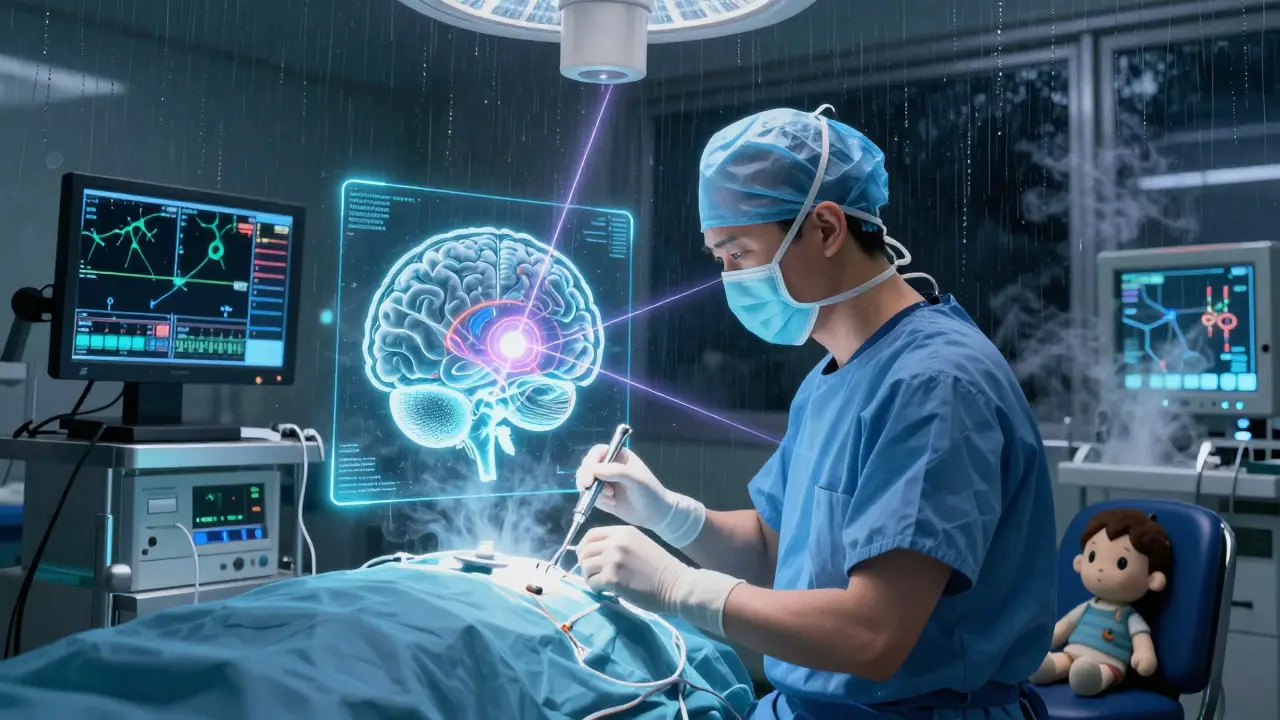
What Are the Most Common Types of Surgery?
There are several procedures, but the most common is temporal lobe resection. About 60% of epilepsy surgeries involve removing part of the temporal lobe, usually because of hippocampal sclerosis-a shrunken, scarred hippocampus that’s been firing off seizures for years.
Success rates here are strong: 65-70% of patients become seizure-free two years after surgery. That’s compared to less than 5% who stop having seizures just by switching meds.
Other common surgeries include:
- Focal resection: Removing a small area in the frontal, parietal, or occipital lobe. Success depends on how clearly the seizure zone is defined.
- Corpus callosotomy: Cutting the band connecting the two brain halves. Used for severe drop attacks in kids, not for stopping all seizures-but it prevents dangerous falls.
- Laser interstitial thermal therapy (LITT): A newer, minimally invasive option. A laser probe is inserted through a tiny hole in the skull. It heats and destroys the seizure focus. Recovery is faster, complications are lower (2.3% vs. 8.7% for open surgery), and seizure freedom is about 55% at one year.
- Responsive neurostimulation (RNS): A device implanted in the skull detects abnormal electrical activity and zaps it before a seizure starts. It’s not a cure, but it cuts seizures by half for many.
Generalized epilepsy-where seizures start all over the brain-isn’t helped by resection. But newer devices like RNS and vagus nerve stimulators are expanding options.
What Are the Real Risks?
Brain surgery sounds scary-and it is. But the risks are often smaller than people imagine, and far smaller than the risks of continuing uncontrolled seizures.
For temporal lobe surgery, the most common risks are:
- Memory problems: About 10-15% of patients report trouble remembering names or events, especially if the surgery is on the side of the brain dominant for language. Most improve over time.
- Visual field loss: Up to 20% lose a small part of their side vision. It’s usually not noticeable in daily life.
- Infection or bleeding: Less than 5% risk, and most cases are treated without long-term issues.
- Permanent neurological deficit: Like weakness or speech trouble. Happens in only 1-2% of cases.
And then there’s the risk of doing nothing. People with uncontrolled epilepsy are 20 times more likely to die suddenly (SUDEP) than the general population. Seizures can cause falls, burns, drowning, or car crashes. The longer you wait, the more your brain changes-and the harder it becomes to recover cognitive function.
What Can You Expect After Surgery?
Recovery isn’t instant. Most people stay in the hospital for 3-5 days. You’ll feel tired, groggy, and maybe a bit confused. That’s normal. Medications don’t stop right away. You’ll still take them for at least a year, sometimes longer.
Here’s what real patients report:
- 60-80% of temporal lobe patients are seizure-free after two years
- 79% say they can drive again for the first time in years
- 75% return to work or school
- 68% report improved mood and reduced anxiety
One patient from the Multicenter Study said: “I had 15-20 seizures a month. After surgery, I’ve been seizure-free for three years. I got my license back. I started college. I didn’t think that was possible.”
But not everyone wins. About 15-20% of people who go through full evaluation aren’t even candidates-because their seizures start in too many places. And even among those who have surgery, 20-30% still have some seizures, though they’re usually fewer and less severe.

Why Don’t More People Get Surgery?
Here’s the shocking part: an estimated 300,000 Americans with drug-resistant epilepsy could benefit from surgery. But only about 5,000 surgeries are done each year. That’s less than 2%.
Why?
- Fear: Half of referred patients decline evaluation because they’re terrified of brain surgery.
- Delayed referrals: A 2022 survey found 63% of patients waited over five years after becoming drug-resistant before being referred. Some waited over a decade.
- Doctor misconceptions: Nearly half of neurologists still don’t know the correct definition of drug-resistant epilepsy.
- Insurance hurdles: 42% of initial requests are denied. But 78% of appeals get approved-if you push.
- Access: 85% of top-tier epilepsy centers are in big cities. If you live in rural America or New Zealand, getting to one can be a major hurdle.
But things are changing. The ILAE launched a Global Surgery Initiative in 2023 to train more doctors and reduce delays. More neurologists are referring earlier. Insurance appeals are becoming more successful. And minimally invasive options like LITT are making surgery less intimidating.
What Should You Do Next?
If you or someone you love has drug-resistant epilepsy, here’s what to do:
- Track your seizures: Keep a diary with date, time, duration, triggers, and what happened before and after.
- Ask your neurologist: “Am I a candidate for epilepsy surgery?” Don’t wait for them to bring it up.
- Request a referral to a Level 4 epilepsy center. These are the only ones equipped to do full evaluations.
- Connect with support: The Epilepsy Surgery Alliance offers patient navigators who help with insurance, scheduling, and answering questions.
- Don’t give up on hope. Surgery isn’t a gamble-it’s a proven path to a better life.
Is Surgery Worth It?
A 2023 cost analysis found that every successful epilepsy surgery saves society $1.2 million over ten years-through fewer ER visits, hospital stays, lost work, and emergency care. But the real value isn’t in dollars. It’s in freedom. The ability to hold a job. To drive. To sleep through the night. To not live in fear of the next seizure.
Medications can manage epilepsy. Surgery can change it. And for the right person, that difference is everything.
9 Comments
vivian papadatu February 1 2026
This is one of the most thorough, compassionate summaries of epilepsy surgery I’ve ever read. I’ve been living with drug-resistant epilepsy for 12 years, and I wish someone had handed me this article when I first got diagnosed. The stats on quality of life improvements-driving, returning to work, reduced anxiety-are what kept me going when I felt hopeless. No one talks about how much emotional weight comes with just surviving daily seizures. Thank you for writing this with such clarity and heart.
Chris & Kara Cutler February 2 2026
I cried reading this. My sister had LITT last year. She’s been seizure-free for 14 months. 🥹
Rachel Liew February 4 2026
i just found out my cousin is a candidate for this and i had no idea surgery was even an option. i always thought meds were the only way. this is so helpful. thank you for sharing all the details. i’m going to print this out for her family.
Jamie Allan Brown February 5 2026
The part about delayed referrals hit me hard. My neurologist waited three years before even mentioning surgery. By then, my brain had already started rewiring around the seizures-it made everything harder. I’m lucky I found a Level 4 center on my own. Please, if you’re reading this and you’re still waiting: don’t wait. Ask. Push. Your future self will thank you.
Nicki Aries February 6 2026
I work in insurance claims, and I’ve seen firsthand how many of these surgeries get denied on the first try. It’s not about cost-it’s about bureaucracy. But here’s the thing: if you appeal, you have a 78% chance of approval. I’ve helped three families get coverage after initial denials. Call your provider. Send the letter. Attach the ILAE guidelines. Don’t take ‘no’ for an answer. You’re not asking for a luxury-you’re asking for your life back.
Deep Rank February 7 2026
Honestly, this article feels like a sales pitch from a hospital marketing team. Everyone talks about success rates but ignores the people who lose their memory or can’t speak after surgery. I know a woman who had temporal resection and now forgets her own daughter’s birthday. She says she’s ‘glad’ she’s seizure-free, but she’s not the same person. And what about all the people who go through the 6-week testing and then get told they’re not a candidate? That’s torture. You’re not giving the full picture. Surgery isn’t magic-it’s a gamble with your identity.
Naomi Walsh February 8 2026
I’m surprised you didn’t mention the fact that LITT has a significantly higher recurrence rate than traditional resection-only 55% seizure-free at one year, versus 70% for open surgery. Also, the 20% visual field loss statistic is misleading; it’s not ‘usually not noticeable’-it’s a permanent homonymous hemianopsia that affects peripheral awareness. People who drive need to understand this isn’t a minor side effect. This article reads like it was written by someone who’s never actually sat in a neurosurgery consult.
Bryan Coleman February 10 2026
I had RNS implanted last year. It didn’t make me seizure-free, but it cut my seizures from 10 a week to maybe 2 a month. And the best part? I can sleep through the night now. My wife says she hasn’t woken up scared in a year. The device’s alerts are kinda clunky, but it’s saved my mental health. If you’re not a candidate for resection, RNS is way better than just living with it.
Naresh L February 10 2026
There’s a deeper question here that isn’t addressed: if epilepsy surgery is so effective, why does society treat it as experimental? We accept amputations to save lives, but when it comes to the brain, we cling to fear. Maybe it’s because we don’t understand the mind as a physical organ. We think of memory, identity, language as sacred-untouchable. But if a part of the brain is malfunctioning, isn’t removing it no different than removing a cancerous lung? The real tragedy isn’t the risk of surgery-it’s the cultural silence around it. We’ve turned a medical solution into a moral dilemma.