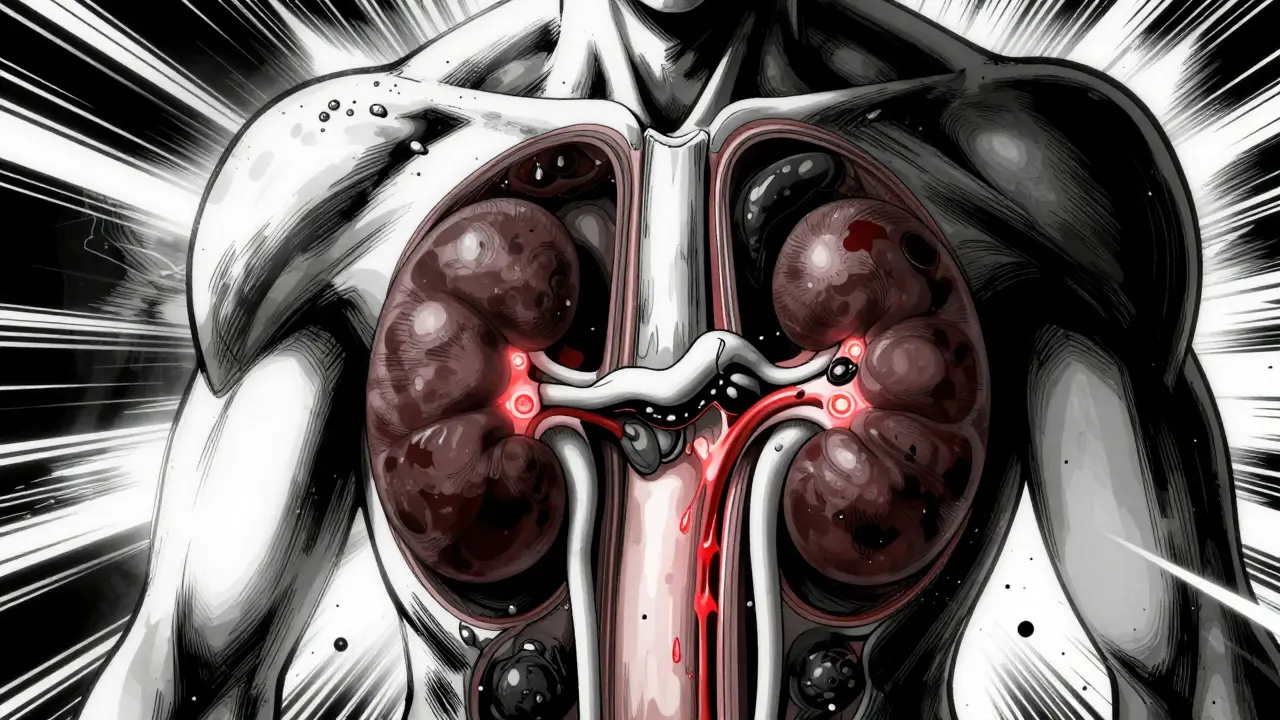
Your kidneys are hard workers. They filter your blood, balance fluids, and remove waste around the clock. But sometimes, they stop working suddenly. This isn't a slow decline over years; it happens in hours or days. Doctors call this Acute Kidney Injury, or AKI. It is a rapid loss of kidney function that requires immediate medical attention to prevent permanent damage. If you’ve ever wondered why your doctor checks your blood work so often during hospital stays, this is why. Early detection saves lives-and kidneys.
In the past, doctors called this "acute renal failure." The name changed because even mild drops in function matter. A small drop can trigger big problems if ignored. Today, we’ll break down what causes AKI, how to spot it, and what recovery looks like. No jargon. Just clear facts.
What Exactly Is Acute Kidney Injury?
Think of your kidneys as filters. When they get injured, waste builds up in your blood. Fluids pool in your tissues. Electrolytes go out of balance. That’s AKI. It affects about 13.3 million people worldwide every year. In hospitals, 20-30% of patients in intensive care units develop it.
The shift from "failure" to "injury" matters. It reminds us that not all cases end in dialysis. Many people recover fully if treated quickly. The key is speed. Every hour counts.
| Metric | Value |
|---|---|
| Global Annual Cases | 13.3 million |
| Hospital ICU Incidence | 20-30% |
| Mortality in Critical Care | 24-37% |
| Recovery Rate (Prerenal) | 70-80% |
Three Main Types of AKI: Where the Problem Starts
Not all kidney injuries are the same. Doctors group them into three types based on where the problem originates. Knowing the type helps choose the right treatment.
- Prerenal AKI (60-70% of cases): Blood flow to the kidneys drops. Think severe dehydration, bleeding, or heart failure. The kidneys themselves are fine-they’re just starved of blood. Fix the flow, and they often bounce back fast.
- Intrarenal AKI (25-35% of cases): Direct damage inside the kidney tissue. Causes include toxic drugs (like certain antibiotics), infections, or autoimmune diseases like lupus. This type takes longer to heal.
- Postrenal AKI (5-10% of cases): Something blocks urine flow. Enlarged prostate, kidney stones, or tumors can cause this. Remove the blockage, and function usually returns.
For example, if you have food poisoning and vomit for two days, you risk prerenal AKI. Your body loses fluid faster than you replace it. Blood pressure drops. Kidneys get less blood. Creatinine rises. Simple IV fluids can fix this before real damage occurs.
Symptoms You Should Never Ignore
Here’s the tricky part: some people feel fine. About 22% of AKI cases show no obvious symptoms until blood tests reveal trouble. But most people do notice changes.
- Low urine output: Less than 400 mL per day (oliguria) or almost none (anuria). Watch for dark, concentrated urine.
- Swelling: Ankles, feet, or hands puff up due to fluid retention. Seen in 68% of cases.
- Shortness of breath: Fluid backs up into lungs. Happens in 42% of hospitalized patients.
- Fatigue and confusion: Waste products affect brain function. Common in elderly patients.
- Nausea or flank pain: Stomach upset or pain between ribs and hips may signal internal issues.
If you’re in the hospital, nurses track your urine hourly. At home, pay attention to sudden swelling or extreme tiredness. Don’t wait for pain. Pain doesn’t always mean something is wrong-but silence doesn’t mean everything is fine either.
How Doctors Diagnose AKI
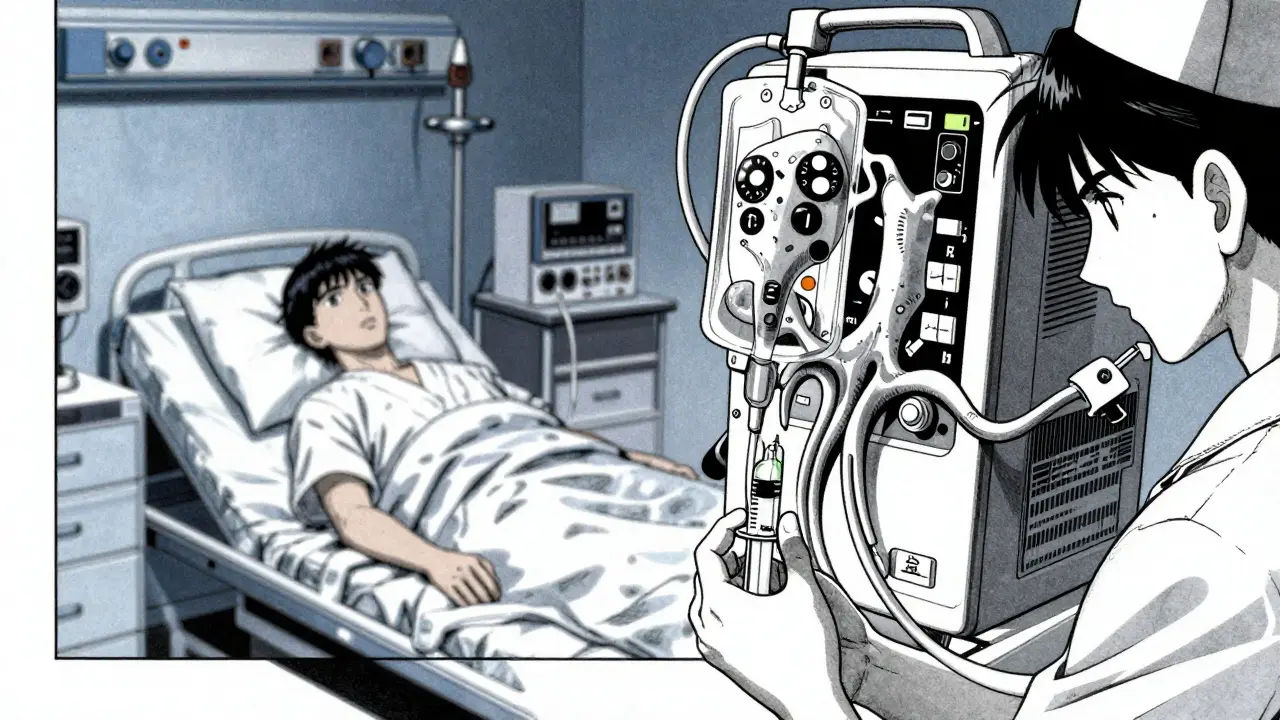
Diagnosis relies on simple tests done quickly. The gold standard comes from KDIGO guidelines, established in 2012. They define AKI as:
- A rise in serum creatinine by ≥0.3 mg/dL within 48 hours, OR
- A ≥50% increase from baseline within 7 days, OR
- Urine output <0.5 mL/kg/hour for 6 hours
Creatinine is a waste product from muscle breakdown. Healthy kidneys filter it out. When levels spike, it means filtration has slowed. Doctors also check blood urea nitrogen (BUN) and electrolytes like potassium. High potassium (>5.5 mEq/L) can stop your heart. That’s why emergency teams act fast.
Imaging plays a role too. Renal ultrasound is used in 85% of cases to check for blockages or structural changes. CT scans detect stones with 95% accuracy. These tools help rule out postrenal causes early.
Treatment Strategies Based on Cause
Treatment depends entirely on the root cause. There’s no one-size-fits-all pill for AKI. Instead, doctors target the source.
Prerenal AKI: Restore Blood Flow
Fluid resuscitation is first-line therapy. A 500-1000 mL normal saline bolus often reverses mild cases within 24-48 hours. If heart failure is the culprit, diuretics may be needed instead of fluids. Timing is critical-wait too long, and tubular cells die.
Intrarenal AKI: Stop the Damage
If nephrotoxic drugs caused the injury, stopping them leads to improvement in 65% of cases within 72 hours. For immune-related conditions like glomerulonephritis, corticosteroids induce remission in 50-70% of patients. Plasmapheresis works well for hemolytic uremic syndrome when started within 24 hours.
Postrenal AKI: Clear the Blockage
Ureteral stents relieve obstruction in 90% of cases immediately. Prostate enlargement might require medication or surgery later, but getting urine flowing again is step one.
When Dialysis Becomes Necessary
About 5-10% of hospitalized AKI patients need temporary dialysis. Intermittent hemodialysis removes excess fluid and toxins. Continuous renal replacement therapy (CRRT) runs slowly in ICUs for unstable patients. Peritoneal dialysis is rare (2-5%) but useful when vascular access fails. Remember: needing dialysis doesn’t mean permanent failure. Many people come off it after weeks.
Recovery Timeline and Long-Term Outlook
Can you recover fully? Yes-in many cases. Prerenal AKI resolves completely in 70-80% of patients within 7-10 days. Intrarenal cases take 2-6 weeks, with 40-60% seeing partial or full recovery. Severe acute tubular necrosis (ATN) with prolonged low urine output has only a 20-30% chance of full return to baseline.
Factors that worsen prognosis:
- Age over 65 (35% lower recovery rate)
- Pre-existing chronic kidney disease (eGFR <60 mL/min/1.73m² cuts recovery odds in half)
- AKI lasting more than 7 days (2.3x higher risk of incomplete healing)
- Need for dialysis support (only 25% achieve full recovery at 3 months)
Long-term risks are real. One in four survivors develops stage 3 or worse chronic kidney disease within a year. Each AKI episode multiplies the 5-year risk of end-stage renal disease by 8.2 times. Follow-up care isn’t optional-it’s essential.
Early Detection Saves Kidneys
The window for effective intervention is narrow-often just 6-12 hours from initial insult to irreversible damage. Hospitals now use electronic health record alerts to flag rising creatinine levels automatically. Studies show these systems reduce mortality by 12%.
New biomarkers like neutrophil gelatinase-associated lipocalin (NGAL) can predict AKI 24-48 hours before creatinine rises. Point-of-care testing makes this possible at bedside. Research trials like STARRT-AKI are proving that early dialysis initiation reduces 90-day mortality by 9% in severe cases.
AI algorithms analyzing EHR data could soon predict AKI risk with 75% accuracy 12-24 hours before onset. Imagine preventing injury before it starts. That future is closer than you think.
Patient Voices: Life After AKI
Numbers tell one story. People tell another. A 2022 survey found 68% of survivors experienced "kidney fatigue" for 3-6 months post-recovery. Forty-two percent reported ongoing anxiety about their health. Nearly a third needed temporary disability accommodations.
One patient shared: "After my AKI from sepsis, I spent 17 days in ICU on CRRT. Even after my creatinine normalized, I couldn’t walk more than 50 feet without exhaustion for 3 months. The mental toll was worse than the physical symptoms." Another said: "Caught mine at stage 1. Two liters of IV fluids. Creatinine back to normal in 24 hours. Full recovery in five days."
Both stories are true. Yours depends on timing, severity, and support system. Advocate for yourself. Ask questions. Track your labs.
Is acute kidney injury reversible?
Yes, in many cases. Prerenal AKI reverses in 70-80% of patients within 7-10 days with prompt treatment. Intrarenal cases may take weeks, with 40-60% recovering partially or fully. Severe cases requiring dialysis have lower recovery rates, but complete restoration is still possible.
What foods should I avoid during AKI recovery?
Limit high-potassium foods (bananas, oranges, potatoes), high-sodium items (processed meats, canned soups), and excessive protein until your doctor clears you. Your dietitian will tailor recommendations based on your lab results and remaining kidney function.
How long does it take for creatinine levels to normalize?
In mild prerenal AKI, creatinine often returns to baseline within 24-48 hours after fluid resuscitation. More severe cases may take several weeks. Monitoring every 24-48 hours helps track progress and adjust treatment accordingly.
Can dehydration cause acute kidney injury?
Absolutely. Dehydration is a leading cause of prerenal AKI, accounting for 15-20% of community-acquired cases. Vomiting, diarrhea, fever, or inadequate fluid intake can rapidly reduce blood volume and impair kidney perfusion.
Does AKI turn into chronic kidney disease?
It can. About 23% of AKI survivors develop stage 3 or higher CKD within one year. Risk increases with age, pre-existing kidney issues, and severity of the initial injury. Regular follow-up care significantly improves long-term outcomes.
What medications can harm the kidneys?
Common culprits include NSAIDs (ibuprofen, naproxen), aminoglycoside antibiotics, certain antivirals, and intravenous contrast dye. Always inform healthcare providers about all medications and supplements you take, especially if you have existing kidney concerns.
When should I seek emergency care for suspected AKI?
Seek immediate help if you experience drastically reduced urine output, severe shortness of breath, chest pain, confusion, or swelling accompanied by nausea. These signs suggest advanced complications requiring urgent intervention.
Are there new treatments being developed for AKI?
Research focuses on early biomarkers (TIMP-2, IGFBP7, NGAL) for prediction, AI-driven risk assessment models, and optimized timing for renal replacement therapy. Clinical trials like STARRT-AKI continue refining best practices for intervention windows.