
When a baby doesn’t respond to a loud sound, it’s easy to think they’re just distracted. But if hearing loss goes undetected, the impact can last a lifetime. By age 3, a child with untreated hearing loss may already be months-sometimes years-behind peers in speech, language, and social skills. The good news? We can catch most cases early. And when we do, children can develop language skills right on track.
Why Screening Starts at Birth
Every newborn in the U.S. should get a hearing screening before leaving the hospital. That’s not a suggestion-it’s standard care. Since the 1990s, universal newborn hearing screening has become the norm, and today, 94% of babies are tested before going home. This isn’t just about being thorough. It’s about timing. Research shows that children identified with hearing loss before 6 months of age have a 60-70% chance of developing normal language skills. Those identified after 12 months? Only 20-30%. That gap isn’t small. It’s life-changing. The goal is simple: find it early, act fast. Screening isn’t one test. It’s a two-step process. First, most hospitals use Otoacoustic Emissions (OAE), which checks if the inner ear responds to sound. If that’s unclear, they use Automated Auditory Brainstem Response (AABR), which measures how the brain reacts to sound. Both are quick, painless, and done while the baby sleeps. If a baby doesn’t pass the first screen, they get a repeat test within two weeks. If they fail again, a full diagnostic hearing evaluation by an audiologist is due by 3 months old. That’s the rule. And it’s backed by 40 years of data.What Causes Hearing Loss in Children?
Hearing loss in kids isn’t one thing. It comes in two big categories: congenital (present at birth) and acquired (happens after birth). About half of all childhood hearing loss is genetic. Mutations in the GJB2 gene alone cause half of those cases. That’s why a family history of hearing loss is a major red flag-even if the baby passed the newborn screen. The other big piece? Infections during pregnancy. Cytomegalovirus (CMV) is the most common cause of non-genetic hearing loss in newborns. It affects 15-20% of babies with congenital hearing loss. Many parents don’t even know they had CMV-it often feels like a mild cold. Premature birth and low birth weight also raise risk. About 5% of hearing loss cases are tied to complications during or after birth, especially in babies who spent time in the NICU. After birth, the biggest culprit? Ear infections. By age 3, 80% of kids have had at least one bout of otitis media. These infections cause temporary hearing loss, but if they keep coming back, they can delay speech development. That’s why doctors watch for frequent ear tugging, fussiness during feeding, or not responding to their name. Other causes include meningitis (which causes hearing loss in 30% of affected children), loud noise exposure (12.5% of kids aged 6-19 have noise-induced hearing loss from headphones or concerts), and head injuries.Screening Doesn’t Stop After Birth
Many parents think hearing screening is a one-time thing. It’s not. Hearing loss can develop at any age. The American Academy of Pediatrics says kids should be screened at ages 4, 5, 6, 8, and 10. Then again between 11-14, 15-17, and 18-21. Why so many? Because hearing can change. A child might pass at birth, then develop hearing loss from recurrent ear infections, head trauma, or even a virus years later. School-based screenings are key. In Minnesota, kids must be screened before starting kindergarten. In Kansas, screenings are required from birth through age 21. These aren’t just checklists-they’re safety nets. Screening methods change with age. For toddlers and preschoolers, it’s often play audiometry-kids drop a block when they hear a sound. For older kids, it’s pure-tone testing: they raise a hand when they hear tones at different pitches and volumes. The goal? Detect hearing loss at 20 dB or higher. That’s the level where speech sounds start to get fuzzy. Tympanometry is also used to check for fluid behind the eardrum. If the eardrum doesn’t move properly, it could mean an ear infection or glue ear-common causes of temporary hearing loss.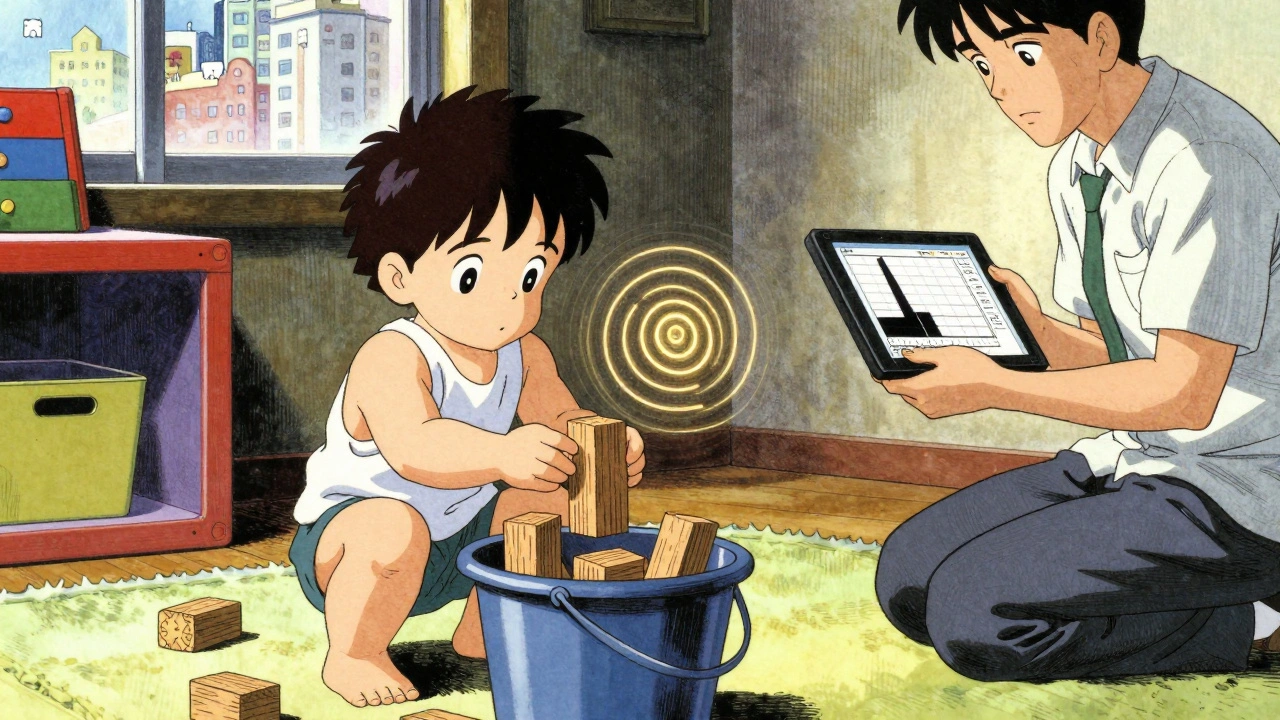
What Happens After a Diagnosis?
Finding hearing loss is just the first step. The real work starts now. By 6 months of age, a child diagnosed with permanent hearing loss should be enrolled in an intervention program. That’s the target. And it’s critical. Intervention isn’t one-size-fits-all. It depends on the child, the family, and the degree of loss. For mild to moderate loss, hearing aids are often the first step. Studies show they improve speech perception by 85% in quiet environments. For profound loss, cochlear implants are common. Around 60-70% of children with implants develop open-set speech recognition-that means they can understand speech without lip-reading. Therapy matters just as much as the device. Auditory-Verbal Therapy (AVT) helps children learn to listen and speak using their residual hearing. When started before 12 months, it leads to age-appropriate language in 65-75% of cases. Some families choose sign language. Bilingual-Bicultural (Bi-Bi) education, where kids learn both ASL and written English, leads to an 80% high school graduation rate among deaf students-far above the national average for deaf youth. There’s no single right path. The goal is communication. Whether it’s spoken language, sign language, or both, the child needs consistent, rich exposure from day one.Who’s Involved in the Process?
This isn’t just the audiologist’s job. It’s a team effort. Pediatric audiologists are the experts who do the full testing and recommend devices. They need at least 300 hours of hands-on training with children. Speech-language pathologists (SLPs) work with kids on communication skills. In schools, 87% of SLPs are responsible for hearing screenings. Primary care doctors play a big role too. At every well-child visit, they use tools like PEDS to spot developmental delays-including hearing concerns. These tools catch 92% of cases. Nurses and trained screeners in schools and clinics perform the initial tests. In 46 states, they must be certified and retrained yearly. And then there are parents. They’re the ones who notice if their child doesn’t turn toward their voice, repeats “huh?” often, or turns the TV up too loud. Their instincts matter. If you’re worried, don’t wait for the next checkup. Call your pediatrician or audiologist.
The Gaps We Still Need to Fix
We’ve made progress-but we’re not there yet. One in three babies who fail their newborn screen never get a full diagnostic test by 3 months. In rural areas, that number jumps to over half. Why? Lack of access, transportation, or follow-up reminders. Even when diagnosed, only 64.5% of infants get intervention by 6 months. And disparities exist. Black and Hispanic children are 23% less likely to receive timely services than white children. New tools are helping. Telehealth audiology visits now have 92% accuracy compared to in-person visits. Mobile screening units are reaching kids in underserved areas-over 15,000 children were screened this way in 2022 alone. Smartphone-based OAE tests are now 95% accurate. AI tools can read audiograms with 98.7% accuracy, matching expert audiologists. These aren’t science fiction-they’re here, and they’re changing access. Future steps include universal genetic screening at birth and routine CMV testing for newborns. Since CMV is the top non-genetic cause, catching it early could prevent thousands of cases of hearing loss.What Parents Can Do Right Now
- If your baby didn’t get a hearing screen at birth, ask for one now. It’s still possible. - Know the risk factors: family history, NICU stay, frequent ear infections, or delayed speech. - Watch for signs: not reacting to loud noises, not turning to your voice, not babbling by 6 months, or not saying words by 12-15 months. - Don’t wait for school screening. If you have concerns at any age, get it checked. - Connect with early intervention services. Even if you’re unsure, it’s better to be safe. Hearing loss isn’t a life sentence. It’s a condition we can manage-especially when we catch it early. The tools are here. The science is clear. What’s missing is action.Can a child develop hearing loss after passing the newborn screen?
Yes. While newborn screening catches most congenital cases, hearing loss can develop later due to ear infections, head injuries, loud noise exposure, or illnesses like meningitis. That’s why ongoing screenings at ages 4, 5, 6, 8, 10, and during adolescence are critical.
How do I know if my toddler has hearing loss?
Look for signs like not responding when called, turning up the TV volume, speaking unclearly, or not using two-word phrases by age 2. Toddlers with hearing loss often seem to ignore you-but they’re not being defiant. They can’t hear well enough to understand.
Are hearing aids effective for young children?
Yes. For mild to moderate hearing loss, hearing aids improve speech perception by up to 85% in quiet environments. They work best when fitted early-ideally before 6 months-and paired with consistent therapy.
What’s the difference between cochlear implants and hearing aids?
Hearing aids amplify sound. Cochlear implants bypass damaged parts of the ear and directly stimulate the auditory nerve. They’re recommended for children with profound hearing loss who get little benefit from hearing aids. About 60-70% of children with implants develop open-set speech recognition.
Is sign language better than spoken language for deaf children?
There’s no single answer. Some families choose spoken language with hearing aids or implants. Others choose sign language or both. Research shows that children in bilingual-bicultural programs (using ASL and English) have higher graduation rates-80% compared to lower rates in other models. The key is early, consistent language exposure-whether spoken or signed.
How soon should intervention start after diagnosis?
By 6 months of age. Every month of delay affects language development. Children who start intervention before 6 months are far more likely to reach normal language milestones than those who start after 12 months.
Can noise damage a child’s hearing?
Absolutely. One in eight children aged 6-19 has noise-induced hearing loss from headphones, concerts, or loud toys. Keep volume below 60% of maximum and limit exposure to 60 minutes at a time. Use noise-canceling headphones to reduce the need for high volume.
What should I do if my child fails a school hearing screening?
Don’t ignore it. Schedule a full diagnostic hearing test with a pediatric audiologist within a month. Many school screenings miss subtle losses or are affected by background noise. A professional evaluation is the only way to know for sure.
8 Comments
Michael Feldstein December 2 2025
My nephew passed the newborn screen but started lagging on speech by 18 months. Turned out he had intermittent fluid buildup from chronic ear infections. No one caught it until kindergarten. That’s why I’m screaming from the rooftops: don’t trust one test. Keep watching. Keep asking.
Rebecca Braatz December 2 2025
YES. This. I’m a speech therapist and I see kids every day who missed the window because parents thought ‘they’ll catch up.’ They don’t. Not without help. If your kid isn’t babbling by 6 months, don’t wait for the next pediatric visit-call an audiologist TODAY. Early intervention isn’t optional-it’s the difference between speaking and surviving in a hearing world.
Heidi Thomas December 3 2025
Stop pushing hearing aids like they’re magic. Kids with cochlear implants do better long-term. Why are we still wasting time with devices that barely work? The science is clear-implant early or get left behind.
Carolyn Ford December 4 2025
Oh please. You’re all acting like this is some groundbreaking revelation. I’ve been a deaf mom for 15 years. We’ve known this since the 80s. Why do you think it’s news now? Because white, middle-class parents finally care when it affects their ‘perfect’ baby. What about the kids in rural Texas or the Navajo reservation? You think they get the same access? No. You’re just performing concern.
zac grant December 5 2025
From a clinical perspective, the 20 dB threshold is critical because it’s the point where consonants like /s/, /t/, and /k/ become unintelligible without amplification. That’s why even ‘mild’ loss impacts phonological development. The real bottleneck isn’t tech-it’s follow-up. 30% of kids who fail OAE never get AABR. That’s a systemic failure, not a parental one.
jagdish kumar December 6 2025
Is hearing not just another form of vibration? We all hear differently. Maybe the child is not broken-maybe the world is too loud.
michael booth December 6 2025
Agreed. We need to treat this like we treat vision screening. Universal. Mandatory. No exceptions. If we can test for color blindness at 5, why not hearing at 6 months? The infrastructure exists. The will doesn't. Let's fix that.
Benjamin Sedler December 8 2025
Wait-so you’re telling me we’re putting microchips in babies’ skulls now? Next they’ll be coding their emotions. I’m not saying don’t help kids-but this feels like a Silicon Valley solution to a human problem. What about love? What about touch? You can’t implant connection.