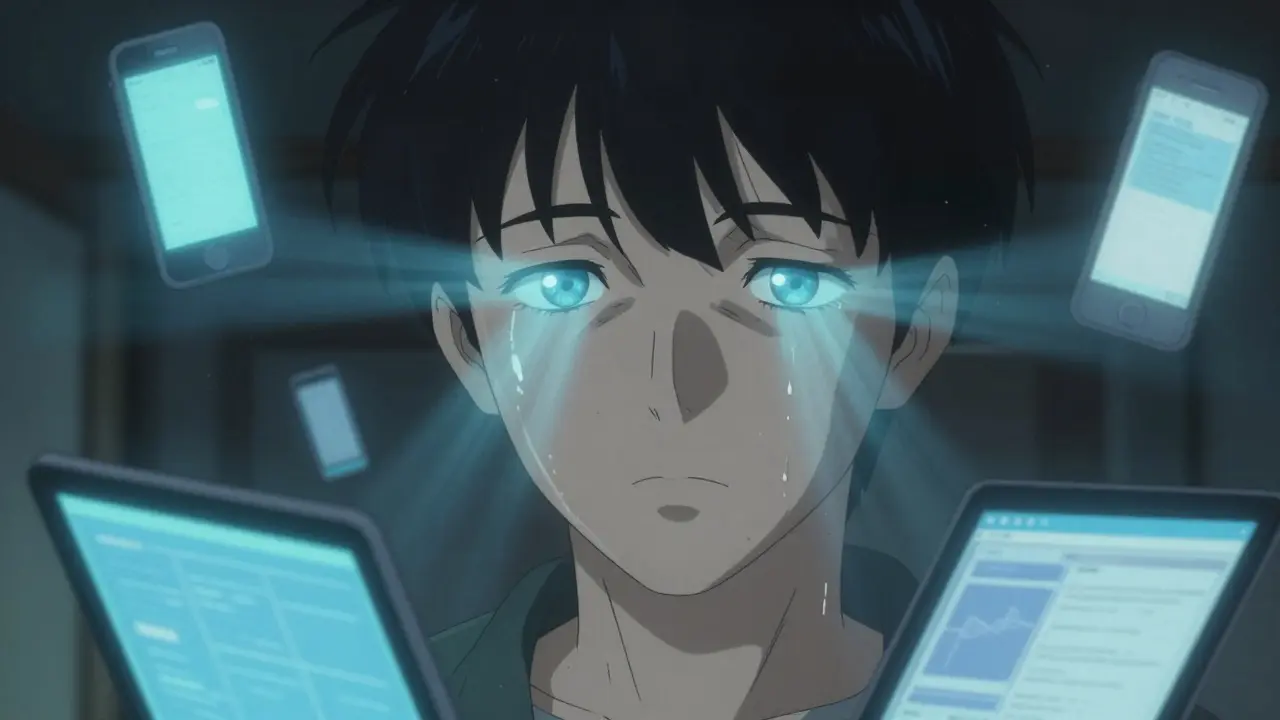
Most people spend over six hours a day staring at screens. Phones, laptops, tablets - they’re everywhere. And with that constant exposure comes a growing list of complaints: dry eyes, headaches, blurry vision, trouble sleeping. You’ve probably heard it’s all because of blue light. But is that really true? And if it is, what actually helps?
What Is Blue Light, Really?
Blue light isn’t just from your phone. It’s part of natural sunlight. But the kind that’s raising concerns is the high-energy visible (HEV) light between 415 and 455 nanometers - the shortest, most energetic wavelengths in the visible spectrum. This light doesn’t just bounce off your eye; it goes deep. It passes through the cornea and lens, reaching the retina. Studies show that at high enough intensities, this light can trigger oxidative stress in retinal cells. One 2018 NIH study found that 24 hours of exposure to 450 nm blue light at 10 mW/cm² reduced corneal cell viability by nearly 40%. That’s not something you see from a quick scroll.
But here’s the catch: the light from your screen? It’s nowhere near that intense. Your phone emits about 0.1-0.5 mW/cm². Even your monitor is far below the levels used in lab studies. So while the science says blue light can damage cells under extreme conditions, real-world screen use? The risk of permanent eye damage remains unproven.
Why Your Eyes Feel So Tired
If blue light isn’t the main villain, what is? The real culprit is how you use your screens. Staring at a screen for hours means you blink less - about 66% less than when you’re reading paper. Less blinking means your eyes dry out. That’s why 64.7% of people report dry eyes after prolonged screen use.
Also, your eyes are constantly focusing and refocusing. Holding a phone 12 inches from your face forces your eye muscles to work harder than if you were reading a book 18 inches away. That strain adds up. Add poor lighting - a bright screen in a dark room - and you’ve got perfect conditions for digital eye strain. Symptoms? Headaches, blurred vision, watery or gritty eyes. These aren’t signs of permanent damage. They’re signs of fatigue.
Do Blue Light Glasses Work?
The market for blue light glasses exploded. In 2022, people spent over $3 billion on them. But do they actually help?
Amber-tinted lenses block 65-100% of blue light. They can make colors look weird - especially if you’re editing photos or watching videos. A 2022 University of Manchester study found they reduced visual acuity by over 8% in color-sensitive tasks. That’s why photographers and designers avoid them.
Clear lenses with blue light filters? They block only 10-25%. A 2023 Consumer Reports test found one popular brand (Eyezen) reduced blue light by just 12%, not the 20% claimed. And while some users swear by them, 42% of 1-star Amazon reviews say they noticed no difference in eye strain.
Here’s the truth: if your eyes feel better after wearing them, it’s likely because you’re also using them as a reminder to take breaks. The glasses themselves? They’re not doing much.
Screen Filters: Hardware vs. Software
Software filters like Night Shift (iOS) or f.lux (Windows/Mac) reduce blue light by shifting your screen’s color temperature. At maximum settings, they cut blue light by 10-20%. But here’s the problem: they don’t touch the most harmful part of the spectrum - 415-455 nm. The International Commission on Illumination calls this the “peak hazard” range. Software filters miss it.
Hardware filters - like screen protectors or built-in OLED tuning - are more effective. Newer OLED displays can cut blue light emission by 30-40% without changing color accuracy. Apple’s iOS 17.4, released in March 2024, uses ambient light sensors to adjust color temperature dynamically. Independent testing showed it cut melatonin suppression by 37% compared to older versions.
But here’s what most people don’t realize: even the best filter won’t help if you’re still staring at your screen for five hours straight.
The One Habit That Actually Works
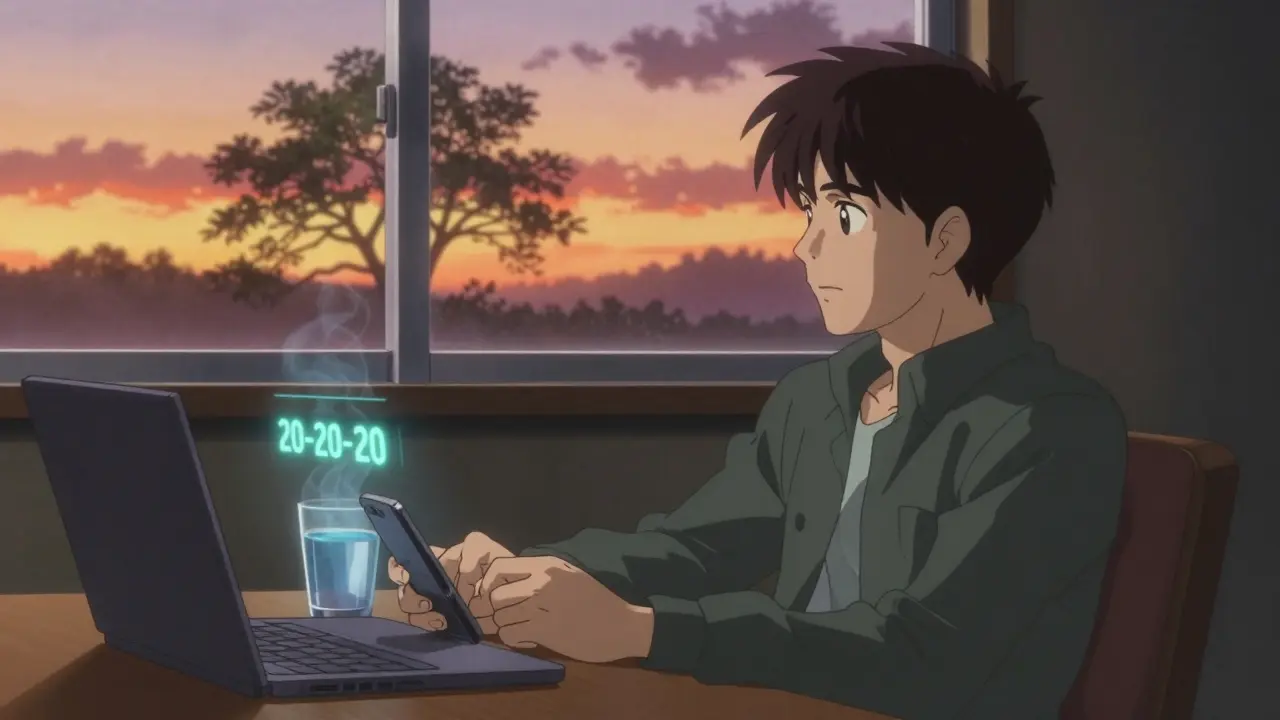
Forget the glasses. Forget the filters. The most effective, science-backed way to reduce digital eye strain is the 20-20-20 rule.
Every 20 minutes, look at something 20 feet away for 20 seconds. Sounds simple? A 2021 study in Optometry and Vision Science found it reduced eye strain by over 53%. Why? Because it gives your focusing muscles a break. It lets your eyes blink naturally again. And it resets your visual system.
Reddit users on r/Bluelight reported that 78% of those who stuck with the rule noticed less strain. It doesn’t cost anything. No app needed. Just train yourself to pause.
Other Proven Habits
- Adjust screen brightness: Match it to your room. Too bright? Too dim? Both cause strain. Aim for 300-500 lux in your workspace. A 2022 Rensselaer Polytechnic study found this cut discomfort by 41%.
- Use night mode two hours before bed: Blue light at night suppresses melatonin. A 2018 University of Toronto study showed night mode increased melatonin production by 58% compared to standard settings.
- Keep distance: Hold your phone at least 18 inches away. The American Optometric Association says that reduces focusing demand by 3.7 diopters - a huge relief for your eyes.
- Hydrate and blink: Dry eyes worsen with caffeine and low humidity. Drink water. Consciously blink more. It’s that simple.
What About Supplements?
There’s growing interest in lutein and zeaxanthin - antioxidants found in leafy greens and egg yolks. A February 2024 study in Nature Communications showed that taking 10mg lutein and 2mg zeaxanthin daily for six months increased macular pigment density by 0.12. That’s equivalent to the blue light filtering effect of a 25% screen filter - naturally.
It’s not a magic pill. But if you’re eating a balanced diet, it’s a smart backup. No side effects. No cost. Just good nutrition.
The Bigger Picture
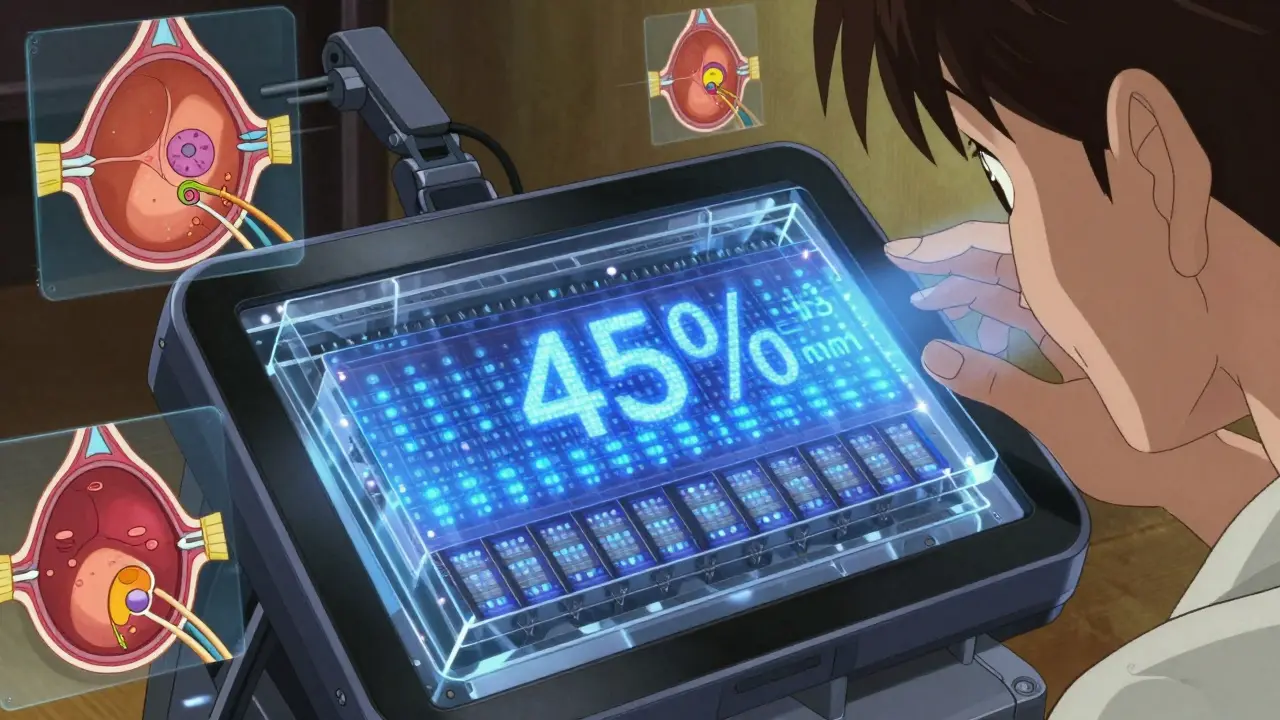
Here’s what most companies don’t tell you: the future of blue light protection isn’t in glasses. It’s in the screen itself. OLED and MicroLED manufacturers are building in hardware-level blue light reduction. Samsung’s 2025 roadmap targets 50% reduction in the 415-455 nm range with almost no color shift. Corning’s quantum dot lenses could filter 45% without tinting.
That means the market for aftermarket blue light glasses might shrink by 18% a year from 2025 onward. Why? Because you won’t need them anymore. Your screen will do the work.
For now? Focus on habits, not gadgets. Take breaks. Adjust lighting. Keep your distance. Sleep better. Those things cost nothing - and they work every time.
Is blue light from screens actually damaging my eyes?
There’s no solid evidence that blue light from screens causes permanent eye damage. Lab studies use much higher intensities than what you get from phones or monitors. What you’re feeling - dryness, strain, headaches - is fatigue, not injury. The American Academy of Ophthalmology says blue light glasses aren’t necessary for eye health.
Do blue light glasses help with sleep?
Yes, but not because of the glasses themselves. Wearing amber lenses at night reduces blue light exposure, which can help melatonin rise. But the same effect comes from using night mode on your devices. In fact, a 2024 study showed Apple’s adaptive color temperature reduced melatonin suppression by 37% more than older night modes - without needing special glasses.
What’s the best way to reduce eye strain?
The 20-20-20 rule is the most effective. Look away from your screen every 20 minutes for 20 seconds at something 20 feet away. Combine that with keeping your screen at arm’s length, matching brightness to ambient light, and blinking more. That combo reduces strain faster than any filter or glass.
Are software filters like Night Shift enough?
They help, but they’re incomplete. Most software filters only reduce blue light by 10-20% and miss the most problematic wavelengths (415-455 nm). Newer systems like iOS 17.4 are better - they use ambient sensors to adjust dynamically. Still, they’re no substitute for taking breaks and reducing overall screen time.
Should I buy blue light blocking screen protectors?
Probably not. Most reduce blue light by only 10-15%, and they can reduce screen clarity or add glare. The same effect is better achieved by using your device’s built-in night mode, adjusting brightness, and following the 20-20-20 rule. Save your money - your eyes won’t thank you for the filter.
11 Comments
Chelsea Deflyss February 9 2026
Ive been usin blue light glasses for a year now and my headaches are gone lol dont care what the science says i feel better
also my phone screen looks less harsh at night like its breathing or somethin idk
Brandon Osborne February 10 2026
STOP WASTING MONEY ON GLASSES. This is such a scam engineered by Big Optics to keep you buying useless junk.
The real issue? You're glued to your screen like a zombie. You dont blink. You dont move. You dont breathe.
I work in ophthalmology and I see people with corneal ulcers from 14-hour Zoom marathons. Not because of blue light. Because they forgot they had eyelids.
The 20-20-20 rule is the only thing that matters. Do it. Or keep crying about your 'eye strain'.
Marie Fontaine February 11 2026
OMG YES to the 20-20-20 rule!! I started using a dumb little timer app and my eyes feel like theyve been reborn 🙌
Also drinking water helps SO MUCH like who knew??
and blinking on purpose?? game changer. i feel like a new person
Lyle Whyatt February 13 2026
You know what's wild? The entire blue light panic is a classic case of technological anxiety dressed up as science. We're terrified of invisible forces - radiation, EMFs, blue light - because we can't control them.
But here's the thing: the human eye evolved under sunlight. We're not fragile. We're adaptable. The real problem isn't the wavelength - it's the duration. We're not just using screens. We're living inside them.
A 2019 study from the University of Sydney tracked 12,000 people over 5 years. The only variable that consistently correlated with ocular fatigue? Screen time duration. Not filters. Not glasses. Not color temperature. Time.
So if you're gonna fix it, fix the habit. Not the gadget.
Tatiana Barbosa February 13 2026
The macular pigment density study is legit. Lutein/zeaxanthin isn't a bandaid - it's a biological upgrade. Your retina literally builds a natural sunscreen.
I took 10/2mg daily for 8 months. My contrast sensitivity improved. My night vision got sharper. My optometrist was shocked.
And it's not expensive. A month's supply costs less than one pair of those overpriced glasses. Nutrition > gimmicks.
Ken Cooper February 15 2026
wait so the 20-20-20 thing is real?? i thought it was one of those internet myths like 'drink 8 glasses of water'
i tried it yesterday and holy crap my eyes stopped feelin like sandpaper
also i didnt even know i was squintin so hard
MANI V February 15 2026
This article is dangerously misleading. You're telling people to ignore blue light when the evidence is clear - it disrupts circadian rhythm at the cellular level.
The NIH study you cited? It used 10 mW/cm². But your phone? At 100% brightness in a dark room? It's hitting 0.8 mW/cm² - close enough to trigger photoreceptor stress.
You're dismissing the science because it doesn't fit your narrative. That's not skepticism. That's negligence.
Tasha Lake February 16 2026
I work in UX design. I used to swear by amber lenses. Then I tried iOS 17.4's adaptive mode with the 20-20-20 rule. My color accuracy didn't suffer. My eyes didn't burn. My sleep improved.
Hardware > software > glasses. And the rule? Non-negotiable.
Tom Forwood February 16 2026
Aussie here. We've been doing this for decades. Sunlight? Yeah. But we also take breaks. Walk. Look at trees. Drink tea.
Screen time isn't evil. It's just… not a lifestyle. We got used to staring at screens because we're lazy. Not because tech is evil.
The 20-20-20 rule? My grandad taught it to me in '98. He used a typewriter. He knew what strain felt like.
John McDonald February 18 2026
I used to think blue light was the enemy. Then I started tracking my screen time. I was on my phone 8 hours a day. 6 hours on Zoom.
I cut it to 4 hours. No glasses. No filters. Just less time.
My eyes stopped hurting. My sleep got better. My mood lifted.
Sometimes the solution isn't a product. It's a choice.
Andrew Jackson February 20 2026
The notion that one can mitigate biological degradation through behavioral adjustment alone is a dangerous fallacy propagated by technocratic elites who seek to absolve industry of responsibility.
The human organism is not a machine. It is a biological system under sustained assault from electromagnetic pollution.
To suggest that blinking more is sufficient is to ignore the cumulative, epigenetic toll of chronic phototoxic exposure.
We are not merely fatigued. We are being slowly, systematically, altered.