
Seeing your child struggle with sadness that won't go away is one of the hardest things a parent can experience. It’s not just a bad mood or a phase; it’s child and adolescent depression, a serious condition affecting kids aged 3 to 18. The good news? You have options. For years, the standard approach was medication alone. Today, experts are looking at a combination of psychotherapy and pharmacological interventions, with family-based therapy gaining significant traction as a powerful tool for healing.
This guide breaks down what actually works. We’ll look at how medications like SSRIs function, why involving the whole family in therapy matters, and how to decide which path-or combination-is right for your teen.
Understanding the Diagnosis: More Than Just Sadness
To treat depression effectively, you first need to understand what you’re dealing with. According to the Diagnostic and Statistical Manual of Mental Disorders (DSM-5), a clinical reference used by healthcare professionals, a diagnosis requires specific criteria. It’s not enough for a child to feel down after a breakup or a bad grade. They must exhibit persistent symptoms like loss of interest in activities, changes in sleep or appetite, fatigue, feelings of worthlessness, or thoughts of self-harm for at least two weeks.
Early-onset depression is no joke. A July 2023 meta-analysis published in the International Journal of Psychology highlighted that this condition contributes substantially to global disability. If left untreated, it can derail education, relationships, and future career prospects. That’s why early identification is critical. The American Academy of Pediatrics updated their guidelines in 2020 to emphasize structured treatment approaches starting from primary care visits.
The Role of Medication: SSRIs and Safety
When therapy isn’t enough, or when symptoms are severe, medication becomes part of the equation. However, prescribing antidepressants to minors requires extreme caution. As of 2023, only two medications are approved by the U.S. Food and Drug Administration (FDA) for treating depression in children and adolescents:
- Fluoxetine (Prozac): Often the first choice, typically dosed at 10-20 mg/day.
- Escitalopram (Lexapro): Another option, also usually started at 10-20 mg/day.
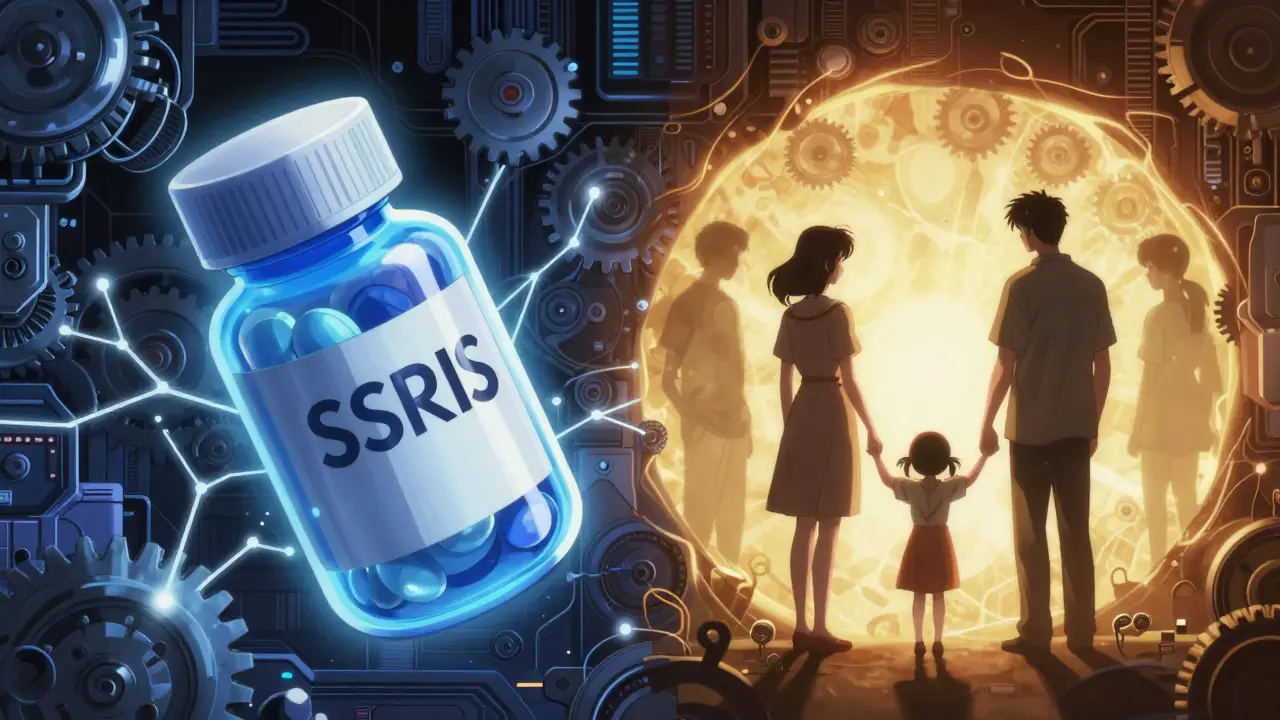
These drugs belong to a class called Selective Serotonin Reuptake Inhibitors (SSRIs). They work by increasing serotonin levels in the brain, which helps regulate mood. But here’s the catch: they don’t work overnight. It takes 4 to 6 weeks to see the full effect.
Safety is paramount. The FDA mandates a "black box warning" on all antidepressants due to a small but real risk of increased suicidal ideation, especially during the first few weeks of treatment. This phenomenon, known as activation syndrome, occurs in about 11-18% of adolescent SSRI users according to the Treatment for Adolescents with Depression Study (TADS). Side effects like headaches, nausea, and insomnia lead 32% of young users to stop taking the medication entirely. Close monitoring by a pediatrician or psychiatrist is non-negotiable.
Family Therapy: Healing the System, Not Just the Child
For a long time, Cognitive Behavioral Therapy (CBT) focused solely on the individual patient. But kids don’t live in a vacuum. They live in families. If the home environment is high-conflict, critical, or disconnected, individual therapy often hits a wall. This is where Family-Based Therapy, an intervention model that involves parents and siblings in the treatment process comes in.
There are several types of family therapy, each with a different angle:
- Attachment-Based Family Therapy (ABFT): Focuses on repairing ruptured parent-child bonds. This is particularly effective for teens with suicidal thoughts.
- Structural Family Therapy: Addresses power imbalances and hierarchy issues within the household.
- Strategic Family Therapy: Looks at how family problem-solving attempts might accidentally keep the depression going, offering new ways to interact.
A 2022 study in the Journal of the Delaware Academy of Medicine found that ABFT showed superior outcomes for reducing suicidal ideation compared to usual care. The logic is simple: if the child feels misunderstood or unsafe at home, their depression will persist. By improving communication and empathy, you remove a major stressor.
Comparing Approaches: What Does the Data Say?
So, which is better: pills or talking with the whole family? The answer depends on the severity of the case and the family dynamic. Let’s look at the evidence side-by-side.
| Feature | Medication (SSRIs) | Family-Based Therapy |
|---|---|---|
| Time to Effect | 4-6 weeks for full benefit | 8-16 weeks depending on model |
| Best For | Moderate to severe biological symptoms | Poor family functioning, communication issues |
| Risks | Activation syndrome, side effects | Requires active family participation |
| Efficacy Data | High for symptom reduction | Modest overall (g=0.22), higher for specific cases |
| Cost Consideration | $18,200 per QALY (Quality-Adjusted Life Year) | $12,500 per QALY |
The Agency for Healthcare Research and Quality (AHRQ) reviewed data in 2020 and concluded that combining pharmacotherapy with psychotherapy provides greater benefits than either alone. However, family therapy isn’t a magic bullet for everyone. A 2023 meta-analysis noted high heterogeneity in results, meaning success varies wildly based on how well the therapy is implemented and whether the family is willing to engage authentically.

Navigating the Process: Practical Steps for Parents
If you suspect your child is depressed, don’t wait. Here is a practical roadmap based on current best practices:
- Screen Early: The U.S. Preventive Services Task Force recommends universal screening for adolescents aged 12-18. Ask your pediatrician to use a standardized tool.
- Assess Family Functioning: Therapists may use tools like the Family Assessment Device (FAD). Scores above 2.0 indicate dysfunctional patterns that need addressing.
- Start with Active Support: Before jumping into heavy interventions, the AAP suggests six to eight weeks of active support and monitoring. Sometimes, just being heard helps.
- Choose the Right Modality: If there is high conflict at home, prioritize family therapy. If symptoms are severe (e.g., inability to eat or sleep), consider medication alongside therapy.
- Monitor Closely: If starting medication, check in weekly for the first month. Watch for agitation or talk of suicide.
One major hurdle is access. There is a workforce shortage. Only 8,500 certified child and adolescent family therapists serve 42 million U.S. adolescents. Waitlists of 12-18 months are common in many regions. Telehealth platforms are stepping in, with some digital therapies showing 72% completion rates, higher than traditional in-person models.
Real-World Challenges and Expectations
Let’s be honest: family therapy is hard work. It’s not just sitting around chatting. It involves confronting painful truths. Parents in NAMI forums report that learning to reduce criticism is the most valuable skill they gain, but 41% of dissatisfied users cite "resistant family members" as a dealbreaker. If one person refuses to participate, the therapy loses much of its power.
Similarly, medication management is a marathon, not a sprint. Don’t expect miracles in week one. And never stop medication abruptly without doctor supervision. Recurrence rates are high, so monitoring continues for up to two years after remission.
The landscape is evolving. Digital therapeutics like reSET-O received FDA approval in 2023, integrating technology with traditional care. Meanwhile, research into biomarkers aims to predict who will respond to SSRIs, potentially sparing families from trial-and-error prescribing. By 2030, experts project family therapy could become a first-line intervention for nearly half of all adolescent depression cases due to its cost-effectiveness and holistic benefits.
What are the signs of depression in teenagers?
Signs include persistent sadness, irritability, withdrawal from friends and hobbies, changes in sleep or eating habits, difficulty concentrating, and expressions of hopelessness. Unlike adults, teens may show more anger or physical complaints like stomachaches rather than verbalizing sadness.
Is family therapy effective for all types of depression?
It is most effective when family dynamics contribute to the distress, such as in cases of poor communication or high conflict. For severe biological depression, it is often combined with medication. It may be less effective if family members are unwilling to participate honestly.
Can I give my child antidepressants without therapy?
While possible, guidelines strongly recommend against medication alone for mild to moderate cases. The combination of medication and psychotherapy yields the best outcomes. Medication alone carries a higher risk of relapse once the drug is stopped.
How long does family therapy take?
Typical protocols involve 12-16 weekly sessions of 50-90 minutes. Strategic approaches may show results in 8-10 sessions, while attachment-based models might require 16-20 sessions to fully repair relational ruptures.
What should I do if my teen is suicidal?
This is a medical emergency. Call 988 (Suicide & Crisis Lifeline) or 911 immediately. Do not leave them alone. Ensure any means of self-harm are removed from the home. Seek immediate evaluation at an emergency room or crisis center.