Have you ever wondered why some medications cost a few dollars while others cost hundreds, even though they do the exact same thing? The secret lies in a regulatory shortcut that allows generic versions of brand-name drugs to hit the market without repeating years of expensive clinical trials. For the average person, this means a cheaper pharmacy bill. For the pharmaceutical industry, it's a high-stakes game of legal certifications and scientific precision. Understanding how the FDA authorization of generics is the process by which the U.S. Food and Drug Administration approves generic versions of existing brand-name drugs works requires looking at the law that started it all.
The Legal Foundation: The Hatch-Waxman Act
The entire US generic drug industry exists because of a specific piece of legislation: the Hatch-Waxman Act. Formally known as the Drug Price Competition and Patent Term Restoration Act of 1984, this law solved a massive problem. Before 1984, generic makers had to perform their own full-scale clinical trials to prove a drug was safe, which was so expensive that almost nobody did it. The Act created a shortcut, allowing generic companies to rely on the FDA's previous findings of safety and effectiveness for the original brand-name drug.
Under Section 505(j) of the Federal Food, Drug, and Cosmetic Act, the government introduced the Abbreviated New Drug Application (or ANDA). As the name suggests, it's "abbreviated" because the manufacturer doesn't need to provide animal or human clinical data to prove the drug works; they only need to prove that their version is the same as the original. This shift made it economically viable for companies to compete, leading to a market where roughly 9 out of 10 prescriptions filled in the US are now generics.
How a Generic Gets Approved: The ANDA Process
Getting a drug through the Office of Generic Drugs (OGD) isn't as simple as copying a formula. The FDA demands that the generic version be a "therapeutic equivalent" to the Reference Listed Drug (RLD), which is the brand-name version. To get the green light, a company must prove several technical points:
- Active Ingredients: The drug must have the same active chemical component as the brand name. While inactive ingredients like dyes or fillers can differ, they cannot interfere with how the drug works.
- Strength and Dosage: The pill, capsule, or injection must be the same strength, dosage form, and route of administration.
- Indications: The generic must be marketed for the same uses as the original.
- Manufacturing Standards: The factory must follow the same Good Manufacturing Practice (GMP) regulations as the brand-name manufacturer.
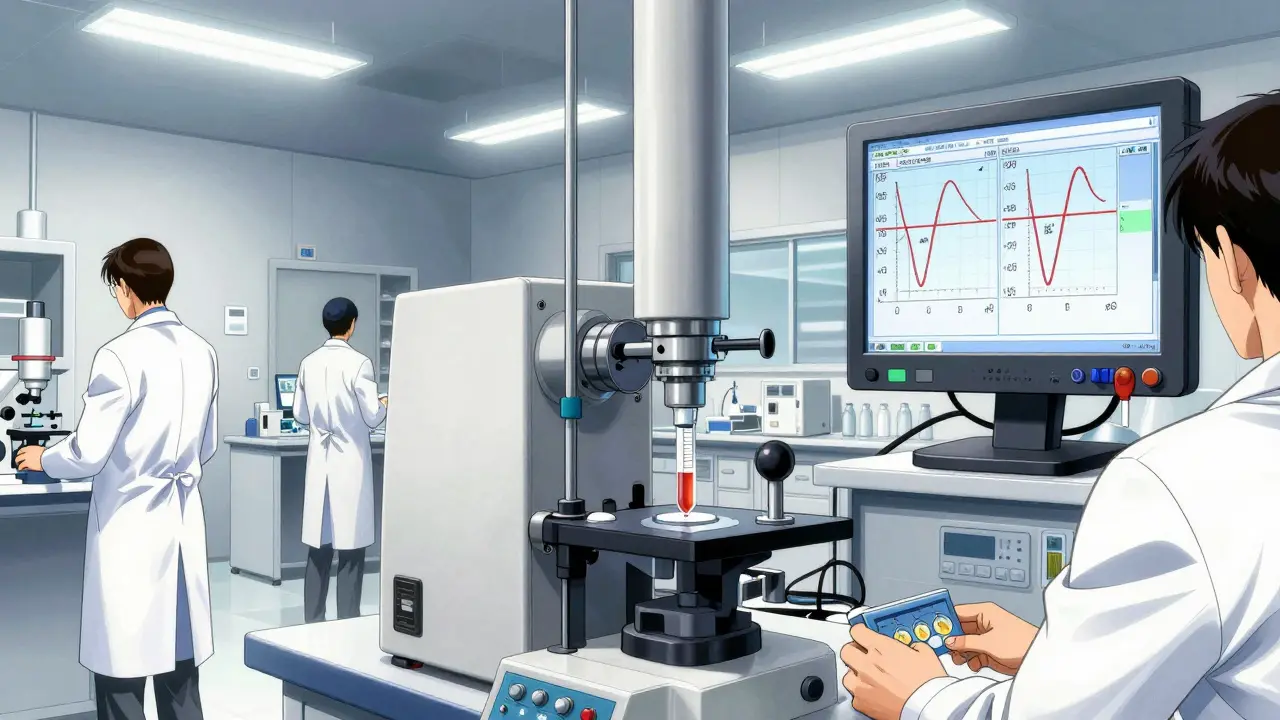
The most critical part of this process is bioequivalence. The FDA doesn't just want to know if the ingredients are the same; they want to know if the drug gets into your bloodstream at the same speed and in the same amount as the original. This is usually tested using a small group of healthy volunteers (typically 24 to 36 people) to ensure the pharmacokinetic profile matches the brand-name drug.
Timeline and Review Cycles
The FDA doesn't just take a folder of papers and say "looks good." The process starts with a Filing Review. If the application is missing key data, the FDA issues a Refuse-to-Receive (RTR) letter, and the company has to start over and pay the fee again. Once accepted, the application enters a substantive review phase with a Target Action Date (TAD).
| Application Type | FDA Review Goal | Priority Level |
|---|---|---|
| Standard Original ANDA | 10 Months | Normal |
| Priority ANDA | 8 Months | High (Drug shortages/First generics) |
To speed things up, the Generic Drug User Fee Amendments (GDUFA) allow the FDA to collect fees from companies to fund more reviewers. This has significantly reduced the time it takes to get a drug to the pharmacy shelf, though first-time applicants often go through several review cycles before they finally get a final approval.
The Legal Battle: Patents and the 'Orange Book'
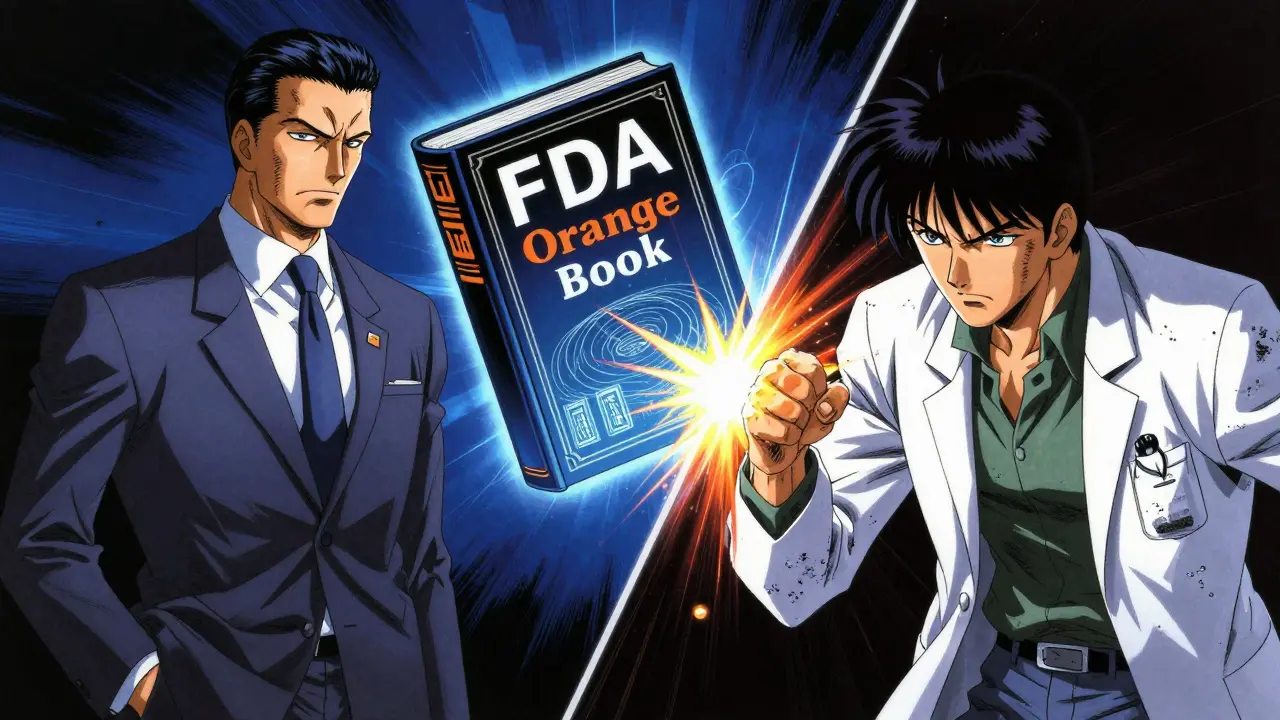
The biggest hurdle for a generic company isn't usually the science-it's the law. The FDA maintains the Orange Book, which lists all approved drugs and their associated patents. When a company submits an ANDA, they must make a patent certification. If they believe a patent is invalid or won't be infringed, they file a "Paragraph IV certification."
This is where things get messy. If a generic company challenges a patent via Paragraph IV, the brand-name company often sues for infringement. This triggers a mandatory 30-month stay, meaning the FDA cannot approve the generic drug while the court case is pending. This mechanism is designed to balance the incentive for innovators to create new drugs with the public's need for affordable medicine.
Complex Generics: The New Frontier
While simple pills are easy to replicate, "complex generics" are a different story. Things like inhalers, topical creams, or modified-release injections can't always be proven via standard bioequivalence tests. For example, an inhaler's effectiveness depends not just on the chemistry, but on the physical design of the device and how the particles are dispersed in the lungs.
Because of this, the FDA has launched the Complex Generic Drug Product Development Resources initiative. These products require more sophisticated scientific demonstration and often take longer to move through the approval pipeline. However, they are vital for public health. A recent example was the approval of the first generic naltrexone extended-release injectable in 2023, which provided a critical, affordable tool in the fight against the opioid epidemic.
The Financial Impact of the Abbreviated Pathway
Why does this all matter? Because the cost difference is staggering. Developing a brand-name drug can cost upwards of $2.6 billion due to the necessity of massive Phase I, II, and III clinical trials. In contrast, a generic manufacturer spending $1 million to $5 million on an ANDA can bring a functionally identical product to market. This efficiency is why generic drugs typically cost 80% to 85% less than their brand-name counterparts.
Recent trends show a shift toward strengthening the domestic supply chain. As of late 2025, the FDA introduced a pilot prioritization program that rewards companies who test and manufacture their products within the U.S. by giving them faster review times. This is an effort to reduce reliance on overseas manufacturing and prevent drug shortages.
What is the difference between an NDA and an ANDA?
A New Drug Application (NDA) is for brand-name drugs and requires full evidence of safety and efficacy through extensive clinical trials. An Abbreviated New Drug Application (ANDA) is for generics and allows the manufacturer to skip those trials by proving the drug is bioequivalent to an already approved brand-name drug.
Does a generic drug have the same quality as a brand-name drug?
Yes. The FDA requires that generic drugs meet the exact same standards for identity, strength, purity, and quality as the brand-name product. They must also be manufactured under the same Good Manufacturing Practice (GMP) regulations.
Why do some generics take so long to reach the market?
The delay is often due to patent litigation. If a generic company challenges a patent (Paragraph IV), the brand company can sue, resulting in a 30-month stay where the FDA is legally barred from approving the generic until the court decides the case.
What is the 'Orange Book'?
The Orange Book is the official FDA publication that lists approved drug products with therapeutic equivalence evaluations and detailed patent and exclusivity information. Generic companies use it to determine which patents they need to navigate before filing an ANDA.
How does the FDA test bioequivalence?
Bioequivalence is typically tested through pharmacokinetic studies involving 24 to 36 healthy volunteers. The FDA checks if the generic drug delivers the active ingredient into the bloodstream at the same rate and to the same extent as the brand-name drug.
12 Comments
Ajinkya Joshi April 23 2026
Oh wow, a detailed breakdown of how big pharma manages to keep us hostage for as long as possible before finally letting a generic version drop. Truly heartwarming to see how "balanced" the system is when a 30-month stay basically protects a monopoly while people go broke buying brand names. Absolute genius of a legal loophole.
RAJESH MARAVI April 23 2026
Actuallly the Orange Book is just a way for them to hide the real patents until the last secnd!! its all a scam to keep prices high and the FDA is just playin along lol
Sue Stoller April 23 2026
It's honestly so great that we have these pathways to make medicine more affordable for everyone! 🌟 Imagine how many lives are saved just by having that 80% cost reduction. Keep sharing this kind of info, it's so helpful for people to understand why their pharmacy bill is lower! ✨💖
Ally Warren April 25 2026
The dichotomy between innovation and accessibility is the eternal struggle of modern medicine. We want the new, groundbreaking cures, yet we need them to be available to the masses. The Hatch-Waxman Act is essentially a societal contract, trading a period of exclusivity for a future of universal access.
Caroline Duvoe April 26 2026
everyone knows about the orange book lol 🙄 bioequivilance is basic stuff
Amy Fredericks April 28 2026
I totally get why some people are frustrated with the timelines, but it's a relief to know the standards for quality are the same across the board. It gives so much peace of mind knowing that the generic version is just as safe as the fancy brand one.
Olayinka Ibukunoluwa Mercy April 30 2026
This is such a wonderful explanation!!! 🌸 It's so important for us to be educated on these matters so we can advocate for our own health and wellness!!! Thank you for shedding light on the ANDA process!!!! 📚🙏✨
Dave Edwards April 30 2026
The sheer arrogance of these pharmaceutical companies is disgusting! They use Paragraph IV certifications as a weapon to stop competition and bleed patients dry. It's a moral failure of the highest order that we even allow a 30-month stay while people are suffering! 😡
Anastasios Kyriacou May 2 2026
who cares about the legal stuff just make the meds cheaper already lol
Mel Glick May 3 2026
Wait, you're telling me they can just 'challenge' a patent and then the whole thing gets paused for two and a half years? That is absolute garbage! This isn't a balance of incentives, it's a blatant corporate shield that prevents affordable healthcare from actually reaching the people who need it right now!
Dan Wizard May 4 2026
I find it quite fascinating that the physical design of the delivery mechanism, such as in the case of an inhaler, is just as critical as the chemical composition itself, and it makes me wonder if the move toward domestic manufacturing in 2025 will actually solve the shortage issues or if it's simply a political gesture to appease the public while the complex generics continue to lag behind due to their inherent scientific difficulty.
Odicha ude Somtochukwu May 5 2026
The emphasis on Good Manufacturing Practice (GMP) is truly the cornerstone of this entire system, as it ensures that regardless of the price point, the patient's safety remains the primary objective!!!! It is heartening to see the FDA prioritize domestic supply chains to mitigate the risks of global instability!!!!