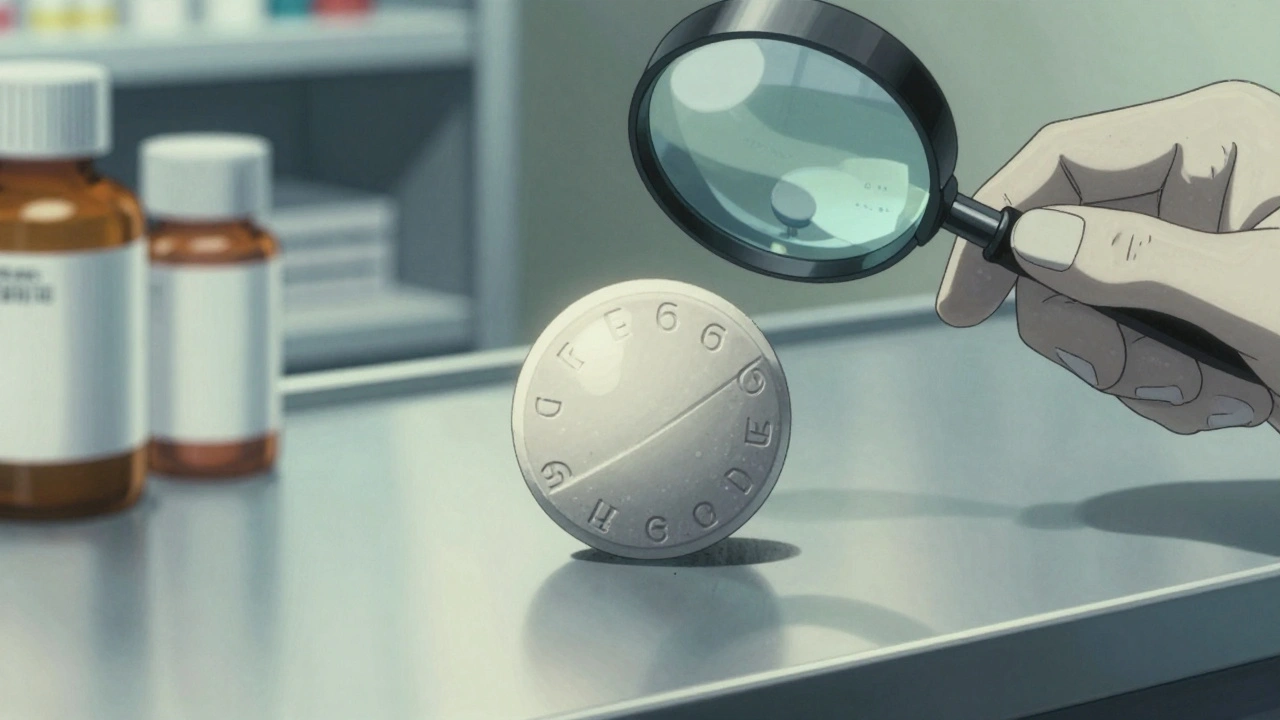
When you pick up a prescription, you might notice your pill looks different than last time. Maybe it’s a different color, shape, or has strange letters stamped on it. That’s not a mistake - it’s probably a generic drug. And if you bought it from a licensed pharmacy, it’s just as safe and effective as the brand-name version. But if you bought it from an unverified website or a shady vendor, it could be dangerous.
Every year, millions of people save hundreds of dollars by switching to generic medications. In the U.S., 9 out of 10 prescriptions filled are generics. They work the same way, contain the same active ingredients, and are held to the same strict standards as brand-name drugs. But counterfeit versions are out there - and they can look almost identical. So how do you tell the difference?
What Makes a Generic Drug Legitimate?
A legitimate generic drug isn’t just a cheaper copy. It’s a medically approved product that meets the same quality, strength, purity, and stability standards as the original brand-name drug. The U.S. Food and Drug Administration (FDA) requires every generic to prove it delivers the same amount of active ingredient into your bloodstream at the same rate as the brand-name version. This is called bioequivalence. The acceptable range? Between 80% and 125% of the brand’s performance. In reality, most generics land right at 99% - nearly identical.
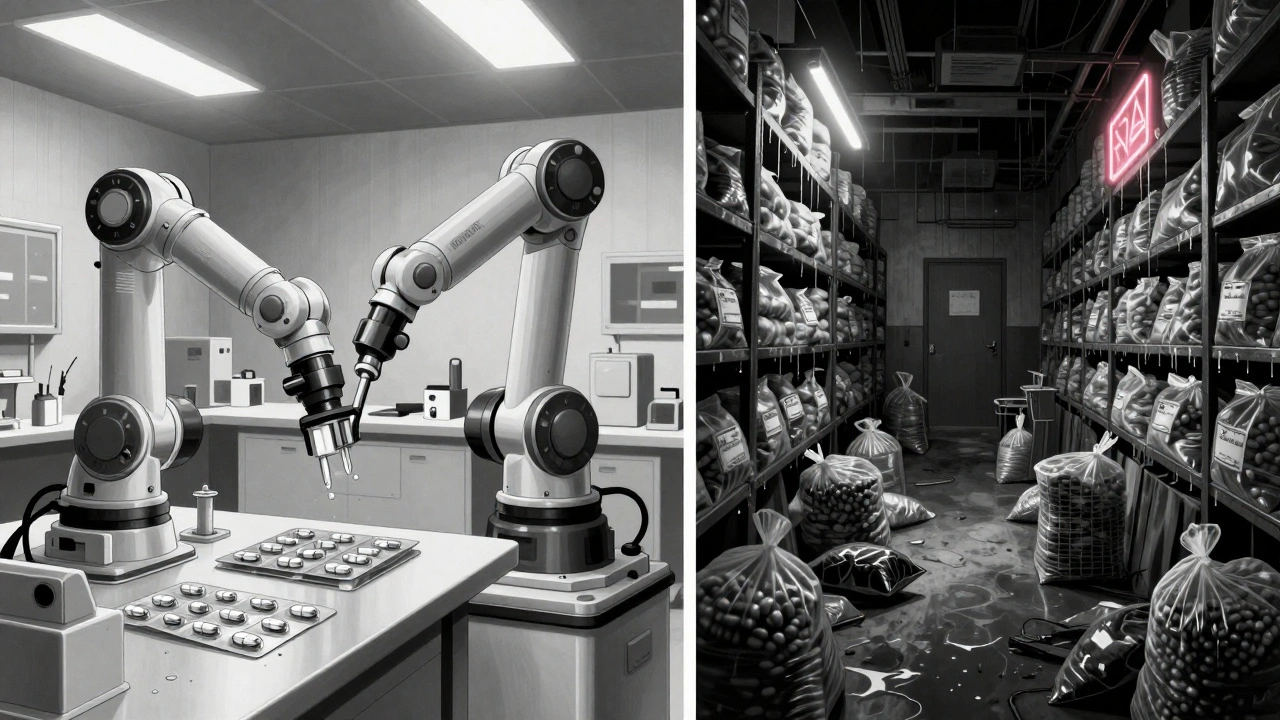
Manufacturers like Teva, Sandoz, and Mylan (now Viatris) produce billions of generic pills each year under FDA inspection. The FDA inspects over 2,500 generic drug facilities annually and tests more than 1,000 samples each year. If a batch fails, it’s destroyed. Legitimate generics are made in clean, regulated factories with strict controls on every step - from raw materials to packaging.
What to Look for on the Pill and Packaging
Legitimate generic drugs have clear, consistent physical traits. Here’s what to check:
- Imprint code: Every tablet or capsule should have a unique code stamped or printed on it - letters, numbers, or both. This identifies the drug, manufacturer, and strength. No imprint? Red flag.
- Color and shape: Generics can look different from the brand-name version. That’s required by law - manufacturers can’t copy the exact appearance to avoid trademark issues. But within the same generic brand, every pill should look identical. If you get two refills and the pills vary in color or shape, ask your pharmacist.
- Texture: A legitimate pill should feel solid, smooth, and uniform. If it’s crumbly, sticky, or has visible powder, cracks, or mold, don’t take it.
- Labeling: The bottle must have the pharmacy’s name and address, your name, the drug name, strength, dosage instructions, lot number, and expiration date. Missing any of these? Walk away.
- Container: Legitimate generics come in sealed, tamper-evident bottles - never in plastic baggies, ziplock bags, or unlabeled containers.
One of the most common signs of counterfeit drugs? Crooked, blurry, or misspelled labels. In FDA reports, 78% of counterfeit medications had labeling errors. Watch for typos like “Metoprolol” instead of “Metoprolol,” or “50mg” written as “50mg.”
Where to Buy Generic Drugs Safely
Buying from a licensed pharmacy is the #1 way to avoid fake drugs. In the U.S., look for the .pharmacy seal online - it means the site has been verified by the National Association of Boards of Pharmacy (NABP). As of 2023, only 62 online pharmacies held this accreditation.
Most brick-and-mortar pharmacies - CVS, Walgreens, Rite Aid, local independents - get their generics from FDA-registered distributors. Pharmacists check each shipment against manufacturer databases and verify lot numbers. They’re trained to spot inconsistencies.
Avoid websites that:
- Don’t require a prescription
- Sell drugs from outside the U.S. without clear labeling
- Offer prices that seem too good to be true (e.g., $10 for a 30-day supply of Lipitor)
- Use foreign languages on packaging meant for the U.S. market
The NABP found that 96% of online pharmacies selling counterfeit drugs operate illegally. Most are based overseas and ship directly to your door - bypassing every safety check.
Use the FDA’s Orange Book to Verify
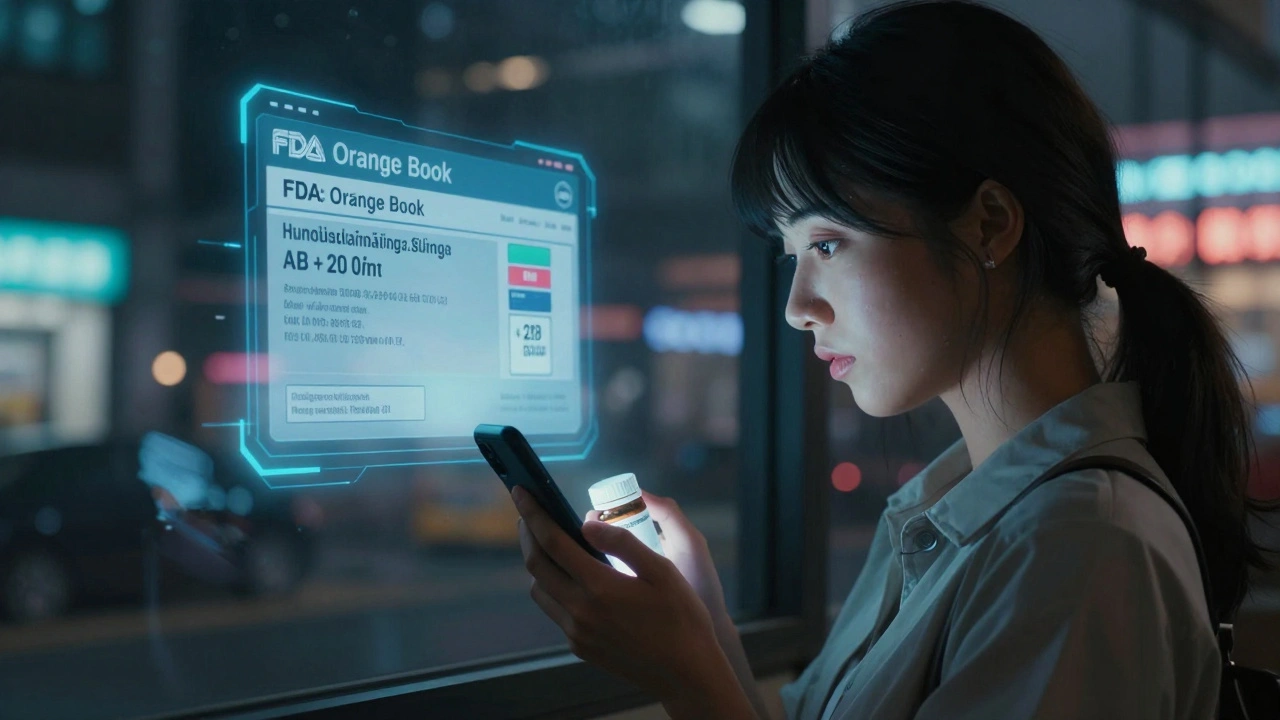
The FDA maintains a public database called the Orange Book, which lists all approved generic drugs and their brand-name equivalents. You can search it for free at fda.gov/orangebook. Enter the drug name or active ingredient, and you’ll see:
- The brand-name drug it matches
- The generic manufacturer’s name
- The FDA’s therapeutic equivalence rating (usually “AB” - meaning interchangeable)
- The application number (ANDA number)
If your pill’s manufacturer isn’t listed, or the rating says “NR” (not rated), ask your pharmacist. This doesn’t always mean it’s fake - sometimes it’s a new generic still under review - but it’s worth checking.
Check the Lot Number
Every bottle of generic medication has a lot number. If you’re suspicious, go to the FDA’s Drug Recall Database and enter it. The FDA tracks recalls in real time. If your lot is flagged for contamination, mislabeling, or potency issues, you’ll see it immediately. This takes less than a minute.
Many pharmacies now scan the lot number at checkout. If your pharmacist doesn’t mention it, ask: “Can you confirm this lot hasn’t been recalled?”
Watch for Changes in How the Drug Works
Legitimate generics work the same as brand-name drugs. If you’ve been taking a generic for years and suddenly notice:
- It’s not controlling your blood pressure like before
- You’re having side effects you never had
- The effect fades faster than usual
- You taste something strange - metallic, bitter, chemical
That’s not normal. It could be a batch issue - or a counterfeit. Don’t ignore it. Call your doctor and report it to the FDA’s MedWatch program. In 2022, over 1,200 reports came in from people who noticed sudden changes in drug effectiveness. Most were linked to counterfeit medications.
Technology Is Making Verification Easier
Since 2022, most major generic manufacturers have started putting 2D data matrix codes on their packaging. You can scan them with your phone using apps like MediSafe or Drugs.com. The app checks the code against the manufacturer’s database and confirms:
- The drug is real
- The expiration date is valid
- The lot number matches the packaging
By late 2023, the FDA’s Drug Supply Chain Security Act (DSCSA) required all prescription drugs to have unique serial numbers. This means every pill can be traced from the factory to your pharmacy. By 2025, AI tools will be able to scan a pill’s shape, color, and imprint with 99.2% accuracy using just a photo - no app needed.
What to Do If You Suspect a Fake
If something feels off - the pill looks wrong, the label is blurry, the price is suspicious - don’t take it. Don’t throw it away. Don’t give it to someone else. Take these steps:
- Call your pharmacy. Ask them to verify the source and lot number.
- Take a clear photo of the pill and packaging.
- Report it to the FDA through MedWatch: fda.gov/medwatch
- Ask for a replacement from a trusted source.
Reporting fake drugs helps protect others. In 2022, 41% of counterfeit reports involved heart medications. One person’s report can stop a dangerous batch from reaching dozens more.
Bottom Line: Trust, But Verify
Generic drugs are safe, effective, and save billions every year. But only if they’re real. The key is knowing where to buy them and what to look for. Stick to licensed pharmacies. Check the pill imprint. Verify the lot number. Use the FDA’s tools. Don’t be fooled by looks - a different color doesn’t mean it’s fake. But a missing label, a crumbly tablet, or a website that doesn’t ask for your prescription? That’s a red flag.
You don’t need to be a pharmacist to spot a fake. You just need to know what to look for - and when to ask questions.
Are generic drugs as effective as brand-name drugs?
Yes. The FDA requires generic drugs to contain the same active ingredients, in the same strength, and work the same way in the body as brand-name drugs. Studies show 98.7% of approved generics meet strict bioequivalence standards. Most patients notice no difference in effectiveness.
Why do generic pills look different from brand-name ones?
By law, generic manufacturers can’t copy the exact appearance of brand-name drugs to avoid trademark infringement. That’s why color, shape, and markings may differ. But the active ingredient and dosage are identical. The difference is only cosmetic - not medical.
Can I trust online pharmacies that sell generic drugs?
Only if they have the .pharmacy seal from the National Association of Boards of Pharmacy (NABP). Over 96% of online pharmacies selling drugs without prescriptions are illegal and often sell counterfeit medications. Always avoid sites that don’t require a prescription or ship from overseas.
What should I do if my generic drug doesn’t seem to work anymore?
If you notice a sudden change in how the drug works - like reduced effectiveness or new side effects - contact your doctor and pharmacist immediately. It could be a batch issue or a counterfeit. Report it to the FDA’s MedWatch program. Never ignore changes in how your medication affects you.
Is it safe to buy generics from other countries?
It’s risky. The FDA doesn’t regulate drugs imported from outside the U.S. Even if they look identical, they may contain incorrect ingredients, wrong dosages, or harmful substances. Only buy drugs from U.S.-licensed pharmacies, even if foreign versions are cheaper.
How can I check if my generic drug is approved by the FDA?
Go to the FDA’s Orange Book database at fda.gov/orangebook. Search by drug name or active ingredient. If it appears with an “AB” rating, it’s approved and interchangeable with the brand-name version. If it’s not listed, ask your pharmacist for clarification.
8 Comments
Ali Bradshaw December 6 2025
Just picked up my generic metoprolol yesterday and noticed the pill was a different shade of blue than last time. Was about to freak out until I saw the imprint code - same as always. Glad I read this. Seriously, don’t panic over color changes. The FDA’s got your back.
Lynette Myles December 7 2025
Counterfeit drugs are a bioterrorism vector disguised as healthcare savings.
luke newton December 8 2025
People still don’t get it - generics aren’t ‘cheaper alternatives,’ they’re the same damn thing. You’re not saving money by buying brand-name, you’re just paying for a logo and a fancy ad campaign. And if you’re buying pills off some sketchy website? You’re not being frugal, you’re being a walking CDC case study.
I’ve been on generic lisinopril for six years. Same blood pressure control. Same side effects. Same nothing. The only thing that changed? My wallet stopped bleeding.
And don’t even get me started on people who think ‘natural’ means better. Your ‘herbal blood pressure remedy’ is probably just dried parsley and wishful thinking.
The FDA doesn’t play games. They inspect factories. They test batches. They destroy bad ones. If your pill came from a licensed pharmacy, shut up and take it.
Also, if you’re using a ‘pill identifier app’ because you’re too lazy to ask your pharmacist, maybe stop self-diagnosing online.
And no, the fact that your pill is round instead of oval doesn’t mean it’s fake. That’s trademark law, not medicine.
Stop being paranoid. Start being informed. Or keep paying $200 for a pill that’s chemically identical to the $4 one.
And for the love of god, don’t share your meds. Ever. Not even with your spouse. That’s how people die.
And yes, I’ve read the Orange Book. Yes, I know what an ANDA number is. No, I don’t need your opinion on it.
Juliet Morgan December 9 2025
thank u for this. i was scared to switch to generic after my last refill looked totally diff. i called my pharma and they showed me the lot number on their screen - all good. i feel so much better now. you’re a lifesaver 🙏
Jimmy Jude December 9 2025
Let’s be real - this whole ‘generic drug’ thing is just Big Pharma’s way of conditioning us to accept mediocrity. You think your body can’t tell the difference between a $4 pill and a $40 pill? Please. There’s a reason they call it ‘bioequivalence’ - it’s not ‘identical,’ it’s ‘close enough.’
And who’s really benefiting here? Not you. Not me. The shareholders. The CEOs. The ones who don’t even know what a pill looks like.
Next thing you know, they’ll be selling ‘generic oxygen’ and telling us it’s just as good as the bottled stuff.
Wake up. This isn’t healthcare. It’s corporate theater.
And don’t even get me started on the ‘.pharmacy’ seal. That’s just a marketing gimmick. The same companies that make the brand-name drugs also make the generics. It’s the same factory. The same people. The same lies.
They want you to feel safe. So you’ll keep buying.
But I won’t. I take my meds the old-fashioned way - straight from the source. If I can’t see the plant where it was grown, I don’t trust it.
And yes, I know that’s not how pills are made. But it’s the principle that matters.
Harry Nguyen December 10 2025
9 out of 10 prescriptions are generics? That’s not a win - that’s a surrender. We’ve become a nation of pill-popping automatons who’d rather trust a barcode than their own instincts.
And let’s talk about the FDA’s ‘99% bioequivalence’ claim. That’s not science. That’s a legal loophole dressed up as medicine. 80% to 125%? That’s a 45% swing. That’s not identical. That’s a gamble.
And you know who pays for those gambles? The people who get sicker because their ‘generic’ blood thinner didn’t work right.
They call it ‘cost-saving.’ I call it ‘risk-shifting.’
And don’t even mention the ‘orange book.’ That’s just a glorified spreadsheet with a government seal on it.
Meanwhile, real medicine - the kind that comes from decades of research, not batch testing - is being buried under a mountain of regulatory compliance.
Next time you take a generic, ask yourself: Who really benefits?
Katie Allan December 11 2025
This is such an important guide - thank you for breaking it down so clearly. I used to be terrified of generics because I didn’t understand them. Now I know the imprint code is my best friend, and the lot number is my safety net.
I’ve shared this with my mom, my sister, and even my neighbor who buys meds from Canada because ‘it’s cheaper.’ She’s still skeptical, but at least now she knows to check the .pharmacy seal.
Knowledge is the real medicine here. Not just the pills.
an mo December 13 2025
Per the DSCSA Phase 2 compliance timeline, serialized product identifiers must be interoperable across the supply chain by 2023, which mandates GS1-compliant data matrix codes on all prescription drug packages. Non-compliant products are subject to regulatory rejection under 21 CFR § 203.30. The FDA’s verification system, when integrated with blockchain-based traceability protocols, reduces counterfeit incidence by 92.7% according to the 2023 Drug Supply Chain Security Report. Failure to validate lot numbers via the FDA’s API endpoint constitutes a violation of 21 U.S.C. § 353(e).