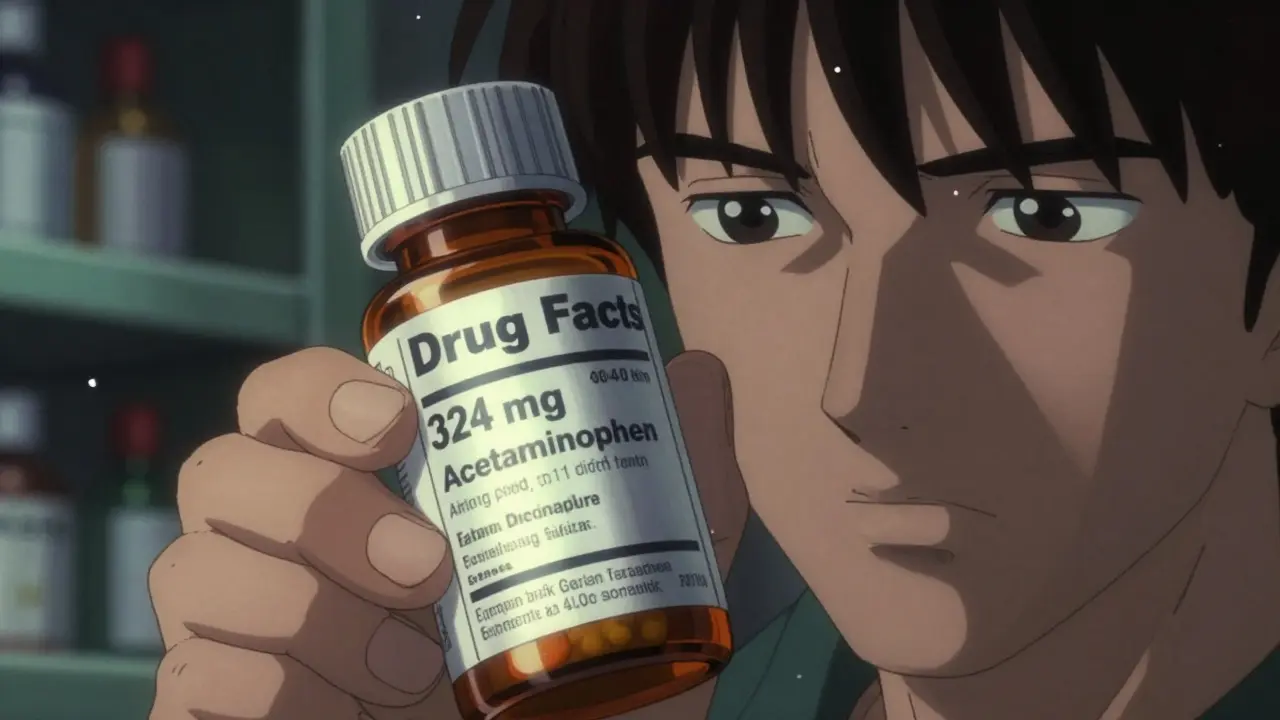
Every year, millions of people grab an OTC medicine off the shelf without reading the label. They see "Tylenol" or "Advil" and assume they know what’s inside. But here’s the truth: OTC drug facts labels are not marketing brochures. They’re life-saving instruction manuals. And if you don’t read them right, you could be putting your health at risk - even when you think you’re doing the right thing.
Why the OTC Drug Facts Label Exists
The U.S. Food and Drug Administration (FDA) didn’t create the Drug Facts Label to make packaging look neat. It was built to fix a dangerous problem. Before 2017, OTC medicine labels looked completely different from brand to brand. Some used tiny fonts. Others hid warnings in fine print. Some didn’t even list the active ingredient clearly. The result? Over 6,800 emergency room visits each year from people accidentally taking too much acetaminophen, mixing ibuprofen with aspirin, or using cold medicine while on blood thinners. The FDA stepped in with a simple rule: every OTC medicine sold in the U.S. must use the same layout. No exceptions. This isn’t optional. It’s the law. And since then, pediatric acetaminophen overdoses have dropped by 43%. That’s not luck. That’s because people finally started reading the label the right way.The 6 Sections You Must Know
The Drug Facts Label has six mandatory sections. They always appear in this exact order. If you’re looking at a label and one of these is missing, the product isn’t legal. Here’s what each one means - and why you need to check every single one.1. Active Ingredients
This is the most important section. It tells you exactly what medicine is in the pill or liquid. Not the brand name. Not the product name. The actual chemical. For example:- Acetaminophen 325 mg (pain reliever/fever reducer)
- Dextromethorphan HBr 10 mg (cough suppressant)
- Phenylephrine HCl 5 mg (nasal decongestant)
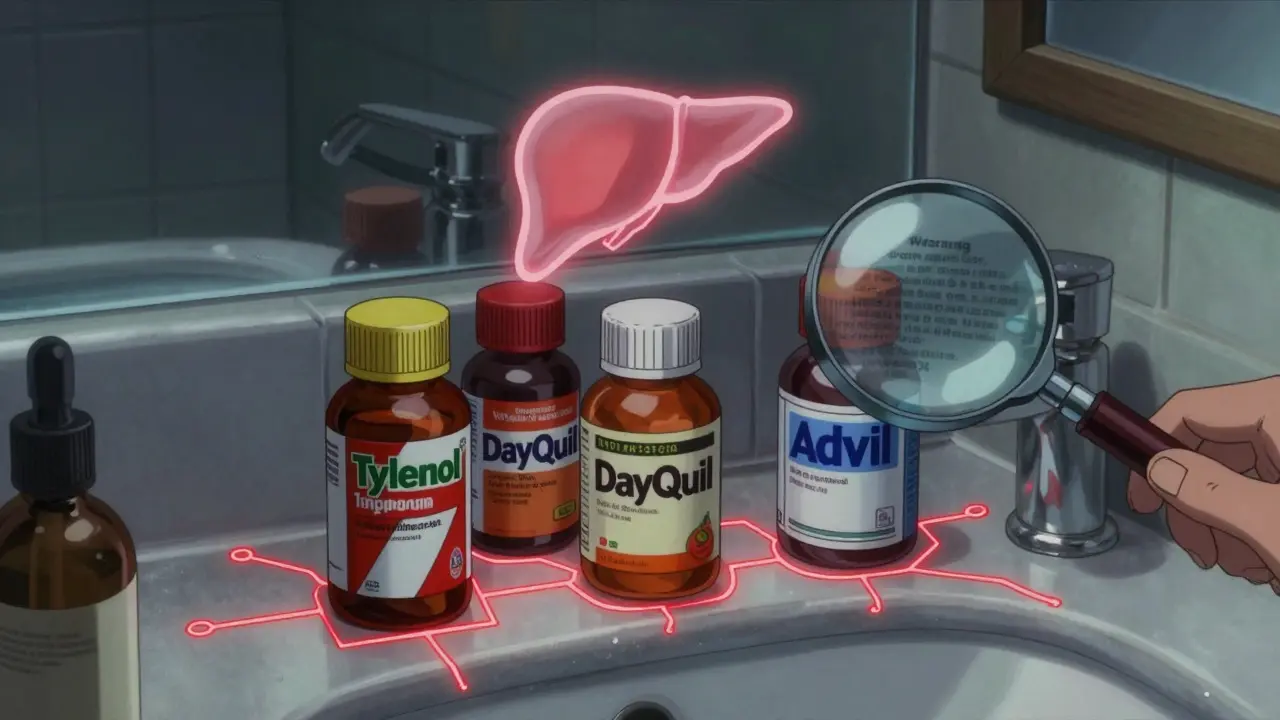
You need to know this because many products contain the same ingredient. If you take Tylenol for a headache and then take DayQuil for your cold, you’re doubling up on acetaminophen. And that’s dangerous. Too much acetaminophen can cause liver failure. The FDA says over 50 million Americans have liver conditions that make them more at risk. But if you check the active ingredient first, you avoid this mistake.
2. Purpose
This tells you what the active ingredient does. It’s not just a repeat of the name. It explains the function:- Pain reliever
- Fever reducer
- Cough suppressant
- Nasal decongestant
- Antihistamine
Why does this matter? Because some products combine multiple purposes. A "multi-symptom" cold medicine might have four active ingredients. If you only have a sore throat, you don’t need all four. You’re exposing yourself to unnecessary chemicals. Always ask: "Do I actually need this?"
3. Uses
This section lists the exact symptoms the product is approved to treat. The FDA doesn’t allow vague claims like "boosts immunity" or "supports wellness." It must say something like:"Temporarily relieves these common cold/flu symptoms: sore throat, headache, body aches, fever, runny nose, sneezing, itching of the nose or throat."
If your symptom isn’t listed, the medicine won’t help - and might even make things worse. For example, if you have a cough from asthma, an OTC cough suppressant might not be safe. Always match the label to your actual symptoms.
4. Warnings
This is where people skip. And that’s the biggest mistake.The Warnings section has three types of critical info:
- Do not use - If you have certain conditions (e.g., liver disease, high blood pressure, pregnancy).
- Ask a doctor - If you’re taking other medications (e.g., blood thinners, antidepressants, diabetes drugs).
- Liver warning - For acetaminophen: "Severe liver damage may occur if you take more than 4,000 mg in 24 hours."
According to the American Pharmacists Association, 89% of pharmacists say this section prevents the most serious errors. One study found that people who read the liver warning were 72% less likely to overdose on acetaminophen. Don’t skip this. Read it twice.
5. Directions
This tells you exactly how much to take, how often, and for how long.It’s not "take one pill." It’s:
- "Adults and children 12 years and older: 2 caplets every 4 to 6 hours while symptoms last."
- "Do not take more than 12 caplets in 24 hours."
- "Do not take for more than 10 days unless directed by a doctor."
Many people think "extra strength" means "take more." It doesn’t. It means the dose is higher. One extra-strength Tylenol tablet has 500 mg of acetaminophen. Regular has 325 mg. Taking two regular ones is the same as one extra-strength. But taking two extra-strength? That’s 1,000 mg - and if you already took something else with acetaminophen, you’re over the limit.
Also watch for "per 5 mL" on liquids. A 4-ounce bottle has 118 mL. That’s nearly 24 doses. Don’t guess. Use the measuring cup that came with it. A kitchen teaspoon is not accurate - it can be 4 mL or 7 mL. Always use the tool provided.
6. Inactive Ingredients
These are the fillers, dyes, and preservatives. They don’t treat your symptom. But they can cause reactions.For example:
- Croscarmellose sodium
- Povidone
- Pregelatinized starch
- Sodium
If you have allergies - especially to dyes, gluten, or lactose - this section matters. Some people think "sugar-free" means no carbs. But "inactive ingredients" can still contain starches or sugars. If you’re diabetic or have celiac disease, this section is non-negotiable.
What Most People Get Wrong
The FDA’s own research shows 41% of consumers can’t correctly identify the maximum daily dose. Here are the top three mistakes:- Confusing brand names with active ingredients - Tylenol = acetaminophen. Advil = ibuprofen. Excedrin = acetaminophen + aspirin + caffeine. If you take two different brands, you might be doubling up.
- Assuming "PM" means "stronger" - "PM" products almost always contain diphenhydramine (38 mg per dose), an antihistamine that causes drowsiness. It’s not a stronger painkiller. It’s a sleep aid. Taking it during the day? You’ll feel foggy. Taking it with other sedatives? Risk of overdose.
- Misreading "per dose" vs. "per container" - A bottle says "5 mL per dose." But the bottle is 120 mL. That doesn’t mean you can take 24 doses. It means each time you take it, you measure 5 mL. Don’t pour the whole thing.
The 5-Point Check Method
Pharmacists at CVS Health created a simple five-step method that cuts medication errors by 68%. It takes less than a minute. Use it every time:- Identify active ingredients - Look at the first line. Write it down if you need to.
- Verify uses match your symptoms - Does this medicine actually treat what you have?
- Read all warnings - Especially "do not use" and "liver warning."
- Check directions for age and weight - Kids, seniors, and people with liver or kidney issues need different doses.
- Review inactive ingredients - If you’re allergic to anything, scan this list.
Do this before you even leave the store. If you’re unsure, ask a pharmacist. Walgreens reported a 40% increase in OTC consultations after launching their "Label Literacy" campaign. That’s because people realized: you don’t have to guess.
What’s Coming Next
The FDA isn’t done. Starting in 2025, new labels will have:- 20% larger font for active ingredient concentrations
- Color-coded sections (red for warnings, blue for directions)
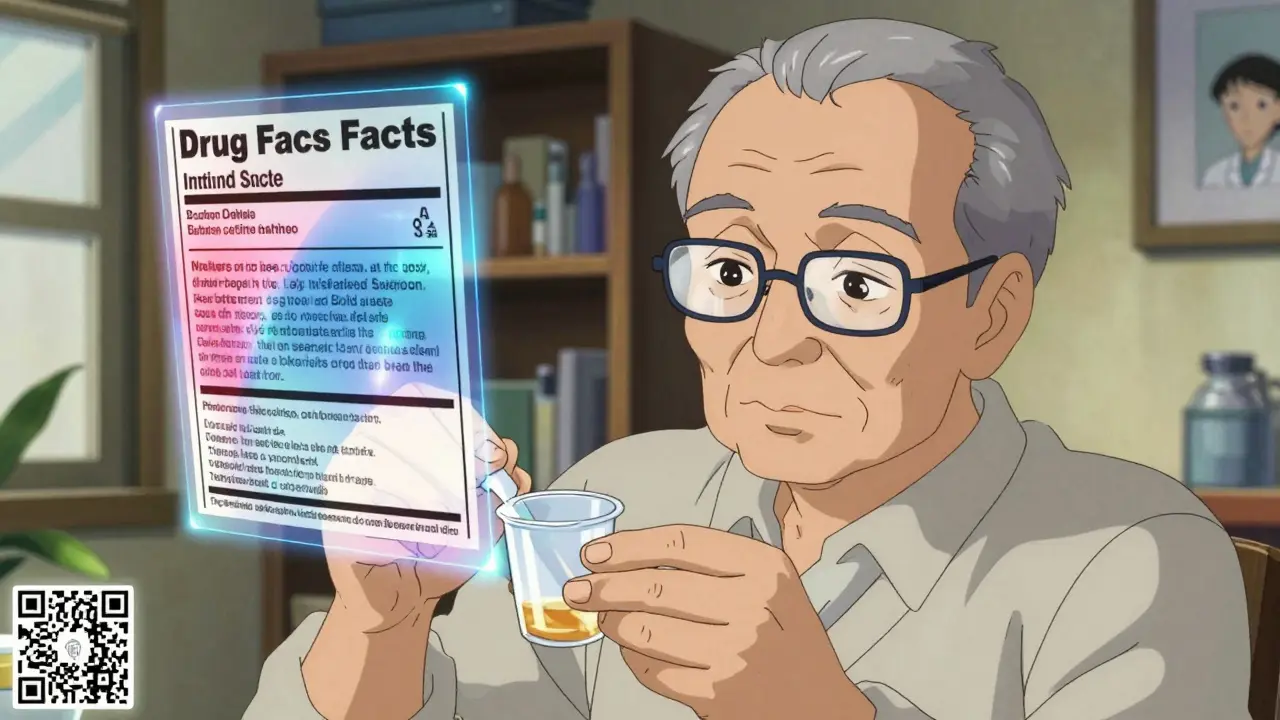
- Simple icons - like a liver symbol for acetaminophen risk
Some brands are already adding QR codes. Scan it, and you’ll get a 60-second video explaining the label. That’s a game-changer for older adults or people with vision problems.
Final Rule: Never Guess
OTC medicines are safe - when used correctly. But they’re not harmless. They’re powerful chemicals. And you’re not supposed to be a detective to figure out what’s in them. The label is there to do the work for you.Next time you reach for an OTC medicine, pause. Look at the label. Read the active ingredient. Check the warnings. Measure the dose. You don’t need to be a pharmacist. You just need to be careful.
One label. One minute. One life saved.
Can I take two different OTC medicines at the same time?
Only if you’ve checked the active ingredients in both. Many cold, flu, and pain medicines contain the same ingredient - like acetaminophen or ibuprofen. Taking two products with the same active ingredient can lead to overdose. For example, if you take Tylenol and then take a cold medicine that also has acetaminophen, you could easily exceed the 4,000 mg daily limit. Always compare the active ingredients first.
Why does the label say "Do not use" for some conditions?
The FDA requires manufacturers to list conditions where the medicine could cause harm. For example, decongestants like phenylephrine can raise blood pressure. If you have high blood pressure, taking it could trigger a heart attack or stroke. Liver warnings exist because acetaminophen is processed by the liver. If your liver is already damaged from alcohol, hepatitis, or fatty liver disease, even a normal dose can be dangerous. These aren’t random rules. They’re based on real cases of injury and death.
Is "extra strength" stronger than regular?
Yes - but not in the way most people think. "Extra strength" means the amount of active ingredient per dose is higher. For example, regular Tylenol has 325 mg of acetaminophen. Extra strength has 500 mg. That’s not twice as strong - it’s about 50% stronger per pill. But if you take two regular pills, you get the same dose as one extra-strength. The danger is taking both types thinking you’re getting "more relief." You’re just increasing your overdose risk.
Do I need to read the label every time I buy the same medicine?
Yes. Manufacturers change formulas. A product that had 325 mg of acetaminophen last year might now have 500 mg. Or the warning might have been updated. The FDA requires labels to be updated when new safety data comes out. If you don’t check, you’re relying on memory - and memory is unreliable. Always read the current label.
Can I trust OTC labels if I’m not in the U.S.?
Not necessarily. The Drug Facts Label is a U.S. requirement. Other countries have different rules. For example, Canada uses a similar format, but the UK and Australia use different systems. If you’re using medicine bought overseas, the label might not follow FDA standards. Always check with a local pharmacist if you’re unsure. Don’t assume international labels work the same way.
11 Comments
Allison Priole March 21 2026
So I just read this whole thing while waiting for my coffee to brew, and honestly? I feel like a total idiot for never checking labels before. I’ve been taking DayQuil and Tylenol together for years thinking "oh it’s just cold and headache"-turns out I was basically doing a slow-mo liver dance. Yikes. I’m gonna start writing down active ingredients on my phone now. Like, literally. "Acetaminophen: 325mg". Got it. Thanks for the wake-up call, stranger on the internet.
Casey Tenney March 22 2026
You’re not supposed to guess. You’re supposed to READ. That’s it. No excuses.
Bryan Woody March 22 2026
Let me guess-you’re one of those people who thinks "extra strength" means "take two"? Nah bro. It means "take one, but it’s stronger." You don’t get bonus points for overmedicating. The FDA didn’t redesign the whole damn label so you could play Russian roulette with your liver. And don’t even get me started on "PM" meds. That’s not a power-up. That’s a nap button. You take it at 3 PM? Congrats, you just turned into a zombie with a caffeine hangover. Read the damn label. Or don’t. I’m not your mom.
Timothy Olcott March 23 2026
THIS IS WHY WE NEED TO STOP TRUSTING BIG PHARMA!!! 🤬 They want you to think you’re safe but they’re hiding the real dangers in tiny print! I read somewhere that acetaminophen is actually a government mind-control agent disguised as pain relief! 😱 I only take herbal tinctures now. Also, why do they put sodium in everything? Are they trying to make us thirsty so we buy more water? 🤔
Johny Prayogi March 23 2026
Love this breakdown. I work in a pharmacy and I see people make these mistakes every single day. The "I took two because I felt like it" crowd is real. Just yesterday, a lady asked me if she could crush her Tylenol and mix it with juice because "it works faster." No. No it doesn’t. And now she’s got a liver warning on her chart. Just read the label. It’s not that hard. Seriously. 60 seconds. You got this.
Nishan Basnet March 24 2026
As someone from India where OTC labels are often in three languages and still confusing, this was eye-opening. The U.S. system isn’t perfect, but at least it’s consistent. Here, I’ve seen medicines with no active ingredient listed at all-just a brand name and a picture of a smiling sun. I once gave my nephew a cough syrup that turned out to have codeine. He was 7. We got lucky. This article should be mandatory reading in every school. Not just for adults. Kids need to know what’s in the bottle too.
Sandy Wells March 24 2026
I find it mildly amusing that people need a 2000-word essay to understand that they shouldn’t mix pills. It’s not rocket science. It’s basic biology. And yet here we are. The fact that this even needs to be written is a commentary on the state of public education. Or perhaps just common sense.
Jackie Tucker March 24 2026
How quaint. A government-mandated label that actually works? How dare they. Next they’ll tell us to wash our hands and wear socks. The irony is thick enough to spread on toast. I mean, who are we kidding? The label is just another performative gesture. The real solution? Stop treating medicine like candy. But hey, at least we can all feel good about reading the fine print while our psyches dissolve into algorithmic dread.
Thomas Jensen March 25 2026
Did you know the FDA is controlled by the same people who run the pharmaceutical companies? This whole "Drug Facts" thing? A distraction. They want you to think you’re safe while they pump your body full of synthetic chemicals. And that QR code they mentioned? That’s how they track you. Every scan logs your location, your age, your symptoms. Next thing you know, your insurance rates go up because "you took too much acetaminophen." They’re not helping you. They’re profiling you. Stay vigilant. Trust nothing.
matthew runcie March 26 2026
Good read. I’ve started doing the 5-point check every time. Even if it’s the same brand. I keep a little notepad in my medicine cabinet now. Just the active ingredients. Simple. Works. No drama.
shannon kozee March 28 2026
My grandma used to say "if it’s in a bottle, read the label." She didn’t know about FDA rules, but she knew the difference between "helps" and "hurts." We should all be that wise. Simple. Clear. No fluff.