
You take a pill. It’s the same active ingredient as the brand-name drug you used to take. Same dose. Same manufacturer, maybe even the same factory. But something feels off. Your headache doesn’t fade as fast. Your anxiety creeps back. You swear the generic version isn’t working like it should.
Here’s the twist: it’s not the pill. It’s your brain.
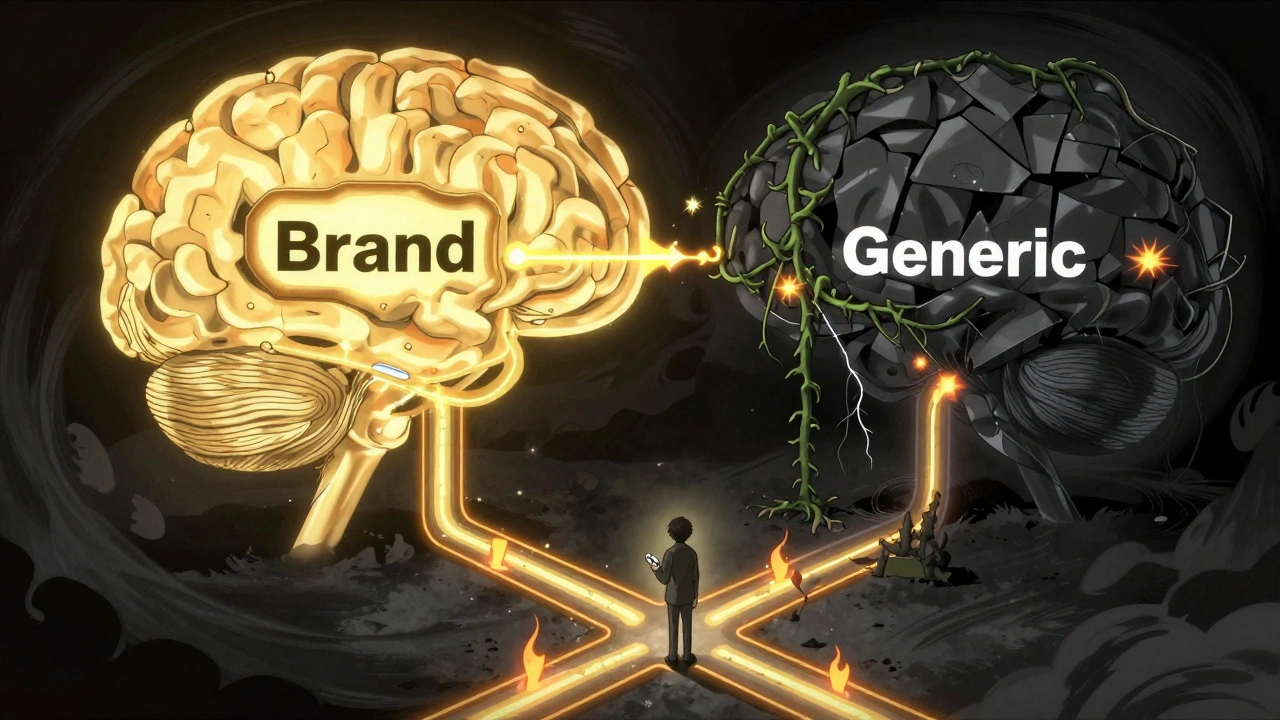
Studies show that people often feel worse on generic medications-not because they’re weaker, but because they believe they are. This isn’t superstition. It’s a well-documented psychological phenomenon called the placebo effect, flipped on its head. When you expect less, your body delivers less. That’s the nocebo effect: negative expectations making real, measurable changes in how you feel.
Same Drug, Different Mindset
In 2014, researchers at the University of Auckland ran a simple but powerful experiment. They gave 87 students with frequent headaches three types of pills: real ibuprofen, a placebo labeled as a brand-name painkiller, and an identical placebo labeled as a generic. The results? The brand-labeled placebo reduced pain almost as much as the real drug. The generic-labeled placebo? Almost half as effective.
And here’s the kicker: the pills were all identical in chemical makeup. No difference in absorption. No difference in strength. Just the label.
This isn’t an isolated case. In a 2014 study from the University of Cincinnati, Parkinson’s patients given a fake injection labeled as a $1,500 treatment showed significantly better movement than those given the same injection labeled as a $100 one. Brain scans showed more dopamine was released in the higher-priced group-even though nothing was actually entering their system.
Price isn’t the only trigger. Packaging matters. Color matters. Even the shape of the pill matters. People associate certain looks with quality. A white, oval pill with a logo? That’s a brand. A small, unmarked tablet? That’s a generic. And your brain reads that difference like a signal: cheap = weak.
When Your Body Believes the Lie
The placebo effect isn’t just about feeling better. It’s about real, biological changes. When you expect relief, your brain releases natural painkillers-endorphins, dopamine, even serotonin. These chemicals actually reduce inflammation, lower stress hormones, and calm nerve signals.
With generics, the opposite happens. You expect side effects. You expect failure. And your brain delivers. A 2014 meta-analysis in JAMA Internal Medicine found that patients told they were taking a generic statin reported more muscle pain than those told they were taking the brand version-even though both were identical placebos. The only difference? The label.
This isn’t just about pain or statins. It shows up in antidepressants, epilepsy meds, and blood pressure drugs. A 2013 review in The Lancet Psychiatry found that depression trials using generic-labeled placebos had 11% lower response rates than brand-labeled ones. That’s not a fluke. That’s your brain working exactly as it’s been conditioned to.
Why Do We Trust Brands More?
Brands aren’t just logos. They’re stories. They’re ads on TV. They’re doctors saying, “This one’s proven.” They’re years of marketing telling you, “This is the one that works.”
Generics? They’re silent. No commercials. No fancy packaging. No celebrity endorsements. Just a plain bottle and a price tag that’s 80% lower. That’s not a feature-it’s a psychological disadvantage.
Even when people know generics are the same, their gut still says otherwise. A 2020 Kaiser Family Foundation poll found 41% of Americans feel like they’re getting “inferior medicine” with generics. That’s not ignorance. That’s conditioning. We’ve been trained to equate cost with value. And in medicine, that belief has real consequences.
The Real Cost of the Nocebo Effect
It’s not just about feeling worse. It’s about what happens next.
When patients think generics don’t work, they stop taking them. Or they switch back to brand-name drugs-even if it costs them $1,200 a year extra. A 2017 study in JAMA Internal Medicine found that people on generic cardiovascular drugs had 12-15% higher hospitalization rates than those on brand-name versions. Not because the drugs failed. Because patients stopped taking them.
And it’s expensive. The U.S. healthcare system loses an estimated $1.2 billion a year because people pay for brand-name drugs they don’t need. Add in missed work, ER visits, and complications from non-adherence, and the total cost of nocebo-driven non-compliance hits $318 billion annually.
It’s not just money. It’s health. People with epilepsy who switch to generics report more seizures-not because the drug is less effective, but because their anxiety spikes. EEGs show no increase in seizure activity, yet patients swear it’s happening. Their minds are rewriting their reality.
How Doctors Can Fix This
This isn’t a problem patients should solve alone. It’s a communication gap.
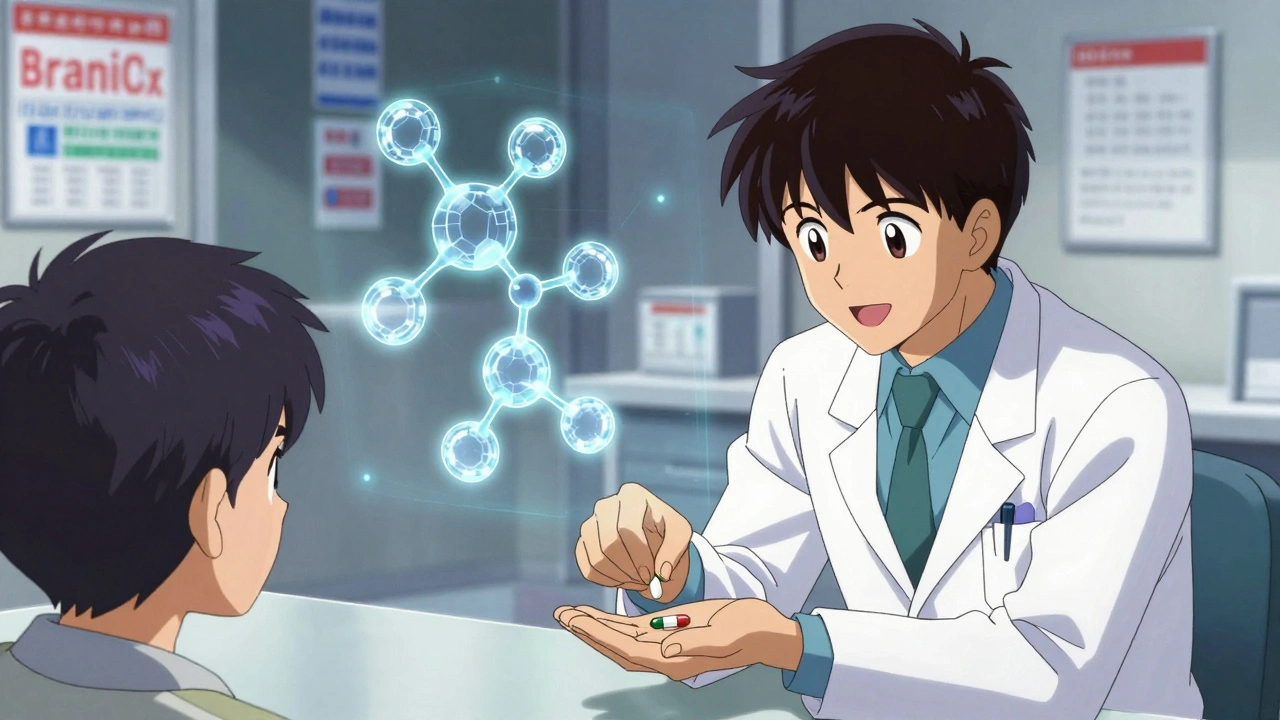
One 2018 study from the University of Chicago found that a simple 7-minute conversation explaining bioequivalence-how generics are required to be within 80-125% of the brand’s absorption rate-increased patient acceptance from 58% to 89%. Six months later, those patients were still taking their meds. The control group? Less than half stuck with it.
What works? Specific language:
- “This generic has the exact same active ingredient. The FDA requires it to work the same way.”
- “The only difference is the price. The pill inside is identical.”
- “Many people feel worse at first-not because it’s weaker, but because they expect it. That feeling fades.”
Training doctors to say these things matters. A 2020 trial showed that physicians trained in “positive generic messaging” saw 85% adherence rates. Those using standard explanations? Only 63%.
It’s not about persuasion. It’s about correction. You’re not arguing with patients. You’re helping them unlearn a myth.
What You Can Do
If you’ve switched to a generic and feel like it’s not working, ask yourself: Is it the pill-or the story I’m telling myself?
Try this:
- Check the label. Does it say the same active ingredient as your brand? If yes, it’s the same drug.
- Look up the manufacturer. Many brand-name companies make their own generics. You’re not getting a cheaper version-you’re getting the same product in a different bottle.
- Give it time. If you’re switching from a brand you’ve used for years, your brain needs to recalibrate. It can take weeks.
- Ask your doctor to explain how generics are tested. Understanding the science helps silence the fear.
- Don’t assume side effects are from the drug. They might be from your expectations.
Some people do have real reactions to inactive ingredients-fillers, dyes, coatings. But those cases are rare. A 2015 study found that only a small fraction of people who blame generics for side effects actually react differently when switched between generic brands. Most of the time, it’s the label.
The Future Is Changing
Companies are starting to notice. In 2023, researchers at the University of Wisconsin tested generic packaging that looked more like brand-name products-cleaner design, better colors, familiar shapes. Result? Nocebo complaints dropped by 37%.
And the FDA is backing digital tools. A new app called “Generic Confidence” uses augmented reality to show you how the generic matches the brand molecule-by-molecule. Early users reported 29% higher adherence.
Long-term, researchers are testing blockchain verification-letting patients scan a code to see exactly where their pill was made, what quality checks it passed. The goal? Replace fear with transparency.
But the biggest change won’t come from packaging or apps. It’ll come from conversations. From doctors who take the time to explain. From patients who question their assumptions. From a system that stops treating psychology as a sideshow and starts seeing it as central to treatment.
Generics aren’t second-rate. They’re the same drug, cheaper. And your brain? It’s capable of healing itself-if you let it believe in the pill.”
Do generic drugs really work the same as brand-name drugs?
Yes. By law, generic drugs must contain the same active ingredient, strength, dosage form, and route of administration as the brand-name version. They must also meet the same strict standards for purity, stability, and absorption set by the FDA. The only differences are in inactive ingredients (like dyes or fillers) and packaging. Bioequivalence testing ensures that 98.5% of generics perform identically in the body. The perception that they’re weaker is psychological, not pharmacological.
Why do I feel worse on a generic medication?
You’re likely experiencing the nocebo effect-where negative expectations cause real physical symptoms. If you believe a generic is inferior, your brain may reduce natural painkillers, increase stress hormones, or amplify sensations like nausea or fatigue. Studies show identical placebos cause more side effects when labeled as generics. This isn’t in your head as a weakness-it’s a measurable biological response to belief.
Can the packaging of a generic drug affect how well it works?
Yes. A 2023 trial found that when generic medications were packaged to look more like brand-name products-cleaner design, familiar colors, consistent shapes-patients reported 37% fewer side effects and higher satisfaction. Your brain uses visual cues to judge quality. A plain white pill in a simple bottle triggers subconscious assumptions of lower value. Packaging doesn’t change the drug, but it changes how your body responds to it.
Are there real differences between generic brands of the same drug?
Sometimes, but rarely. While the active ingredient is identical, inactive ingredients (like binders or coatings) can vary between manufacturers. In rare cases, these differences can affect absorption or cause allergies. A 2015 study found that 42% of people who thought they were intolerant to a generic statin actually tolerated a different generic version. If you suspect a problem, ask your pharmacist to switch you to another generic brand-not back to the brand-name drug.
Should I avoid generics because of the placebo effect?
No. The placebo effect works both ways. If you believe in the generic, it will work. The cost savings are real-$312 per year on average-and the clinical outcomes are identical for most people. Avoiding generics because of fear means paying more and risking non-adherence. Talk to your doctor, learn the facts, and give it time. Most people find no difference after adjusting their mindset.
How can I help someone who doesn’t trust generics?
Start by validating their experience. Say, “It’s common to feel like it’s not working-many people do.” Then explain the science simply: “The FDA requires generics to be the same as the brand. The only difference is the price.” Share stories of others who switched and felt fine. If possible, show them the manufacturer’s name-many generics are made by the same companies that make brand-name drugs. Knowledge reduces fear.
Understanding the placebo effect with generics isn’t about dismissing patient concerns. It’s about recognizing that medicine doesn’t just act on the body-it acts on the mind. And when we fix the message, we fix the outcome.
20 Comments
Yasmine Hajar December 4 2025
I used to swear generics didn't work until I switched my blood pressure med and didn't notice a difference after 3 weeks. Turns out I was just anxious about the pill looking different. My doctor explained the FDA requirements and it clicked. My BP's been stable ever since.
val kendra December 4 2025
My mom switched to generic lisinopril and kept complaining it wasn't working. Turned out she was taking it at night instead of morning. Same pill. Different habit. Sometimes the problem isn't the drug, it's the routine.
Ben Choy December 5 2025
I work in pharmacy and see this daily. People freak out over the color change. One guy cried because his antidepressant went from blue to white. We had to show him the batch records. He was fine after that. The pill didn't change. His fear did.
Karl Barrett December 6 2025
The nocebo effect is a fascinating intersection of neurobiology and semiotics. The symbolic capital assigned to pharmaceutical branding creates a cognitive schema that modulates endogenous opioid release. When the visual and linguistic cues associated with efficacy are stripped away, the somatic response follows suit. This isn't irrational-it's a predictive coding failure where prior reinforcement overrides pharmacokinetic reality.
Jake Deeds December 6 2025
I can't believe people still fall for this. If you're too cheap to pay for the real thing, don't blame your brain when it doesn't magically fix your problems. Maybe if you didn't cut corners everywhere else in life, you wouldn't be so surprised your meds 'don't work'.
George Graham December 7 2025
I used to be skeptical too. Then I had a panic attack after switching to a generic Xanax. Turned out my doctor had switched me to a different manufacturer. Same active ingredient, different filler. I switched back to the original generic and it was fine. Not all generics are equal-sometimes it's the coating, not the mindset.
John Filby December 9 2025
I had the same thing with my cholesterol med. Thought the generic was useless. Then I read up on bioequivalence and realized I was just stressed about the change. Gave it 4 weeks, no more chest tightness. Now I save $200 a month and feel better than ever. Mindset really is everything.
Elizabeth Crutchfield December 11 2025
My aunt took generic metformin and said it gave her stomach cramps. Switched to another generic brand-same active ingredient-no issues. The problem wasn't the drug. It was the filler. Some people are sensitive to dyes or binders. Not always in your head. But 90% of the time it is.
Emmanuel Peter December 11 2025
This is why I don't trust the FDA. They let these cheap knockoffs fly under the radar. My cousin got seizures because of a generic epilepsy med. The manufacturer used a different binder. They didn't test it properly. This isn't psychology-it's corporate greed dressed up as science.
Ashley Elliott December 12 2025
I think this post is really important. So many people feel ashamed when they think they're 'just imagining' side effects. But it's real. Your brain is part of your body. Validating that experience is the first step to healing. Thanks for writing this.
Chad Handy December 14 2025
I've been on the same generic antidepressant for 7 years. Every time I refill, I stare at the pill for 5 minutes wondering if it's going to fail me again. I know it's the same drug. I know the science. But my body remembers the first time it didn't work. That fear never leaves. You can't just 'think positive' and fix that.
Augusta Barlow December 15 2025
This is all just Big Pharma brainwashing. The real reason generics are cheaper is because they're made in China with unregulated ingredients. The FDA doesn't inspect those factories. They're just trusting the paperwork. You think your brain is the problem? Try checking the pill's origin code. I bet you're swallowing toxins.
Joe Lam December 15 2025
If you're dumb enough to believe a generic works the same as a brand, you deserve the side effects. Real medicine costs money. If you can't afford it, don't take it. Stop pretending you're saving money when you're just gambling with your health.
Jenny Rogers December 17 2025
The notion that psychological factors can override pharmacological efficacy is both scientifically valid and morally concerning. One cannot reduce the complex biochemistry of neuroreceptor binding to mere suggestion. The erosion of trust in pharmaceutical regulation is a societal failure of epistemological rigor.
Rachel Bonaparte December 18 2025
I used to be a believer in generics until I got hospitalized after switching. The pharmacy gave me a different version. My heart started racing. I thought I was dying. Turned out the generic had a different dye. The doctor said it was 'just in my head'. I'm still not taking another one. I've seen what happens when you trust the system.
Scott van Haastrecht December 20 2025
This is the dumbest thing I've read all week. If your brain makes you feel worse, go see a shrink. Don't blame the pill. You're not special. Everyone gets the same drug. If you're weak enough to be affected by the label, maybe you shouldn't be taking meds at all.
Chase Brittingham December 20 2025
I had the same issue with my thyroid med. Switched to generic, felt sluggish. Thought it was the drug. Then I checked the bottle-different manufacturer. Switched to another generic, same active ingredient, felt fine. It wasn't the drug. It was the filler. My body reacted to the cornstarch. Weird, right?
Bill Wolfe December 20 2025
I'm a doctor. I've seen this for 20 years. The nocebo effect is real, but people like you use it as an excuse to ignore the truth. If you're still on brand-name drugs because you're scared of generics, you're not being smart-you're being exploited. You're paying $1,500 a year for the same chemical that costs $20. That's not belief. That's financial abuse.
Ollie Newland December 21 2025
I'm a GP in the UK. We use generics 98% of the time. Patients rarely complain. Why? Because we explain it. We say: 'This is the same drug. The only difference is you're saving £50 a month.' We show them the packaging side by side. We tell them the manufacturer. Knowledge kills fear. It's that simple.
Shofner Lehto December 22 2025
I used to be a skeptic too. Then I got my first generic statin. Felt weird for a week. Thought it wasn't working. Then I checked my cholesterol numbers. They were better than when I was on the brand. My brain was lying to me. The science doesn't care what you believe. It just works.