When you think of diabetes meds, you probably picture pills that lower blood sugar. But SGLT2 inhibitors are changing that. These drugs don’t just help control glucose - they protect your heart and kidneys in ways no other diabetes medication does. And that’s why doctors are now prescribing them before even reaching for metformin in certain patients.
How SGLT2 Inhibitors Actually Work
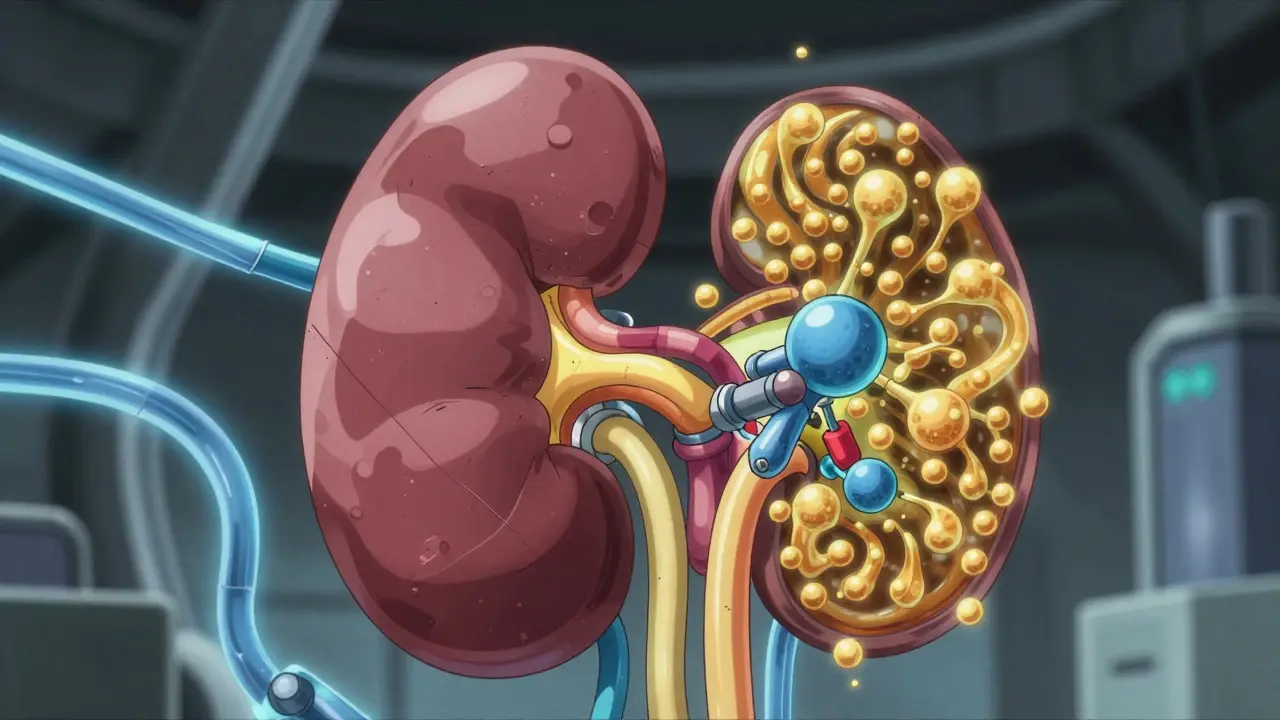
Unlike insulin or drugs that boost insulin release, SGLT2 inhibitors work in your kidneys. They block a protein called SGLT2 - the same one that normally reabsorbs sugar from your urine back into your blood. In someone with type 2 diabetes, this system gets overactive, pulling back too much glucose even when blood sugar is high. SGLT2 inhibitors stop that. The result? Extra sugar gets flushed out through urine. That’s why people on these drugs often see their A1c drop by 0.5% to 1.0% - even if they’re already on other meds.
But here’s the twist: this isn’t just about sugar. When you lose glucose in your urine, you also lose water and sodium. That’s why patients often lose 2 to 3 kg (4-7 lbs) and see their blood pressure drop by 3-5 mmHg. It’s not magic - it’s physics. And that’s just the start.
The Heart Protection You Didn’t Expect
In 2015, the EMPA-REG OUTCOME trial changed everything. Researchers gave empagliflozin (Jardiance) to over 7,000 people with type 2 diabetes and existing heart disease. After three years, those on the drug had a 38% lower risk of dying from heart problems. That’s not a small number - it’s one of the biggest benefits ever seen in a diabetes trial. The same group had a 32% lower risk of dying from any cause.
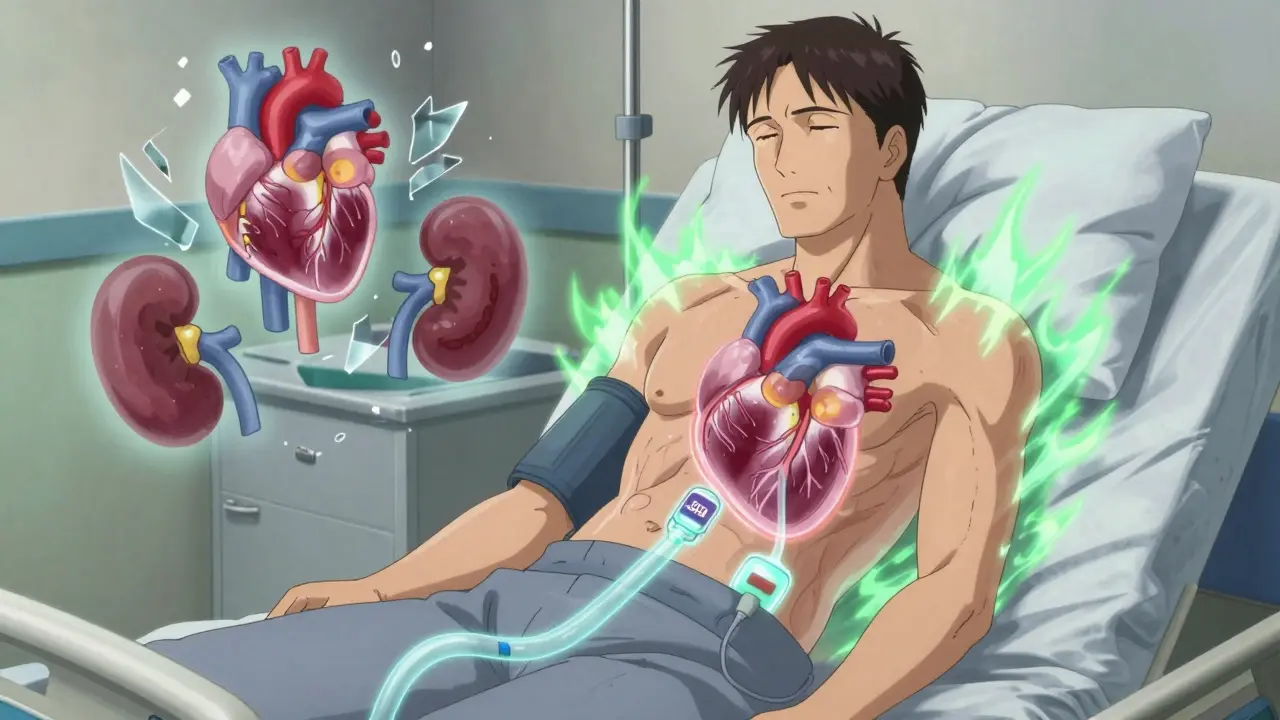
Why does this happen? It’s not because their blood sugar got lower. Other drugs lowered glucose just as much - but didn’t cut heart deaths. The real answer lies in how SGLT2 inhibitors change how the heart and blood vessels handle fluid. They reduce pressure in the heart’s chambers, improve how the heart muscle uses energy, and reduce inflammation. The DAPA-HF and EMPEROR-Reduced trials later proved this: even people without diabetes who had heart failure saw a 25-30% drop in hospitalizations and death when taking dapagliflozin (Farxiga) or empagliflozin.
Today, the European Society of Cardiology and the American Heart Association both say: if you have heart failure - whether you have diabetes or not - you should be on an SGLT2 inhibitor. That’s how strong the evidence is.
Kidney Protection That Outlasts Blood Sugar Control
Your kidneys filter about 180 liters of blood a day. In type 2 diabetes, high pressure and high sugar slowly damage the tiny filters. That’s how diabetic kidney disease starts. SGLT2 inhibitors don’t just lower sugar - they lower pressure inside the kidney’s filtering units (glomeruli). This isn’t just a side effect. It’s the core mechanism.
The CREDENCE trial in 2019 gave canagliflozin (Invokana) to over 4,400 people with diabetic kidney disease. After 2.6 years, those on the drug had a 30% lower risk of reaching kidney failure, needing dialysis, or dying from kidney disease. The EMPA-KIDNEY trial in 2023 showed similar results - even in people without diabetes. That’s huge. It means these drugs might protect kidneys regardless of whether you have type 2 diabetes.
Here’s something counterintuitive: when you start an SGLT2 inhibitor, your eGFR (a measure of kidney function) might dip slightly in the first few weeks. That’s normal. It’s not damage - it’s the kidney adjusting. After 2-3 months, it stabilizes. And long-term, the rate of decline slows down. This is why nephrologists now recommend starting these drugs even when kidney function is mildly reduced (eGFR >30 mL/min/1.73m²).
How They Compare to Other Diabetes Drugs
Metformin is still the first choice for most people with type 2 diabetes - cheap, safe, and effective. But it doesn’t protect your heart or kidneys. Sulfonylureas like glimepiride? They lower glucose but cause weight gain and low blood sugar. DPP-4 inhibitors like sitagliptin? They’re weight-neutral and safe, but show no clear benefit for heart or kidney outcomes.
Here’s a quick comparison:
| Medication | Cost (monthly) | HbA1c Reduction | Heart Protection | Kidney Protection | Weight Change |
|---|---|---|---|---|---|
| Metformin | $4-$10 | 0.5-1.0% | No | No | Neutral |
| Sulfonylureas | $10-$15 | 0.7-1.2% | No | No | +2-5 kg |
| DPP-4 Inhibitors | $350-$400 | 0.5-0.8% | Minimal | Minimal | Neutral |
| SGLT2 Inhibitors | $520-$600 | 0.5-1.0% | Yes | Yes | -2 to -3 kg |
The cost is higher, yes. But when you factor in fewer hospital visits for heart failure or dialysis, studies show SGLT2 inhibitors save money over time. The CLASSIC trial found each quality-adjusted life year gained cost just $38,400 - well under the $50,000 threshold used in U.S. healthcare.
What You Need to Watch Out For
These drugs are generally safe. But they’re not risk-free.
- Genital infections: About 4-5% of users get yeast infections or urinary tract infections. It’s because sugar in urine feeds bacteria and fungi. Easy to treat, but annoying.
- Volume depletion: If you’re older, on diuretics, or have low blood pressure, you might feel dizzy or faint. Start with a lower dose and drink enough water.
- Diabetic ketoacidosis (DKA): This is rare - about 0.1-0.3% of users. But it can happen even with normal or only slightly high blood sugar (euglycemic DKA). Watch for nausea, vomiting, stomach pain, or trouble breathing - especially if you’re sick or having surgery. Stop the drug and call your doctor.
- Lower-limb amputations: Canagliflozin showed a slightly higher risk (6.3 vs 3.4 per 1,000 patients per year). Not seen with other SGLT2 inhibitors. Avoid in people with foot ulcers or poor circulation.
They’re not for type 1 diabetes. And they’re not recommended if your eGFR drops below 30 mL/min/1.73m². But for most people with type 2 diabetes - especially those with heart disease, kidney disease, or obesity - the benefits far outweigh the risks.

Real Stories, Real Impact
One patient on Reddit said: "I lost 12 pounds in three months. I didn’t even try. I just took Jardiance." Another wrote on a diabetes forum: "My A1c went from 8.5% to 6.8%. But I had two yeast infections. Worth it? Yes."
A man with heart failure told his cardiologist his ejection fraction jumped from 25% to 35% after starting Farxiga. That’s not common - but it’s happening often enough that cardiologists now routinely add SGLT2 inhibitors to heart failure regimens.
On Drugs.com, 68% of users reported more energy. 72% lost weight. 65% saw lower blood pressure. The complaints? Genital itching (41%), peeing too much (38%), and cost (57%). Insurance coverage is still a hurdle - but many manufacturers offer patient assistance programs.
What’s Next?
The FDA already approved empagliflozin for heart failure in 2021 and dapagliflozin for chronic kidney disease in 2021. Now, data from EMPA-KIDNEY suggests approval for kidney protection even without diabetes is coming in 2024. The DELIVER trial showed dapagliflozin helps people with preserved ejection fraction - the most common form of heart failure.
Generic versions are expected to hit the U.S. market between 2025 and 2028. When they do, prices could drop 60-70%. That’ll make these life-saving drugs accessible to far more people.
The American Diabetes Association now recommends SGLT2 inhibitors as first-line therapy for patients with heart failure, kidney disease, or established cardiovascular disease - even before metformin. That’s how far we’ve come. These aren’t just diabetes pills anymore. They’re cardiorenal protectors. And for millions of people, they’re changing the trajectory of their disease.
Are SGLT2 inhibitors better than metformin for heart and kidney protection?
Yes - for patients with heart failure, chronic kidney disease, or cardiovascular disease. Metformin is still the best first choice for most people with type 2 diabetes because it’s cheap and safe. But it doesn’t reduce heart attacks, strokes, or kidney failure like SGLT2 inhibitors do. If you have those conditions, guidelines now recommend starting with an SGLT2 inhibitor, even before metformin.
Can I take an SGLT2 inhibitor if I don’t have diabetes?
Yes - and you might already be. The FDA approved dapagliflozin (Farxiga) in 2021 for chronic kidney disease regardless of diabetes status. Empagliflozin (Jardiance) is approved for heart failure with reduced ejection fraction in people with or without diabetes. Ongoing trials suggest these drugs will soon be approved for heart failure with preserved ejection fraction and even prediabetes. The benefits go far beyond glucose control.
Why do SGLT2 inhibitors cause yeast infections?
Because they make your urine sweeter. When glucose is excreted in the urine, it creates a sugary environment where yeast and bacteria thrive. This mostly affects the genital area. It’s more common in women but can happen in men too. Good hygiene, dry underwear, and antifungal treatments usually fix it. It’s rarely serious - but it’s the most common reason people stop taking these drugs.
Do SGLT2 inhibitors cause kidney damage?
No - quite the opposite. An early dip in eGFR (kidney filter rate) is normal and actually signals the drug is working. It reflects reduced pressure inside the kidney’s filtering units, which protects them long-term. Studies show these drugs slow the progression of kidney disease by 30% or more. The drop in eGFR usually stabilizes after 2-3 months. If your eGFR stays below 30 for three months, your doctor may stop it - but that’s because the drug becomes less effective, not because it’s harming you.
What should I do if I get sick or have surgery?
Stop your SGLT2 inhibitor temporarily. Illness, fasting, or surgery can increase the risk of diabetic ketoacidosis (DKA), even with normal blood sugar. Talk to your doctor. They’ll likely tell you to hold the drug for 1-3 days until you’re eating normally again. Never stop insulin or other diabetes meds without guidance. Drink plenty of water and monitor for symptoms like nausea, vomiting, or deep breathing.
8 Comments
Alfred Noble February 25 2026
Just started Jardiance last month and wow. Lost 8 lbs without trying, my BP dropped, and my A1c went from 8.1 to 6.9. Yeah, I got a yeast infection - classic. Took a trip to the pharmacy, bought some Monistat, and life went on. Worth every penny. My cardiologist said I’m lucky to be on this before things got worse. 🙌
Matthew Brooker February 26 2026
This is why I love modern medicine - not because it’s fancy but because it actually fixes stuff. SGLT2 inhibitors aren’t just drugs, they’re life recalibrators. Heart, kidneys, weight, blood pressure - all getting a reset. And yeah, the cost sucks now but wait till generics drop. This is going to be the standard in 5 years. Trust me.
Emily Wolff February 26 2026
Metformin is for people who don’t read studies. If you have heart or kidney risk, you’re literally leaving life-saving protection on the table by not starting with an SGLT2i. This isn’t opinion - it’s guideline. Stop pretending cost is the barrier when outcomes are this clear.
Jacob Carthy February 27 2026
Y’all act like these drugs are magic pills but let’s be real - the FDA approved them because Big Pharma paid off the trials. I’ve seen people get DKA from these things and no one talks about it. And now they’re pushing them on people who don’t even have diabetes? What’s next - insulin for your cat?
Lisandra Lautert March 1 2026
Someone said "I lost 12 pounds in three months. I didn’t even try." That’s not a win - that’s a side effect masquerading as a benefit. Your body is literally pooping out calories. That’s not health. That’s waste. And now we’re calling it medicine?
Cory L March 2 2026
Imagine a drug that doesn’t just lower sugar - it turns your heart from a struggling pump into a well-tuned engine. That’s what SGLT2 inhibitors do. And the kidneys? They’re not just surviving - they’re healing. I’ve seen patients go from "I’m done" to "I’m hiking again." This isn’t science fiction. It’s Tuesday in 2024. The future’s here, and it’s peeing out glucose.
Bhaskar Anand March 3 2026
In India we can't even get metformin reliably, and now you want us to pay $600 for a pill? This is American healthcare fantasy. In our clinics, we use diet, walking, and insulin. Simple. Cheap. Real. Stop exporting your overpriced solutions to countries that don't have insurance. This isn't progress - it's exploitation.
William James March 5 2026
What’s wild is how we used to think of diabetes as just a sugar problem. Now we see it as a whole-body cascade - heart, kidneys, blood vessels, even inflammation. These drugs don’t just treat symptoms - they interrupt the whole downward spiral. And that’s why, even if you’re not diabetic, if your heart is tired or your kidneys are struggling - this might be the quiet hero your body’s been waiting for. Not a miracle. Just… better science.