SJS/TEN Symptom Checker
This tool helps identify potential signs of Stevens-Johnson Syndrome or Toxic Epidermal Necrolysis. IMPORTANT: This is for educational purposes only and does not replace professional medical diagnosis. If you have these symptoms, seek emergency care immediately.
Select symptoms to check if you might have SJS/TEN.
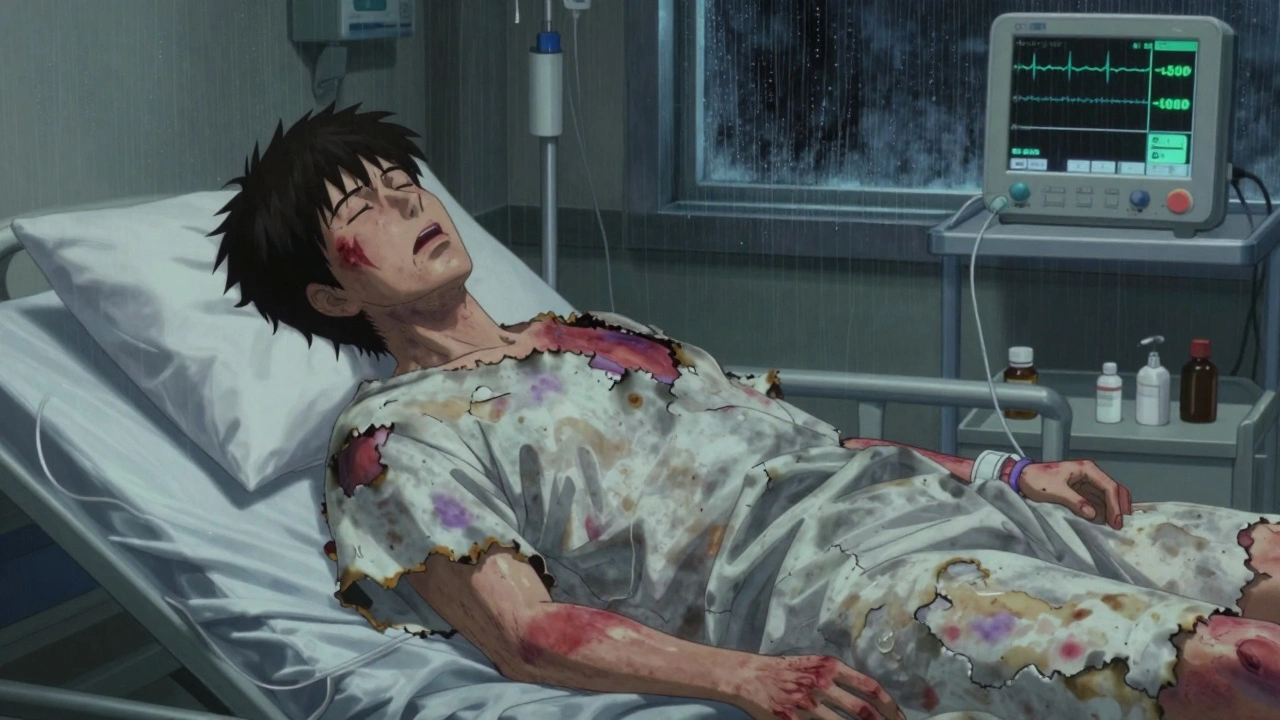
It starts with a fever, a sore throat, maybe a headache-like the flu you can’t shake. Then, within days, your skin turns red, burns, and begins to blister. Your eyes swell shut. Your mouth feels like it’s on fire. You’re not just sick. You’re having a medical emergency. This is Stevens-Johnson Syndrome (SJS) and Toxic Epidermal Necrolysis (TEN)-rare but deadly reactions to medications that can turn a routine prescription into a life-or-death situation.
What Exactly Are SJS and TEN?
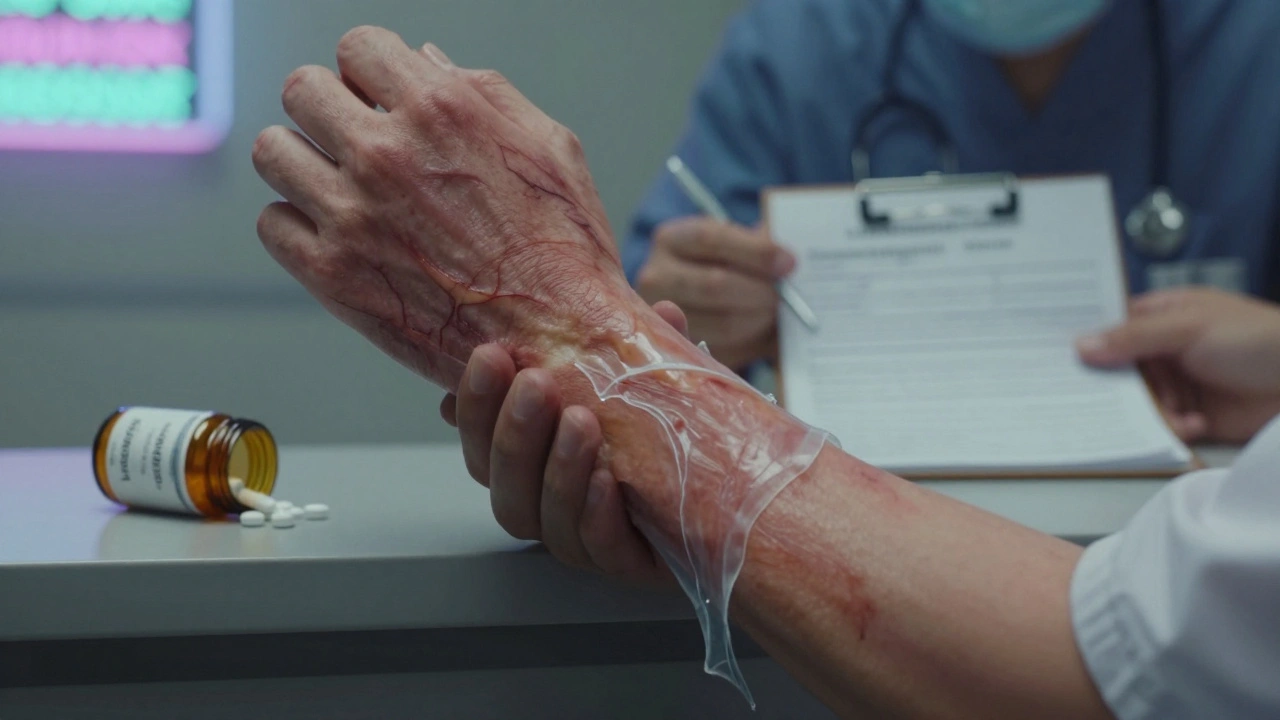
Stevens-Johnson Syndrome and Toxic Epidermal Necrolysis aren’t two separate diseases. They’re part of the same dangerous spectrum, defined by how much of your skin dies and peels off. SJS affects less than 10% of your body surface area. TEN affects more than 30%. If it’s between 10% and 30%, doctors call it SJS/TEN overlap. In the worst cases, over half your skin sloughs away like a bad burn.
The trigger? Almost always a medication. These reactions don’t happen because you’re allergic in the usual sense. There’s no sneezing or hives. Instead, your immune system goes rogue, attacking your own skin and mucous membranes. The result? Full-thickness epidermal necrosis-your skin’s outer layer dies and detaches. This isn’t a rash you can treat with cream. It’s a systemic collapse.
Which Medications Cause SJS/TEN?
Not every drug carries this risk. But some are known red flags. The most common culprits include:
- Allopurinol-used for gout
- Lamotrigine-an epilepsy and bipolar medication
- Carbamazepine and phenytoin-other seizure drugs
- Nevirapine-an HIV treatment
- Oxicam NSAIDs like meloxicam and piroxicam
- Sulfonamides such as sulfamethoxazole (often in antibiotics like Bactrim)
Here’s the catch: you don’t need to be on these drugs for long. Reactions can strike within days-or even weeks after you’ve stopped taking them. Some people develop SJS after restarting lamotrigine too quickly after a break. Others react to their first dose.
And it’s not just the drug itself. Cross-reactivity is real. If you’ve had SJS from carbamazepine, you’re at high risk if you ever take phenytoin, lamotrigine, or even certain penicillin antibiotics. Survivors must avoid entire classes of drugs, not just the one that caused the reaction.
How Do You Know It’s SJS/TEN and Not Just a Rash?
Most rashes are harmless. But SJS/TEN has a pattern you can’t ignore:
- Flu-like start-fever, fatigue, sore throat, burning eyes
- Fast-spreading rash-red or purplish patches that blister and turn into painful sores
- Mucous membrane damage-mouth, eyes, nose, genitals, throat all get eroded
- Skin peeling-sheets of skin come off with gentle pressure
It’s not itchy like eczema. It’s agonizing. Your skin feels like it’s been burned. Your eyes won’t open. You can’t swallow. You can’t eat. This isn’t something you wait out. If you notice these signs-especially after starting a new medication-go to the emergency room immediately.
Doctors confirm the diagnosis with a skin biopsy. Under the microscope, they see full-thickness skin death with little inflammation-a signature sign. No lab test can catch it early. It’s all about recognizing the pattern.
Who’s at Highest Risk?
Anyone can get SJS/TEN, but some groups are far more vulnerable:
- People with HIV or weakened immune systems
- Those taking sodium valproate along with lamotrigine
- People who’ve had a rash from epilepsy drugs before
- Those allergic to trimethoprim (a common antibiotic component)
- Anyone with a family history of SJS/TEN-genetic factors like the HLA-B*15:02 gene (common in Southeast Asian populations) increase risk with certain drugs
Children are more likely to get SJS than adults, especially with anticonvulsants. But the worst outcomes? Those happen in older adults and those with chronic illnesses.
What Happens in the Hospital?
There’s no magic pill for SJS/TEN. Treatment is about survival.
First: stop the drug. Immediately. No exceptions. Even if you’re not sure which one caused it, every medication you’ve taken in the last few weeks gets pulled.
Then: you’re moved to a burn unit or intensive care. Why? Because your skin is gone. Your body loses fluids, can’t regulate temperature, and is wide open to infection. You’ll get IV fluids, pain control, wound care, and antibiotics to fight off sepsis-the #1 cause of death.
Some hospitals try immunomodulators like IVIG (intravenous immunoglobulin) or corticosteroids, but evidence is mixed. The best treatment? Time, supportive care, and expert nursing.
Survival depends on how fast you get help. If you’re treated within 24-48 hours of symptoms, your chances jump. Delayed care? Mortality skyrockets.
What Happens After You Survive?
Living through SJS/TEN doesn’t mean you’re out of the woods. Long-term damage is common-and often permanent.
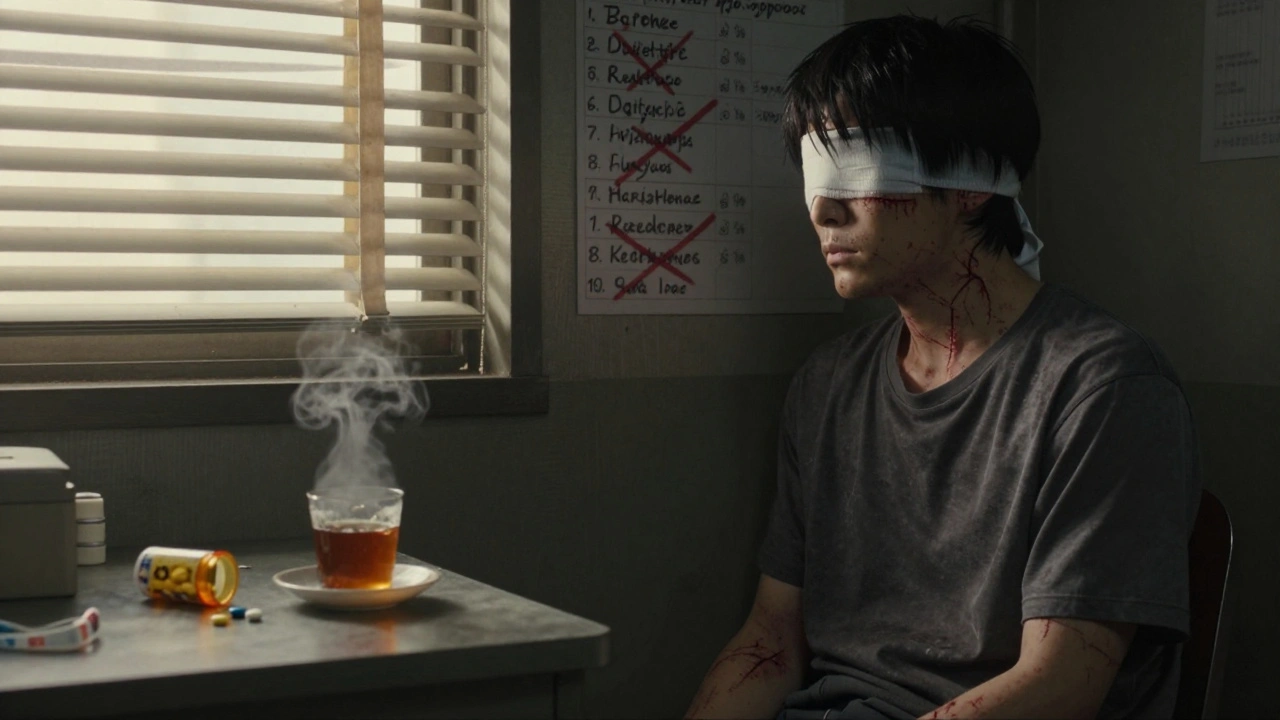
- Eye problems-30-50% of survivors develop chronic dry eyes, corneal scarring, or even blindness. Regular ophthalmology checkups for at least a year are non-negotiable.
- Scarring and skin changes-pigment loss, thickened scars, and nail loss happen often. Nails may grow back, but sometimes they don’t.
- Oral damage-mouth sores lead to chronic pain, gum disease, and difficulty eating. Dental care becomes essential.
- Genital complications-vaginal stenosis in women, phimosis in men. These require specialist intervention.
- Lung and digestive issues-esophageal strictures, pulmonary fibrosis, and blood clots can develop months later.
Recovery takes months. Some people never fully return to how they were before. And you can never take the triggering drug-or anything like it-again.
Can It Be Prevented?
Yes-mostly through awareness and caution.
- Start high-risk drugs like lamotrigine at the lowest possible dose and increase slowly. Rapid escalation is a major trigger.
- Don’t start new medications, supplements, or even new foods during the first 8 weeks of treatment with drugs like lamotrigine or allopurinol. This reduces confusion if a rash appears.
- Know your family history. If a close relative had SJS/TEN, tell your doctor before starting any new medication.
- Get tested for HLA-B*15:02 if you’re of Southeast Asian descent before taking carbamazepine. It’s a simple blood test that can prevent tragedy.
- If you get a rash while on one of these drugs, stop it and go to the ER-don’t wait. Don’t call your GP. Don’t wait for an appointment. Go now.
Most people who take these drugs never have a reaction. The risk is low-about five cases per million users per week. But when it happens, it’s catastrophic. That’s why vigilance matters.
What Should You Do If You’re Prescribed a High-Risk Drug?
If your doctor prescribes lamotrigine, allopurinol, or another high-risk medication:
- Ask: “What are the warning signs of a serious reaction?”
- Ask: “Is there a genetic test I should have before starting this?”
- Ask: “What should I do if I get a rash?”
- Write down the exact name of the drug and its brand version.
- Keep a list of all your medications and share it with every doctor you see.
- Wear a medical alert bracelet if you’ve had SJS/TEN before.
Don’t assume your doctor knows every risk. They’re busy. You’re the one living with your body. Be your own advocate.
Final Thought: Don’t Wait for the Worst
SJS and TEN are rare. But they’re not mysterious. They’re predictable-if you know the signs. They’re preventable-if you act fast. They’re survivable-if you get help in time.
If you or someone you know has a fever, a spreading rash, and blistering lips or eyes after starting a new drug-do not wait. Call an ambulance. Go to the emergency room. Say: “I think this might be Stevens-Johnson Syndrome.”
That one phrase could save a life.
10 Comments
Taya Rtichsheva December 8 2025
so i took allopurinol for gout and got a rash and just thought i was allergic to like...everything
turns out i almost died and now i cant take half the meds in the pharmacy
thanks for the reminder that my skin is not a suggestion
George Taylor December 8 2025
...I just...I don’t understand why people don’t read the damn insert...I mean, it’s right there, in 8-point font, buried between the list of side effects and the “may cause spontaneous dancing” disclaimer...I mean, if you’re going to take a drug that has a 1 in 1 million chance of turning your skin into a wet napkin...why are you surprised when it happens?...It’s not like the FDA is hiding it...they literally printed it in bold...I just...I don’t know what to say anymore...
ian septian December 8 2025
Stop the drug. Go to ER. Say the words. Save your life.
Katherine Rodgers December 9 2025
oh wow so lamotrigine is dangerous??? who knew??? next you’ll tell me water can drown people if you drink too much at once
my grandma took this drug for 20 years and still danced at my wedding
maybe you just need to stop scaring people with scary words and let them live their lives
Lauren Dare December 11 2025
Given the pathophysiological cascade involving HLA-mediated cytotoxic T-cell activation and keratinocyte apoptosis, it’s imperative to contextualize pharmacogenomic risk stratification within the broader framework of polypharmacy surveillance protocols.
Also, why do people think they can self-diagnose a dermatological emergency via Reddit? I mean, really? The HLA-B*15:02 allele has a population frequency of 15% in certain cohorts-do you have your genotyping report handy, or are you just winging it?
Darcie Streeter-Oxland December 12 2025
It is, indeed, a matter of considerable gravity that such a rare yet devastating adverse reaction remains under-recognized within primary care settings. One might posit that the dissemination of clinical awareness is insufficiently prioritized within medical education curricula, particularly in jurisdictions where pharmacovigilance infrastructure is under-resourced.
Sarah Gray December 13 2025
People who don’t get tested for HLA-B*15:02 before taking carbamazepine are just irresponsible. You’re not ‘lucky’ if you survive-you’re just statistically lucky. If you’re from Southeast Asia and didn’t get tested, you were playing Russian roulette with your epidermis. And if you think a rash is ‘just a rash’? You’re not just ignorant-you’re dangerous.
Kathy Haverly December 14 2025
Oh great, another ‘awareness’ post that makes people paranoid about every pill they take. Next you’ll tell me ibuprofen is secretly a death trap. I’ve been on lamotrigine for five years. No rash. No issues. Why are you trying to scare healthy people into never taking medicine again? The real epidemic is fear, not SJS.
Suzanne Johnston December 14 2025
It’s easy to say ‘go to the ER’-but what if you’re uninsured? What if you’re in rural Maine and the nearest burn unit is 3 hours away? What if you’re a single mom and can’t afford to miss work? This isn’t just a medical issue-it’s a systemic one. Awareness is good, but access is justice. We need better safety nets, not just more warnings.
Graham Abbas December 15 2025
I had a cousin who survived TEN after taking sulfamethoxazole. She lost 60% of her skin. Spent 87 days in ICU. Couldn’t blink for six months. Now she can’t wear sunglasses because her eyelids fused shut. She still cries when she sees the sun. And she’s alive. But not the same.
Don’t wait for a rash. Don’t wait for pain. Don’t wait for your eyes to close. If you’re on one of these drugs and feel even a little off-go. Now. Not tomorrow. Not after your Zoom meeting. Now.
Because the difference between ‘I thought it was just a bug’ and ‘I went to the ER’ is the difference between life and a memorial page.