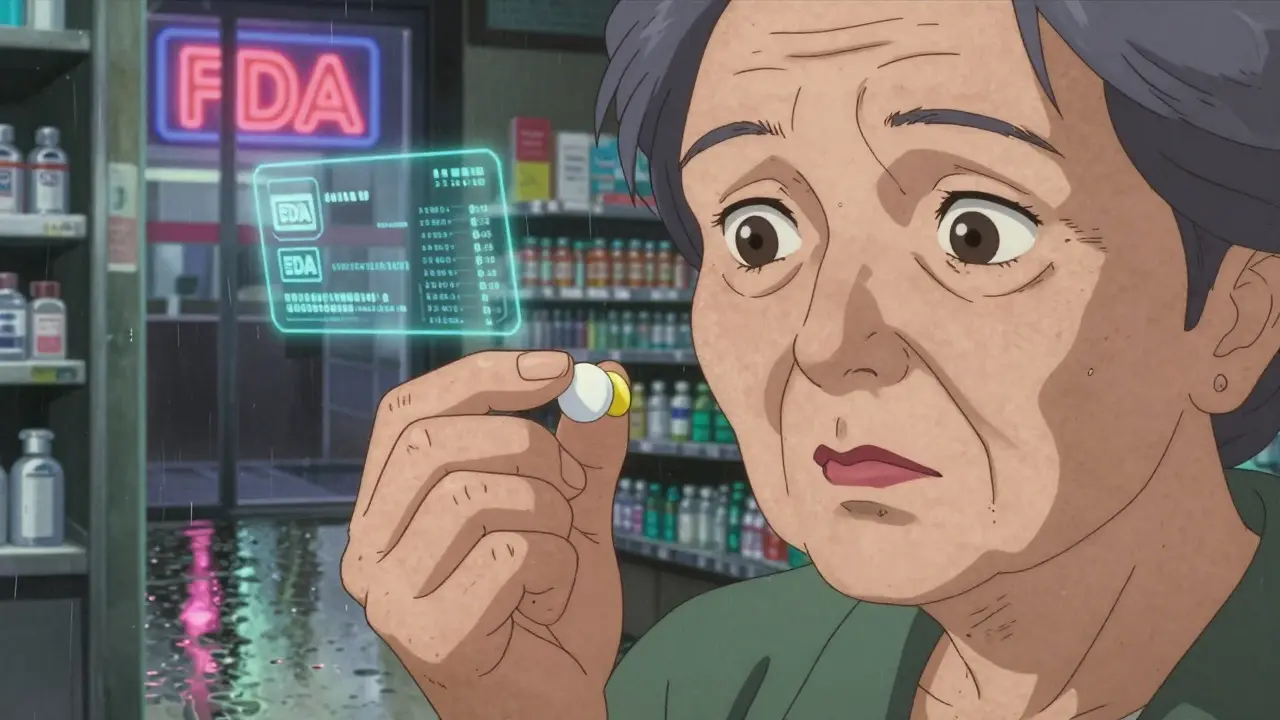
When your pharmacist hands you a pill that looks nothing like the one you’ve been taking, it’s normal to pause. The color is different. The shape is odd. The name on the tablet is unfamiliar. You might wonder: Is this really the same thing?
The short answer is yes - if it’s an FDA-approved generic. But knowing that doesn’t always ease the worry. Switching from a brand-name drug to its generic version is common, affordable, and usually seamless. But it’s not always automatic, and there are situations where you should pay extra attention.
What Exactly Is a Generic Drug?
A generic drug is not a copy. It’s not a cheaper version with less active ingredient. It’s the exact same medicine, legally required to contain the same active ingredient, in the same strength, and delivered the same way - whether it’s a pill, injection, or inhaler. The FDA demands that generics match brand-name drugs in how quickly and completely they enter your bloodstream. This is called bioequivalence. To get approval, manufacturers must prove their version delivers between 80% and 125% of the brand’s absorption rate. In real-world data, the average difference is just 4.1% - barely more than random variation.
Generics became widespread after the 1984 Hatch-Waxman Act made it easier and faster for companies to bring them to market. Today, 9 out of 10 prescriptions filled in the U.S. are generics. Yet they make up only about 20% of total drug spending. Why? Because they cost far less.
How Much Money Can You Save?
On average, switching to a generic saves you 80% to 85% per prescription. For example, if your brand-name cholesterol pill costs $350 a month, the generic might cost $15. That’s not a typo. One patient in Phoenix told ABC15 she was skipping doses because she couldn’t afford the brand. After switching to the generic, she took it every day - and her numbers improved.
Medicare beneficiaries save an average of $1,268 a year just by using generics instead of brand-name drugs. For people managing chronic conditions like diabetes, high blood pressure, or depression, that kind of savings means the difference between staying on treatment and going without.
Studies show people are more likely to take their meds when they’re affordable. One Kaiser Permanente study found 78% of diabetic patients stuck with their generic metformin, while only 63% stayed on the brand-name version, Glucophage. Adherence isn’t just about health - it’s about survival.
Why Do Generics Look Different?
Generics can’t look like the brand-name drug. That’s not a mistake - it’s the law. Trademark rules require generics to have a different color, shape, or size. This prevents confusion and protects the brand’s identity. But for patients, it can cause problems.
A 2022 case from the Patient Safety Reporting System involved an 82-year-old woman who accidentally took two pills because her new generic was a bright yellow oval instead of the white round one she was used to. She didn’t realize it was the same medicine. That’s why pharmacists are required to explain the change when they switch your prescription.
Don’t panic if your pill looks different. But do ask: Is this the same drug I’ve been taking? Check the name on the bottle. If it says “metformin” instead of “Glucophage,” you’re good. If you’re unsure, call your pharmacist. They’re trained to help you understand the difference.
Are Generics Always Safe?
For most people, yes. A major 2019 study in JAMA Internal Medicine reviewed over 2,000 clinical trials and found generics performed identically to brand-name drugs in 88% of cases. That’s a strong track record.
But there are exceptions. Some drugs have a narrow therapeutic index - meaning even tiny changes in blood levels can cause serious side effects or make the drug stop working. These include:
- Levothyroxine (for thyroid)
- Warfarin (a blood thinner)
- Phenytoin and carbamazepine (for seizures)
For these, switching between different generic versions - even from the same manufacturer - can sometimes cause problems. The American Epilepsy Society found that 12.7% of patients switching between generic seizure meds had breakthrough seizures, compared to just 4.3% who stayed on one version.
If you’re on one of these drugs, talk to your doctor before switching. Some patients do better on one generic than another. In those cases, your doctor may write “Dispense as Written” or “Do Not Substitute” on your prescription. That means the pharmacy can’t swap it out without your consent.
What About Side Effects?
Generics have the same active ingredient - so the same side effects should occur. But they can have different inactive ingredients. These are the fillers, dyes, preservatives, and coatings that help the pill hold together or taste better. They don’t affect how the drug works, but they can cause reactions in sensitive people.
Some generics use red dye (FD&C Red No. 40), which can trigger allergies. Others use lactose, which can upset people with intolerance. The FDA acknowledges this rare risk and updated its guidelines in 2023 to require clearer labeling of inactive ingredients by 2025. Right now, though, many generic labels don’t list them clearly. A 2022 University of Michigan study found only 37% of generic drug packaging fully identified potential allergens.
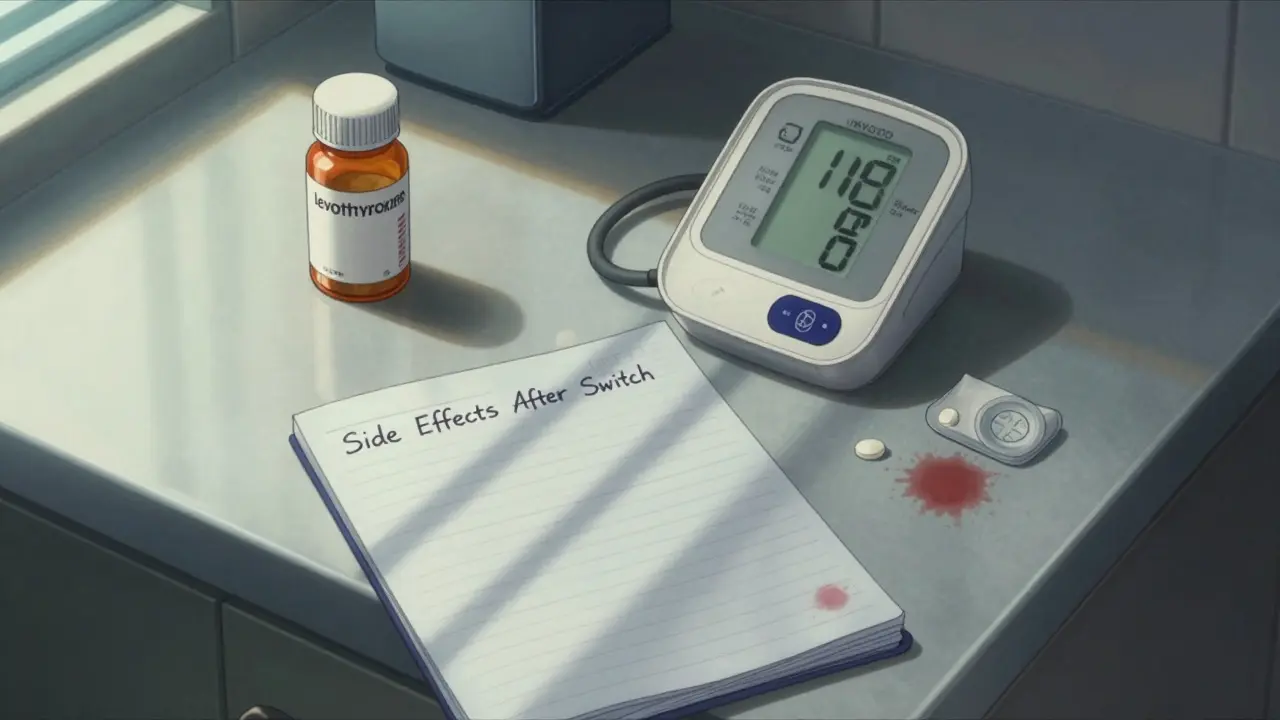
If you’ve had allergic reactions to medications before - or if you notice new symptoms after switching - write them down. Track things like rash, swelling, stomach upset, or mood changes. Bring them to your doctor. It might be the generic.
When Should You Stay on Brand?
Most people don’t need to. But there are a few cases where sticking with the brand makes sense:
- You’re on a narrow therapeutic index drug and had problems switching before
- You’re using a complex delivery system - like an inhaler or topical cream - where generics have shown inconsistent performance
- Your insurance won’t cover the generic, and you can’t afford the brand
- Your doctor specifically recommends staying on the brand for your condition
Also, don’t confuse generics with biosimilars. Biosimilars are for biologic drugs - complex medicines made from living cells, like Humira or Enbrel. These aren’t exact copies, and they’re not always interchangeable. As of November 2023, there are 37 FDA-approved biosimilars, with more coming in 2024. They’re cheaper than the originals but still more expensive than traditional generics.
What Should You Do When Switching?
Switching to a generic is usually simple. But here’s how to do it right:
- Ask your pharmacist when you pick up your prescription: “Is this a generic? What’s the difference?”
- Check the label - make sure the active ingredient matches your old prescription.
- Look at the pill - note the color, shape, and imprint. Take a photo if you’re unsure.
- Monitor for two weeks - keep a simple log: How do you feel? Any new side effects? Any change in symptoms?
- Track key numbers - if you’re on blood thinners, check your INR. If you have diabetes, track your fasting glucose. If you’re on antidepressants, note your mood using a simple scale like PHQ-9.
- Call your doctor if you notice anything unusual - even if it seems minor.
Pharmacists are required to offer a 5-7 minute counseling session when substituting generics. Use it. Ask questions. Write things down. You’re not being difficult - you’re being smart.
What’s Changing in 2024 and Beyond?
The FDA is pushing to make generics even better. The Generic Drug User Fee Amendments (GDUFA) III, running through 2027, is investing $1.5 billion to speed up approvals and fix drug shortages. By 2025, all generic labels must clearly list inactive ingredients. And starting in 2024, Medicare will cover all FDA-approved generics without requiring prior authorization - meaning no more delays or paperwork.
More complex generics are on the way: orally disintegrating tablets, patches, and nasal sprays that match brand-name versions exactly. In 2024 alone, over 200 new generics are expected, including biosimilars for Humira, which could cut costs by 50% or more.
By 2030, experts predict 95% of all prescriptions will be filled with generics. That’s not just a trend - it’s the future of affordable care.
Real Stories, Real Results
On Reddit’s r/Pharmacy, over 300 people shared their experiences switching to generics. 83% said they noticed no difference. But 17% reported issues - mostly confusion over appearance, or rare side effects like headaches or nausea. One woman wrote: “I thought the generic made me anxious. Turned out it was the new dye. Switched back to brand for a month, then tried a different generic - no problem.”
GoodRx surveyed 15,000 patients who switched. 92% were satisfied. 87% said they took their meds more regularly because they could afford them.
Generics aren’t perfect. But they’re not a compromise. They’re a smart, safe, and proven choice - for most people, most of the time.
Frequently Asked Questions
Are generic drugs as effective as brand-name drugs?
Yes. The FDA requires generics to have the same active ingredient, strength, dosage form, and bioequivalence as brand-name drugs. Studies show they work the same in 88% of cases. The only differences are in inactive ingredients and appearance.
Why do generic pills look different?
Trademark laws require generics to look different from brand-name drugs. That means different colors, shapes, or sizes. It doesn’t affect how the drug works - it’s just to avoid confusion and protect brand identity.
Can switching to a generic cause side effects?
Rarely. Side effects usually come from the active ingredient, which is the same. But some people react to inactive ingredients like dyes or fillers in generics. If you notice new symptoms after switching, talk to your doctor or pharmacist.
Which drugs should I avoid switching?
Avoid switching generics for drugs with a narrow therapeutic index - like levothyroxine, warfarin, phenytoin, or carbamazepine - unless your doctor approves it. These require very precise dosing, and even small changes can affect safety or effectiveness.
How can I tell if my prescription was switched?
Check the label on your bottle. The active ingredient will be the same, but the manufacturer name and pill appearance will differ. Your pharmacist is required to tell you if they substituted a generic. If you’re unsure, ask them directly.
Can I ask my doctor to keep me on the brand name?
Yes. If you’ve had problems with generics before, or if you’re on a sensitive medication, your doctor can write “Dispense as Written” or “Do Not Substitute” on your prescription. This tells the pharmacy not to switch it without your consent.
Are biosimilars the same as generics?
No. Biosimilars are for complex biologic drugs made from living cells - like Humira or Enbrel. They’re similar, but not identical, to the original. Generics are exact copies of simple chemical drugs. Biosimilars are newer, more expensive, and not always interchangeable.
Next Steps
If you’re considering switching to a generic, start by asking your pharmacist. They can tell you what’s available and what to expect. If you’re on a high-risk medication, talk to your doctor before making any changes. Keep a simple log for two weeks after switching - note how you feel, any side effects, and changes in your condition. If something feels off, don’t ignore it. Call your provider. Your health isn’t a gamble - it’s your priority.
9 Comments
Amanda Eichstaedt January 13 2026
It's wild how much fear surrounds generics when the science is so clear. I used to panic every time my pill changed color until I started reading the FDA's bioequivalence data. Turns out my blood pressure meds work the same whether they're blue or white. The real issue isn't the drug-it's how we're trained to equate price with value. Cheap doesn't mean weak. It means accessible.
Alex Fortwengler January 13 2026
Yeah right. FDA-approved my ass. I saw a guy on YouTube who switched to generic levothyroxine and ended up in the ER. They don’t test these things long-term. Big Pharma owns the FDA. The real story? They want you hooked on cheap pills so you don’t notice the side effects until it’s too late. I stick with brand. I’d rather pay more and not die.
jordan shiyangeni January 14 2026
Let’s be perfectly clear: the notion that generics are ‘identical’ is a legal fiction, not a scientific truth. While the active ingredient may be chemically identical, the excipients-those unregulated, unmonitored, and often undisclosed fillers, binders, and dyes-can trigger immune responses, alter absorption kinetics, and even induce subclinical inflammation over time. The FDA’s 80–125% bioequivalence window is not a margin of error-it’s a gaping chasm of clinical uncertainty. And for patients on narrow therapeutic index drugs, that chasm can be fatal. You’re not ‘saving money’-you’re gambling with your physiology, and that’s not smart, it’s negligent.
Abner San Diego January 14 2026
Generic? Yeah, I got one last month. Looked like a neon green gumball. Took it. Felt like my brain was wrapped in wet socks for three days. My cousin in Texas said the same thing with his seizure med. You think the FDA cares? Nah. They’re too busy approving Chinese factory pills that smell like burnt plastic. We don’t need generics-we need American-made medicine. This country used to make things that lasted. Now we just swallow whatever’s cheapest. Pathetic.
Eileen Reilly January 16 2026
so i switched my antidepressant to generic and at first i thought it was making me super anxious but then i realized it was just the dye?? like?? i had no idea dyes could do that. now i check the bottle like a hawk. also my pharmacist gave me a sticker that says "this is not your old pill" lmao. thanks for the heads up, post.
Monica Puglia January 16 2026
❤️ This is such an important post. I’ve been on levothyroxine for 12 years and switched generics three times. The first time, I felt like I was drowning in slow motion. Called my doc. Switched back. Found a generic that worked. Now I keep a little notebook: pill color, date switched, how I felt. It’s not paranoia-it’s self-care. You’re not being difficult. You’re being your own advocate. Keep doing that. 💪
Cecelia Alta January 18 2026
Okay but have you seen the price gouging on the brand-name versions? I had a friend who was paying $480 a month for her blood thinner until she switched to generic-now it’s $17. She cried. Not because she was sad-because she finally felt like she could breathe again. And then some guy on here is acting like generics are a death trap? Honey, if you can’t afford your meds, you’re already dying. Slowly. Quietly. And no one’s writing a Reddit post about it. Generics aren’t perfect, but they’re the only thing keeping millions of people alive. Stop being dramatic and start being grateful.
steve ker January 19 2026
Generics work fine. Stop overthinking. Pharmacies switch them because they can. You take it or don’t. Your choice. No need for journals or photos or counseling. Just take the pill.
George Bridges January 20 2026
I appreciate how thoughtful this post is. I’m a pharmacist and I see this every day-patients scared because their pill changed shape. I always show them the active ingredient on the label. I ask if they’ve noticed anything different. Sometimes they have. Sometimes they haven’t. Either way, I listen. That’s the part no one talks about: the human moment between the bottle and the body. It’s not about the drug. It’s about trust. And we can rebuild that one conversation at a time.