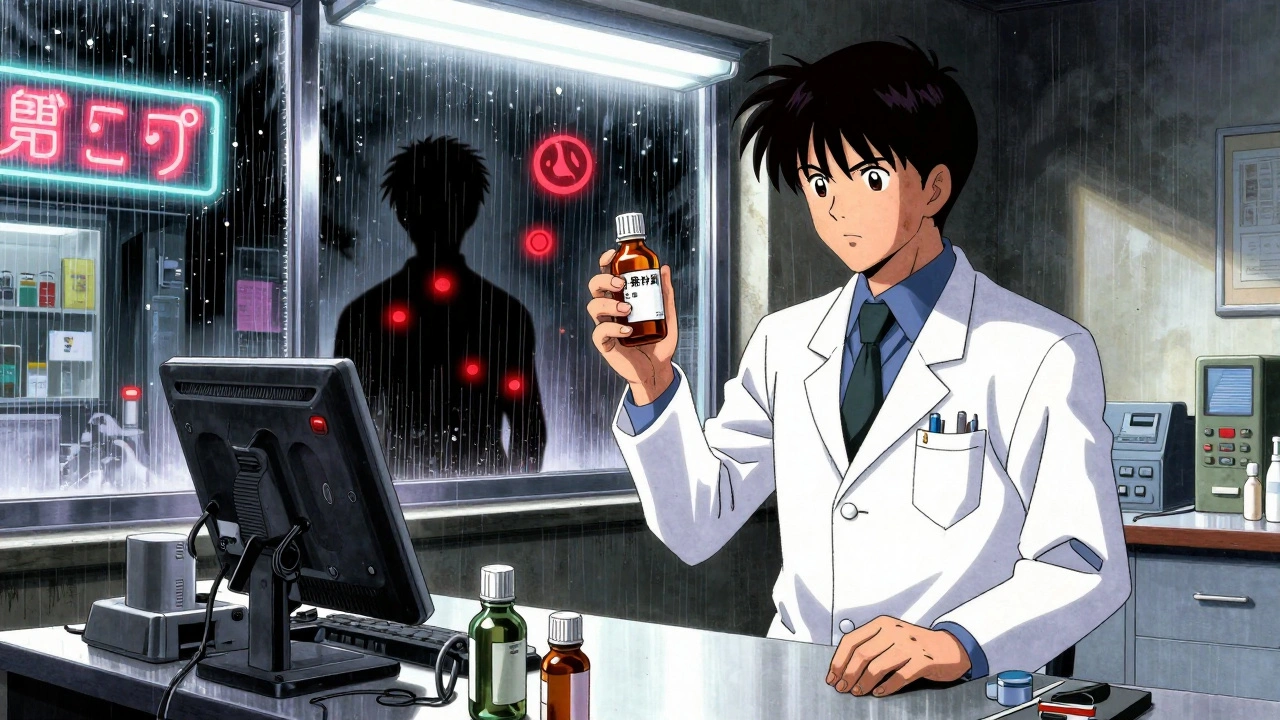
When a patient picks up a generic pill, they assume it works just like the brand-name version. But what if it doesn’t? What if the new pill causes a rash, dizziness, or worse - and no one notices because everyone assumes generics are identical? This is where pharmacists step in. Not as passive dispensers, but as frontline safety watchdogs. Adverse event reporting isn’t optional for pharmacists. It’s a core part of their professional duty - especially when it comes to generic medications.
Why Generic Medications Need Extra Attention
Generic drugs are supposed to be bioequivalent to their brand-name counterparts. That means they contain the same active ingredient, in the same dose, and should work the same way. But "equivalent" doesn’t mean "identical." Generics can differ in fillers, binders, coatings, and manufacturing processes. These differences are usually harmless. But sometimes, they trigger unexpected reactions. A patient who’s taken the brand-name drug for years might suddenly get nausea or headaches after switching to a generic. Or worse - they might develop a severe skin reaction or abnormal heart rhythm. The problem? Prescribers often don’t know which generic version a patient is taking. And patients rarely connect their new symptoms to the medication change. That’s where pharmacists come in. We’re the ones who hand over the bottle. We see the label. We know the patient’s history. We’re the first to spot that something’s off.What Counts as an Adverse Event?
An adverse drug reaction (ADR) is any harmful, unintended effect from taking a medication. Not every side effect is an ADR. If a patient gets a headache after starting a blood pressure pill, that might just be a known side effect. But if they get a blistering rash, chest pain, or sudden confusion - that’s serious. The FDA defines serious adverse events as those that result in:- Hospitalization
- Permanent disability
- Life-threatening conditions
- Death
- Congenital malformations
Legal Duty: It’s Not Just a Good Idea - It’s Required
In many places, reporting isn’t encouraged. It’s mandatory. In British Columbia, pharmacists are legally required to report any suspected adverse reaction to Health Canada. They must also document it in the patient’s PharmaNet record and notify the prescriber. That’s not a suggestion. That’s the law. In New Jersey, consultant pharmacists must report drug defects and adverse reactions to the FDA’s system within the same shift they identify the issue. In most other U.S. states, while federal law doesn’t force reporting, the FDA strongly urges it - especially for serious events. And if a pharmacist ignores a clear, serious reaction, they could be held liable if harm continues. The bottom line: Pharmacists are legally and ethically responsible for recognizing and reporting adverse events. Ignorance isn’t an excuse. If you’re dispensing medication, you’re part of the safety net.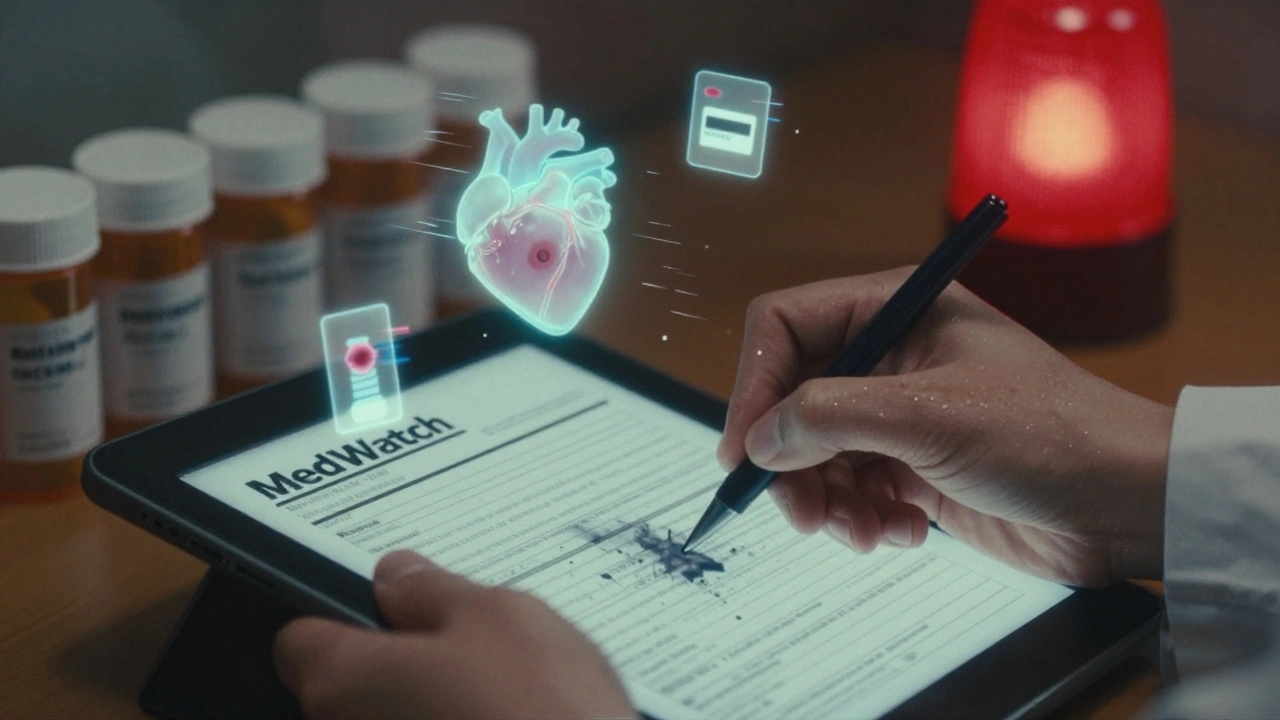
The Reporting Process: How It Actually Works
Reporting sounds complicated. It doesn’t have to be. Here’s how it works in practice:- Recognize the reaction. Did the patient’s symptoms start after switching to a new generic? Is it not listed as a common side effect? Does it match reports from other patients on the same batch?
- Document everything. Patient name (or initials), date of birth, medication name (including generic manufacturer), dose, start date, symptoms, onset time, outcome. Write it in the pharmacy record. Don’t rely on memory.
- Report it. In the U.S., use MedWatch - the FDA’s online portal. It takes about 15 minutes. In Canada, use Health Canada’s online form. Many states now integrate reporting directly into pharmacy software, cutting time by 40%.
- Follow up. Call the prescriber. Let them know what happened. Ask if they’ve seen similar cases. Share your report number if they need to reference it.
Why So Few Reports Get Made
Despite the importance, under-reporting is rampant. Health Canada estimates only 5-10% of all adverse reactions are reported. For generics? It’s probably lower. Why? Three big reasons:- Time. A 2021 survey found 78% of community pharmacists spend 15-30 minutes per report. Most don’t have that time between refills and insurance calls.
- Doubt. "Is this really the drug? Maybe it’s stress. Maybe it’s aging." We second-guess ourselves. But if you’re unsure, report anyway. Better to flag a false alarm than miss a real danger.
- Lack of training. Many pharmacists weren’t taught how to distinguish a true ADR from a common side effect. A rash from a new generic? Could be harmless. Or could be the start of Stevens-Johnson syndrome. Training matters.
Technology Is Making It Easier
Good news: Reporting is getting simpler. The FDA’s MedWatch Online portal now handles 43% of healthcare professional reports - up from 29% in 2020. Pharmacy software in California and Texas now has built-in reporting buttons. One click, and your report goes straight to the FDA. The National Association of Boards of Pharmacy is working with 32 state boards to make this standard. By 2025, experts predict 75% of U.S. states will require pharmacists to report adverse events - just like British Columbia already does. In Europe, mandatory reporting for all healthcare workers since 2012 led to a 220% jump in reports. The result? Faster recalls, clearer warnings, fewer deaths.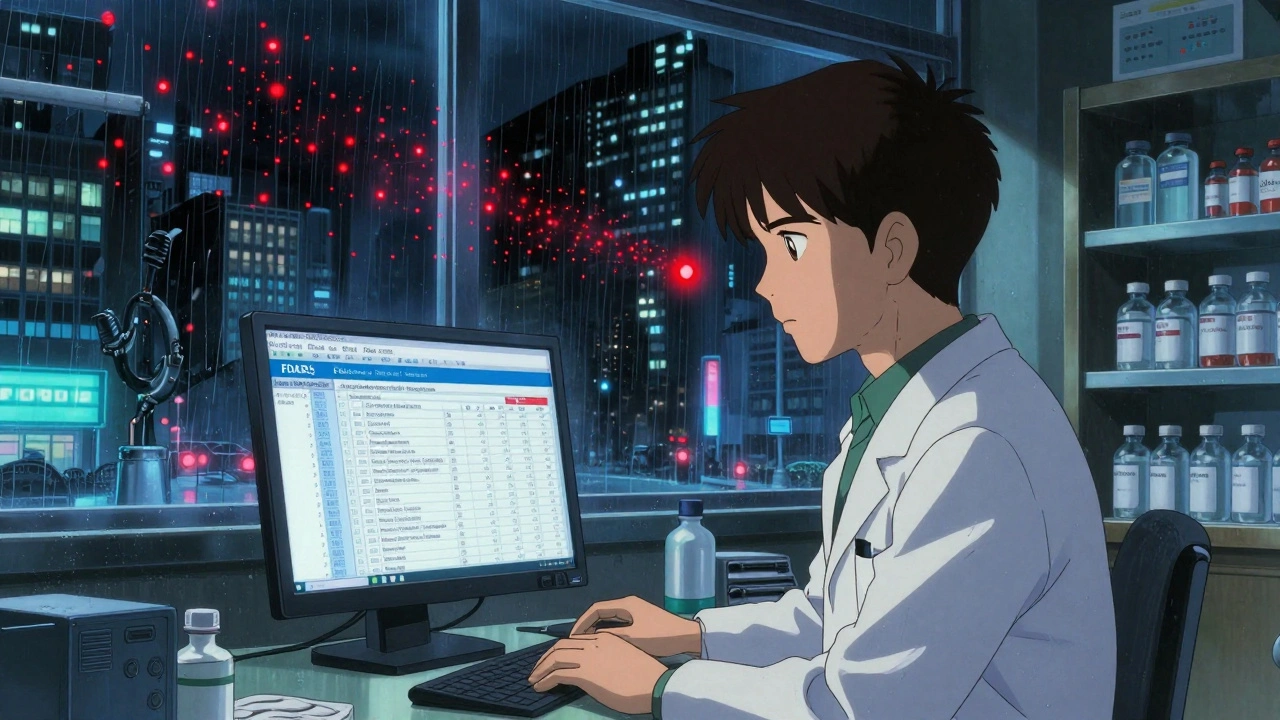
What Happens After You Report?
Your report doesn’t vanish into a black hole. It goes into the FDA’s FAERS database - over 24 million entries and counting. Analysts look for patterns: Is this reaction happening with multiple batches of the same generic? Is it tied to a specific manufacturer? Is it happening more often than with the brand version? If enough reports pile up, the FDA can:- Require the manufacturer to change the label
- Issue a public safety alert
- Investigate the manufacturing process
- Even pull the product off the market
What You Can Do Today
You don’t need to wait for new laws or better software. Start now:- Ask patients: "Have you noticed any new side effects since switching to this generic?"
- Keep a simple log: Medication, reaction, date. Even if you don’t report it yet, write it down.
- Use your pharmacy’s reporting tool - if it exists. If not, go to MedWatch.gov and bookmark it.
- Talk to your manager. Push for training. Ask if your system can integrate reporting.
- Report even the "weird" ones. If a patient says, "I’ve never felt this tired before," and it lines up with a new generic - report it.
Final Thought: Your Voice Matters
Generics save billions in healthcare costs. But cost shouldn’t come at the price of safety. Pharmacists are the bridge between the lab and the patient. We see the small changes others miss. We hear the quiet complaints no one else notices. If you don’t report, no one will. And if no one reports, dangerous patterns stay hidden. That’s not just negligence - it’s a failure of professional duty. Start today. Report one reaction. You might not know it yet, but you just saved someone’s life.Are pharmacists legally required to report adverse events from generic medications?
Yes, in some jurisdictions like British Columbia, pharmacists are legally required to report suspected adverse drug reactions to Health Canada, document them in patient records, and notify the prescriber. In other U.S. states, federal law doesn’t mandate reporting, but the FDA strongly encourages it - especially for serious events. Many states are moving toward mandatory reporting, and failure to report known serious reactions can lead to professional liability.
What if I’m not sure if the reaction is caused by the generic?
Report it anyway. The FDA and Health Canada don’t expect you to prove causation. They need your observations. If a patient reports new symptoms after switching to a generic - even if you think it might be coincidence - document and report it. Patterns emerge from multiple reports. One report might be the first clue in a larger safety issue.
How long does it take to file an adverse event report?
Filing a report through the FDA’s MedWatch Online system typically takes 15-20 minutes. Many pharmacy management systems now have built-in reporting tools that reduce this to under 5 minutes. The time investment is small compared to the potential impact - one report could trigger a national safety alert.
Can I report an adverse event for a patient without their consent?
Yes. Adverse event reporting is considered a public health activity, not a marketing or research effort. Under HIPAA and similar privacy laws, pharmacists can report suspected adverse reactions without patient consent because it falls under treatment and public safety exceptions. You should still inform the patient you’re reporting it - but you don’t need their permission to do so.
Why are generic medications more likely to cause under-reported reactions?
Because both patients and providers assume generics are identical to brand-name drugs. When a patient has a new reaction, they often blame something else - diet, stress, aging - rather than the medication. Pharmacists are often the only ones who know the exact generic manufacturer and batch. Without their input, subtle differences in inactive ingredients or manufacturing can go unnoticed for months or years.
What should I include in my documentation?
Document: the patient’s name (or initials), date of birth, medication name (including generic manufacturer and lot number if available), dose, start date of the new generic, symptoms (exact wording from patient), onset time, duration, outcome, and any actions taken. Even if you don’t report immediately, this record protects you and helps future analysis.
Do I need to report mild or non-serious reactions?
Yes - especially if they’re unexpected. While serious reactions are prioritized, mild but unusual reactions (like persistent nausea, unusual fatigue, or skin changes) can signal early problems. A 2022 study found that pharmacists who reported non-serious but unexpected reactions helped identify emerging safety signals before they became widespread. Don’t wait for hospitalization to act.
Can reporting lead to legal trouble for me?
No - reporting protects you. Failing to report a known serious adverse event when you had the opportunity to do so carries far greater legal and ethical risk. Regulatory bodies recognize pharmacists’ role in patient safety. Reporting demonstrates due diligence. Not reporting can be seen as negligence, especially if similar cases are later discovered.
13 Comments
bobby chandra December 3 2025
Let me tell you something-pharmacists are the unsung heroes of the medication chain. You think a pill is just a pill? No. It’s a symphony of chemistry, timing, and human oversight. When a patient gets a rash after switching generics, it’s not ‘bad luck’-it’s a system failure. And pharmacists? We’re the ones catching it before it becomes a headline. Reporting isn’t paperwork-it’s prevention. One report could stop a cascade of hospitalizations. Stop treating it like a chore. Treat it like your license to save lives.
Archie singh December 4 2025
Let’s be real-most pharmacists don’t report because they’re overworked and underpaid. The system sets them up to fail. Mandatory reporting sounds great on paper until you’re juggling 40 refills, 12 insurance denials, and a crying parent asking why their kid’s asthma got worse. The FDA doesn’t care about your 15-minute window. They just want more data. Meanwhile, you’re trying not to cry in the back room. This isn’t about duty-it’s about broken infrastructure.
Vincent Soldja December 4 2025
Reporting is required in some states. Not all. Don’t overstate it.
shalini vaishnav December 5 2025
India has been reporting adverse drug reactions through the National Pharmacovigilance Programme since 2010. We’ve got better systems than most U.S. states. Your pharmacy software is still stuck in 2012. Meanwhile, we track batch-level reactions across 1.4 billion people. You call this ‘professional duty’? We call it survival. Stop acting like the U.S. is the gold standard.
Gene Linetsky December 6 2025
Did you know the FDA gets 100,000 reports a year but only investigates 0.3%? That’s not safety-it’s theater. They’re not fixing anything. They’re just collecting data to make it look like they’re doing something. And the manufacturers? They’re laughing. The same company that made the bad generic also owns the reporting portal. It’s a closed loop. You think your 15-minute report changes anything? Wake up. It’s all for show.
Ignacio Pacheco December 7 2025
So if I report a weird fatigue after a generic switch, and it turns out to be stress… what happens? Do I get a badge? A pat on the back? Or do I just get another email from HR saying I ‘took too long’ on my shift? I get why people don’t report. It feels like shouting into a void. But… maybe that’s the point. Maybe the void needs shouting.
Jim Schultz December 7 2025
Let’s not romanticize this. Reporting is a burden. And the people who do it? They’re not saints-they’re exhausted. The FDA’s portal is clunky. The training is nonexistent. The pharmacy chains? They don’t incentivize it. They penalize it. If you report, you get more paperwork. If you don’t? Nothing happens. So why risk your reputation for a system that doesn’t care? It’s not negligence. It’s rational survival.
Kidar Saleh December 9 2025
In the UK, we’ve had mandatory reporting for over a decade. It’s not perfect-but it’s changed how we think about generics. We now track manufacturer-specific batches. We’ve caught contamination, inconsistent dissolution rates, even cross-contamination between batches. It’s not magic. It’s consistency. And yes-it takes time. But when a patient doesn’t end up in ICU because a pharmacist took two minutes to click ‘submit’? That’s the kind of impact that keeps me going. Don’t underestimate the power of small, consistent action.
Makenzie Keely December 9 2025
I just reported my third ADR this week-and I’m not even a pharmacist. I’m a patient. My pharmacist noticed I was dizzy after switching to a new generic metformin. She asked me to write down the symptoms, then filed the report for me. She didn’t charge me. She didn’t rush. She said, ‘This matters.’ That’s the kind of care that changes medicine. If every pharmacist did that, we wouldn’t need laws-we’d need a culture. And we’re closer than you think.
Katherine Gianelli December 10 2025
I’ve been a pharmacist for 18 years. I’ve seen patients react to generics I didn’t even know existed. I’ve watched people get better after switching back to brand-name because the generic made them sick-no one else knew why. I report every time. Not because I have to. But because I remember the woman who came in with a blistering rash and said, ‘I thought it was just the heat.’ She almost lost her hand. I didn’t want to be the one who didn’t speak up. You don’t need a law to do what’s right. You just need to remember: you’re holding someone’s life in your hands. Every pill. Every batch. Every report.
Joykrishna Banerjee December 12 2025
Generic manufacturers are exploiting regulatory loopholes. They use cheaper fillers that are banned in the EU. The FDA allows it. Your ‘mandatory reporting’ is a distraction. The real issue? The FDA’s approval process for generics is a joke. Bioequivalence? That’s a statistical illusion. Real-world absorption varies by 30% between batches. You think reporting fixes that? No. You need to ban the bad manufacturers. Not report them. Ban them. And stop pretending paperwork is reform.
Francine Phillips December 13 2025
I don’t report. Not because I don’t care. But because I’ve seen too many reports disappear. I don’t believe it makes a difference anymore. I just document. And hope someone else sees it.
Chloe Madison December 13 2025
Just reported my first ADR today. Took 12 minutes. Felt like I’d done something real. Not just another refill. Not another insurance battle. Something that might help someone next month, next year. I’m not a hero. I’m just tired of pretending silence is safe. If you’re reading this and you’ve never reported-do it today. One report. That’s all it takes to start changing the system. You’ve got this.