You pick up your prescription, but the pill in the bottle looks completely different from what you took last month. It’s smaller, a different color, and maybe even has a strange letter stamped on it. Your heart skips a beat. Is this new medicine going to work? This is a common moment of panic for patients, and it’s where Elara Whitlock sees nurses step in as the critical bridge between confusion and confidence.
Generic medications are everywhere now. In fact, they make up about 90% of all prescriptions filled in the United States. But despite their prevalence, many people still harbor deep doubts about them. Nurses are often the first healthcare professionals to address these fears face-to-face during medication administration or discharge planning. Their role isn't just to hand over a pill; it's to explain why that different-looking pill is safe, effective, and essential for health.
Why the Look Matters Less Than the Science
The biggest hurdle in counseling patients on generics is visual discontinuity. When a patient sees a change in shape, size, or color, their brain interprets it as a change in quality. Dr. Linda Cronenwett, a leading figure in nursing education, points out that addressing this head-on is non-negotiable for safe care. The key message nurses deliver is simple: the active ingredient is identical.
To understand why the look doesn’t matter, you have to look at the science behind approval. Generic drugs must meet strict bioequivalence standards set by regulatory bodies like the FDA. This means the generic version must deliver the same amount of active ingredient into your bloodstream within the same timeframe as the brand-name drug. Specifically, the bioavailability must fall within 80-125% of the brand-name reference. For most drugs, this tiny margin makes no clinical difference. Nurses use plain language to explain this, avoiding jargon like "pharmacokinetics" and instead saying, "Your body absorbs this exactly the same way."
However, there are exceptions. For narrow therapeutic index (NTI) drugs-like warfarin or levothyroxine-the margin for error is much smaller. Here, consistency matters more. Nurses are trained to recognize when a patient is on an NTI drug and may advocate for staying with the same manufacturer to avoid any potential fluctuation in blood levels. This nuance shows patients that nurses aren't just reciting a script; they are thinking critically about their specific health needs.
The Nursing Approach vs. Pharmacist Counseling
Pharmacists play a huge role in generic education, typically offering detailed counseling at the point of dispensing. These sessions can last 8 to 12 minutes. Nurses, however, operate in a different rhythm. Their interactions are shorter, often lasting 3 to 5 minutes in acute care settings, but they happen repeatedly and in the context of immediate care.
| Feature | Nurse-Led Counseling | Pharmacist-Led Counseling |
|---|---|---|
| Timing | During administration or hospital stay | At point of dispensing (pharmacy) |
| Duration | 3-5 minutes (acute care) | 8-12 minutes |
| Focus | Immediate safety, appearance changes, regimen integration | Detailed mechanism, long-term side effects, cost savings |
| Patient Comprehension Rate | 89% | 93% |
| Strength | Addressing immediate anxiety and longitudinal trust | Deep technical knowledge and drug interaction checks |
While pharmacists might score slightly higher on overall comprehension rates, nurses excel at addressing immediate administration concerns. A study in the *Journal of Advanced Nursing* found that nurses were significantly better at calming patients who were anxious about taking a pill right then and there. Why? Because nurses build longitudinal relationships. They see the patient every day. If a patient is worried about a generic switch on Monday, the nurse can check in on Tuesday to see how they’re feeling. This continuity builds trust that a one-time pharmacy visit cannot match.
A Step-by-Step Framework for Effective Counseling
Counseling isn't random. Effective nurses follow structured protocols to ensure nothing is missed. The Institute for Safe Medication Practices (ISMP) outlines a five-step framework that many hospitals have adopted. Here is how it works in practice:
- Pre-counseling Assessment (2 minutes): Before explaining anything, the nurse asks, "What do you know about this medication?" This identifies misconceptions early. If a patient thinks generics are "cheap knockoffs," the nurse knows to focus on quality standards.
- Explain Bioequivalence (3 minutes): Using plain language, the nurse explains that the FDA requires generics to have the same active ingredient, strength, and dosage form. Visual aids, such as showing the FDA Orange Book on a tablet, can be powerful here.
- Address Appearance Changes (2 minutes): The nurse explicitly points out the differences in color or shape. "You’ll notice this pill is blue instead of white. That’s just the dye used by this manufacturer. The medicine inside is the same." This preempts surprise when the patient takes the pill later.
- Teach-Back Verification (2 minutes): This is crucial. The nurse asks the patient to repeat back the key information in their own words. "Can you tell me why this pill looks different but works the same?" Ninety-two percent of Magnet-status hospitals require this documentation.
- Documentation (1 minute): The nurse records the counseling session in the electronic health record (EHR), noting any specific concerns raised by the patient.
This structure ensures that counseling is not just a box-ticking exercise but a genuine educational moment. It transforms a potentially confusing experience into an empowering one.
Overcoming Common Barriers
Even with a solid framework, nurses face real-world challenges. Time is the biggest enemy. In high-census emergency departments, counseling time can drop to under two minutes. In these scenarios, nurses prioritize the most critical information: safety and adherence. They might say, "This is the generic version of your usual med. It works the same. Let’s make sure you take it with food to avoid upset stomach."
Language barriers also complicate things. About 28% of counseling attempts involve patients with limited English proficiency. Relying on family members for translation can lead to errors or embarrassment. Best practice involves using professional medical interpreters or validated multilingual materials. The FDA’s "It’s the Same Medicine" campaign offers resources in multiple languages that nurses can print or display on screens.
Another barrier is misinformation. Social media is full of anecdotes claiming generics caused side effects. Nurses counter this by citing authority. Referencing the rigorous manufacturing standards-where generic plants are inspected just as strictly as brand-name facilities-helps dismantle myths. As RN Sarah Mitchell from Johns Hopkins Hospital noted, showing patients the FDA data directly reduces anxiety dramatically.
The Future of Generic Counseling
The landscape of medication is evolving. As biosimilars-generic versions of complex biologic drugs-become more common, nursing competencies will need to expand. Biosimilars are not identical to their brand-name counterparts in the same way small-molecule generics are; they are highly similar. This requires more nuanced counseling. Nurses will need to explain concepts like immunogenicity (the risk of the body developing antibodies against the drug) in simple terms.
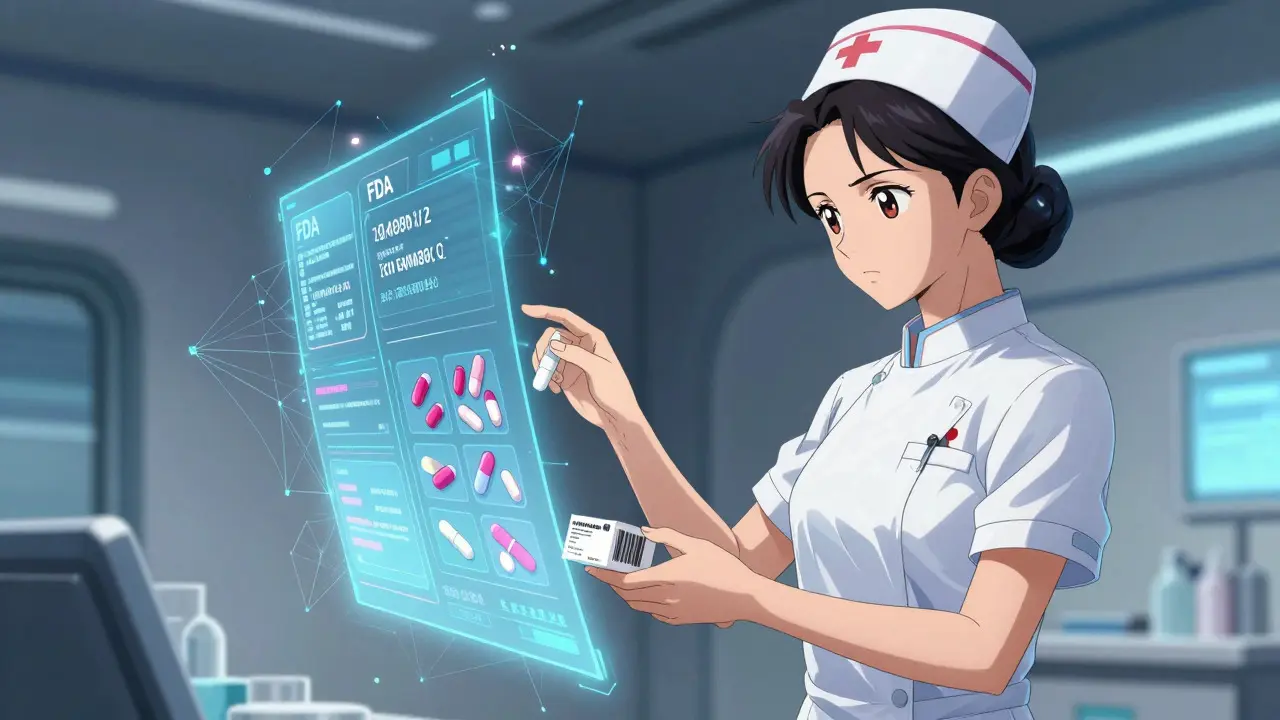
Technology is also changing the game. By 2024, nearly half of healthcare systems had implemented AI-powered tools that provide nurses with real-time access to FDA Orange Book data at the point of care. Imagine a nurse scanning a barcode and instantly seeing a comparison chart of the brand and generic versions, including visual photos of both pills. This technology supports the nurse’s memory and provides consistent, evidence-based information to every patient.
Furthermore, initiatives like the "Generic Medication Passport" piloted at Mayo Clinic are gaining traction. In this model, nurses document each generic substitution with visual references, creating a personal log for the patient. This helps patients recognize their medications over time, reducing confusion when switches occur. As the number of Medicare beneficiaries grows, with proposed rules requiring documented counseling for all generic substitutions, nurses will remain at the forefront of ensuring patient safety and understanding.
Are generic medications as effective as brand-name drugs?
Yes. Generic medications contain the same active ingredients, strength, and dosage form as brand-name drugs. They must meet FDA bioequivalence standards, meaning they deliver the same amount of medication into your bloodstream within the same timeframe. For the vast majority of patients, there is no clinically significant difference in effectiveness.
Why does my generic pill look different from my old one?
Brand-name companies hold patents on the specific look of their pills, including color, shape, and imprint. Once the patent expires, other manufacturers can produce the generic version. These manufacturers use different dyes and molds, resulting in variations in appearance. The inactive ingredients (fillers and binders) may also differ, but the active medicinal component remains identical.
What should I do if I feel different after switching to a generic?
First, don’t stop taking your medication abruptly. Contact your nurse or doctor immediately. While rare, some patients may react differently to inactive ingredients in the generic formulation, such as fillers or dyes. In cases involving narrow therapeutic index drugs (like thyroid medication or blood thinners), your provider may choose to keep you on the same manufacturer to ensure stability. Always report any new symptoms promptly.
Do nurses have special training to counsel on generics?
Yes. Modern nursing education includes competencies in medication safety and patient education. Nurses undergo specialized training to understand bioequivalence, identify narrow therapeutic index drugs, and communicate effectively with patients. Many hospitals require annual competency checks and use standardized frameworks, such as the ISMP’s 5-step process, to ensure consistent and high-quality counseling.
Is it okay to ask for the brand-name drug instead of the generic?
You can always discuss your preferences with your healthcare provider. However, brand-name drugs are often significantly more expensive. Unless there is a medical reason (such as an allergy to an inactive ingredient in the generic or a narrow therapeutic index issue), doctors and nurses generally recommend generics due to their proven efficacy and lower cost, which improves long-term adherence.