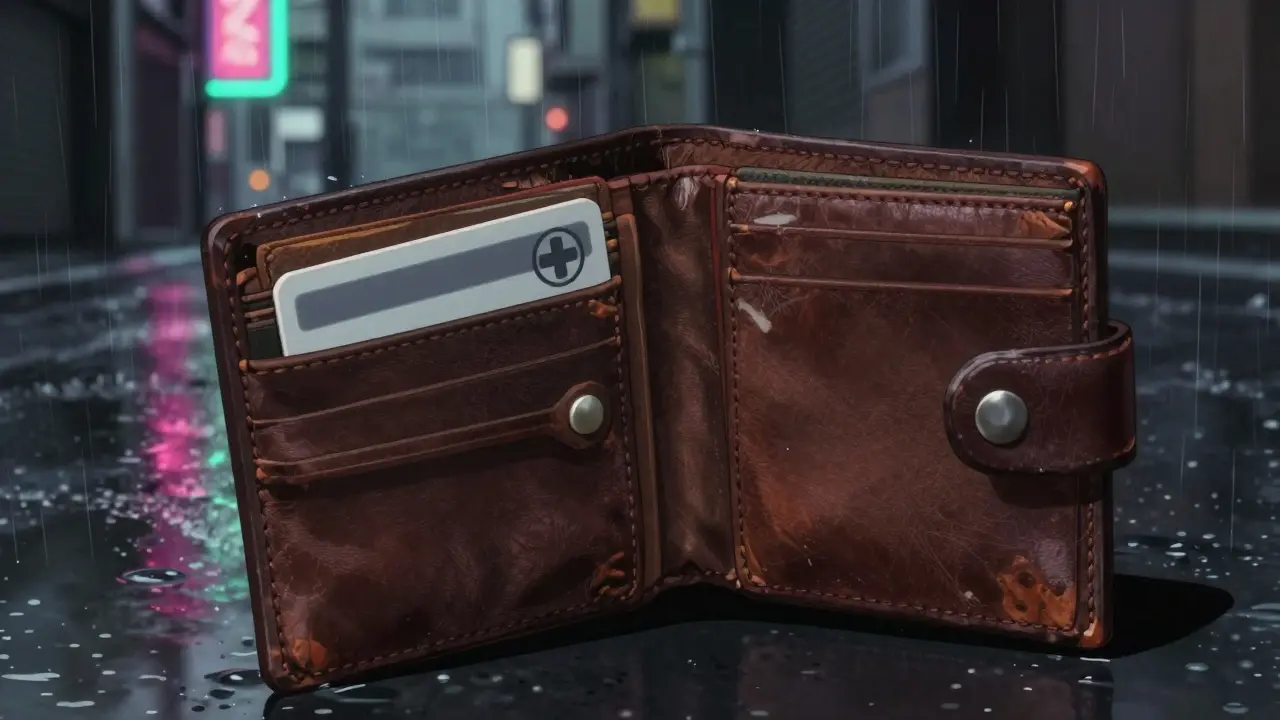
Emergency Medication List Generator
Create Your Emergency Medication List
This tool helps you generate a complete emergency medication card following FDA/CDC guidelines. Fill out your information and download a printable version to carry in your wallet.
Your Medication Details
Additional Information
Preview Your Emergency Card
EMERGENCY MEDICATION CARD
Created:
URGENT: DO NOT IGNORE
MEDICATIONS
ALLERGIES & CONTACTS
Every year, medication errors cause 7,000 deaths in the US. But a simple card in your wallet could prevent that. An Emergency Information Carda portable document containing critical health information accessible during emergencies when a patient can't communicate is your lifeline in a medical crisis. It gives doctors and paramedics immediate access to your medications, allergies, and emergency contacts-potentially saving precious minutes when every second counts.
Why Your Emergency Medication List Matters
When you're unable to speak during an emergency-like after an accident or sudden illness-your emergency medication list becomes your voice. Healthcare providers rely on this information to avoid dangerous drug interactions or incorrect treatments. According to the FDA, 66% of American adults take at least one prescription medication, and 44% take two or more. Without accurate details, doctors might prescribe something that clashes with your current meds. The Institute of Medicine reports medication errors cause 7,000 deaths annually in the US alone. A simple card could prevent those tragedies.
What to Include on Your Card
The FDAU.S. Food and Drug Administration and CDCCenters for Disease Control and Prevention have clear guidelines. Your card must have:
- All prescription and over-the-counter medications, including vitamins and supplements
- Each drug's generic and brand name, strength, and purpose
- Exact instructions for when, how, and how much to take
- Allergies and any past reactions (like rashes or breathing trouble)
- Emergency contacts with phone numbers
- Blood type (as recommended by Healthcare Ready)
- Chronic conditions like diabetes or heart disease
Children's Hospital of Philadelphia adds pediatric-specific details: weight in kilograms, liquid medication concentrations, and precise dosing measurements. Don't forget discontinued medications-especially those you stopped due to side effects.
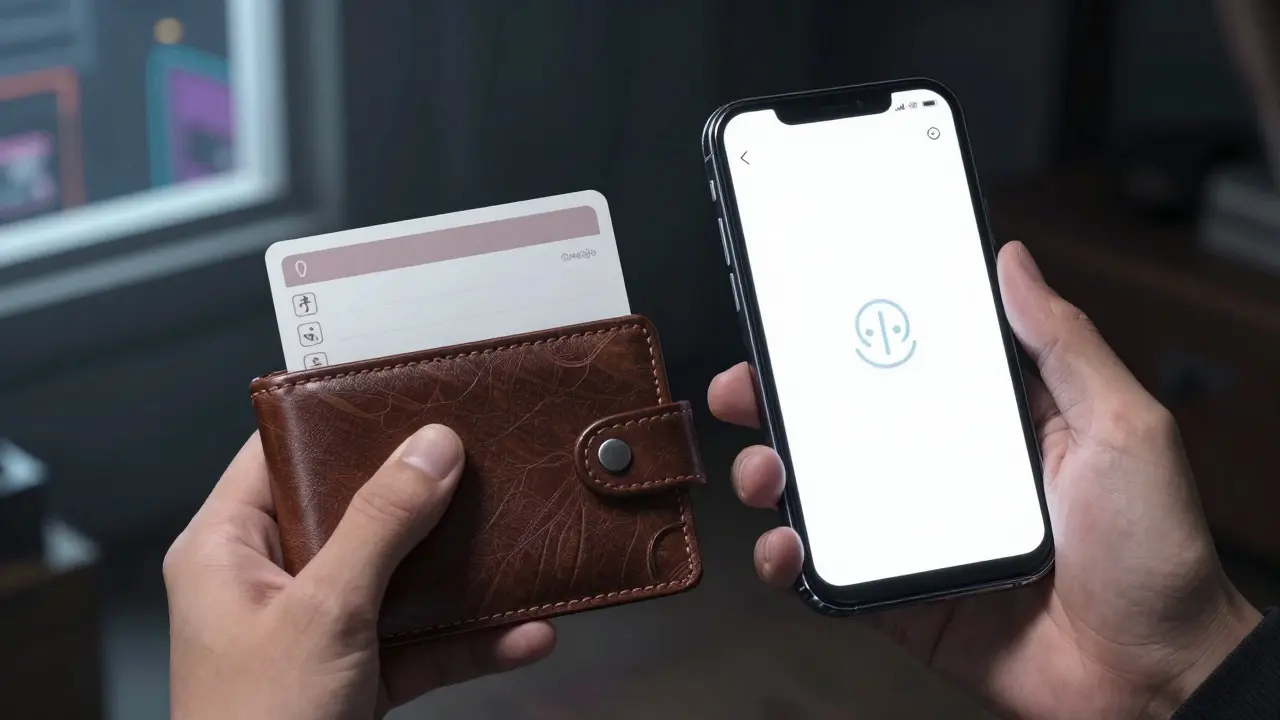
Paper vs Digital: Which Format Works Best?
Here's how different formats stack up:
| Format | Accessibility | Updates | Reliability | Privacy | Cost |
|---|---|---|---|---|---|
| Paper Card | Always accessible | Manual updates | Can be lost or damaged | No privacy concerns | Free |
| Apple Health Medical ID | Accessible from locked screen | Syncs with health apps | Requires charged device | Apple's security features | Free |
| Android Emergency Info | Available on lock screen | Auto-syncs with health data | Device-dependent | Google's security | Free |
A 2021 study in the Journal of the American Medical Informatics Association found digital medical IDs were accessed in 32% of emergency cases, while paper cards had a 78% access rate. However, smartphones are present in 92% of cases, versus paper cards in only 18%. The best approach? Carry both-a paper card in your wallet and digital info on your phone. That way, you cover all bases.
Step-by-Step Guide to Creating Your List
Creating your emergency medication list takes 15-20 minutes. Follow these steps:
- Gather all your medications: Check your pill bottles, prescription labels, and supplement containers. Include everything-even daily vitamins and herbal teas.
- Record details for each item: For every medication, write the generic name (e.g., "metformin"), brand name (if applicable), strength (e.g., "500mg"), purpose (e.g., "type 2 diabetes"), and exact instructions (e.g., "Take one tablet with breakfast").
- Include allergies and medical conditions: Note severe allergies (like penicillin) and chronic issues (such as asthma or kidney disease). If you've had reactions to medications, list them too.
- Add emergency contacts: List at least two people who know your medical history and their phone numbers. Include your doctor's contact info if possible.
- Review with your pharmacist: Pharmacists are experts at verifying medication details. They can catch errors and explain confusing terms.
- Choose your format: Print a free template from the FDA or CDC, or use Apple Health/Android settings to set up digital info.
Pro tip: Update this list every time your doctor changes a prescription. Keep it in your wallet or purse-never leave it at home.

Keeping Your Information Current
Outdated information can be dangerous. Dr. David S. Mendelson, a JAMA Internal Medicine columnist, warns: "An inaccurate medication list is worse than no list at all." Here's how to stay current:
- Update your list after every doctor visit or pharmacy refill
- Ask your pharmacist to review it quarterly
- Set phone reminders to check your list every month
- Keep a digital copy in cloud storage (like Google Drive) as backup
- Share the updated version with all emergency contacts
Healthcare Ready's "Rx on the Run" program found that patients who reviewed their lists at every appointment had 37% fewer medication discrepancies during hospital admissions, according to a 2020 Annals of Internal Medicine study. Simple consistency makes all the difference.
Real-Life Stories: How This Card Saves Lives
Sarah Chen, a nurse practitioner, shared a story on Reddit: "A patient came in after a car crash. His wallet card listed 'warfarin 5mg daily'-a blood thinner. Without that info, doctors might have given him antibiotics that interact dangerously. His card prevented a fatal bleed." Conversely, a January 2023 AgingCare.com post described a mother's hospitalization due to an outdated insulin dose on her paper list. These stories prove why accuracy and accessibility matter. Hurricane Ida evacuee Maria Rodriguez credited her wallet card for ensuring her kidney transplant medications stayed consistent during displacement, avoiding organ rejection. It's not just paperwork-it's lifesaving.
What should I include on my emergency medication list?
Include all prescription and over-the-counter medications, vitamins, supplements, allergies, emergency contacts, blood type, and chronic conditions. For each medication, list the generic name, brand name (if applicable), strength, purpose, and exact instructions for when and how to take it. The FDA and CDC recommend this comprehensive approach to ensure healthcare providers have all necessary details.
Should I use paper or digital for my emergency list?
Carry both for maximum reliability. Paper cards are accessible even without power and work in all settings, while digital options (like Apple Health or Android emergency info) are accessible from locked screens. A 2021 study found paper cards were present in 18% of emergencies but had a 78% access rate, while digital info was in 92% of cases but accessed in only 32%. Using both covers all scenarios.
How often should I update my medication list?
Update your list immediately after any medication change-whether starting a new prescription, stopping a drug, or adjusting doses. The CDC explicitly states to "update this list any time you make a change." Review it with your pharmacist every three months and set monthly phone reminders. Outdated lists can cause more harm than no list at all, as noted in a 2022 JAMA Internal Medicine commentary.
Can I use a free template for my emergency card?
Yes, the FDA's "My Medicines" template and CDC's "My Medications List" are free and clinically validated. CVS Pharmacy and Etsy also offer printable templates, but government templates are preferred for accuracy. Always verify details with your pharmacist before finalizing. For digital use, Apple Health and Android settings provide built-in options at no cost.
What if I forget to update my list during an emergency?
Always carry a physical copy in your wallet or purse, not at home. If you're unable to update it, inform emergency responders about the last time you reviewed it and which medications you think are current. Paramedics are trained to ask about recent changes. For long-term reliability, link your digital health app to pharmacy records for automatic updates where possible.
14 Comments
Matthew Morales February 6 2026
Carry a card in my wallet. Saved me during a car crash. 😊 Updated today. typos happen but worth it!
Carl Crista February 8 2026
Doctors know best. FDA and CDC pushing this to control us. No need for cards.
jan civil February 8 2026
Include all meds. Even vitamins. Pharmacist says yes. Important to list everything.
Nancy Maneely February 8 2026
Government ignores real emergencies. This card is important. Sick of the system.
Lana Younis February 9 2026
Cultural differences matter. Traditional meds should be listed. Y'all need to include them.
Rene Krikhaar February 10 2026
Always forget vitamins. Keep in wallet now. Tips helpful.
Jennifer Aronson February 10 2026
Digital vs paper lacks rural access data.
Further study needed.
Well-structured guide otherwise.
Kate Gile February 11 2026
Updated my list. Will keep in wallet. Small effort big safety.
Gregory Rodriguez February 13 2026
Government got something right. Healthcare system still broken. Card is cool though.
Johanna Pan February 15 2026
Spelling mistakes in post. Still great advice. Sharing with family.
Jenna Elliott February 16 2026
Unnecessary. Trust system. They know best. No need for lists.
Elliot Alejo February 17 2026
Digital version but adding paper copy. Update regularly.
lance black February 17 2026
Just did it.
Pamela Power February 19 2026
Blockchain for emergency lists. Paper is for peasants.