Dental Procedure Risk Calculator
Your Dental Procedure Risk Assessment
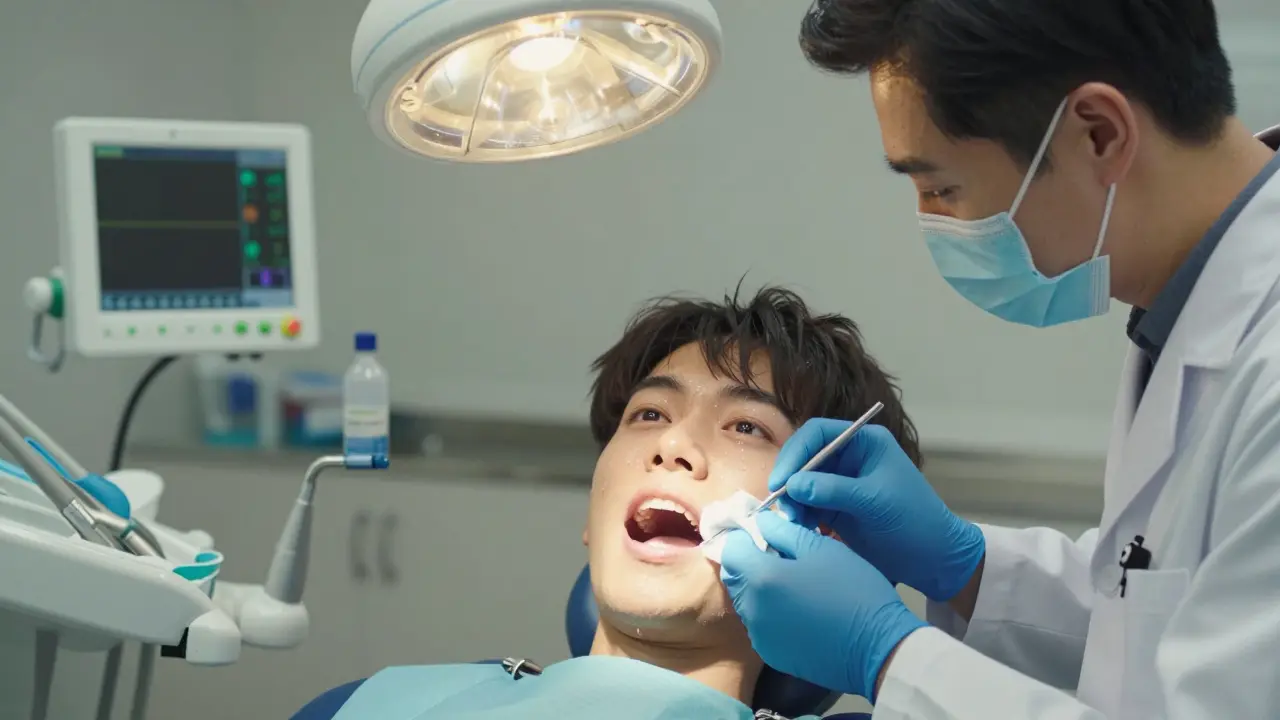
Getting a tooth pulled or a deep cleaning done while on blood thinners can feel scary. You’ve heard stories about people bleeding for hours after a simple dental visit. But here’s the truth: most dental procedures are safe even if you’re on blood thinners. The real danger isn’t the procedure-it’s stopping your medication unnecessarily.
Why Stopping Blood Thinners Is Riskier Than You Think
For years, dentists told patients to stop their blood thinners before any procedure. That advice is outdated-and dangerous. Stopping warfarin, apixaban, rivaroxaban, or other anticoagulants-even for a few days-can trigger a blood clot. That clot could lead to a stroke, heart attack, or pulmonary embolism. In fact, studies show the chance of a life-threatening clot from stopping your meds is higher than the chance of serious bleeding from a dental procedure. The American Dental Association (ADA) updated its guidelines in 2022 to make this clear: For most dental work, do not stop your blood thinners. The same goes for the Scottish Dental Clinical Effectiveness Programme (SDCEP), Stanford Health Care, and UCSD. These groups agree: the bleeding risk from a filling, root canal, or even a single tooth extraction is low. The clotting risk from stopping your meds? Not worth it.How Dental Procedures Are Classified by Bleeding Risk
Not all dental work is the same. Bleeding risk is broken into three levels:- Low-risk: Routine exams, X-rays, cleanings, taking dental impressions. No change to your meds needed.
- Low-moderate risk: Fillings, root canals, scaling and root planing (deep cleaning). Continue your blood thinners.
- Moderate risk: Removing one to three teeth, gum surgery, crown prep. Still usually safe without stopping meds.
What About Your INR Level? (For Warfarin Users)
If you’re on warfarin, your doctor checks your INR (International Normalized Ratio). This number tells how long your blood takes to clot. For dental work:- Low-risk procedures: INR under 3.5 is fine.
- Low-moderate risk: INR under 3.0 is ideal.
- Moderate risk: INR under 3.5 is acceptable, as long as the dentist uses extra hemostatic measures.
Direct Oral Anticoagulants (DOACs): What’s Different?
About 60% of new prescriptions today are for DOACs like apixaban (Eliquis), rivaroxaban (Xarelto), or dabigatran (Pradaxa). These drugs don’t need regular blood tests like warfarin. But they act faster and leave your system quicker. For most dental procedures, you don’t need to skip a dose. But for moderate-risk work like extractions, your dentist might ask you to skip your morning pill on the day of the procedure. That’s it. Wait at least 4 hours after your last dose before the extraction. This lowers bleeding risk without increasing clot risk. Never stop DOACs for more than one day unless your doctor says so. Missing two or more doses can spike your clot risk fast.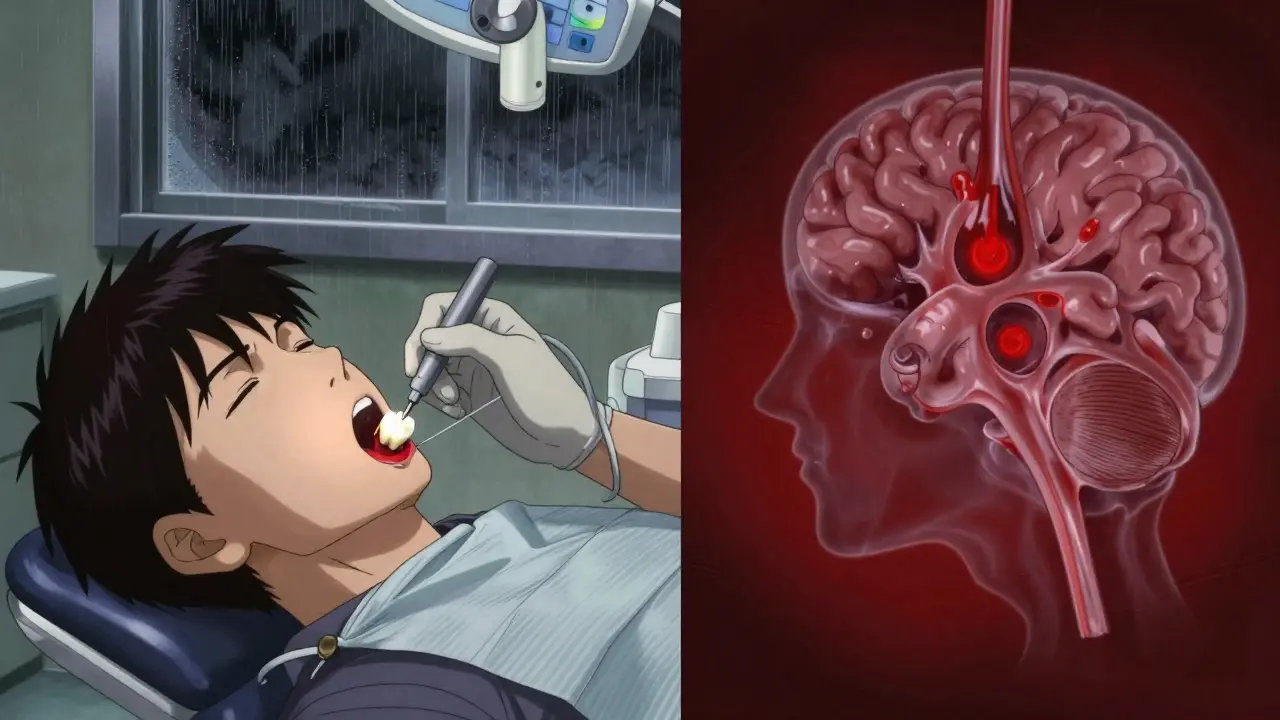
What Dentists Do to Control Bleeding
Dentists aren’t just guessing when you’re on blood thinners. They use proven methods to stop bleeding fast:- Tranexamic acid mouthwash: A 5% solution you swish for 1-2 minutes, then spit. Repeat every 2 hours if needed. It helps clots form and lasts up to 5 days if refrigerated.
- Pressure and packing: Gauze, collagen sponges, or fibrin sealants are packed into the socket after extraction.
- Suturing: Stitches help close the wound and reduce bleeding.
- Avoiding multiple extractions: Instead of pulling 3 teeth in one visit, dentists often space them out over two or three appointments.
Drugs That Make Bleeding Worse
Some common meds make bleeding risk higher. Always tell your dentist about everything you take:- NSAIDs: Ibuprofen, naproxen, diclofenac. These thin blood further. Use acetaminophen (Tylenol) for pain instead.
- Aspirin: Even low-dose aspirin for heart health increases bleeding. Don’t stop it without your cardiologist’s approval.
- Some antibiotics: Like clarithromycin or fluconazole. They can interfere with how your body breaks down DOACs.
- Herbal supplements: Ginkgo biloba, garlic, fish oil, and vitamin E can add to bleeding risk.
Who’s on Blood Thinners These Days?
It’s not just older people anymore. More young adults are on anticoagulants because of:- Deep vein thrombosis (DVT) after long flights
- Atrial fibrillation from intense athletic activity
- Pulmonary embolism after pregnancy
- Genetic clotting disorders like Factor V Leiden

What You Should Do Before Your Appointment
Don’t wait until the day of your appointment to figure this out. Here’s your checklist:- Make a list of every medication and supplement you take-dosage and schedule.
- Call your doctor or anticoagulation clinic. Ask: “Should I stop my blood thinner for this dental procedure?”
- Give your dentist that information before your visit.
- Ask if they use tranexamic acid mouthwash or other hemostatic tools.
- Confirm whether they’ll do one extraction at a time if multiple are needed.
What to Do After the Procedure
After your dental work:- Bite on gauze for 30-45 minutes. Don’t spit or rinse during that time.
- Use cold compresses on your cheek to reduce swelling.
- Don’t smoke or use a straw for at least 24 hours.
- Stick to soft foods. Avoid hot, spicy, or crunchy foods.
- If you see steady bleeding that doesn’t stop after 2 hours, call your dentist.
- If you feel dizzy, short of breath, or have chest pain, go to the ER. That’s not normal bleeding-that’s a clot.
What’s Changing in the Field?
More dental offices are using point-of-care INR testers now. Some even have apps that sync with your anticoagulation clinic. The goal? Better coordination between your dentist and your doctor. Research is also looking at personalized bleeding risk scores-factoring in your age, kidney function, other meds, and even your dental history. These tools will help decide exactly when, or if, to adjust your meds. For now, the message is clear: Most dental work is safe with blood thinners. The biggest mistake patients make is stopping their meds out of fear. The real risk isn’t bleeding-it’s the clot that follows.Should I stop my blood thinner before a tooth extraction?
For a single, uncomplicated extraction, no-you should not stop your blood thinner. The risk of a clot from stopping is much higher than the risk of bleeding. Dentists use local methods like tranexamic acid mouthwash and pressure packing to control bleeding safely. Only in rare cases, like multiple extractions or major oral surgery, might your doctor consider a short hold-but never without medical advice.
Can I take ibuprofen after a dental procedure if I’m on blood thinners?
No. Ibuprofen and other NSAIDs increase bleeding risk when combined with anticoagulants. Use acetaminophen (Tylenol) instead for pain relief. Always check with your dentist or pharmacist before taking any new medication, even over-the-counter ones.
What if my INR is too high for a dental procedure?
If your INR is above 3.5 for low-risk procedures or above 3.0 for moderate ones, your dentist will likely ask you to consult your doctor. Your doctor may temporarily lower your warfarin dose to bring your INR into a safer range-not stop it. Never adjust your dose yourself. The goal is to keep you protected from clots while minimizing bleeding risk.
Are DOACs safer than warfarin for dental work?
DOACs are generally easier to manage for dental procedures because they don’t require regular blood tests and have fewer food or drug interactions. For most procedures, you only need to skip your morning dose on the day of treatment. Their shorter half-life means they clear your system faster, reducing bleeding risk without increasing clot risk. But they still require careful coordination with your prescriber.
Can I get a deep cleaning (scaling) while on blood thinners?
Yes. Deep cleanings are classified as low-moderate risk. Stopping your blood thinner is not recommended. Dentists routinely perform scaling and root planing on patients taking anticoagulants with no major bleeding issues. The key is using proper technique and hemostatic tools like tranexamic acid rinses if needed.
What should I do if I start bleeding heavily after a dental procedure?
Bite down firmly on a moist gauze pad or tea bag for 30-45 minutes. Avoid spitting, rinsing, or sucking through a straw. If bleeding doesn’t slow after 2 hours, call your dentist. If you’re also dizzy, short of breath, or have chest pain, go to the emergency room immediately-these could be signs of a clot, not just bleeding.
10 Comments
Jerry Rodrigues January 20 2026
Been on Xarelto for AFib for 5 years. Had three extractions last year. No issues. Dentist used that tranexamic acid rinse-felt like mouthwash, weird but worked.
Just don’t panic. Your dentist’s got this.
Glenda Marínez Granados January 21 2026
Oh wow. So instead of listening to your doctor who told you to stop your meds for ‘safety,’ we’re now supposed to trust a bunch of dental guidelines written by people who’ve never had a clot?
Yeah right. 😏
Rod Wheatley January 22 2026
As a dental hygienist for 18 years, I’ve seen it all. Patients who stop their anticoagulants? That’s when the ER visits happen-not from bleeding, but from strokes.
Tranexamic acid? We keep it on every tray. Collagen sponges? Standard. Sutures? Always.
And yes-we *do* space out extractions. No one’s pulling six teeth in one sitting on a patient who’s on DOACs.
You’re not a liability. You’re just someone who needs a little extra care. We’ve got your back.
And no, you don’t need to stop your meds. Not for a cleaning. Not for a filling. Not even for a single extraction.
Stop listening to your uncle who ‘heard’ something on YouTube.
Bring your med list. Ask if they use the rinse. And breathe.
You’re gonna be fine.
Philip Williams January 23 2026
This is an excellent and comprehensive breakdown. The key takeaway-that the risk of thrombosis from discontinuing anticoagulants far exceeds the risk of hemorrhage during routine dental procedures-is empirically supported by multiple major medical and dental associations.
It is imperative that patients be educated on this, as misinformation continues to propagate through anecdotal sources.
Additionally, the emphasis on interprofessional communication between dentists and prescribing physicians is not just best practice-it is a critical safety protocol.
Thank you for highlighting the specific clinical tools (tranexamic acid, collagen sponges) and the nuanced differences between warfarin and DOACs.
This is the kind of evidence-based guidance that should be widely disseminated.
Andrew Rinaldi January 25 2026
I used to be terrified of dental work because of my warfarin. Then I found a dentist who actually knew what they were doing.
They didn’t ask me to stop anything. Just asked for my INR, used the rinse, and did one tooth at a time.
Turns out, the fear was worse than the procedure.
Maybe that’s the real problem-not the blood thinner, but the outdated fear.
Just sayin’.
Malvina Tomja January 25 2026
Let me get this straight. You’re telling me I should risk a hemorrhage because some ‘guidelines’ say it’s fine? What about the guy who bled out after a cleaning? You think he cared about ‘studies’? He’s dead.
And now you’re telling everyone to ignore their instincts because some ‘experts’ wrote a memo?
That’s not science. That’s arrogance.
My doctor told me to stop. I stopped. I didn’t die. Coincidence? Maybe. But I’m not betting my life on a 90% success rate.
When you’re the 10%, no one cares how many studies you cite.
Samuel Mendoza January 27 2026
Stop your meds? No. Stop listening to fear-mongers? Yes.
Uju Megafu January 29 2026
OMG I just had a tooth pulled and I didn’t stop my Eliquis and I’m STILL BLEEDING??
MY DENTIST SAID IT WAS FINE BUT NOW I’M ON THE FLOOR WITH A TOWEL ON MY FACE AND MY KID IS CRYING AND I THINK I’M GOING TO DIE
WHY DID NO ONE TELL ME ABOUT THE RINSE??
THIS IS A TRAP.
THIS IS A SCAM.
THEY’RE ALL IN IT TOGETHER.
WHY DIDN’T THEY WARN ME??
THEY DON’T CARE ABOUT US.
THEY JUST WANT TO SAVE TIME.
AND NOW I’M BLEEDING OUT AND NO ONE CARES.
WHY DIDN’T YOU TELL ME??
WHY??
WHY??
WHY??
Jarrod Flesch January 30 2026
Hey Uju, breathe. 😊
Tranexamic acid rinse is the fix-ask your dentist for it next time. They usually have it.
And if you’re still bleeding after 2 hours? Bite on a damp tea bag. Tannins help. I’ve done it myself after a wisdom tooth thing.
You’re not alone. We’ve all had that panic moment.
But you didn’t die. You’re here. And now you know what to do next time.
That’s progress.
And hey-you’re gonna be okay. Seriously.
Melanie Pearson January 31 2026
It is unconscionable that dental professionals are being encouraged to disregard established hematological protocols in favor of convenience. The American Dental Association does not possess the clinical authority to override the medical judgment of a prescribing physician. This represents a dangerous erosion of the physician-patient relationship. Patients are being misled into believing that their cardiologist’s instructions are obsolete. This is not evidence-based practice-it is institutional overreach. The potential for catastrophic outcomes is not theoretical. It is documented. And for those who suffer as a result, no guideline will bring them back.