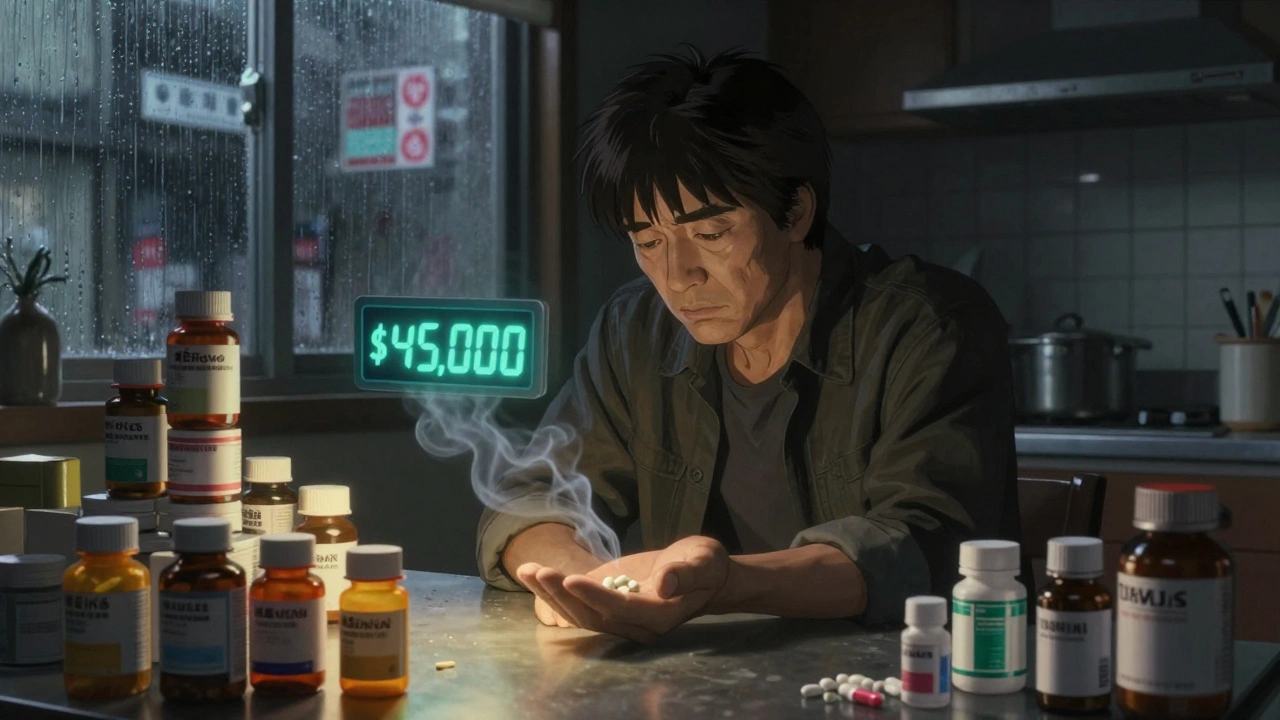
Every year, millions of people with chronic conditions like high blood pressure, diabetes, or asthma pay hundreds - sometimes over a thousand - dollars just to keep their meds stocked. But what if you could slash that cost by 80% without losing any effectiveness? The answer isn’t a new miracle drug. It’s something far simpler: generics.
What Exactly Are Generic Medications?
Generic drugs are exact copies of brand-name medications. They contain the same active ingredients, work the same way in your body, and are held to the same strict standards by the FDA. The only differences? The shape, color, or inactive ingredients like fillers - none of which affect how well the drug works. Once a brand-name drug’s patent expires, other companies can make the same medicine at a fraction of the cost.Take lisinopril, for example. The brand version, Prinivil, might cost $40 to $50 a month. The generic? Around $4. That’s not a sale. That’s a revolution. And it’s not just one drug. Over 90% of all prescriptions filled in the U.S. are generics - not because they’re cheaper, but because they’re just as good.
How Much Do You Really Save Over a Lifetime?
Let’s say you’re diagnosed with hypertension at age 45. You’ll likely need to take medication for the next 30, 40, even 50 years. If you stick with the brand-name version, you could spend $1,500 a year - that’s $45,000 to $75,000 over your lifetime. Switch to the generic, and your annual cost drops to $50. Total? Around $1,500 to $2,000. That’s a savings of $43,000 or more.It’s the same story with diabetes. Metformin, the go-to generic for Type 2 diabetes, costs less than $10 a month. The brand-name version? Up to $150. Over 30 years, that’s over $50,000 saved. For asthma patients, albuterol inhalers drop from $60 to $15 per prescription. Multiply that by 12 refills a year - and decades of use - and you’re looking at tens of thousands in savings.
These aren’t hypothetical numbers. In 2020, U.S. patients saved $338 billion just by using generics instead of brand-name drugs. Over the last decade, that total reached nearly $2.4 trillion. That’s not just corporate profit - that’s real money staying in people’s pockets.
Why Don’t More People Use Generics?
You’d think with savings like this, everyone would jump on generics. But here’s the problem: myths still linger.Some believe generics are “weaker” or “made in shoddy factories.” That’s false. The FDA requires generics to prove they’re bioequivalent - meaning they deliver the same amount of active ingredient into your bloodstream at the same rate as the brand. The acceptable range? 80% to 125%. That’s not a loophole. That’s scientific precision. If a generic falls outside that range, it’s rejected.
Others worry about side effects from inactive ingredients. Yes, fillers and dyes can differ. For most people, that’s harmless. But for those with rare allergies - say, to lactose or certain dyes - it’s worth discussing with your pharmacist. That’s not a reason to avoid generics. It’s a reason to talk to someone who knows.
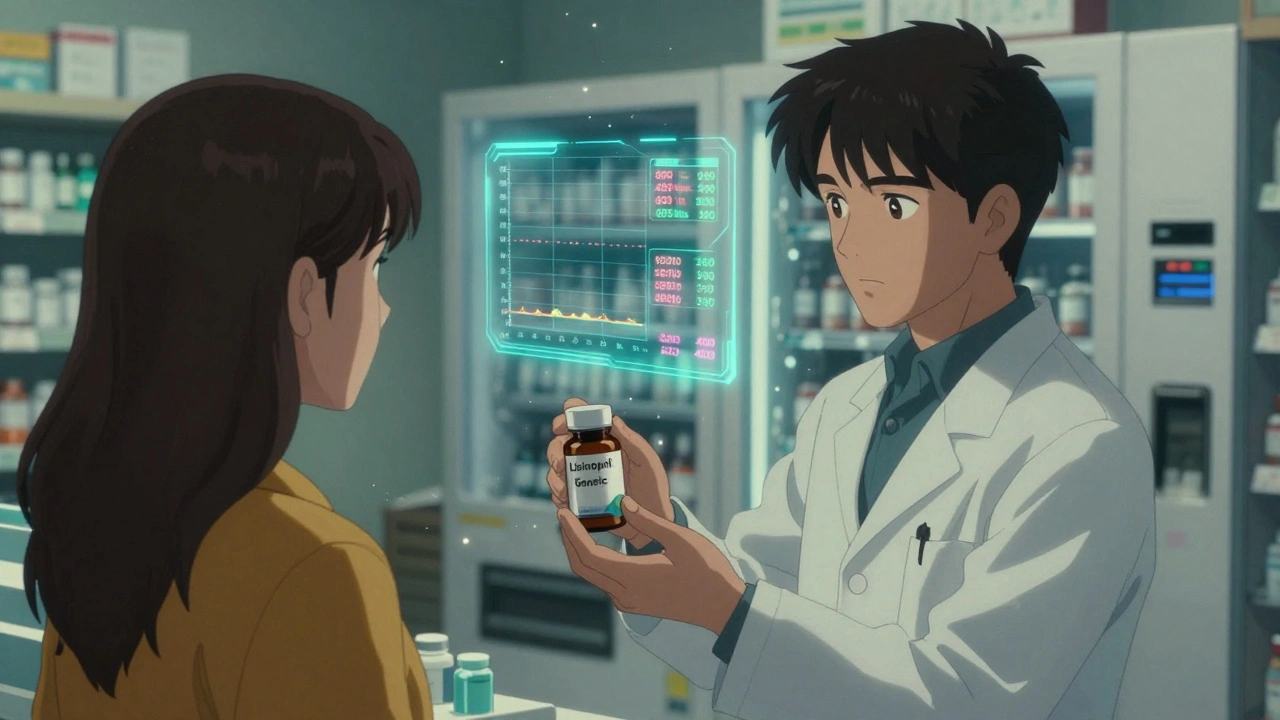
The biggest barrier? Cost confusion. Many patients don’t know their insurance covers generics at a lower copay. Or they assume the doctor’s first prescription is the only option. In reality, your pharmacist can often switch you to a generic without needing a new prescription.
Generics Don’t Just Save Money - They Save Lives
It’s not just about what you pay at the pharmacy. It’s about whether you take your medicine at all.Studies show patients on generics are 18% to 22% more likely to stick with their treatment than those on brand-name drugs. Why? Because they can afford to. When you’re choosing between buying meds or paying your rent, you skip doses. That’s how high blood pressure turns into a stroke. How uncontrolled diabetes leads to kidney failure.
In Brazil, government policies pushing generic drugs for hypertension and diabetes cut healthcare costs by $1.2 billion a year - and increased access by 35%. In India, affordable generic HIV meds helped cut death rates by 25% over a decade. These aren’t isolated cases. They’re proof: when cost drops, adherence rises. And when adherence rises, hospital visits drop.
One study found patients on generics had 20% to 30% fewer emergency room trips and hospital stays. That’s not just saving money - it’s saving time, stress, and quality of life.
How to Make Sure You’re Getting the Best Deal
You don’t need a degree in pharmacology to start saving. Here’s how to take control:- Ask your doctor: “Is there a generic version of this?” If they say no, ask why. Sometimes it’s because the brand is new. Other times, it’s just habit.
- Check your pharmacy’s price list. Many pharmacies - especially chain stores like CVS or Walmart - offer $4 or $10 monthly generic programs for common chronic meds. No insurance needed.
- Use Medicare Part D or Medicaid. These programs often have built-in savings for generics. The Inflation Reduction Act of 2022 capped insulin at $35 a month for Medicare users - and that includes generics.
- Ask your pharmacist about Medication Therapy Management (MTM). It’s a free service for many Medicare patients. A pharmacist reviews all your meds, finds duplicates, spots interactions, and switches you to cheaper generics - all in one 30-minute chat.
- Use the FDA’s Orange Book. It’s a free public database that lists approved generics and their brand equivalents. No login. No fee. Just facts.
What’s Changing in 2025 and Beyond?
The landscape is shifting. More complex drugs - like those for rheumatoid arthritis, cancer, and rare diseases - are now coming off patent. That means biosimilars (the generic version of biologic drugs) are hitting the market. These aren’t simple pills. They’re injectables and infusions that used to cost $10,000 a month. Now, biosimilars are cutting those prices by 30% to 50%.And the FDA is speeding things up. Through GDUFA III (running through 2027), they’re cutting approval times for complex generics. That means more options, faster.
Meanwhile, manufacturers are moving beyond basic pills. New combination generics - like a single pill that combines blood pressure and cholesterol meds - are becoming more common. Fewer pills. Lower cost. Better adherence.
Real Stories, Real Savings
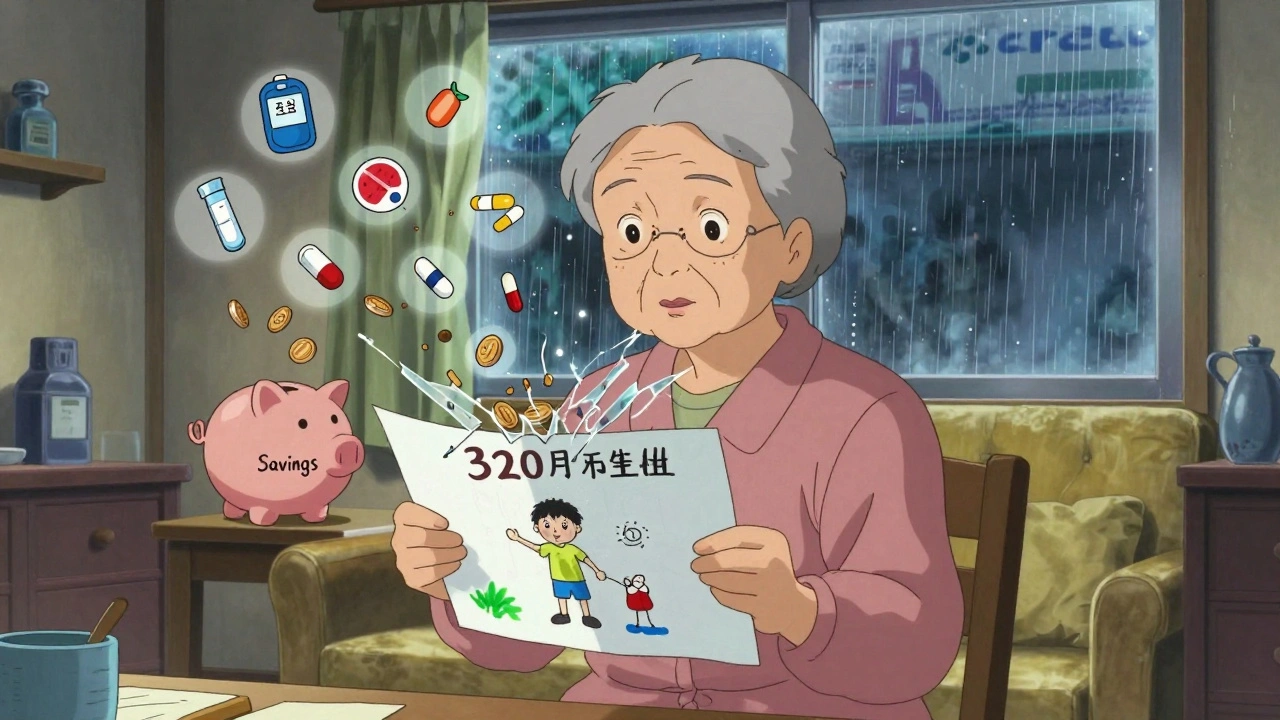
Maria, 68, from rural New Mexico, takes five medications for diabetes, hypertension, and high cholesterol. Before switching to generics, her monthly out-of-pocket cost was $320. After her pharmacist helped her switch and enrolled her in a Medicare MTM program? Her cost dropped to $58. She now has extra money for groceries and her grandkids’ school supplies.James, 52, with asthma, used to refill his inhaler every two months at $65. He thought he had no choice. Then his pharmacist showed him the generic albuterol - $15 for the same inhaler. He switched. His inhaler lasts longer because he’s not afraid to use it when he needs it. His ER visits dropped from three a year to zero.
Don’t Wait for the Next Bill to Arrive
Chronic conditions don’t go away. But your medication costs don’t have to keep climbing. Generics aren’t a compromise. They’re the smartest, safest, most proven way to manage long-term health without going broke.Start today. Ask your doctor. Ask your pharmacist. Look up your meds in the FDA’s Orange Book. Switch one drug. Then another. Over time, those small changes add up to tens of thousands saved - and a healthier, less stressful life.
Are generic drugs as effective as brand-name drugs?
Yes. The FDA requires generics to prove they work the same way in your body as the brand-name version. They must have the same active ingredient, strength, dosage form, and route of administration. Bioequivalence testing ensures they deliver the same amount of medicine into your bloodstream at the same rate. Thousands of studies confirm they are just as effective.
Why are generic drugs so much cheaper?
Brand-name companies spend billions on research, clinical trials, and marketing to get their drug approved. Generic manufacturers don’t have to repeat those expensive studies. They only need to prove their version is bioequivalent. That cuts development costs by 90%. Those savings get passed on to you.
Can I switch from a brand-name drug to a generic without my doctor’s permission?
In most cases, yes. Pharmacists are legally allowed to substitute a generic for a brand-name drug unless the prescription says “dispense as written” or “no substitution.” Even then, you can ask your doctor to change the note. Always check with your pharmacist - they’re trained to handle these switches safely.
Do insurance plans cover generics better than brand-name drugs?
Almost always. Most insurance plans have lower copays for generics. Some even require you to try a generic first before covering the brand-name version. Medicare Part D plans, Medicaid, and many private insurers prioritize generics because they save the system money - and that benefit flows directly to you.
What if I feel like the generic isn’t working as well?
It’s rare, but sometimes people notice a difference. That’s usually because of inactive ingredients - like dyes or fillers - that affect how the pill feels or tastes. It doesn’t mean the medicine isn’t working. If you’re concerned, talk to your pharmacist. They can check if you’re on the right generic version, or switch you to another manufacturer’s version. Never stop your medication without consulting a professional.
Are there any chronic conditions where generics aren’t available?
Generics are available for nearly all common chronic conditions: hypertension, diabetes, asthma, high cholesterol, thyroid disease, depression, and more. For newer biologic drugs - like those for rheumatoid arthritis or Crohn’s disease - generics (called biosimilars) are now becoming available as patents expire. If your drug doesn’t have a generic yet, ask your pharmacist when one might be expected.
13 Comments
alaa ismail December 2 2025
Just switched my dad’s blood pressure med to generic last month. He’s been on it for 12 years. Same pill, same results, but now he’s saving $120 a month. He says he feels like he won the lottery without buying a ticket.
ruiqing Jane December 4 2025
Let me be clear: this isn’t about cutting corners. It’s about cutting nonsense. The FDA doesn’t approve generics based on wishful thinking-it’s a rigorous, science-backed process. If your doctor says ‘no generic,’ ask them to show you the clinical data proving the brand is superior. Spoiler: they can’t. Because it doesn’t exist.
Allan maniero December 4 2025
It’s fascinating, really, how deeply embedded the myth is that expensive = better. We do this with everything-wine, coffee, skincare-but with medication, the stakes are life and death. And yet, the data is overwhelmingly clear: generics are not just cheaper, they’re equally effective. The real tragedy isn’t the cost of the drug-it’s the cost of misinformation. People die because they skip doses, not because generics are inferior. That’s the systemic failure we need to address.
Zoe Bray December 6 2025
From a pharmacoeconomic standpoint, the utilization of bioequivalent therapeutics represents a paradigmatic shift in chronic disease management. The reduction in out-of-pocket expenditures correlates directly with improved medication adherence metrics, as evidenced by multiple cohort studies utilizing claims data from the CDC’s NHANES framework. Furthermore, the cost differential between innovator and generic molecules is statistically significant (p < 0.001), with effect sizes exceeding Cohen’s d = 2.3 in longitudinal analyses.
Girish Padia December 7 2025
India has been doing this for decades. We’ve been making generics since the 70s. You think your $40 pill is magic? We make it for $0.20 and ship it worldwide. If you’re still paying brand prices in 2025, you’re not being smart-you’re being exploited.
Sheryl Lynn December 8 2025
Ugh. I used to take generics. Then I started noticing my skin broke out. My joints felt… dull. Like my body was on mute. I switched back to the brand-and suddenly, I was alive again. Maybe it’s placebo? Maybe. But I’d rather pay $150 a month to feel like a human being than save $100 and feel like a robot on a budget.
Paul Santos December 9 2025
Generics are the capitalism of medicine, my friends. The commodification of healing. We’ve turned life-saving drugs into bulk commodities, stripped of narrative, stripped of prestige. But hey-when your insulin costs less than your latte, are you really living… or just surviving? 🤔
Eddy Kimani December 10 2025
Interesting that the FDA’s bioequivalence window is 80–125%. That’s a 45% variance. While statistically valid, clinically, that could mean a 20% difference in peak plasma concentration for some CYP450-metabolized drugs. For narrow-therapeutic-index meds like warfarin or levothyroxine, even small fluctuations matter. Not saying generics are bad-but they’re not always interchangeable without monitoring.
Chelsea Moore December 12 2025
HOW DARE YOU?! I spent YEARS paying for my brand-name asthma inhaler because I needed it to WORK. And now you’re telling me I was stupid? That I’m a sucker? That my $60 inhaler is just a ‘color change’? My lungs are not a lab experiment! I’m not some statistic in your spreadsheet! I need the REAL thing! And if you think I’m going to risk my breathing for $15… you don’t know me at all!!
Kristen Yates December 14 2025
My mom in Bangladesh takes a generic diabetes pill that costs less than a banana. She’s 78. Her blood sugar is stable. She walks two miles every morning. No hospital visits in five years. If it works for her, it can work for anyone.
Victoria Graci December 14 2025
There’s something deeply poetic about this, isn’t there? We’ve engineered molecules to mimic life-saving chemistry, yet we’ve failed to engineer a system that trusts people to choose wisely. Generics are the quiet rebellion against the cult of branding-the idea that value isn’t in the label, but in the function. Maybe healing doesn’t need a logo. Maybe it just needs to work. And it does.
Saravanan Sathyanandha December 14 2025
In my village in Tamil Nadu, we have a saying: ‘A medicine that heals is a god, whether it wears a golden wrapper or a plain one.’ I’ve seen people choose generics not because they’re cheap, but because they’re trusted. The real revolution isn’t in the pill-it’s in the mindset. We don’t need to convince people generics are safe. We need to remind them that their health is worth more than their pride.
Fern Marder December 16 2025
Okay but… have you seen the pill colors? 😬 Some generics look like they were made by a 5-year-old with a box of crayons. I just can’t swallow a neon green tablet. No. Just no. 🤢