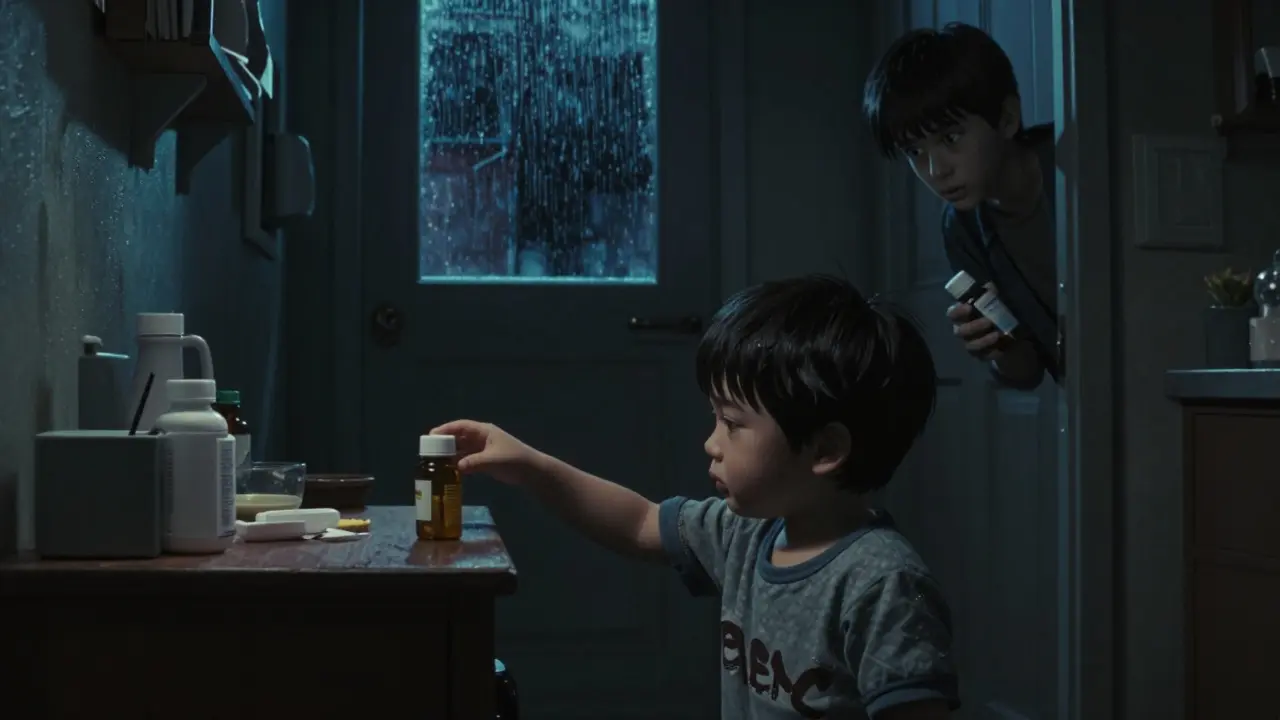
Why Your Medicine Cabinet Could Be Dangerous
Most people think their medicine cabinet is safe. It’s tucked away, locked-or so they assume. But in reality, 70% of teens who misuse prescription drugs get them from their own home, often within minutes of deciding to use them. And for toddlers? A forgotten pill on the nightstand or a purse left within reach can mean an emergency room visit. In 2023, over 48,000 children under five were treated in U.S. emergency rooms for accidental medication ingestions. The real problem? Most of these incidents aren’t caused by strangers or illegal drug rings-they’re caused by poorly stored, easily accessible pills in your own home.
How Counterfeit Drugs Are Sneaking Into Your Home
Counterfeit medications aren’t just a problem in developing countries. With online pharmacies and unregulated suppliers, fake pills now reach homes in New Zealand, the U.S., and beyond. These counterfeit drugs might look identical to real ones, but they can contain no active ingredient, toxic chemicals, or deadly doses of fentanyl. The FDA reports that over 50% of online pharmacies selling prescription drugs operate illegally. Many people buy medications online because they’re cheaper, but they don’t realize they’re risking their life. A fake version of oxycodone might be labeled as 10mg but contain 50mg of fentanyl. A counterfeit antibiotic might have no medicine at all, letting an infection spread unchecked.
How do you tell if your medication is real? Always check the packaging. Legitimate drugs come in sealed containers with clear printing, batch numbers, and tamper-evident seals. If the label looks blurry, the bottle feels flimsy, or the pills have a different color or smell than usual, don’t take them. Call your pharmacist. They can verify authenticity using manufacturer codes and lot numbers. Never refill prescriptions from unknown websites-even if they look professional.
Where Not to Store Your Medications
The bathroom is the worst place to keep medicine. Every time you shower, humidity spikes above 80%. That moisture breaks down pills. Aspirin turns into vinegar and salicylic acid in just two weeks. Ampicillin loses 30% of its strength in seven days at that humidity. Even insulin, which needs refrigeration, can degrade if left in a warm, damp cabinet.
Storing meds in purses, coat pockets, or on the kitchen counter is just as risky. A 2023 study found that 28% of accidental ingestions by toddlers happened because medications were left in a purse within reach. Another 42% occurred when pills were temporarily placed on a nightstand while someone took them. These aren’t mistakes-they’re predictable risks. If you’re not storing your meds properly, you’re not protecting your family.
The Right Way to Store Medications
There’s one rule that all health agencies agree on: lock it up. Not just a regular cabinet. Not just out of reach. Actually locked. The CDC, FDA, and American Academy of Pediatrics all say locked storage reduces accidental access by 92%. That’s not a suggestion-it’s the standard.
Use a dedicated medication safe. These are small, affordable boxes you can mount on a wall or bolt to a dresser. Look for ones that meet ASTM F2057-20 standards-they’re tested to resist tampering by kids aged 42 to 51 months for at least 10 minutes. Gun safes, fireproof document boxes, and even high-mounted toolboxes work too, as long as they lock. The key is height: install it above 5 feet (1.5 meters), where toddlers can’t reach it, but you can still access it quickly.
Keep everything in its original bottle. Those child-resistant caps? They only work if you twist them shut until you hear the click. Most people don’t do this. And if you transfer pills to a pill organizer, you lose the label, the expiration date, and the tamper seal. That makes it impossible to tell if a pill is real or if it’s expired.
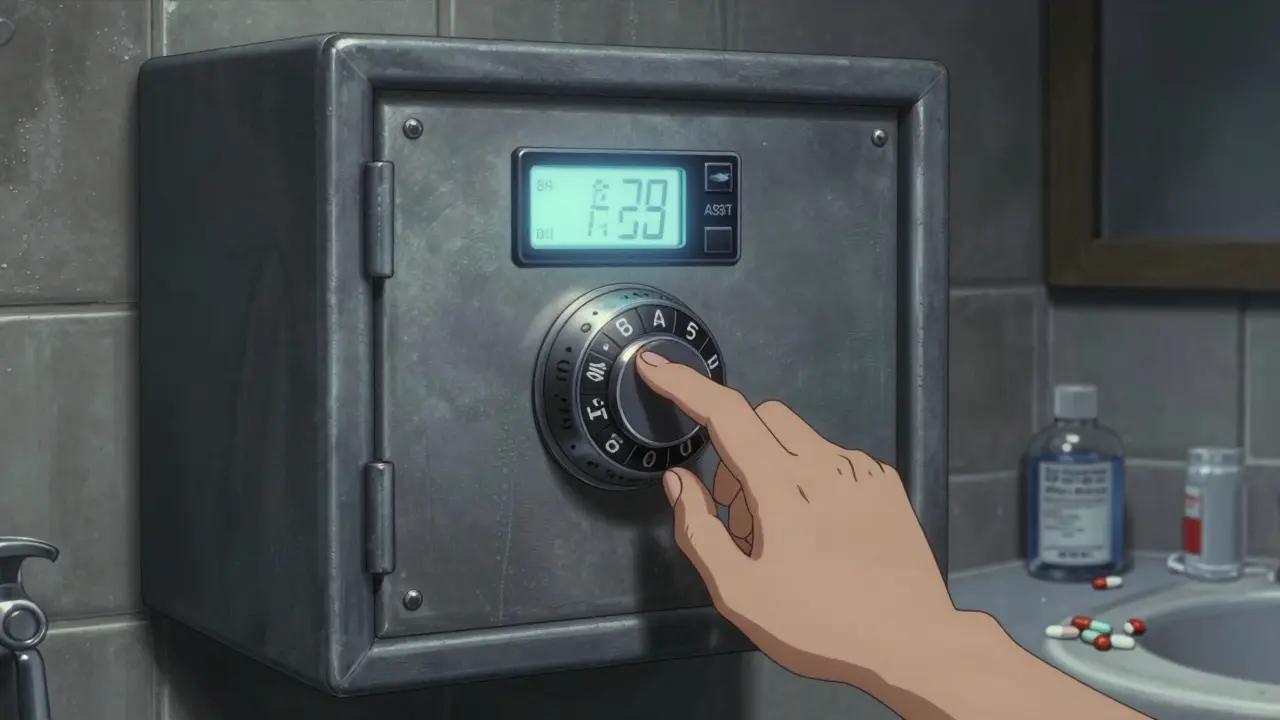
Special Cases: Refrigerated, Emergency, and High-Risk Meds
Some medications need cold storage-like insulin, certain antibiotics, and biologics. These should go in a lockable container inside the fridge, but not in the main compartment where food sits. Keep them on the door shelf, where it’s slightly warmer and easier to grab quickly. The temperature must stay between 36-46°F (2-8°C). A thermometer inside the container helps.
If you use naloxone (Narcan) for opioid overdoses, it must be accessible within 10 seconds. That means no locked safe buried in a closet. Instead, mount a wall safe at waist height, with a combination lock you can open fast. Many families use dual-access safes: one for daily meds (easily reachable), one for opioids (locked away). The Arthritis Foundation recommends combination locks with large dials for older adults with stiff fingers-security doesn’t have to mean sacrifice.
How to Audit Your Home in 20 Minutes
Do this once a quarter. Walk through every room. Look under sinks, in drawers, on shelves, in backpacks, in cars. Write down every medication you find-prescription, over-the-counter, vitamins, supplements. Check expiration dates. Throw out anything old. The EPA says 85% of unused meds are kept for ‘just in case,’ but they’re often ineffective or dangerous by then.
Then, choose one primary storage location. Consolidate everything there. No more five different spots. One locked box. One place everyone knows about. Teach kids that it’s off-limits. Tell teens it’s not theirs to take. Make it a household rule.
Disposal Matters More Than You Think
Flushing pills down the toilet or tossing them in the trash pollutes waterways and harms wildlife. The EPA estimates pharmaceuticals in water affect 75% of U.S. streams. But you can’t just throw them away safely either. The right way? Use a take-back program. In New Zealand, pharmacies like Priceline and Countdown have drop-off bins. In the U.S., there are over 14,000 permanent collection sites. Find yours at www.takebackyourmeds.org.
If no take-back is available, mix pills with coffee grounds or cat litter in a sealed bag before throwing them out. Remove personal info from the bottle. Never leave empty bottles lying around-they can be reused by someone to store fake drugs.
Real Stories From Real Homes
One parent in Christchurch started using a Gunvault MicroVault on her nightstand after her 3-year-old nearly swallowed her thyroid medication. She says her anxiety dropped 90%. Another man in Auckland with chronic pain uses a wall-mounted safe at 6 feet high. He can reach it in seconds during a flare-up, but his two toddlers can’t. He says it’s the only thing that lets him sleep at night.
On Reddit, r/Parenting is full of people who switched from unlocked cabinets to locked safes. Most say the first week felt awkward. By week three, it was normal. One user wrote: ‘I didn’t realize how much stress I was carrying until I didn’t have to check every drawer anymore.’
What’s Changing in 2026
By mid-2026, visiting nurses in New Zealand and the U.S. will start checking medication storage during home visits. Insurance companies are beginning to offer discounts for homes with certified storage solutions. The National Association of Home Builders is drafting standards to rate homes based on safe medication storage-just like smoke detectors.
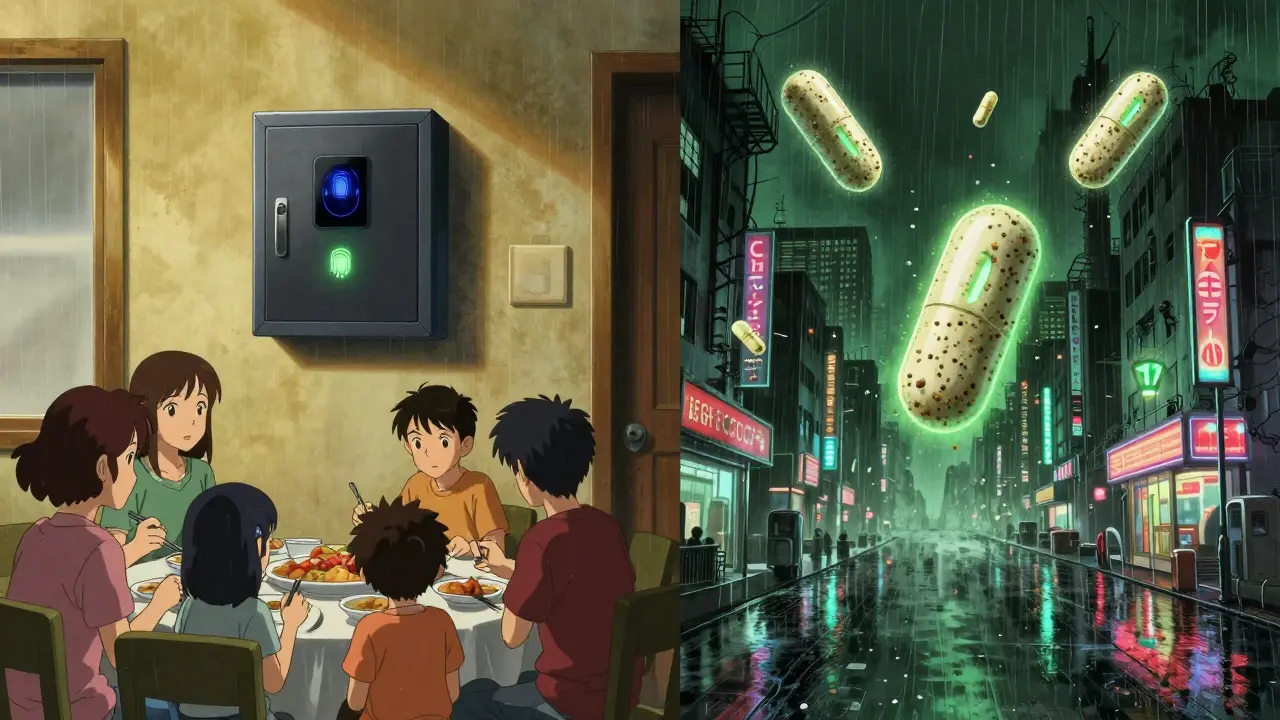
Smart safes with fingerprint access are hitting the market. They log who opens them and when. For elderly users, voice-activated locks are being tested. Blockchain systems are being piloted by major pharmacies to track drug authenticity from factory to shelf. These aren’t sci-fi-they’re coming fast.
What You Can Do Today
- Find every medication in your home. Write them down.
- Check expiration dates. Discard anything old.
- Buy a locked storage box that meets ASTM F2057-20 standards.
- Move all meds into it. Keep them in original bottles.
- Lock it. Put it up high. Tell everyone in the house: ‘This is not for sharing.’
- Find your nearest drug take-back drop-off point. Dispose of leftovers properly.
It takes 21 days to form a habit. After that, it’s not a chore-it’s peace of mind. You’re not just protecting your pills. You’re protecting your child, your teen, your partner, and yourself from something you never saw coming.
How do I know if my medication is counterfeit?
Check the packaging: real medications have sharp printing, clear batch numbers, and tamper-evident seals. The pills should match the description on the label-color, shape, markings. If the bottle feels cheap, the label looks blurry, or the pills smell odd, don’t take them. Call your pharmacist and ask them to verify the lot number with the manufacturer. Online purchases without a prescription are high-risk-over 50% of websites selling prescription drugs are illegal.
Can I store all my meds in one place?
Yes, and you should. Keeping meds in multiple spots-bathroom, kitchen, purse, car-increases the risk of loss, misuse, or accidental ingestion. Consolidate everything into one locked, secure location. Only keep a small, current supply of daily meds in an accessible spot if you have mobility issues. Use a combination lock or smart safe that allows quick access without compromising safety.
Is it safe to use pill organizers?
Only temporarily. Pill organizers are great for remembering doses, but they remove the original labeling, expiration date, and child-resistant cap. This makes it impossible to verify the drug’s identity or safety. Always keep the original bottle locked up. Use the organizer as a daily tool, then refill it from the sealed, labeled container.
What should I do with expired or unused meds?
Never flush them or throw them in the trash without mixing. Use a drug take-back program-pharmacies and police stations often have drop-off bins. In New Zealand, Priceline and Countdown offer free disposal. If no program is nearby, mix pills with coffee grounds or cat litter in a sealed plastic bag, then throw it in the trash. Scratch out your name and prescription details on the bottle before recycling it.
How do I store insulin safely at home?
Keep unopened insulin in the fridge between 36-46°F (2-8°C). Once opened, it can stay at room temperature (below 86°F/30°C) for up to 28 days. Store it in a lockable container on the fridge door-not in the back where it’s too cold. Never freeze it. Always check the expiration date and inspect for clumping or discoloration before use.
Are child-resistant caps enough?
No. Child-resistant caps reduce access by only 45%. When combined with locked storage, that jumps to 92%. Kids can figure out twist caps in minutes. A locked box adds the physical barrier that actually stops them. Always twist the cap until you hear a click-but don’t rely on it alone.
Can I lock up my own pain meds if I have arthritis?
Yes, and you should-but choose the right lock. Combination locks with large, easy-to-turn dials are recommended by the Arthritis Foundation. Wall-mounted safes at waist height let you reach them quickly without bending. Some smart safes open with voice commands or fingerprint scans. Security doesn’t mean sacrificing access. There are solutions designed for both safety and usability.
11 Comments
Sazzy De February 1 2026
I never thought about how humidity ruins pills. My bathroom cabinet is officially retired.
Just moved everything to a locked box on the closet shelf. Feels way better.
Shawn Peck February 2 2026
Dude. You think your kid can't open a pill bottle? I saw a 2-year-old crack a childproof cap like it was a gummy bear. Lock it up or your kid ends up in the ER. No debate.
Melissa Cogswell February 4 2026
I use a pill organizer for my meds but always refill from the original bottle. Learned the hard way after mixing up my blood pressure pills with my vitamins. Don't be like me.
Sheila Garfield February 6 2026
My mum used to keep all her pills in her handbag. I used to think it was cute. Now I know it was terrifying. We got her a little wall safe. She complains but sleeps better now.
Niamh Trihy February 7 2026
The FDA stats on fake online pharmacies are wild. I checked my last order from that 'discount pharmacy'-lot number didn't match. Called my pharmacist. They flagged it as counterfeit within 10 minutes. Don't risk it.
Diksha Srivastava February 7 2026
This is such a simple change that can save so many lives. I just bought a small lockbox for my house. My niece visits every weekend. I'd rather feel safe than embarrassed about being 'overcautious'. You got this!
KATHRYN JOHNSON February 9 2026
I'm a U.S. citizen and I find it unacceptable that our government hasn't mandated childproof locking cabinets in every home like they do with smoke detectors. This isn't a suggestion-it's a public health emergency. Why are we still treating it like a personal choice?
Sidhanth SY February 10 2026
I live in India and we don't have take-back programs everywhere. But I mix my expired meds with used coffee grounds in a sealed jar before tossing it. I also write 'DANGER - MEDICINE' on the outside. Small steps, but better than flushing. Plus, my neighbor now does it too.
Jason Xin February 11 2026
So let me get this straight. You're telling me I need to spend $50 on a safe because I'm too lazy to remember where I put my Tylenol? And that this is somehow more important than fixing our broken healthcare system? Okay.
Blair Kelly February 12 2026
I'm not a parent, but I have chronic pain. I bought a smart safe with fingerprint access. It logs every time I open it. My insurance gave me a $100 discount. My doctor said it's the first time in 10 years someone actually followed the safety guidelines. I'm not a hero. I just didn't want to die from my own meds.
Shubham Dixit February 13 2026
Let me tell you something about the West and their obsession with locks and safes. In my village in India, we keep medicines in a single tin box on the top shelf. No locks. No alarms. No apps. We teach our children respect. We teach them that medicine is not candy. We don't need American paranoia to keep our families safe. Your fear is your own invention. We live with trust, not titanium.