Anticoagulant & Antiviral Interaction Checker
Clinical Recommendation:
*This tool is for informational purposes only. Always consult your doctor or pharmacist before changing medications.
Imagine you are taking your daily blood thinner, a medication that keeps your heart safe from strokes or clots. Then, you test positive for COVID-19. You grab the antiviral treatment recommended by your doctor, perhaps Paxlovid, expecting to feel better in a few days. But what happens next could be dangerous. These two powerful medications can clash inside your body, turning a routine recovery into a medical emergency involving severe bleeding or unexpected blood clots.
This isn't just a theoretical risk. During the peak of the pandemic, hospitals saw a surge in complications because many patients didn't realize how deeply respiratory treatments affect anticoagulants. The interaction between these drugs is complex, driven by how your liver processes them. If you are on blood thinners, understanding this relationship is not optional-it is critical for your safety.
Why Respiratory Infections Change Your Blood Clotting Risk
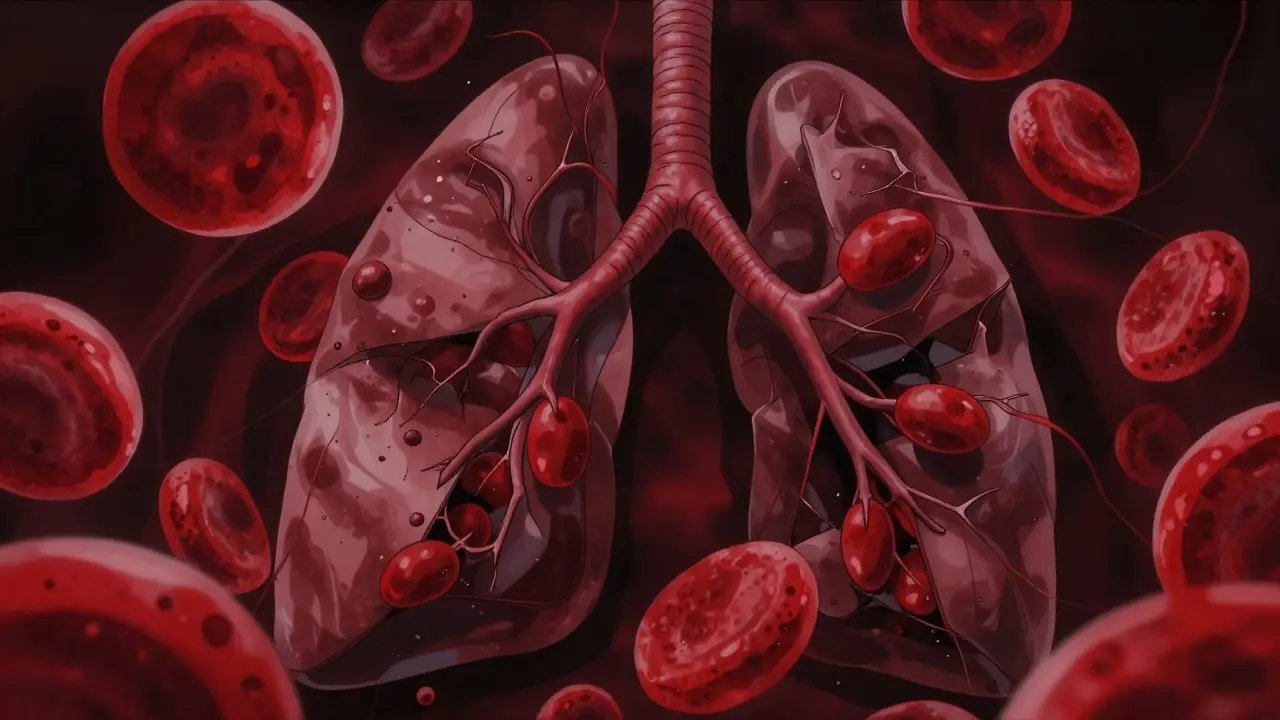
When you catch a serious respiratory infection like SARS-CoV-2, your body reacts in ways that go beyond fever and cough. The virus triggers a state called hypercoagulability, which means your blood becomes much more likely to clot than usual. This is your immune system’s overreaction, creating tiny clots (microthrombi) in your lung vessels. Studies show that in about 70% of critical cases, these micro-clots contribute significantly to organ failure.
Because of this heightened clotting risk, doctors often prescribe therapeutic-dose anticoagulants-higher doses than what you might take for prevention-to keep your blood flowing freely. However, this creates a delicate balance. On one hand, you need strong protection against clots. On the other hand, adding antiviral drugs can disrupt how your body handles these blood thinners, pushing you toward the opposite extreme: dangerous bleeding.
| Medication Class | Example Drugs | Metabolism Pathway | Interaction Risk with Antivirals |
|---|---|---|---|
| DOACs | Apixaban, Rivaroxaban, Dabigatran | CYP3A4 Enzyme & P-glycoprotein | High (Significant level changes) |
| Vitamin K Antagonists | Warfarin | CYP2C9 Enzyme | Moderate (Requires INR monitoring) |
| Low-Molecular-Weight Heparin | Enoxaparin | Renal Clearance | Low (Preferred during interactions) |
The Double-Edged Sword: How Antivirals Affect Blood Thinners
The core of the problem lies in how your liver breaks down drugs. Most Direct Oral Anticoagulants (DOACs) rely on an enzyme called CYP3A4 and a transporter protein known as P-glycoprotein (P-gp). Many antiviral medications used for respiratory infections also interact with these exact same pathways. It’s like two cars trying to use the same single-lane bridge at the same time-one has to stop, or both crash.
Take Paxlovid (nirmatrelvir-ritonavir), for example. The ritonavir component acts as a potent inhibitor of CYP3A4. When you take it with DOACs like apixaban or rivaroxaban, your liver cannot break down the blood thinner fast enough. As a result, levels of the anticoagulant in your blood can skyrocket. Research indicates this can increase exposure to the drug by 3 to 5 times, drastically raising the risk of major bleeding events, such as gastrointestinal hemorrhage.
Conversely, some treatments work in the opposite direction. Dexamethasone, a steroid often used for severe respiratory distress, is a strong inducer of CYP3A4. It speeds up the liver’s activity, causing it to clear blood thinners from your system too quickly. This can reduce the effectiveness of your anticoagulant by up to 50%, leaving you vulnerable to life-threatening clots. You are essentially swinging from one danger zone to another depending on which rescue medication you receive.

Navigating Specific Drug Interactions
Not all blood thinners react the same way, and not all antivirals behave identically. Knowing the specifics helps you have a smarter conversation with your healthcare provider.
Dabigatran: This drug is unique because it relies heavily on P-gp transporters rather than just liver enzymes. When combined with ritonavir-containing drugs, absorption increases dramatically. US guidelines generally advise avoiding this combination if your kidney function is reduced. However, European guidelines sometimes allow it with careful dose adjustments. If you are on dabigatran, timing matters. Some protocols suggest taking the blood thinner at least 12 hours apart from the antiviral to minimize overlap, though this requires strict adherence.
Rivaroxaban and Apixaban: These are among the most commonly prescribed DOACs. Because they are metabolized directly by CYP3A4, they are highly sensitive to inhibitors like ritonavir. The standard recommendation from organizations like the American Society of Health-System Pharmacists (ASHP) is to hold these medications during the 5-day course of Paxlovid. For patients at high risk of clots, doctors may switch you temporarily to a low-molecular-weight heparin injection, such as enoxaparin, which bypasses these metabolic pathways entirely.
Warfarin: While older, warfarin offers a different advantage: it is monitored via the International Normalized Ratio (INR) test. If you are on warfarin, you can continue it while taking Paxlovid, but you must monitor your INR closely-often daily. The antiviral can cause your INR to spike, meaning your blood is thinner than intended. Adjusting the warfarin dose downward during treatment and then back up afterward is a common strategy to maintain safety.

Real-World Challenges and Clinical Strategies
In practice, managing these interactions is messy. A study published in JAMA Internal Medicine found that hospitalized patients faced bleeding rates between 3.5% and 15% when anticoagulants and COVID-19 therapies were mixed improperly. Pharmacists report seeing these issues frequently. In community settings, nearly two-thirds of outpatient pharmacists encountered significant interactions monthly during the height of the pandemic.
Consider the case of a patient who continued full-dose rivaroxaban while starting Paxlovid. Within days, they developed gastrointestinal bleeding requiring hospitalization and blood transfusions. This is not an isolated incident; it reflects a widespread gap in awareness. Many patients assume their chronic medications are "safe" to continue without checking for acute interactions.
To mitigate this, experts recommend a structured approach:
- Assess Thrombotic Risk: Determine if you are at high risk for clots (e.g., recent surgery, active cancer, prior stroke). High-risk patients may need bridging therapy with injectable heparins.
- Review Kidney Function: Check your creatinine clearance (CrCl). Poor kidney function exacerbates the risk of drug accumulation, especially for dabigatran.
- Plan the Pause: For DOACs users, plan to stop the oral medication before starting the antiviral. Resume only after the antiviral course ends and its effects have cleared (usually 2 days post-completion).
- Monitor Closely: If staying on warfarin, schedule frequent INR tests. Watch for signs of bleeding (bruising, black stools) or clotting (swelling, shortness of breath).
Looking Ahead: Better Tools and Treatments
The landscape is improving. Newer antiviral agents are being developed with fewer interaction profiles. For instance, next-generation treatments in clinical trials aim to avoid inhibiting CYP3A4, which would eliminate many of these conflicts. Additionally, artificial intelligence models are now being trained to predict these interactions with high accuracy, helping doctors make faster, safer decisions.
Resources like the Liverpool COVID-19 Drug Interactions website provide up-to-date guidance for clinicians worldwide. As we move forward, the key takeaway remains simple: never assume your medications play nice together. Always inform every healthcare provider you see about every drug you take, including over-the-counter supplements. Your safety depends on that connection.
Can I take Paxlovid if I am on Eliquis (apixaban)?
Generally, no. Paxlovid contains ritonavir, which significantly increases apixaban levels in your blood, raising the risk of severe bleeding. Doctors typically recommend holding apixaban during the 5-day Paxlovid course. If you are at high risk for clots, your doctor may switch you to a temporary injectable blood thinner like enoxaparin instead.
Does dexamethasone affect blood thinners?
Yes, but in the opposite way. Dexamethasone speeds up the metabolism of many DOACs (like rivaroxaban and apixaban), potentially reducing their effectiveness by up to 50%. This increases your risk of forming blood clots. Close monitoring or switching to a non-interacting anticoagulant is often necessary.
Is Warfarin safer to take with antivirals than DOACs?
Warfarin allows for closer monitoring through INR tests, making it easier to adjust doses in real-time. While it still interacts with some antivirals, the ability to measure its effect directly makes it a manageable option compared to DOACs, where blood levels cannot be easily checked in standard clinics.
How long should I wait to restart my blood thinner after finishing Paxlovid?
Most guidelines suggest waiting until 2 days after completing the 5-day Paxlovid course before restarting your DOAC. This allows the ritonavir component to clear your system sufficiently so that your blood thinner does not accumulate to dangerous levels.
What symptoms indicate a dangerous drug interaction?
Watch for signs of excessive bleeding, such as unusual bruising, nosebleeds that won't stop, vomiting blood, or black/tarry stools. Conversely, watch for signs of clotting, including sudden shortness of breath, chest pain, or swelling in one leg. Seek immediate medical attention if any of these occur.