
When your blood clots too easily, it can lead to life-threatening problems like strokes, heart attacks, or pulmonary embolisms. But if it doesn’t clot enough, even a small cut can become dangerous. Finding the right balance is the core challenge of anticoagulation therapy - and it’s not one-size-fits-all.
What Exactly Are Clotting Disorders?
Clotting disorders aren’t just one condition. They include everything from inherited traits like Factor V Leiden to acquired issues like atrial fibrillation or deep vein thrombosis (DVT). These disorders make your blood more likely to form dangerous clots inside veins or arteries. Left untreated, a clot in your leg (DVT) can break loose and travel to your lungs (pulmonary embolism), which kills about 100,000 Americans each year.
Doctors don’t just throw blood thinners at every patient with a clot. They assess risk using tools like the CHA₂DS₂-VASc score for atrial fibrillation. Men with a score of 2 or higher, and women with 3 or higher, are typically recommended for anticoagulation because it cuts their stroke risk by 60-70%. But if you’ve had a first unprovoked DVT or pulmonary embolism with no clear trigger, guidelines suggest lifelong therapy if your bleeding risk is low.
Warfarin and the Role of INR Monitoring
Warfarin has been the go-to blood thinner for over 70 years. It works by blocking vitamin K, which your body needs to make clotting factors. But here’s the catch: it’s finicky. Your INR - International Normalized Ratio - tells doctors how long it takes your blood to clot. For most people, the target range is 2.0 to 3.0. For those with mechanical heart valves, it’s higher: 2.5 to 3.5.
Getting your INR right isn’t easy. It changes with diet (especially leafy greens), alcohol, other medications, and even your genes. About 30-50% of how much warfarin you need is determined by your CYP2C9 and VKORC1 genes. That’s why weekly blood tests are common when you start, and even after that, you’ll likely need checks every 2-4 weeks. A good goal is staying in range at least 70% of the time. Anything below that raises your bleeding risk.
When your INR hits 4.0 or higher, your chance of major bleeding jumps 2.5 times. That’s why patients are taught to watch for signs: unusual bruising, pink or red urine, black stools, or headaches that won’t go away. If you’re on warfarin and hit a high INR, your doctor might pause the dose, give you vitamin K, or use fresh frozen plasma in emergencies.
DOACs: The New Generation of Blood Thinners
Since 2010, direct oral anticoagulants (DOACs) like apixaban, rivaroxaban, dabigatran, and edoxaban have taken over as the first choice for most patients with atrial fibrillation or DVT/PE - as long as they don’t have mechanical heart valves or severe mitral stenosis.
DOACs work differently than warfarin. Apixaban and rivaroxaban block factor Xa; dabigatran blocks thrombin. They start working within hours and leave your system faster - usually in 12 to 17 hours. That means you don’t need weekly blood tests. You take a fixed dose, once or twice a day, with fewer food interactions. No more counting kale.
Studies show apixaban causes 31% less major bleeding than warfarin. Rivaroxaban and dabigatran are slightly better at preventing strokes but carry a 25-30% higher risk of stomach bleeding. In real-world use, 68% of patients prefer DOACs because they hate the constant finger pricks. But DOACs aren’t perfect.

When DOACs Are Not the Right Choice
DOACs are not approved for patients with mechanical heart valves. In those cases, warfarin is still the only option. They’re also risky for people with severe kidney disease. Most DOACs are cleared by the kidneys, so if your creatinine clearance falls below 15-30 mL/min, they’re usually contraindicated.
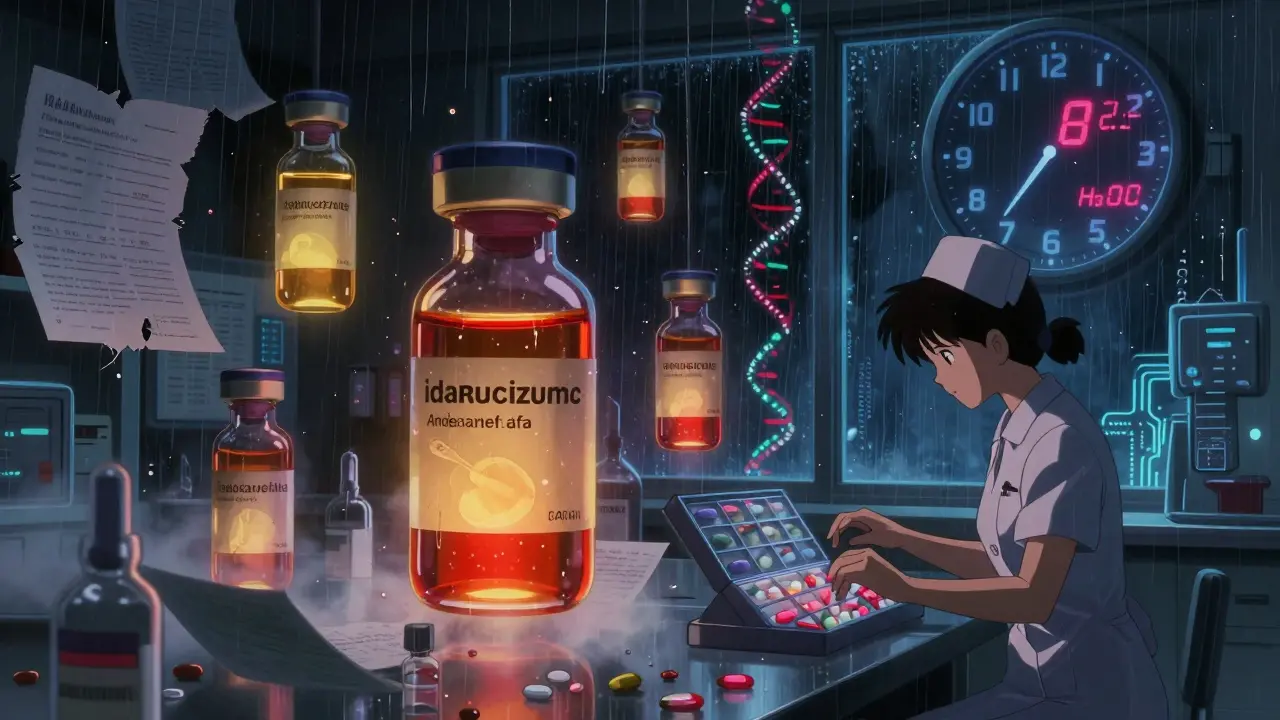
Another big limitation? Reversal. If you bleed badly on warfarin, you have vitamin K and plasma. For DOACs, you need expensive, specialized drugs. Idarucizumab reverses dabigatran - but it costs about $5,000 per vial. Andexanet alfa reverses apixaban and rivaroxaban - and runs around $18,000 per dose. Not every hospital keeps these on hand.
And then there’s cost. Warfarin can cost as little as $4 a month. DOACs? $350-$550. That’s why 28% of Medicare patients stop taking DOACs within a year because they can’t afford them. Insurance often requires step therapy - meaning you have to try warfarin first.
Safety Is About More Than Just the Drug
Anticoagulation safety isn’t just about picking the right pill. It’s about managing the whole picture. Patients on any blood thinner should avoid NSAIDs like ibuprofen or naproxen - they raise bleeding risk. Aspirin can be used in some cases, but only under careful supervision.
Physical activity matters too. High-risk sports like football or skiing increase the chance of trauma-induced bleeding. Many patients switch to swimming, walking, or cycling. Dental work? Inform your dentist. Minor procedures like tooth extractions may need temporary adjustments.
Even something as simple as falling can be dangerous. Elderly patients on DOACs have a higher risk of intracranial bleeding after a fall, even if they don’t lose consciousness. That’s why fall prevention - removing rugs, installing grab bars - is part of the treatment plan.
And then there’s adherence. A nurse who treats blood clots every day still ignored her own symptoms until she collapsed. That’s not rare. People forget doses. They skip them because they feel fine. But missing even one dose of a DOAC can spike clot risk within hours. Pill organizers and phone alarms aren’t luxuries - they’re necessities.
What’s Coming Next?
The field is evolving fast. In November 2023, the FDA approved milvexian, a new drug that targets factor XIa. Early trials show it prevents clots just as well as apixaban but with 22% less bleeding. That could change the game.
Researchers are also testing RNA-based drugs like fitusiran, which reduces antithrombin production. And AI is being used to predict who’s most likely to bleed based on age, kidney function, medications, and even genetic markers - with 82% accuracy.
For now, the best approach remains individualized. Your age, kidney health, bleeding history, lifestyle, and finances all matter. A 72-year-old with atrial fibrillation and no kidney issues? DOACs are likely ideal. A 65-year-old on a fixed income with a history of stomach ulcers? Warfarin might be safer - if they can manage the monitoring.
Key Takeaways for Patients
- INR is critical if you’re on warfarin - stay in the 2.0-3.0 range and get tested regularly.
- DOACs are easier to take but cost more and can’t be used if you have mechanical valves or severe kidney disease.
- Bleeding risk is real with all blood thinners. Watch for unusual bruising, dark stools, or severe headaches.
- Cost matters. Warfarin is cheap. DOACs are expensive - and insurance may not cover them without trying warfarin first.
- Adherence is non-negotiable. Missing doses increases clot risk - especially with DOACs.
- Never stop your medication without talking to your doctor. Stopping suddenly can cause clots within days.
What does INR stand for, and why is it important?
INR stands for International Normalized Ratio. It’s a standardized way to measure how long your blood takes to clot. For people on warfarin, the goal is usually an INR between 2.0 and 3.0. If it’s too low, clots can form. If it’s too high (above 4.0), you’re at much greater risk of dangerous bleeding. Regular INR checks help doctors adjust your warfarin dose to stay in that safe zone.
Can I switch from warfarin to a DOAC?
Maybe - but not always. DOACs are recommended for most people with atrial fibrillation or deep vein thrombosis who don’t have mechanical heart valves or severe mitral stenosis. If you’re doing well on warfarin with stable INR and no major side effects, switching isn’t always necessary. But if you struggle with frequent blood tests, diet restrictions, or drug interactions, a DOAC could be a better fit. Talk to your doctor about your lifestyle, kidney function, and cost.
What happens if I miss a dose of my blood thinner?
It depends on the drug. If you miss one dose of warfarin, it usually doesn’t cause immediate problems - your INR will drop slowly. But with DOACs, the drug leaves your system in 12-17 hours. Missing a dose means your protection drops fast. If you miss a morning dose, take it as soon as you remember that day. If you don’t remember until the next day, skip it and go back to your regular schedule. Never double up. Always check with your doctor for specific instructions.
Are DOACs safer than warfarin?
For most people, yes - but not in every way. DOACs cause fewer brain bleeds and less overall major bleeding than warfarin. Apixaban, in particular, reduces major bleeding by 31%. However, some DOACs like rivaroxaban and dabigatran carry a higher risk of stomach bleeding. DOACs also lack reliable monitoring tests and have expensive reversal agents. So safety depends on your health, lifestyle, and access to care.
Do I need to change my diet if I’m on a DOAC?
No - that’s one of the biggest advantages. Warfarin interacts with vitamin K, which is found in leafy greens like spinach, kale, and broccoli. You don’t have to avoid them, but you need to eat them consistently. DOACs don’t interact with vitamin K, so you can eat your greens without worrying. You still need to avoid heavy alcohol use and NSAIDs like ibuprofen, which increase bleeding risk.
How long do I need to stay on blood thinners?
It depends on why you started. After a first blood clot triggered by surgery or injury, you usually take anticoagulants for 3 months. If the clot had no clear cause (unprovoked), and your bleeding risk is low, guidelines recommend lifelong therapy. For atrial fibrillation, most people stay on it indefinitely unless their stroke risk drops significantly. Your doctor will reassess your risk annually using tools like HAS-BLED.
What to Do Next
If you’re on anticoagulants, make sure you understand your drug, your target, and your warning signs. Keep a list of all your medications and allergies. Bring it to every appointment. Ask your doctor: “Is this the right drug for me? What’s my bleeding risk? What should I do if I miss a dose?”
Don’t assume the newest drug is always the best. Cost, kidney function, and your daily life matter just as much as clinical data. The goal isn’t just to prevent clots - it’s to live well without fear of bleeding.
14 Comments
Tommy Watson December 16 2025
bro i was on warfarin for 2 years and the blood tests were a nightmare. i once forgot to eat greens for a week and my INR went to 5.0. they had to give me vitamin K like i was a zombie. why do we still use this 1950s tech??
Donna Hammond December 18 2025
Tommy, I hear you. Warfarin is brutal on daily life. But if you have stable INR and no major interactions, it's still the most predictable option long-term. DOACs are great for people who can afford them and have normal kidney function - but for those on fixed incomes or with renal issues? Warfarin is often the only viable path. The key is consistency: same time, same diet, same routine. It’s not perfect, but it works when managed right.
Richard Ayres December 20 2025
There’s a profound irony here: we’ve developed drugs that can precisely target clotting factors, yet we still rely on a century-old molecule like warfarin because of cost and access. The real issue isn’t medical - it’s systemic. Why should a 72-year-old retiree choose between their medication and their groceries? This isn’t just about INR ranges - it’s about equity in healthcare.
Sheldon Bird December 20 2025
you got this 💪
DOACs are a game-changer if you can swing it. i switched from warfarin to apixaban last year - no more finger pricks, no more kale anxiety. i set phone alarms for my pills and use a pill box. life changed. you’re not alone - we’re all just trying not to bleed out or clot up 😅
Karen Mccullouch December 21 2025
THEY’RE LYING TO YOU ABOUT DOACS!!!
THEY’RE DESIGNED TO MAKE YOU DEPENDENT ON $18K REVERSAL DRUGS SO BIG PHARMA CAN RAKE IN THE CASH!!
WARRFAN IS FREE AND IT’S BEEN AROUND SINCE WWII!! THEY WANT YOU TO FORGET THAT!!
Michael Gardner December 22 2025
Actually, the data shows DOACs aren’t universally safer - just differently risky. Rivaroxaban increases GI bleeds. Dabigatran has higher stroke risk in elderly with low weight. And apixaban’s 31% lower bleeding? That’s in trials. Real-world adherence? Half the patients miss doses. So maybe the ‘better’ drug is the one you actually take.
Willie Onst December 23 2025
Man, I used to think blood thinners were just pills you swallow. Then my grandma fell in the shower and ended up with a brain bleed on DOAC. She didn’t even hit her head hard. Now I see it’s not about the drug - it’s about your whole life. No rugs, no ibuprofen, no skiing, no forgetting pills. It’s a full-time job. And honestly? I don’t envy anyone on it.
Ronan Lansbury December 23 2025
Have you considered that INR monitoring is deliberately kept complex to maintain the dominance of lab corporations? The fact that DOACs require no testing is a threat to the entire diagnostic-industrial complex. And why are reversal agents so expensive? Because if they weren’t, the entire profit model of anticoagulation would collapse. This isn’t medicine - it’s a financial engineering scheme disguised as healthcare.
Jennifer Taylor December 24 2025
OKAY SO I WAS ON RIVAROXABAN AND MY STOMACH STARTED BLEEDING AND I THOUGHT IT WAS JUST INDIGESTION UNTIL I POOPED BLACK AND MY HUSBAND SCREAMED AND TOOK ME TO THE ER AND THEY SAID I WAS ONE STEP AWAY FROM DYING AND THEN I FOUND OUT THE DRUG COSTS $500 A MONTH AND MY INSURANCE MADE ME TRY WARFARIN FIRST AND I CRIED IN THE PARKING LOT FOR AN HOUR AND NOW I’M ON WARFARIN AND I HATE EVERYTHING
Shelby Ume December 25 2025
As a registered nurse who manages anticoagulation clinics, I’ve seen patients on both warfarin and DOACs. The most critical factor isn’t the drug - it’s the support system. Patients who have a family member to remind them, a pill organizer, and a provider who checks in weekly? They thrive. Those who are isolated? They end up in the ER. Education isn’t optional. It’s the difference between life and death. And yes - we absolutely need better access to reversal agents. This isn’t just clinical - it’s moral.
Jade Hovet December 26 2025
just switched to apixaban last month 🥹 no more blood tests = life changed
but i still panic every time i feel a bruise 😭
also i miss my kale but i dont miss the INR rollercoaster
my phone has 4 alarms for my pills and i still forget sometimes
we’re all just trying to not die today 💪❤️
nithin Kuntumadugu December 27 2025
u guys dont get it. warfarin is the only real anticoagulant. doacs are made by big pharma to make you pay forever. my cousin in india got warfarin for 20 rupees a month. u think we need $5000 reversal drugs? no. we need transparency. the genes they talk about? cyp2c9? that’s just a distraction. the truth is they want you dependent. dont believe the hype. go warfarin. stay cheap. stay free.
John Fred December 28 2025
Let’s break this down clinically: DOACs have superior pharmacokinetics - rapid onset/offset, minimal CYP450 interactions, no vitamin K interference. For AFib patients with CHA₂DS₂-VASc ≥2 and CrCl >30, they’re first-line per AHA/ACC 2023 guidelines. But adherence is the Achilles’ heel. DOAC half-lives are short - 12–17 hours. Miss a dose? You’re unprotected. That’s why pill organizers and digital reminders aren’t ‘nice to haves’ - they’re clinical necessities. And yes, cost is a barrier. But for those who can access them? They’re objectively safer.
Hamza Laassili December 29 2025
why is everyone acting like this is new? i had a stroke at 45 from a clot. i’ve been on warfarin since 2018. i know what it’s like to have a 4.8 INR and go to the hospital. i know what it’s like to be too poor to afford the new drugs. i don’t care what the studies say - i care about surviving. and right now? warfarin is my lifeline. don’t tell me to switch. just tell me how to get my blood tests covered.