Imagine taking a painkiller. You take one pill, and it works. You take two, and it works better-but you also get a bit of heartburn. Take five, and that heartburn turns into stomach pain. That is a classic example of a dose-related side effect, which is an adverse reaction where the severity increases with the amount of drug taken. Now imagine taking an antibiotic. You’ve never had a problem with penicillin before. But this time, after just one dose, your throat swells shut. The dose didn’t matter; your immune system did. This is a non-dose-related side effect, which is an unpredictable reaction often caused by genetics or immune response rather than drug concentration.
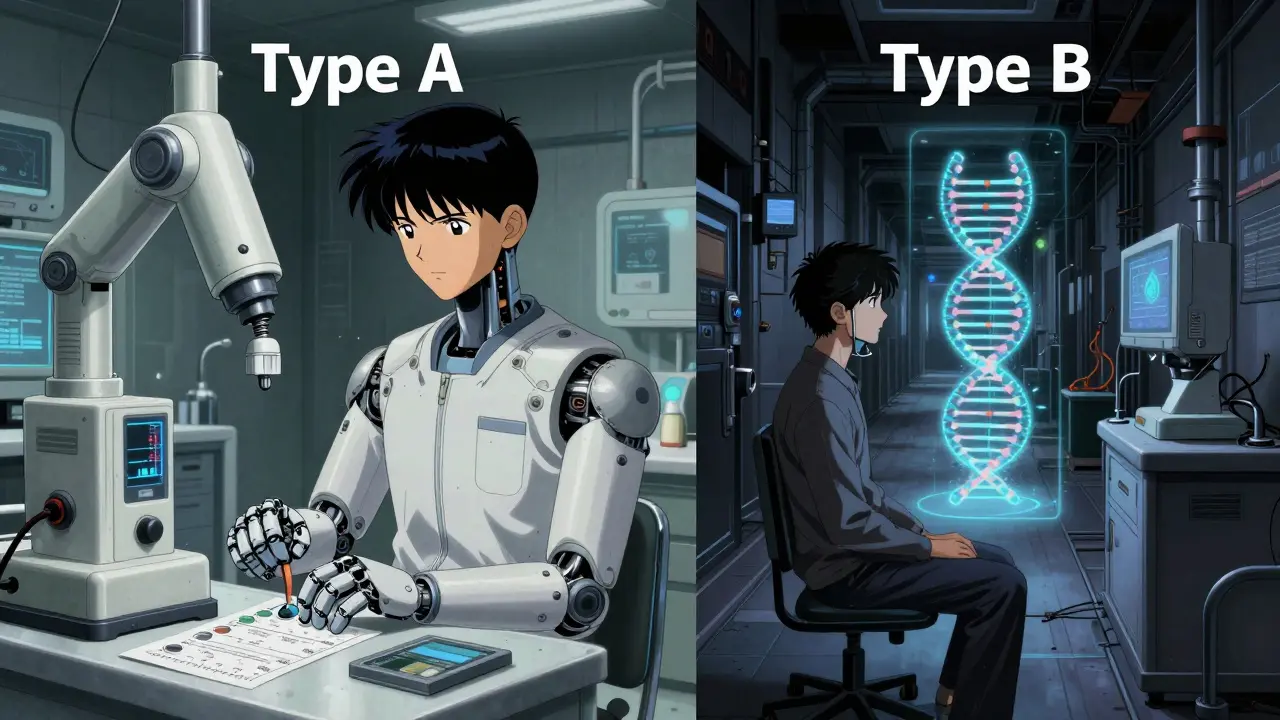
Understanding the difference between these two types of reactions is not just academic trivia. It is the difference between adjusting a prescription and rushing to the emergency room. In pharmacology, we classify these as Type A (augmented) and Type B (bizarre) reactions. Knowing which bucket a side effect falls into helps doctors treat you safely and helps you understand why certain medications require blood tests while others simply need to be avoided forever if a reaction occurs.
The Predictable Problem: Dose-Related (Type A) Reactions
Type A reactions are the most common type of adverse drug event, accounting for about 80% of all reported cases. They are called "augmented" because they are essentially an exaggerated version of the drug’s intended effect. If a drug lowers blood pressure, a Type A reaction is when it lowers it too much. If a drug thins the blood to prevent clots, a Type A reaction is when it thins it so much that you bleed internally.
These reactions follow the basic laws of pharmacology. Specifically, they relate to the concentration of the drug at its site of action. The more drug molecules floating around in your body, the stronger the effect-and the stronger the side effect. Because they are predictable, they can often be prevented or managed by lowering the dose, spacing out doses, or monitoring blood levels.
| Drug Class | Intended Effect | Type A Side Effect (Exaggerated) | Clinical Sign |
|---|---|---|---|
| Antihypertensives | Lower blood pressure | Hypotension (dangerously low BP) | Systolic BP <90 mmHg |
| Insulin / Oral Hypoglycemics | Lower blood sugar | Hypoglycemia | Blood glucose <70 mg/dL |
| Anticoagulants (e.g., Warfarin) | Prevent blood clots | Hemorrhage / Bleeding | INR >4.0 |
| Opioids | Pain relief / Sedation | Respiratory depression | Slow breathing rate (<10/min) |
| Digoxin | Strengthen heart contractions | Toxicity (nausea, vision changes) | Levels >2.0 ng/mL |
Why do these happen? Often, it comes down to how your body processes the drug. If you have kidney issues, your body might clear a drug slower than normal. For example, metformin is cleared by the kidneys. In stage 3 chronic kidney disease, clearance drops by about 50%. If you keep taking the same dose, the drug builds up, leading to toxicity. Similarly, older adults often see a 30-40% reduction in the clearance of drugs like diazepam. The standard dose becomes a toxic dose simply because the body’s filtration system has slowed down.
The Unpredictable Threat: Non-Dose-Related (Type B) Reactions
Type B reactions are different. They are rare, making up only 15-20% of adverse events, but they are far more dangerous. They cause about 70-80% of serious hospitalizations related to drug reactions. These are called "bizarre" because they have nothing to do with the drug’s known pharmacological action. Taking an antibiotic does not logically lead to a skin rash or liver failure based on how the drug kills bacteria. Instead, these reactions are usually immune-mediated or idiosyncratic (unique to the individual).
The key characteristic of a Type B reaction is that it is unpredictable from the drug’s mechanism. More importantly, it is not proportional to the dose. Once your immune system is sensitized, even a microscopic amount of the drug can trigger a massive response. Conversely, you could take high doses for weeks without issue until your body suddenly decides to react.
Common examples include:
- Anaphylaxis: A severe allergic reaction causing airway swelling. It occurs in 1-5 per 10,000 courses of penicillin.
- Stevens-Johnson Syndrome (SJS): A life-threatening skin condition. Incidence is roughly 1.2-6 cases per million person-years for most drugs.
- Drug-Induced Liver Injury (DILI): For example, amoxicillin-clavulanate causes liver injury in 10-15 cases per 10,000 patient-years.
A major driver of Type B reactions is genetics. Your DNA determines how your immune system recognizes foreign substances. For instance, people with the HLA-B*57:01 genetic allele are highly susceptible to hypersensitivity reactions from the HIV drug abacavir. If you have this gene, the risk is significant. If you don’t, the risk is near zero. This is why genetic screening is now standard practice for certain medications.
Why the Distinction Matters: Management and Prevention
The way a doctor handles a side effect depends entirely on whether it is Type A or Type B. This distinction dictates the clinical path forward.
For Type A (Dose-Related) reactions, the goal is management. Since the reaction is tied to concentration, you can often fix it by:
- Lowering the dose: Reducing the amount of drug reduces the side effect intensity.
- Therapeutic Drug Monitoring (TDM): Blood tests ensure levels stay within the "therapeutic window." For drugs with a narrow therapeutic index-like digoxin (therapeutic range 0.5-0.9 ng/mL)-this is critical. Toxicity starts at >2.0 ng/mL.
- Adjusting for organ function: Doctors reduce doses for patients with renal or hepatic impairment to prevent accumulation.
For Type B (Non-Dose-Related) reactions, the goal is avoidance. You cannot "lower the dose" to prevent an allergic reaction once sensitization has occurred. The management strategy includes:
- Permanent discontinuation: The drug must be stopped immediately and never used again.
- Genetic Screening: Testing for HLA alleles before starting high-risk drugs. For example, testing for HLA-B*15:02 before prescribing carbamazepine in Asian populations has a 97% sensitivity for preventing SJS/TEN.
- Desensitization Protocols: In some cases, like penicillin allergy, graded challenges can help determine if a reaction was real or a false alarm, allowing safe use if necessary.

The Paradox: Are Any Reactions Truly Non-Dose-Related?
Here is where pharmacology gets tricky. Strictly speaking, the law of mass action suggests that every chemical interaction depends on concentration. So, how can a reaction be truly independent of dose?
In 2015, researchers Aronson and Ferner resolved this paradox by identifying four reasons why reactions appear non-dose-related:
- The reaction isn't real: Sometimes statistical noise or methodological errors make a random event look like a drug side effect.
- Hypersusceptibility: In sensitive individuals, the dose-response curve reaches its maximum effect at very low doses. To them, 1mg and 100mg trigger the same severe reaction, making it look dose-independent.
- Wide individual variation: Some people react at tiny doses; others never react. When you average this across a population, the dose-response link disappears.
- Measurement imprecision: We may not be measuring the actual exposure at the cellular level accurately enough to see the dose link.
Essentially, Type B reactions likely have a dose threshold below which they don’t occur, but that threshold varies wildly from person to person. For practical purposes, however, treating them as non-dose-related is safer and more clinically useful.
Real-World Impact: Costs and Safety
The financial and human cost of these reactions is staggering. Type A reactions are responsible for the majority of medication-related costs, estimated at $130 billion annually in the US alone. This is largely due to the volume of cases-hospitalizations for hypoglycemia, bleeding events, and electrolyte imbalances add up quickly.
However, Type B reactions drive most product liability litigation and drug withdrawals. The European Medicines Agency reports that while Type B reactions account for only 15% of reported ADRs, they represent 70% of drug withdrawals due to safety concerns. Why? Because a single case of Stevens-Johnson syndrome or fatal liver failure can halt a drug’s market presence, whereas manageable Type A side effects are often considered acceptable risks if monitored properly.
Regulatory bodies like the FDA are responding with stricter frameworks. As of late 2022, 71 drugs had active Risk Evaluation and Mitigation Strategies (REMS) programs, covering over 107 million prescriptions annually. These programs often mandate specific testing or monitoring to catch both Type A and Type B risks before they become tragedies.
What You Can Do: Practical Tips for Patients
You don’t need a degree in pharmacology to protect yourself. Here is how to apply this knowledge:
1. Report Changes Immediately
If you start feeling worse after increasing a dose, tell your doctor. It’s likely a Type A reaction, and they can adjust the dosage. If you develop a rash, swelling, or difficulty breathing, seek emergency care. It could be a Type B reaction, and timing is critical.
2. Keep a Medication List
Carry a list of all your medications, including supplements. Many Type A reactions are caused by drug-drug interactions. For example, clarithromycin can increase statin concentrations by 5-10 times by inhibiting the CYP3A4 enzyme, turning a standard dose into a toxic one.
3. Ask About Genetic Testing
If you are prescribed high-risk medications like carbamazepine, allopurinol, or abacavir, ask if genetic screening is recommended. Tests like HLA-B*57:01 cost between $150-$300 but can prevent life-threatening reactions.
4. Understand Your Kidney and Liver Health
Since Type A reactions often stem from poor drug clearance, knowing your kidney (eGFR) and liver function scores helps your doctor prescribe safer doses. Don’t skip routine blood work if you are on long-term medications.
Frequently Asked Questions
What is the main difference between Type A and Type B adverse drug reactions?
Type A reactions are dose-dependent and predictable extensions of a drug's known effects (e.g., bleeding from anticoagulants). Type B reactions are non-dose-dependent, unpredictable, and often immune-mediated or genetic (e.g., anaphylaxis or Stevens-Johnson syndrome).
Are Type A or Type B side effects more common?
Type A reactions are much more common, accounting for approximately 80% of all adverse drug reactions. However, Type B reactions are more severe and cause the majority of serious hospitalizations and drug-related deaths.
Can you prevent Type B reactions?
While you cannot change your genetics, you can prevent many Type B reactions through screening. Genetic tests for HLA alleles (like HLA-B*57:01 for abacavir) and skin testing for allergies (like penicillin) can identify at-risk patients before they start treatment.
Why do elderly patients experience more dose-related side effects?
As we age, our kidneys and liver often function less efficiently. This reduces the clearance of drugs from the body. For example, diazepam clearance can drop by 30-40% in the elderly, meaning a standard dose can accumulate to toxic levels, causing excessive sedation or confusion.
What is a narrow therapeutic index?
A narrow therapeutic index means there is a small difference between the dose that treats the condition and the dose that causes toxicity. Drugs like digoxin, lithium, and warfarin have narrow indices, requiring careful monitoring to avoid Type A adverse reactions.
Is it possible for a drug to cause both Type A and Type B reactions?
Yes. Most drugs can cause both. For example, chemotherapy agents cause dose-related bone marrow suppression (Type A) but can also cause rare, unpredictable allergic reactions or secondary cancers (Type B).