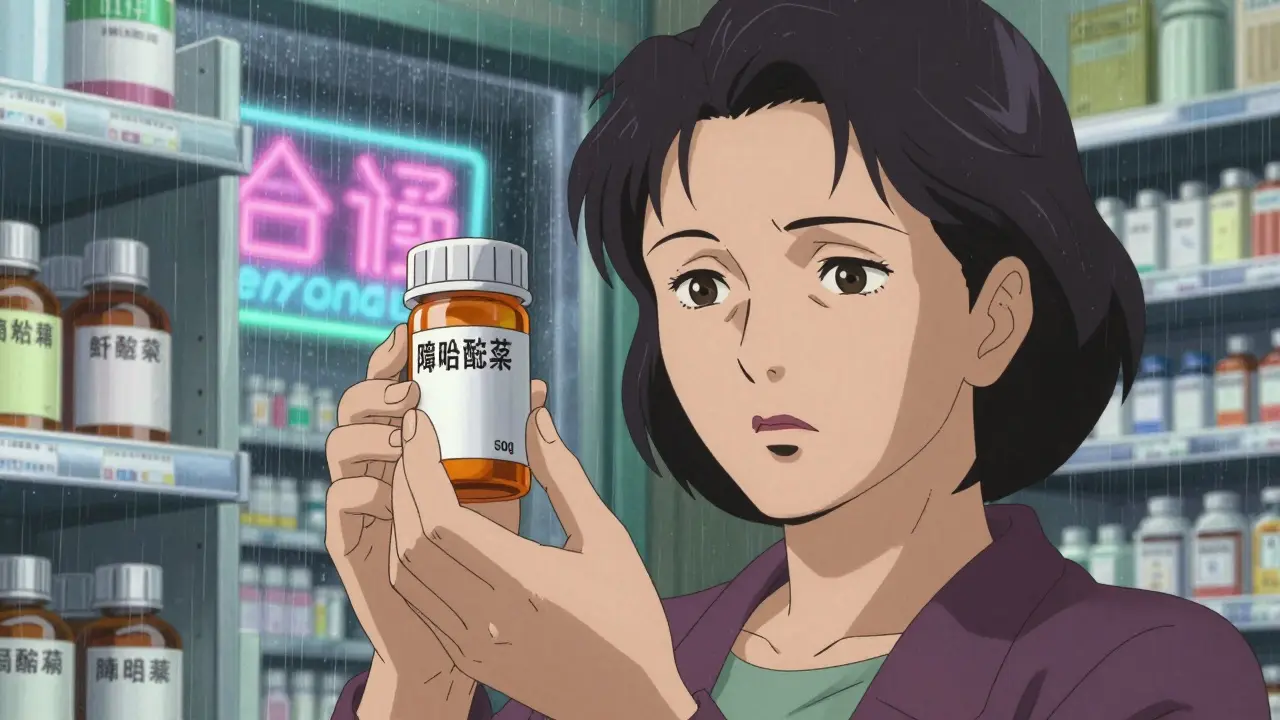
Every year, hundreds of thousands of people in the U.S. take the wrong medication-not because their doctor prescribed it, but because the label on the bottle didn’t match what they were supposed to get. It sounds rare, but it’s not. One in four preventable medication errors comes from a mismatched label. And the worst part? You don’t need to be a medical expert to catch it. You just need to know what to look for-and how to check it.
Why Checking Your Prescription Label Matters
You’ve been to the doctor. You got a prescription. You picked up the bottle. You’re done, right? Wrong. The pharmacy is a busy place. Pharmacists are doing their best, but mistakes happen. A label might get swapped. A digit might be misread. A generic version might be filled without telling you. And if you don’t check, you might end up taking something dangerous.The Food and Drug Administration (FDA) says the most critical safety step you can take is verifying your prescription label before leaving the pharmacy. A 2020 study in the Journal of the American Pharmacists Association found that patients who checked their labels reduced their risk of taking the wrong medicine by 67%. That’s not a small number. That’s life-changing.
It’s not just about getting the right pill. It’s about getting the right dose. A 5 mg pill looks like a 50 mg pill. One might help you. The other could send you to the hospital. That’s why checking the label isn’t optional-it’s your last line of defense.
What Every Prescription Label Must Include
By law, every prescription label in the U.S. must have six key pieces of information. If any of these are missing or unclear, ask for help. Don’t leave without answers.- Your full legal name-first, middle (if used), and last. Not “J. Smith.” Not “John.” It must match exactly what you gave the pharmacy.
- Medication name-both the brand name (like Lipitor) and the generic name (like atorvastatin). Sometimes the label only shows the generic. That’s fine, as long as you know what your doctor prescribed.
- Strength-this is critical. Is it 5 mg? 10 mg? 50 mg? A single digit can make all the difference.
- Dosage instructions-how much to take, how often, and how to take it (with food? on an empty stomach? at bedtime?).
- Prescriber’s name-the doctor who wrote the prescription.
- Pharmacy name and phone number-so you can call if something doesn’t look right.
Some labels also include the National Drug Code (NDC), a unique 10- or 11-digit number that identifies the exact drug, manufacturer, and package size. You don’t need to memorize it, but if you’re comparing your pill to a previous bottle, it’s useful.
How to Verify Your Prescription in 30 Seconds
You don’t need to be a pharmacist. You just need to slow down. Here’s a simple six-step check you can do right at the counter:- Hold the bottle at eye level. Good lighting matters. If the pharmacy lights are dim, ask to step near a window or ask for a magnifying glass. Many CVS and Walgreens locations have them at the pickup counter.
- Check your name. Does it say “Elara Huxleigh” or “E. Huxleigh”? If your middle name was on your doctor’s form, it should be on the label. If it’s wrong, say so immediately.
- Match the medication. Look at the name. Is it the same as what your doctor told you? If your doctor said “metformin,” but the label says “glimepiride,” stop. Ask why.
- Confirm the strength. Is it 500 mg or 50 mg? If your last prescription was 10 mg and this one says 5 mg, double-check. Dose changes happen-but you should know about them.
- Read the directions. “Take one tablet by mouth twice daily” is clear. “Take qd” or “tid” might confuse you. If you don’t understand, ask the pharmacist to explain it in plain words.
- Check the pharmacy info. Is the phone number legible? Can you call them if you have a question later? If the label is smudged or faded, ask for a new one.
That’s it. Thirty seconds. One bottle. One check. And you just made yourself safer.
Common Mistakes People Miss
Even when people check, they often miss the real dangers. Here are the top three errors patients overlook:- Wrong strength-This is the #1 error caught by patients. A 10 mg blood thinner instead of 5 mg can cause dangerous bleeding. Always compare the number to your doctor’s note or previous bottle.
- Wrong patient name-Yes, this happens. A 2023 survey found 15% of label errors were because the name didn’t match the patient. One Reddit user shared how their mom almost got a roommate’s blood pressure pill because the label had her name on it.
- Similar-looking names-“Hydrochlorothiazide” and “Hydralazine” sound alike. “Lisinopril” and “Losartan” look similar on paper. If a drug name looks unfamiliar, ask the pharmacist: “Is this the same one my doctor gave me?”
And don’t assume the pill looks the same. Generic versions can look completely different from brand names. That’s normal. But if the pill shape, color, or imprint doesn’t match what you’ve taken before, ask why.
What to Do If Something’s Wrong
If you spot a mistake, don’t panic. Don’t just take the bottle and worry later. Do this:- Don’t leave the pharmacy. Stay there. Ask to speak with the pharmacist directly.
- Bring your doctor’s note or prescription slip. Show them what your doctor wrote. That’s your proof.
- Ask for a new label. Pharmacies are required to fix mistakes at no cost. They’ll re-print the label or even re-fill the prescription if needed.
- Call your doctor if unsure. If the pharmacist says it’s correct but you’re still uneasy, call your doctor’s office. Ask: “Did you prescribe this exact medication and dose?”
Pharmacists expect this. They’re trained to handle it. In fact, the American Medical Association says doctors who encourage patients to verify labels see 40% fewer medication errors in their practice.
Special Considerations: Older Adults and Low Vision
If you’re over 65 or have trouble reading small print, you’re not alone. Nearly 13% of adults over 40 have vision issues that make labels hard to read. And 37% of seniors say they’ve missed an error because the text was too small.Here’s what helps:
- Ask for large-print labels. Many pharmacies offer them. A 2023 AARP survey found 71% of adults 50+ feel safer with larger text.
- Use your phone’s magnifier. iPhones and Android phones have built-in magnification tools. Point the camera at the label, zoom in, and read clearly.
- Ask for a printed summary. Some pharmacies give you a one-page sheet with all your meds, doses, and instructions. Ask for one.
- Keep a medication list. Write down every drug you take, the dose, and why. Bring it to every appointment. It’s your backup.
Don’t let poor eyesight stop you from staying safe. There are tools. Use them.
What’s Changing in 2025 and Beyond
The system is getting better. By the end of 2025, the FDA will require all prescription labels to use a standard format:- Your name will be in 24-point font-at the top of the label.
- Medication name and strength will be bolded and larger.
- Directions will use plain language, no abbreviations.
Some pharmacies are already testing QR codes on labels. Scan it, and you’ll get a video in your language explaining your medicine. By 2026, 60% of prescriptions for seniors are expected to include this feature.
But here’s the truth: no technology replaces your eyes. No app replaces your attention. The most powerful safety tool you have is still you-checking the label, asking questions, and refusing to accept anything that doesn’t feel right.
Final Reminder: You’re the Last Line of Defense
Doctors write prescriptions. Pharmacists fill them. But you’re the one who swallows the pill. If something doesn’t match, speak up. It’s not being difficult. It’s being smart.Medication errors aren’t just accidents. They’re preventable. And you hold the key.
What if my name is spelled wrong on the prescription label?
If your name is misspelled-even by one letter-you should not take the medication. Pharmacies are required to match your legal name exactly. Contact the pharmacy immediately and ask them to reprint the label. If they refuse, call your doctor’s office to confirm the prescription was written for you. Never assume a small spelling error is harmless.
Can I trust the generic version of my medication?
Yes, generic medications are required by the FDA to contain the same active ingredient, strength, and dosage form as the brand name. They work the same way. But the pill might look different-different color, shape, or markings. That’s normal. What’s not normal is if the name or strength doesn’t match what your doctor prescribed. Always check the generic name on the label against what your doctor told you.
Why does my label say ‘take once daily’ but my doctor said ‘twice daily’?
This is a red flag. Never assume the pharmacy made a mistake without checking. Call the pharmacy first to clarify. If they confirm the label is correct, call your doctor’s office. It’s possible your dose was changed, but you need to know about it. Never adjust your dose based on the label alone-always confirm with your prescriber.
Is it okay to take a prescription if the bottle looks old or the label is faded?
No. Faded labels, cracked bottles, or missing expiration dates are signs the medication may have been mishandled or stored improperly. Ask for a new bottle. Pharmacies are required to provide you with a clean, legible label. If they say it’s fine, ask to speak to the manager. Your safety isn’t negotiable.
Should I check my prescription every time I refill it?
Yes. Even if you’ve taken the same medicine for years, things can change. The pharmacy might switch to a different generic manufacturer. The dose might be adjusted. The label might print wrong. Always check every refill. It only takes 30 seconds-and it could save your life.
14 Comments
Jake Moore January 18 2026
Just saved my mom’s life last year with this exact checklist. She almost took a neighbor’s blood thinner because the label had her name on it. I told her to always check the name first-turns out, the pharmacy mixed up two elderly patients’ prescriptions. She’s 78, doesn’t trust tech, but she checks every bottle now. Best 30 seconds of her day.
Pharmacies hate when you ask questions. But guess what? They’re paid to get it right. You’re not being difficult-you’re doing your job as a patient.
Praseetha Pn January 18 2026
Y’all are being naive. This isn’t about typos-it’s about Big Pharma and the FDA colluding with pharmacies to push generics. You think they care if your name’s spelled wrong? Nah. They want you on the cheapest pill, even if it’s not the right one. I’ve seen the documents. The NDC codes? Manipulated. The labels? Printed in bulk with auto-fill errors. They count on you being too tired to check.
And don’t get me started on QR codes-those are tracking devices. Scan it, and they know you’re taking meds. Who’s watching? Who’s selling your data? This is control. Not safety. Wake up.
Also, why does every label say ‘take with food’? Because they know you’ll forget and then blame yourself. That’s the game.
Nishant Sonuley January 20 2026
Look, I get it-you want to feel like a superhero checking your pill bottle. And honestly? That’s kinda beautiful. But let’s be real: if you’re the type of person who reads the entire label, you’re probably already the exception. Most folks just grab the bottle, toss it in the cabinet, and hope for the best.
Here’s the real issue: pharmacies are understaffed, overworked, and underpaid. The guy behind the counter is juggling 12 prescriptions, a crying kid, and a diabetic’s insulin shortage. He’s not a villain-he’s a human who forgot to double-check the middle name.
So yes, check your label. But also, be kind. Say thank you. Offer to help. Maybe even volunteer at a pharmacy. Fixing the system isn’t about vigilance-it’s about compassion. And maybe, just maybe, if we treat these folks like humans, they’ll treat our meds like sacred things.
Emma ######### January 21 2026
I used to skip checking labels until my cousin had a reaction to a generic version of her thyroid med. The pill looked different-yellow instead of white-and she thought it was ‘just how it was now.’ She didn’t say anything until she started having panic attacks. Turned out the dose was double. She’s fine now, but it took three ER visits.
Now I check every time. Even if it’s the same med. Even if I’ve had it for 10 years. I keep a little notebook with the pill color, shape, and imprint. My grandma taught me that. She said, ‘If you don’t know what’s in your body, you don’t own it.’
Still scared? Ask for a printed summary. They’ll give it to you. No judgment.
Andrew Short January 23 2026
Pathetic. People don’t check labels because they’re lazy. They’re not ‘victims of the system’-they’re just irresponsible. If you can’t read a 12-point font, get glasses. If you can’t spell your own name, maybe you shouldn’t be managing your own meds.
This whole article reads like a PSA for people who think responsibility is optional. You want to live? Pay attention. Stop blaming the pharmacy. Stop asking for big print. Stop expecting the world to bend for your apathy.
And for god’s sake, if you’re on blood thinners, maybe don’t let your 80-year-old aunt pick them up for you. That’s not ‘helping.’ That’s negligence.
Robert Cassidy January 24 2026
Let’s be honest-this is all just a distraction. The real problem? The U.S. healthcare system is a rigged casino. You think a label error is the danger? Nah. The danger is that you’re alive in this country and you’re still expected to fight for your own damn medicine.
Why is it on YOU to catch a mistake made by a $12/hour pharmacist? Why isn’t the system built to prevent it? Why do we have to be detectives just to not die?
And don’t give me that ‘you’re the last line of defense’ crap. That’s not empowerment. That’s systemic abandonment. We’re not supposed to be our own nurses. We’re supposed to be patients.
But hey, at least we’ve got QR codes now. Maybe next they’ll install a drone that drops your pills into your mouth while you sleep. Progress, baby.
Andrew Qu January 26 2026
Biggest tip I give my patients: take a photo of the label when you get it. Then compare it to your next refill. If the pill looks different, or the name changed, or the dose is off-boom. You’ve got proof.
Also, if you’re on multiple meds, use a pill organizer with the days and times labeled. I give mine out for free at the clinic. No one should be guessing what’s in that little compartment.
And yes, I’ve had patients cry because they thought they were ‘being annoying’ for asking questions. You’re not. You’re saving your own life. That’s not annoying. That’s heroic.
Jodi Harding January 27 2026
My grandma died because she didn’t check. She took a pill that was meant for her neighbor. Name mismatch. She was 84. Didn’t read well. Didn’t have anyone to help.
Now I check every bottle. Even if it’s the same drug. Even if it’s the same pharmacy. Even if I’ve had it for 15 years.
30 seconds. That’s all it takes.
Don’t be her.
Zoe Brooks January 29 2026
Just checked my insulin label right after reading this. 😅 Thank you, internet stranger. I was gonna skip it because ‘it’s the same as always.’ But I didn’t. And guess what? The strength changed from 100 to 80. I called the pharmacy. They apologized and fixed it.
Also, I cried a little. Not because I was scared-because I realized how easy it is to forget you’re the only one who really cares if you live or die.
Thanks for the reminder. 🙏
Kristin Dailey January 29 2026
Why are we even talking about this? In other countries, you don’t get to pick your meds. You get what the system gives you. Here, you’re free to die from a typo. That’s America.
Check your label. Or don’t. Either way, the system won’t change.
But hey, at least you’re not in China. They don’t even have labels. Just pills in a bag. Good luck.
Selina Warren January 30 2026
I used to think this was overkill. Then I got prescribed metformin. Took it. Felt dizzy. Thought it was ‘just side effects.’ Turned out the label said ‘metoprolol’-a heart med. I was on beta-blockers for diabetes. I didn’t know what that even was.
Woke up in the ER. Turned out the pharmacist swapped two names that looked alike. Both start with ‘M-E-T.’
Now I read every word. Out loud. Even if I’m in a rush.
And I tell everyone I know. Because you don’t get a second chance to not die.
Robert Davis January 31 2026
Let’s be real-this is just another way for the medical-industrial complex to make you feel guilty for not being perfect.
You’re supposed to memorize every drug name. Check every digit. Know the difference between ‘hydrochlorothiazide’ and ‘hydralazine’? Good luck. Most people don’t even know what ‘hydro’ means.
And yet, we’re told it’s our fault if we get it wrong.
Meanwhile, the FDA approves 10,000 new drugs a year. Pharmacists get 2 minutes per prescription. And we’re the problem?
Maybe the system is broken. Maybe we’re not.
Eric Gebeke February 1 2026
Why are you even reading this? You’re not the kind of person who checks labels. You’re the kind who says, ‘I trust my doctor.’
Well, guess what? Your doctor doesn’t even know what pharmacy you use. Or what generic they switched to. Or if your name was misspelled.
You’re not special. You’re not smart. You’re just lucky so far.
And when your heart stops because you took the wrong pill? Don’t blame the pharmacist. Blame yourself for not caring enough to check.
Just sayin’.
Joni O February 2 2026
just checked my label and my name was misspelled. i called the pharmacy and they were super nice and fixed it right away. i felt like a jerk for doubting them but then i remembered-this isn’t about trust, it’s about safety. thanks for this post. i’m gonna start taking pics of my labels now. 💪