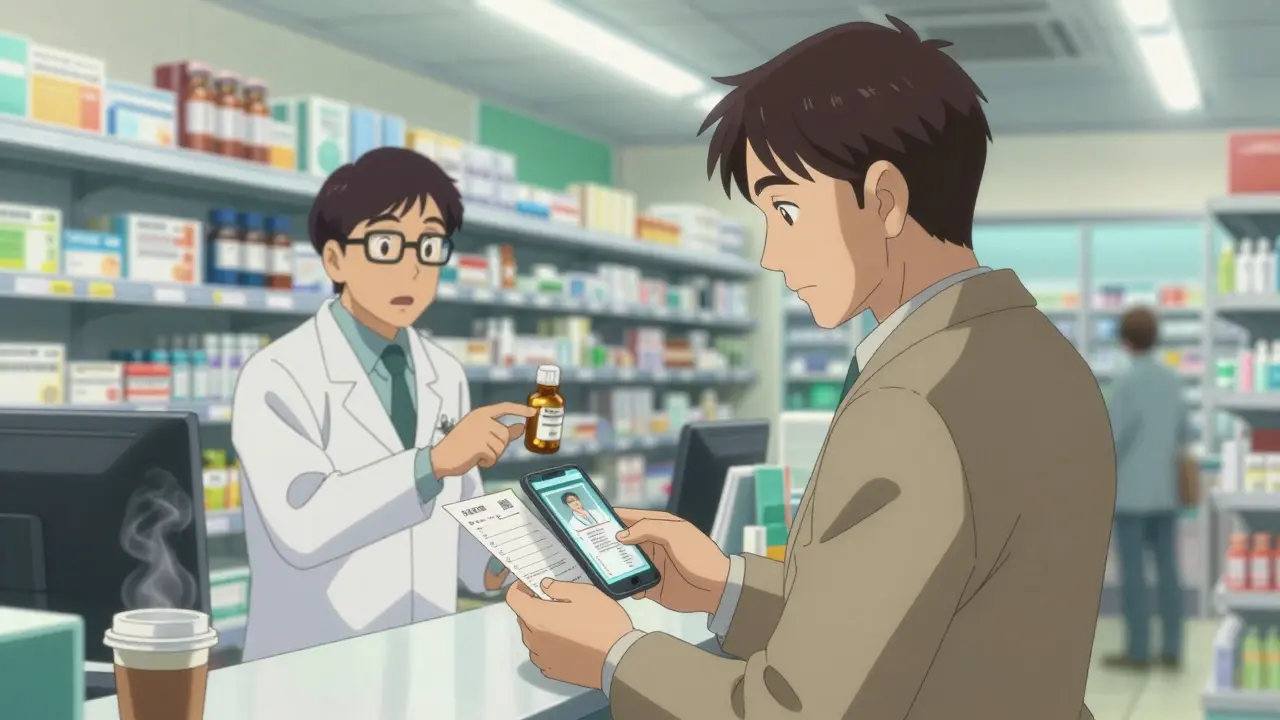
Every year, hundreds of thousands of people in the U.S. get the wrong medication, the wrong dose, or incorrect instructions at the pharmacy. Many of these mistakes aren’t caused by reckless pharmacists-they happen because the system relies on one person to catch errors, and humans make mistakes. You can’t control the pharmacy’s workflow, but you can control what you do when you walk up to the counter. A simple personal safety checklist for pharmacy visits isn’t just a good idea-it’s a lifeline.
Why Your Pharmacy Visit Needs a Checklist
You don’t need to be a medical expert to spot a dangerous mistake. A 2022 study from the Institute for Safe Medication Practices found that over 40% of dispensing errors could have been caught by the patient if they’d asked two simple questions. That’s not luck. That’s awareness. Most people assume the pharmacy has already double-checked everything. But pharmacies are busy. One pharmacist might be filling 30 prescriptions at once. A label might be misprinted. A computer might swap two similar-looking drugs-like hydrocodone and hydromorphone. These aren’t rare mistakes. They happen daily. Your job isn’t to be a pharmacist. Your job is to be a second set of eyes. You’re not replacing the system-you’re reinforcing it.The Five-Step Personal Safety Checklist
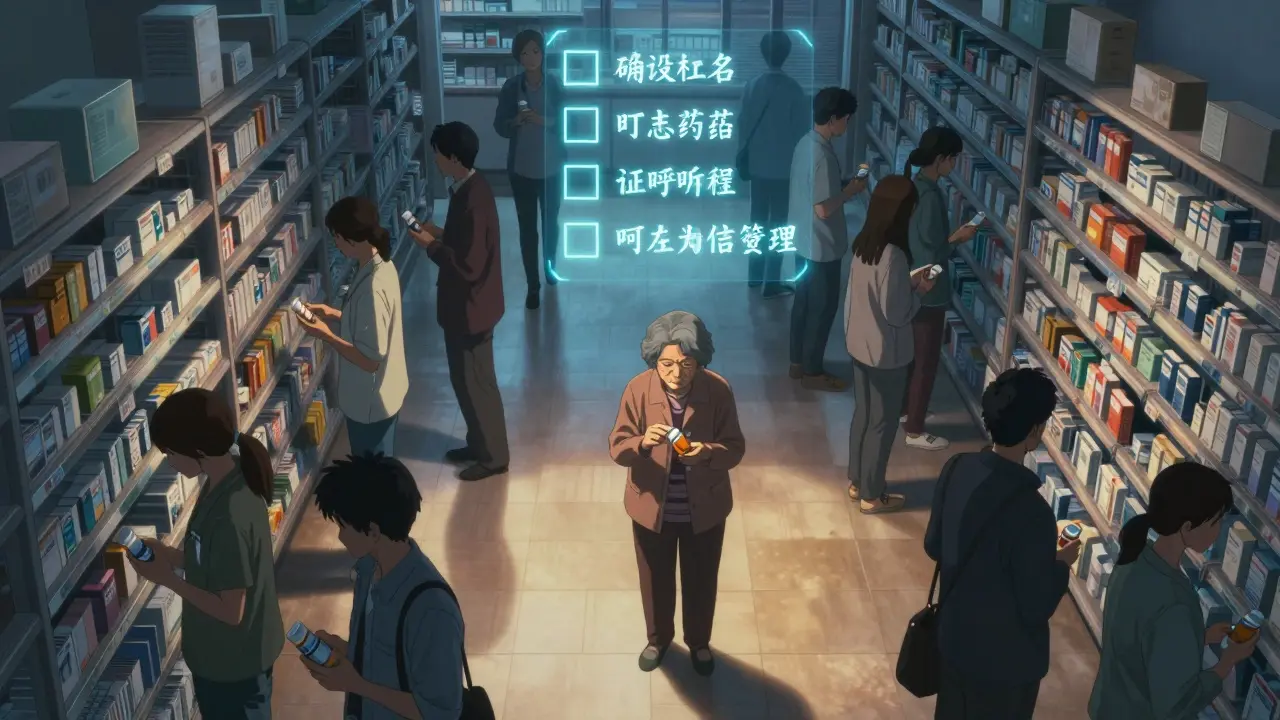
Here’s what you should do every single time you pick up a prescription. No exceptions.- Confirm the patient name-out loud. Don’t just nod. Say: “Is this for [Your Full Name]?” Pharmacists hear names all day. They might misspell yours, mix you up with someone else, or hand you the wrong bag. Hearing your name spoken back confirms you’re getting your meds.
- Check the drug name and strength-compare it to your prescription. If your doctor prescribed metformin 500 mg, but the bottle says metformin 1000 mg, that’s not a typo-it’s a risk. Ask: “Is this the same as what my doctor ordered?” Keep a copy of your prescription on your phone or in your wallet. You don’t need to memorize it.
- Verify the dosage instructions-out loud again. The label might say “Take one tablet twice daily,” but your doctor meant “Take one tablet with breakfast and dinner.” Don’t assume. Say: “So I take this in the morning and at night, right?” If the instructions are unclear, ask for clarification. Never guess.
- Look for changes-in color, shape, size, or markings. If you’ve taken this drug before, you know what it looks like. If the pill is now blue instead of white, or has a different imprint, ask: “Is this the same medicine I got last time?” Generic drugs can look different, but you should still be alerted if something feels off.
- Ask about interactions-even if you’re not sure. Say: “Could this interact with anything else I’m taking?” List your other meds, supplements, or even over-the-counter painkillers. Pharmacists are trained to catch dangerous combinations-like warfarin and ibuprofen, or statins and grapefruit juice. You don’t need to know the science. Just ask.
What to Bring to Every Visit
You can’t do this checklist without the right tools. Here’s what to carry every time:- A current list of all your medications (prescription, OTC, supplements)
- The prescription slip or a photo of it from your doctor
- Your phone with your pharmacy’s contact info and your doctor’s number
- A small notebook or notes app to write down instructions
- Any recent lab results if you’re on blood thinners, diabetes meds, or kidney-affecting drugs
Many people think they don’t need this because they’ve been taking the same pill for years. But medications change. Your body changes. Your other drugs change. A new interaction can appear overnight.
Red Flags You Can’t Ignore
If any of these happen, don’t walk away. Stop. Ask. Demand clarification.- The pharmacist says, “It’s fine,” but won’t show you the label or explain why.
- The bottle has no label, or the label is smudged, torn, or handwritten.
- You’re handed a new drug you’ve never seen before, and no one explains why.
- The dosage is different from your last refill without a doctor’s note.
- You’re told, “We’re out of your usual brand,” but no one tells you if the generic is safe to switch.
These aren’t minor issues. They’re warning signs. One pharmacy error led to a 68-year-old woman taking 10 times her prescribed dose of insulin. She went into a coma. She survived. But she didn’t catch it herself. She trusted the system.
What to Do If You Spot an Error
If you notice something wrong, don’t panic. Don’t argue. Just say:“I think there might be a mistake. Can we double-check this?”
Most pharmacists will thank you. They want to get it right. If they brush you off, ask to speak to the manager. If they still won’t help, call your doctor. Take a photo of the label. Write down the date, time, pharmacy name, and pharmacist’s name (if possible). Then file a report with the FDA’s MedWatch program-it’s online, free, and anonymous.
Why This Works Better Than You Think
You might think, “I’m just one person. What difference can I make?”Here’s the truth: pharmacists want patients to ask questions. A 2023 survey by the American Pharmacists Association found that 87% of pharmacists said patients who ask about their meds are more likely to take them correctly-and fewer make mistakes.
When you ask questions, you’re not being difficult. You’re helping the system work better. You’re reducing the chance that the next person gets your error.
What You Shouldn’t Do
Don’t assume. Don’t rush. Don’t feel bad for asking.- Don’t skip the checklist because you’re in a hurry. The faster you are, the more likely you are to miss something.
- Don’t let embarrassment stop you. Pharmacists hear “What does this pill do?” 50 times a day. They’re used to it.
- Don’t rely on memory. Even if you’ve taken this drug for 10 years, write it down. Memory fails. Labels don’t.
Real Example: How a Checklist Saved a Life
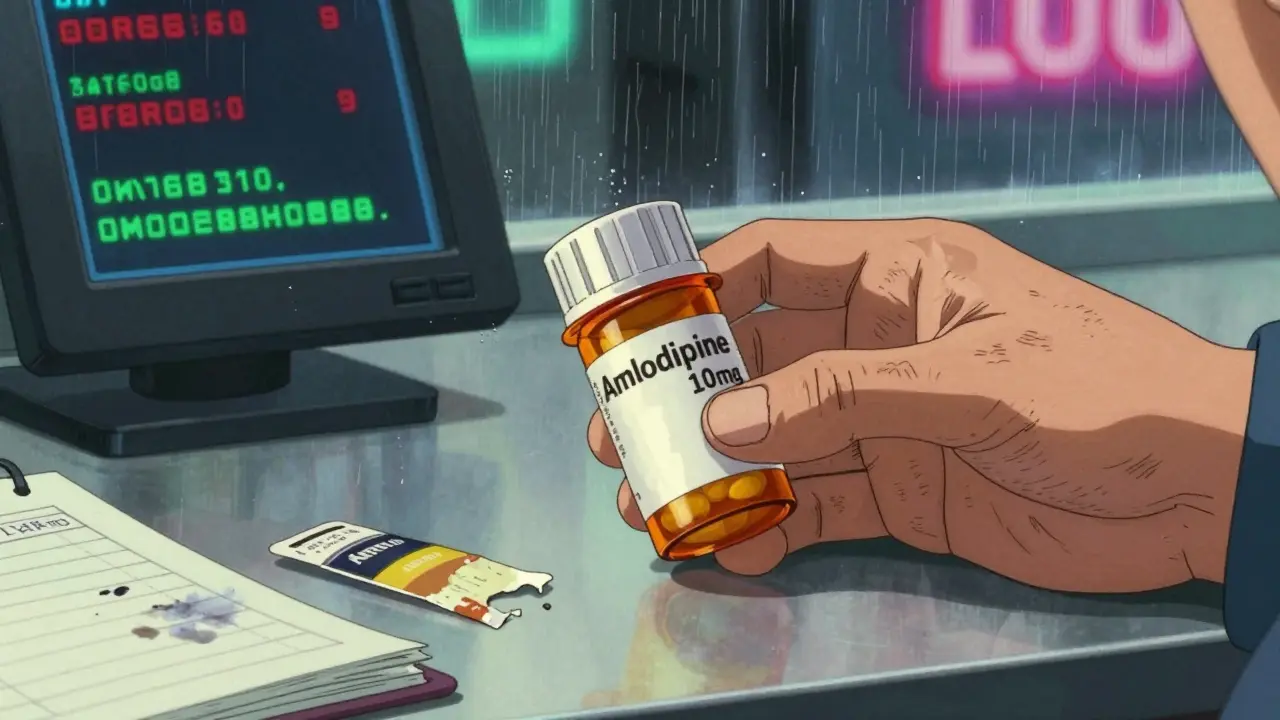
A 72-year-old man in Ohio picked up his new blood pressure med. He’d been on the same one for years. This time, the pill looked different. He didn’t recognize it. He pulled out his phone, opened his doctor’s email, and compared the label. The new drug was amlodipine, but the dose was 10 mg instead of 5 mg. He asked the pharmacist. The pharmacist checked the system-there had been a computer glitch. The wrong dose had been sent. The man didn’t take it. He called his doctor. A serious overdose was prevented.He didn’t know pharmacology. He just had a checklist.
Next Steps: Build Your Personal Safety Routine
Start today. Print out this checklist. Put it on your fridge. Save it in your phone. Use it every time.Make it a habit. After a few visits, it’ll feel automatic. And when it does, you’ll realize something important: you’re not just protecting yourself. You’re helping everyone around you.
Medication safety isn’t just the pharmacy’s job. It’s your job too.
Can I really trust my pharmacist if I ask questions?
Yes. Pharmacists are trained to answer questions-and they appreciate patients who ask. A 2023 survey of over 1,200 pharmacists found that 9 out of 10 said patients who ask about their meds are more likely to take them correctly. Asking isn’t a sign of distrust. It’s a sign of smart self-care.
What if the pharmacy refuses to correct a mistake?
If a pharmacist dismisses your concern, ask to speak to the manager. If that doesn’t work, call your doctor and explain what happened. Take a photo of the incorrect label, note the date and pharmacy name, and report it to the FDA’s MedWatch program. You have the right to safe medication. No pharmacy should make you feel wrong for protecting yourself.
Do I need to check every prescription, even if it’s the same as last time?
Yes. Even if you’ve taken the same drug for years, the manufacturer, dosage, or formulation can change. Generic drugs look different. Doses get adjusted. A small change can be dangerous. Always verify. It takes 30 seconds. That’s less time than it takes to scroll through your phone.
Can I use this checklist for over-the-counter meds too?
Absolutely. OTC drugs like painkillers, sleep aids, or allergy meds can interact with your prescriptions. Taking too much acetaminophen can damage your liver. Mixing antihistamines with blood pressure meds can cause dizziness or falls. Always check the label and ask if you’re unsure-even if you bought it without a prescription.
What if I’m elderly or have trouble reading labels?
Ask the pharmacist to read the label aloud to you. Most pharmacies offer this service. You can also bring a family member or caregiver with you. Many pharmacies have large-print labels or audio instructions available upon request. Don’t be afraid to ask for help. Your safety matters more than pride.
15 Comments
Hariom Sharma February 19 2026
Bro, this checklist is FIRE! 🙌 I just started using it after my cousin almost got the wrong diabetes med last month. Now I check every single time-even for OTC stuff like Advil. My pharmacist even asked if I’m a nurse lol. Just saying your name and asking about interactions? Game changer. I’m telling all my family in India now. Safety ain’t optional, man.
Greg Scott February 19 2026
Finally someone says it out loud. I work in a pharmacy and honestly? We love when patients ask questions. It’s not us being lazy-it’s the system being stretched thin. One guy last week caught a 10x dose error on his blood thinner. He didn’t yell. He just said, ‘Can we double-check this?’ We high-fived. Seriously.
Caleb Sciannella February 21 2026
It is of paramount importance to recognize that the contemporary healthcare delivery paradigm is predicated upon a fragile chain of human verification, wherein the patient, as the final node in the pharmacovigilance network, assumes a critical, albeit often unacknowledged, role in error mitigation. The five-step checklist delineated herein is not merely a procedural recommendation, but a necessary epistemological intervention into a system structurally vulnerable to cognitive overload and procedural drift. One must not underestimate the ontological weight of verbal confirmation-speech acts as a performative safeguard against the ontological slippage inherent in digital and manual dispensing workflows.
Davis teo February 22 2026
OMG I CRIED reading this. I almost died last year because I didn’t check. I took a pill that looked like my usual one but it was for thyroid and I’m diabetic. My heart raced, I broke out in sweat, I thought I was dying. I called 911. Turns out it was a mix-up. I didn’t ask. I just trusted. I’m crying now typing this. Please. Please. Please. Check. Every. Single. Time. I’m not okay. I still have nightmares.
Michaela Jorstad February 23 2026
I love this. So much. Seriously. I’ve been doing this for years, and I’ve saved my mom, my brother, and two of my friends. I keep a laminated copy in my purse. I write down the instructions in my Notes app. I always say, ‘Can you read the label to me?’ Even if I can read it. Because sometimes, they misread it too. And I’m not embarrassed. Never. I’m proud. I’m a safety warrior. 💪
Chris Beeley February 24 2026
Let me be blunt: this checklist is a Band-Aid on a hemorrhage. The real issue is the American pharmaceutical industrial complex’s commodification of care. Pharmacists are overworked, underpaid, and systemically disempowered. You think asking questions fixes structural underfunding? No. What we need is universal healthcare with mandatory pharmacist-to-patient ratios, AI-assisted cross-checking, and federal oversight. Until then, this checklist is performative activism disguised as empowerment. I’ve published three peer-reviewed papers on this. You’re welcome.
Danielle Gerrish February 24 2026
So I just got back from CVS and I used this checklist. I asked about interactions. The pharmacist looked at me like I was a genius. Then she said, ‘Wait-you’re not the one who called about the warfarin mix-up last week?’ I said, ‘Yeah, that was me.’ She gave me a hug. I cried. I told her I do this because I don’t want anyone else to go through what my aunt went through. She gave me a free bag of gummy vitamins. I’m not even joking. This shit works. I’m telling everyone.
Liam Crean February 26 2026
I’ve been using this for 6 months now. It’s weird how it feels natural. I used to think I was being annoying. Turns out, I was just being careful. I keep my med list on my phone. I show it to them. They always say ‘thank you.’ I didn’t realize how much weight I was carrying until I started doing this. Now I feel… lighter. Like I’m not just waiting to get my meds. I’m part of the process.
Benjamin Fox February 27 2026
Why are we letting foreigners tell us how to do this? We’re the USA. We got the best pharma in the world. If you can’t trust your pharmacist, maybe you shouldn’t be on meds. This checklist is just fearmongering. I take 7 pills a day. Never checked once. Still breathing. 💪🇺🇸
Jonathan Rutter February 28 2026
You think this checklist is the solution? You’re delusional. The real problem is that Americans are lazy. They don’t read labels. They don’t know what their meds do. They let corporations dictate their health. And now they want a little checklist? That’s not empowerment-that’s infantilization. You’re treating adults like children who need a checklist to take a pill. The real fix? Stop giving people so many drugs. Stop letting doctors overprescribe. Stop letting insurance companies push generics. But no one wants to fix the root. So we get this. Pathetic.
Jana Eiffel March 1 2026
The epistemological architecture of pharmaceutical safety demands a reconceptualization of patient agency not as a reactive mechanism, but as an ontological imperative. The checklist, while pragmatically efficacious, remains a symptom of a deeper epistemic failure: the ontological alienation of the patient from their own pharmacological identity. One must interrogate the hegemony of the prescription as a singular, authoritative text, and instead embrace a dialogic model wherein the patient’s embodied knowledge is co-constitutive of therapeutic integrity. The five steps, while useful, are merely procedural artifacts of a paradigm in need of radical reformation.
John Cena March 1 2026
I’ve been doing this since my dad had a bad reaction to a new med. I just say hi, check the name, ask about the dose. It’s not hard. My pharmacist knows me now. Sometimes we chat about the weather. I feel like part of the team. It’s weird how something so small makes you feel safer. No drama. Just care.
aine power March 3 2026
Checklist. Done. Moving on.
Tommy Chapman March 4 2026
Who gives a damn about a checklist? You’re not gonna save anyone. People who need this are too dumb to live. If you can’t read a label, maybe you shouldn’t be taking meds. This is why America’s falling apart. Everyone wants a handout and a safety net. Wake up. Take responsibility. Or don’t. I don’t care.
Freddy King March 6 2026
Let’s deconstruct the performative safety paradigm presented here. The checklist functions as a neoliberal technofix-individualizing systemic risk. By placing the burden of verification on the patient, we absolve institutional actors of accountability. The 40% error detection rate cited? Correlation ≠ causation. The real metric is reduction in dispensing errors per 10,000 scripts. We need data, not anecdotes. Also, why is there no mention of barcode scanning compliance rates? Or EHR interoperability failures? This feels like a viral LinkedIn post masquerading as public health policy. 🤷♂️