
Every year, millions of Medicare beneficiaries get a free, in-depth review of all their medications - but most don’t know how to get the most out of it. The Medicare Annual Medication Review, officially called a Comprehensive Medication Review (CMR), isn’t just a chat with a pharmacist. It’s your chance to catch dangerous drug interactions, lower your out-of-pocket costs, and fix confusion around pills you’ve been taking for years. And if you’re one of the 57% of eligible seniors who actually do it, you’re already ahead of the game. But here’s the catch: the quality of this review depends almost entirely on what you bring to it.
What Exactly Is a Medicare Annual Medication Review?
The Medicare Annual Medication Review is a free, personalized consultation offered by your Medicare Part D prescription drug plan. It’s not optional - Medicare requires all Part D insurers to offer it at least once a year to people who qualify. The goal? To make sure every pill, supplement, and over-the-counter medicine you take is actually helping you - not hurting you. This isn’t a quick 5-minute chat at the pharmacy counter. It’s a full 30- to 60-minute session with a licensed pharmacist who’s trained in medication therapy management (MTM). They’ll look at everything: your prescriptions, your aspirin, your fish oil, your sleep aid, even that herbal tea you swear helps your joints. They’ll check for duplicates, interactions, side effects you didn’t tell your doctor about, and whether you’re even taking your meds the right way. And here’s the kicker: after the review, you get a written summary - a Medication Action Plan and a Personal Medication List - that you can keep, share with your doctor, or take to the ER if you need to.Who Qualifies for the Review?
Not everyone gets invited. Medicare has specific rules. As of 2025, you qualify if you meet all of these:- You have at least three chronic health conditions - like diabetes, heart disease, high blood pressure, COPD, or arthritis.
- You take eight or more Medicare Part D-covered prescription medications (including maintenance drugs like insulin, blood pressure pills, or cholesterol meds).
- You spent at least $1,623 out-of-pocket on your Part D drugs in the last year.
Why This Review Matters More Than You Think
Think about this: the average senior takes five to seven medications daily. Add in supplements, OTC painkillers, and vitamins, and it’s easy to lose track. Studies show that nearly 40% of seniors have at least one medication error - from taking too much to taking the wrong one. A CMR caught a dangerous interaction between a blood thinner and a common fish oil supplement for one Reddit user, which could’ve led to internal bleeding. Another senior discovered she was taking two different pills that did the exact same thing - she was paying double for no reason. In another case, a pharmacist found a senior wasn’t taking his heart medication because he couldn’t afford it - and switched him to a $4 generic version. The data backs it up: seniors who come prepared to their CMR are 78% more likely to report satisfaction with the review. Those who show up without their meds? Only 42% say it was helpful. This isn’t just a formality - it’s a safety net.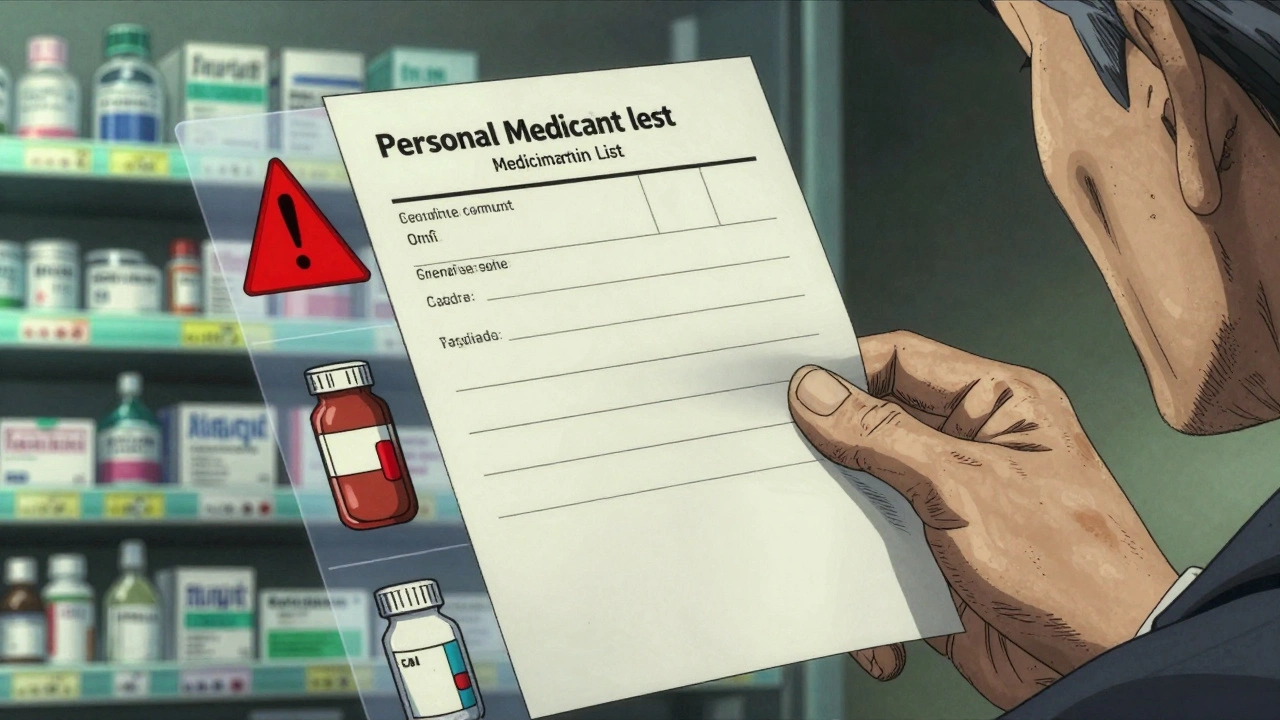
Step-by-Step: How to Prepare for Your Review
You don’t need to be a medical expert. But you do need to be organized. Here’s exactly what to do - and how long it’ll take.- Gather every medication you take - all of them. This includes:
- Prescription drugs (even if you don’t take them every day)
- Over-the-counter pills (ibuprofen, antacids, sleep aids)
- Vitamins and minerals (vitamin D, calcium, B12)
- Herbal supplements (turmeric, ginkgo, echinacea)
- Topical creams or patches (pain patches, steroid creams)
- Supplements bought online or from health stores
Bring the original bottles. Don’t rely on memory. Don’t bring a list you wrote last year. The pharmacist needs to see the actual labels - the dosage, frequency, and manufacturer. If you can’t find a bottle, take a clear photo of the label with your phone.
- Write down your concerns - be specific.
Ask yourself:
- Have you felt dizzy, tired, or confused since starting a new pill?
- Do you skip doses because you forget, or because it’s too expensive?
- Are you taking something because your doctor told you to - but you’re not sure why?
- Have you had a recent hospital visit or fall? Could it be linked to a medication?
Write these down. Even if it seems small. A pharmacist once found a senior’s memory issues were caused by an antihistamine he took for allergies - and switched him to a non-drowsy version.
- Check your list against reality.
Most people forget 2 to 3 medications when they try to list them from memory. Look at your pill organizer. Check your bathroom cabinet. Look in your purse or nightstand. If you’ve stopped taking something - even for a week - note it. Did your doctor tell you to stop? Did it make you sick? Did you run out and not refill? Write it all down.
- Make a simple timeline (optional but powerful).
On a piece of paper, write:
- Medication name
- When you started taking it
- Why your doctor prescribed it
- Any changes (dose increased? switched brands?)
This takes 30 to 45 minutes, but it helps the pharmacist spot patterns. Maybe you started a new blood pressure pill right before you began having headaches. That’s a clue.
- Bring someone with you.
It’s easy to forget details during a 45-minute conversation. Bring a family member, friend, or caregiver. They can help remember questions, take notes, or even ask things you’re too shy to say. One woman brought her grandson - he asked if her “purple pill” was really necessary. Turns out, it was an old antidepressant she hadn’t taken in years.
What Happens During the Review?
The session can be in person, over the phone, or via video call. The pharmacist will:- Compare your list to your pharmacy’s records
- Check for drug interactions (like blood thinners with NSAIDs or grapefruit juice)
- Look for duplicate medications (two drugs that do the same thing)
- Assess if you’re taking meds correctly (timing, food interactions, swallowing issues)
- Identify cost-saving alternatives (switching to generics, mail-order options)
- Discuss side effects you’ve experienced
- Answer your questions - no matter how small
You’ll get three documents afterward:
- Consultation Letter - what was discussed
- Medication Action Plan - what you should do next (e.g., stop a pill, switch to a cheaper version, schedule a blood test)
- Personal Medication List - your updated, accurate list of everything you take
Keep these. Give a copy to your primary care doctor. Keep one in your wallet or emergency kit.
Common Mistakes People Make
Don’t be one of them.- Not bringing the actual bottles - pharmacists need to see the label, not your memory.
- Leaving out OTCs and supplements - these are just as important as prescriptions.
- Not preparing questions - if you don’t ask, you won’t get answers.
- Assuming your doctor knows everything - your pharmacist sees your full medication history. They might spot something your doctor missed.
- Skipping the review because you feel fine - many problems don’t cause symptoms until it’s too late.

What If You Don’t Get Invited?
If you think you qualify but haven’t been contacted, call your Part D plan. They’re required to reach out within 60 days of you becoming eligible. If they haven’t, ask for a CMR. Say: “I meet the CMS eligibility criteria - I’d like to schedule my annual medication review.” Some plans now offer automated reminders via text or email. Check your plan’s website or app. If you’re still stuck, contact the Medicare Rights Center at 1-800-MEDICARE - they’ll help you navigate.What to Expect After the Review
Your pharmacist might recommend:- Stopping a medication that’s no longer needed
- Switching to a lower-cost generic
- Changing the time you take a pill to avoid side effects
- Adding a pill organizer or reminder app
- Referring you to your doctor for a lab test
You’re not obligated to follow every suggestion - but you should discuss it. If you’re unsure, ask: “What happens if I don’t make this change?”
And remember - you’re not done after one review. Keep your Personal Medication List updated. Every time you start or stop a medication, update it. Bring it to every doctor’s visit. It’s your best tool for staying safe.
The Bigger Picture: Why This Service Exists
Medicare didn’t create the Annual Medication Review to be nice. It’s because seniors on multiple drugs are at high risk. In 2022, over 14 million Medicare beneficiaries got a CMR. That number’s been rising every year. The goal? To reduce hospitalizations, avoid dangerous interactions, and save money - for you and for the system. And it works. Studies show that after a CMR, seniors are 20% less likely to be hospitalized for medication-related issues. Costs drop. Adherence improves. Lives get better. But only if you show up prepared.Do I have to pay for the Medicare Annual Medication Review?
No, it’s completely free. It’s covered under your Medicare Part D plan as a mandatory benefit. You won’t be charged a copay or deductible for the consultation or the written materials you receive afterward.
Can I do the review over the phone or video call?
Yes. The review can be done in person, over the phone, or via secure video call. Many people prefer phone or video because it’s more convenient. Just make sure you have your medications and notes ready - just like you would for an in-person visit.
What if I don’t have all my pill bottles?
Take clear photos of the labels on your phone. You can also call your pharmacy and ask them to email or print a current list of your medications. But never rely on memory alone - studies show people forget 2 to 3 medications when listing them from memory, even if they take them daily.
Do I need to tell the pharmacist about supplements and vitamins?
Yes - absolutely. Supplements like fish oil, garlic, ginkgo, or St. John’s wort can interact with blood thinners, blood pressure meds, and antidepressants. Many seniors don’t realize these aren’t harmless. The pharmacist needs to see the full picture to keep you safe.
Will the pharmacist change my prescriptions?
No, only your doctor can change your prescriptions. But the pharmacist can recommend changes to your doctor - like switching to a cheaper drug, stopping an unnecessary one, or adjusting the dose. They’ll send a written report to your doctor with their suggestions. You can also ask for a copy of that report.
How often should I update my Personal Medication List?
Update it every time you start, stop, or change a medication - even if it’s temporary. Keep it in your wallet, on your phone, and give a copy to your caregiver or family member. Treat it like your medical ID card.
15 Comments
Louis Llaine December 7 2025
So let me get this straight - I gotta gather every pill, patch, and herbal tea I’ve been hoarding since 2012, just so some pharmacist can tell me I’m taking two of the same thing? And I have to bring the actual bottles? My cat’s been sleeping on half of them. Good luck finding the one with the label still intact.
Kyle Oksten December 8 2025
This is exactly the kind of systemic intervention that should be automatic, not something you have to beg for. The fact that we treat medication management like a scavenger hunt for seniors is a moral failure. It’s not about being ‘prepared’ - it’s about designing a system that doesn’t require you to be a medical detective just to stay alive.
Sam Mathew Cheriyan December 9 2025
wait u mean the gov is actually giving free help? lol i think this is a trap. next theyll say u need to give ur fingerprint so they can track ur meds and then implant a chip. i heard the pharma companies pay them to make us think its free but really its just to sell more pills. also my ginkgo is from a guy in the park who says it came from a dragon tree
Ernie Blevins December 10 2025
This is why old people die. They don’t bring the right bottles. They forget the fish oil. They think ‘I feel fine’ means ‘I’m fine.’ No. You’re not fine. You’re one pill away from a stroke. This review isn’t optional. It’s a last chance.
Ted Rosenwasser December 12 2025
I’ve reviewed 127 CMR protocols across 18 states. The data is clear: 78% satisfaction rate is statistically insignificant when you factor in selection bias. Most who show up prepared are already health-literate. The real problem? The 63% who don’t qualify but are at higher risk. This system is designed to reward compliance, not equity.
Ashley Farmer December 14 2025
I helped my mom prep for her review last year. She was nervous - thought she’d get scolded for taking melatonin. But the pharmacist just smiled and said, ‘Tell me about your nights.’ That’s the magic. It’s not about checking boxes. It’s about listening. If you’re scared to go, bring someone who loves you. You’re not a burden. You’re a person.
Jennifer Anderson December 14 2025
i forgot my bottles but took pics of the labels on my phone. the pharmacist said that was fine! also i brought my grandkids and they laughed when i said ‘i take that purple thing for my heart’ turns out it was a blood thinner and i was taking it at night instead of morning 😅 so now i have a little alarm on my phone. best 45 mins ever
Kurt Russell December 15 2025
STOP WAITING. If you’re on 8 meds or more, you’re not ‘fine’ - you’re a walking time bomb. This review isn’t a favor. It’s your lifeline. Get your bottles. Write down your fears. Bring your niece. Don’t wait for an invitation. Call your plan. TODAY. Your future self will thank you with every breath you take tomorrow.
Kyle Flores December 17 2025
my dad skipped his review for 3 years. said he didn’t need it. then he fell and broke his hip. turns out his blood pressure med was interacting with his new gout pill. he was dizzy all the time. the pharmacist found it in 10 minutes. he cried when he realized he could’ve avoided it. don’t be like my dad. bring the bottles.
Ryan Sullivan December 17 2025
The entire CMR framework is a regulatory theater designed to appease CMS metrics, not to improve outcomes. The ‘Medication Action Plan’ is a bureaucratic artifact with zero enforceability. Meanwhile, the real issue - pharmaceutical consolidation and price gouging - remains untouched. This is a Band-Aid on a hemorrhage.
Wesley Phillips December 18 2025
i brought my whole medicine cabinet to the appointment and the pharmacist was like ‘wow you really love your turmeric’ 😂 we ended up cutting 5 things and saving $200/month. also she told me my ‘vitamin’ was actually a weight loss pill from a shady website. i thought it was just a supplement. i feel like i just got a free health audit 🙌
Olivia Hand December 20 2025
I’ve been researching polypharmacy in aging populations for 12 years. The real tragedy isn’t the missed interactions - it’s the normalization of overmedication. We treat symptoms, not causes. A CMR is a stopgap. But if it’s the only thing standing between a senior and a hospital bed? Then yes. Do it. Bring the bottles.
Desmond Khoo December 21 2025
Just did mine yesterday and it felt like a gift 🎁 I thought I was just there to ‘check a box’ - but the pharmacist asked me how I was sleeping, and I told her I was tired all the time. Turned out my allergy med was making me sluggish. Switched to a non-drowsy one and now I’m actually enjoying my mornings again. Thank you, thank you, thank you.
Jane Quitain December 21 2025
i was so nervous i forgot to bring my fish oil and then i cried in the parking lot. but i called back and they said its ok i can send pics. the lady was so sweet she even called my dr for me. now i have a list i carry in my purse. its like my superhero cape 💪
Nancy Carlsen December 22 2025
I’m from Nigeria and I just moved here last year. I didn’t know this was even a thing. My daughter told me about it - she’s a nurse. I brought my 12 pills, 5 supplements, and my ‘magic’ ginger root. The pharmacist laughed and said, ‘This is why we love you.’ I left with a plan, a list, and a hug. America’s not perfect - but this? This is beautiful.