
Side Effect Frequency Calculator
Understanding side effect frequencies is critical when discussing medications with your doctor. This tool helps you convert between percentages and '1 in X' numbers so you can better understand what your doctor is telling you.
Side Effect Frequency Converter
Enter a percentage or '1 in X' value to see the equivalent representation.
Results
Enter a value above to see the conversion
Example: If your doctor says "1 in 10 people experience headaches," that means 10% of patients have this side effect. This is considered "common" by medical standards.
Another example: If the doctor says "2% of patients experience this side effect," that means 1 in 50 people experience it. This would be classified as "uncommon" by medical standards.
Remember: Very common means 10% or more (1 in 10 or more), Common means 1-10% (1 in 10 to 1 in 100), Uncommon means 0.1-1% (1 in 100 to 1 in 1,000), and Rare means less than 0.1% (more than 1 in 1,000).
Have you ever stopped taking a medication because you didn’t expect the side effects? You’re not alone. Nearly 68% of patients quit their prescriptions after experiencing side effects that were never mentioned during the appointment. It’s not that doctors are hiding anything - it’s that the conversation about side effects is often rushed, vague, or skipped entirely. But here’s the truth: talking openly about side effect burden isn’t just helpful - it’s essential for staying healthy and getting the most out of your treatment.
Why Side Effect Burden Matters More Than You Think
Side effect burden isn’t just about nausea or dizziness. It’s the weight of how those symptoms affect your life: skipping work because you’re too tired, avoiding social plans because of brain fog, or waking up at 3 a.m. because of restless legs. When side effects aren’t managed well, people stop taking their meds. And that’s dangerous. In the U.S., poor communication about side effects contributes to 50% of medication non-adherence among people with chronic conditions like high blood pressure, diabetes, or depression. The problem isn’t just patient forgetfulness. It’s that most doctors don’t know how to talk about side effects in a way that sticks. A 2015 study found that on average, physicians mention only 3.2 side effects per medication - even though each drug can have 15 to 25 possible reactions. And when they do mention them, they often say things like, “Some people get headaches.” But what does “some” mean? 1 in 10? 1 in 100? Patients don’t know - and that uncertainty leads to fear, confusion, and quitting treatment.What Patients Really Want to Know
Most people want to be prepared. A 2023 study showed that 49% of patients want to hear about both common and serious side effects. Another 26% only care about dangerous ones. And 17% just want to know what’s likely to happen, even if it’s mild. The key? It’s personal. Your tolerance for side effects depends on your lifestyle, your values, and even how much you like to know ahead of time. Here’s what patients consistently ask for:- How common? “Is this something that happens to 1 in 5 people or 1 in 1,000?”
- How bad? “Will this make me feel lousy for a few days, or could it land me in the hospital?”
- What can I do? “If I get this, is there a fix? Should I call you, or can I handle it myself?”
- Is it worth it? “Will this side effect be worse than the disease I’m treating?”
How to Have the Right Conversation
You don’t need to be a medical expert to have a productive talk about side effects. Here’s how to do it - step by step.1. Start by Saying What You Need
Before your doctor dives into the script, say something like:“I’d like to know what side effects I might experience with this medication - especially the ones that are likely and the ones that are serious. I want to be prepared.”This simple sentence shifts the conversation from generic to personal. Studies show that when patients clearly state their preferences, doctors are 3x more likely to give them useful details.
2. Ask for Numbers, Not Vague Terms
Don’t accept “some people” or “rarely.” Push for clarity:- “What percentage of people get this?”
- “Is this something that happens in 1 out of 10, or 1 out of 100?”
- “How long do these side effects usually last?”
- Very common: more than 1 in 10 people (10%+)
- Common: 1 in 10 to 1 in 100 (1-10%)
- Uncommon: 1 in 100 to 1 in 1,000 (0.1-1%)
- Rare: less than 1 in 1,000 (under 0.1%)
3. Talk About Management - Not Just Warning Signs
Knowing a side effect exists isn’t enough. You need to know what to do if it happens. Ask:- “What should I do if I get this?”
- “Should I take it with food? At night? Skip a dose?”
- “When should I call you - and when should I go to urgent care?”
4. Bring Up Your Real Concerns
Don’t be afraid to say: “I’m worried this will make me too tired to work.” Or: “I can’t handle more nausea - I’m already throwing up from chemo.” Your doctor can’t help if they don’t know what matters to you. A 2023 study found that patients who shared their personal concerns about side effects were 42% more likely to stick with their treatment plan. Why? Because the doctor could adjust the plan - maybe switch to a different drug, lower the dose, or add a side effect blocker.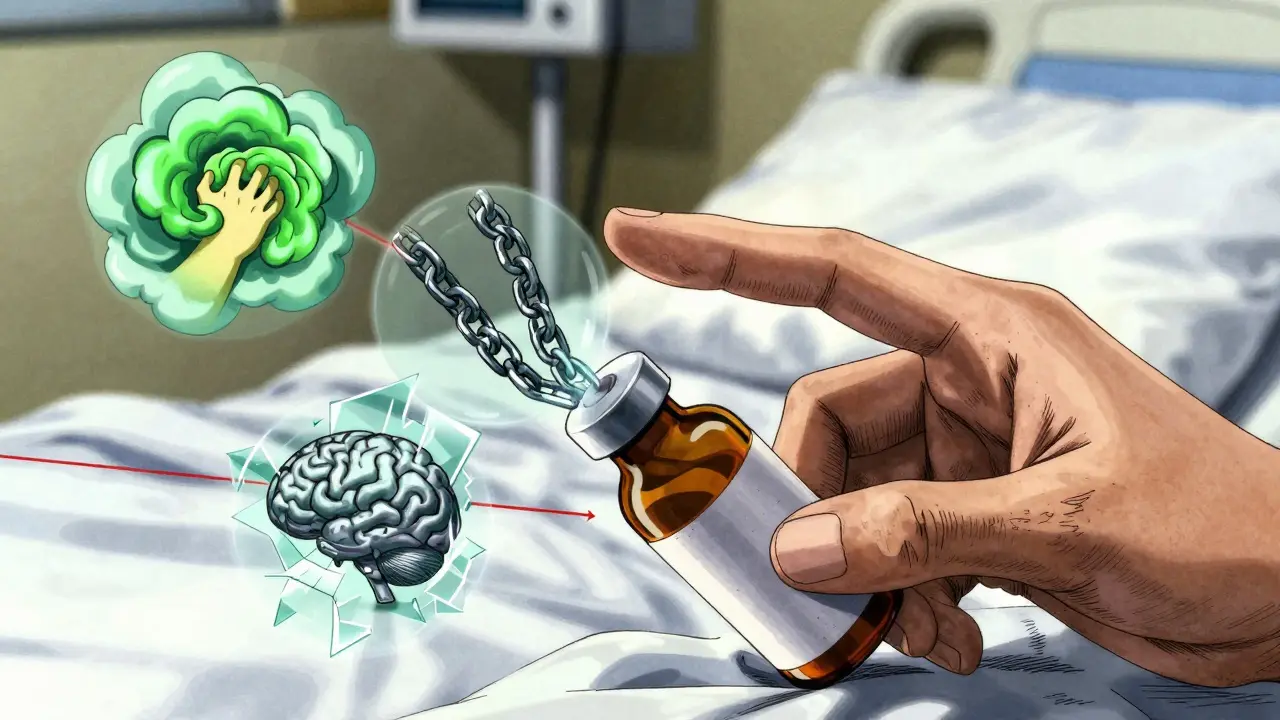
The Nocebo Effect: When Talking Makes Side Effects Worse
Here’s the twist: telling you about side effects can sometimes make them happen more often. This is called the nocebo effect. In studies, patients who were told about nausea were 26-40% more likely to feel nauseous - even if they were on a sugar pill. That doesn’t mean you shouldn’t talk about side effects. It means you need to talk about them the right way. The best approach? Risk-stratified communication. Focus on:- Side effects that are common (happen to 1 in 10 or more)
- Side effects that are serious (even if rare)
What Your Doctor Can Do Better
Doctors aren’t ignoring you. Most are overwhelmed. In a typical 15-minute visit, they have about 1.8 minutes to talk about medications. That’s not enough. But there are tools that help:- Pre-visit questionnaires: Medical assistants ask patients ahead of time: “Are you having trouble with your meds?” This catches issues before the doctor even walks in - and saves over 2 minutes per visit.
- Electronic health record prompts: Systems that auto-populate side effect info based on the drug can boost completeness by 37%.
- Standardized handouts: Written summaries with clear frequencies and management tips improve recall by 29%.

What to Do If You’re Already Stopped Taking Your Meds
If you’ve quit a medication because of side effects - don’t feel guilty. But don’t stay off it without talking to your provider. Here’s what to say:“I stopped taking [medication] because I had [side effect]. I’d like to understand if this is normal, if there’s a way to manage it, or if there’s another option.”Doctors respond best when patients are honest - not defensive. One 2023 AMA guideline says: “Thank you for letting us know you’re not taking your meds as prescribed. Can we talk through this together?” That’s the tone you want to invite.
Final Thought: Your Side Effect Burden Is Your Business
You’re not being difficult. You’re not overreacting. You’re being smart. Side effect burden is part of your treatment - not an afterthought. The goal isn’t to avoid all side effects. It’s to manage them so they don’t outweigh the benefits. If your doctor brushes you off, asks you to “just take it,” or says “everyone gets a little tired” - you have every right to ask for more. Better communication doesn’t just improve adherence. It improves your life.One patient told me: “I didn’t know I could ask for numbers. Once I did, I felt like I was finally being treated like a person - not a checklist.” That’s what this is about.
Why do doctors rarely talk about side effects in detail?
Doctors often skip detailed side effect discussions because of time pressure. In a typical 15-minute appointment, they have less than 2 minutes to cover medications. Many also fear causing anxiety or triggering the nocebo effect - where mentioning side effects makes them more likely to occur. But research shows that when doctors use risk-stratified communication (focusing on common and serious effects), patients feel more informed without increased anxiety. Training programs like the AMA’s STEPS Forward module help doctors learn how to do this efficiently.
How can I know if a side effect is serious or just annoying?
Serious side effects are those that could lead to hospitalization, permanent damage, or death - like liver failure, severe allergic reactions, or heart rhythm changes. Common side effects are mild and temporary - like headache, dizziness, or nausea - and affect 1 in 10 or more people. Ask your doctor to classify each side effect using standard terms: very common (>10%), common (1-10%), uncommon (0.1-1%), rare (<0.1%). If a side effect is rare but severe, you should still know about it. If it’s common but mild, you can often manage it at home.
Should I talk to my pharmacist instead of my doctor about side effects?
Pharmacists are excellent resources - they’re trained specifically in drug interactions and side effects. In fact, 51% of patients prefer getting side effect info from both their doctor and pharmacist. But don’t rely on the pharmacist alone. Your doctor needs to know what you’re experiencing to adjust your treatment plan. Use your pharmacist for clarification and your doctor for decisions about changing meds or doses. Together, they give you the full picture.
What if I don’t want to know all the side effects? Is that okay?
Yes, absolutely. Not everyone wants to know every possible side effect. About 26% of patients only want to hear about dangerous ones, and 17% only want to know about common ones. Tell your doctor: “I’d rather hear only about serious side effects” or “I’d like to know what’s likely, but not the rare ones.” This is called information preference - and it’s part of shared decision-making. Your doctor should respect it. If they push you to hear everything, ask them to tailor the discussion to your comfort level.
Can side effect communication reduce my risk of hospitalization?
Yes. When patients understand what side effects to expect and how to manage them, they’re less likely to stop their meds - and less likely to end up in the ER. A 2022 American Heart Association study found that patients who received clear, structured side effect info had 22% higher adherence rates. Since non-adherence causes 18% of medication-related hospitalizations, better communication directly lowers that risk. Tools like pre-visit questionnaires and electronic health record prompts help catch problems early - preventing emergencies before they happen.
Next Steps: What You Can Do Today
- Write down your top 3 concerns about your current meds - even if they seem small.
- Before your next appointment, say: “I’d like to understand the side effects better - especially how common and how serious they are.”
- Ask for written info or a link to a patient guide. Many clinics now provide these.
- If you’ve stopped a med, call your doctor. Say: “I quit because of X. Can we talk about alternatives?”
11 Comments
phyllis bourassa March 6 2026
I can't believe doctors still treat side effects like they're a surprise package. 🤦♀️ I had to stop my blood pressure med because it made me feel like a zombie walking through molasses. They said 'some people get tired'-like, what does that even mean? 1 in 10? 1 in 100? I'm not a statistic, I'm a person trying to live. I finally asked for numbers and they gave me a handout. Took me three visits, but now I'm on a better med and actually sleeping at night. Stop being vague. We're not children.
Ferdinand Aton March 6 2026
Honestly? I think the whole 'ask for numbers' thing is overrated. I had a doc tell me '1 in 5 get dizziness' and I still panicked and quit the med. Then I found out it was for a condition I didn't even have. Doctors shouldn't be burdened with this. Patients should just trust the process. If it's prescribed, it's probably fine.
William Minks March 7 2026
I love this post 😊 I’ve been in both roles-patient and caregiver for my mom. She’s got diabetes and I finally got her to ask for percentages. She said, 'Doc, is this headache thing common or rare?' and he actually paused and said, 'Common-about 8%.' She cried. Not from sadness-from relief. That’s the moment you realize you’re being seen. 🙏 Let’s normalize asking for numbers. It’s not rude. It’s smart.
Jeff Mirisola March 7 2026
Look, I get it. Doctors are rushed. But here’s the thing: if you don’t talk about side effects, you’re not just failing the patient-you’re failing yourself. I’m a nurse. I’ve seen patients stop meds because they didn’t know what ‘rare’ meant. One guy thought ‘rare’ meant ‘I’ll never get it’ so he didn’t tell us when he started having chest pain. Turned out it was a reaction. He almost died. We need better tools. We need training. We need to stop acting like this is optional. It’s not.
Susan Purney Mark March 7 2026
I used to think asking for numbers was pushy. Then I got prescribed an antidepressant and the doctor said, 'Some people feel nauseous.' I Googled it and found out 40% of people do. I was so scared I almost didn’t take it. When I went back and said, 'Can you tell me how common nausea really is?' he looked at me like I’d spoken a new language. Then he pulled up a chart. I felt like an adult for the first time in years. 🤍 You deserve to know what you’re signing up for.
Ian Kiplagat March 8 2026
Interesting. I’ve worked in UK NHS for 18 years. We use standardized leaflets. Patients get them before the consult. Side effects are colour-coded. Red = serious. Yellow = common. Green = mild. No one asks for numbers because they already have them. Maybe the US needs a system, not just a conversation.
Amina Aminkhuslen March 9 2026
My doctor said 'some people get brain fog' and I thought, 'Cool, I'll just be a genius.' Two weeks later I forgot my kid's birthday. I didn't realize 'some' meant 30%. That's not vague-that's negligent. They're not hiding info. They're just lazy. And now I'm stuck on a med that makes me feel like I'm underwater. I'm not mad. I'm just done being treated like a lab rat with a pulse.
amber carrillo March 10 2026
I appreciate this article. It is important that patients understand the potential outcomes of their treatments. Clear communication leads to better adherence and improved health outcomes. I encourage all individuals to engage with their providers in a thoughtful and respectful manner.
Tim Hnatko March 12 2026
I was a patient who stopped my meds because I thought the side effects were 'normal.' Turns out, they weren't. I didn't know how to ask. No one taught me. I wish I’d known about risk-stratified communication sooner. I’m not angry at my doctor-I’m angry at the system. But I’m trying to help others now. If you’re reading this and you’re scared to ask-ask. You’re not being difficult. You’re being brave.
Aaron Pace March 12 2026
Wait wait wait-so if I tell my doctor I’m scared of side effects, they’ll give me numbers? 😍 I’m gonna try this tomorrow. My doc’s like 'just take it' and I’m like 'but my soul is crying' 🥺 I’m so nervous but I’m doing it. I’m a person, not a checkbox. I’m proud of myself.
Roland Silber March 14 2026
I’ve been on 7 different meds in the last 5 years. Every time, I asked the same thing: 'How many people get this?' And every time, the answer was different. One doc said 'common' meant 1 in 5. Another said 1 in 20. The FDA standards exist for a reason. If your doctor doesn’t know them, ask them to look them up. Or bring a printed sheet. I do. It’s awkward at first. Then it becomes a power move. You’re not asking for permission-you’re claiming your right to be informed. And honestly? The best doctors appreciate it. The ones who don’t? You don’t need them.