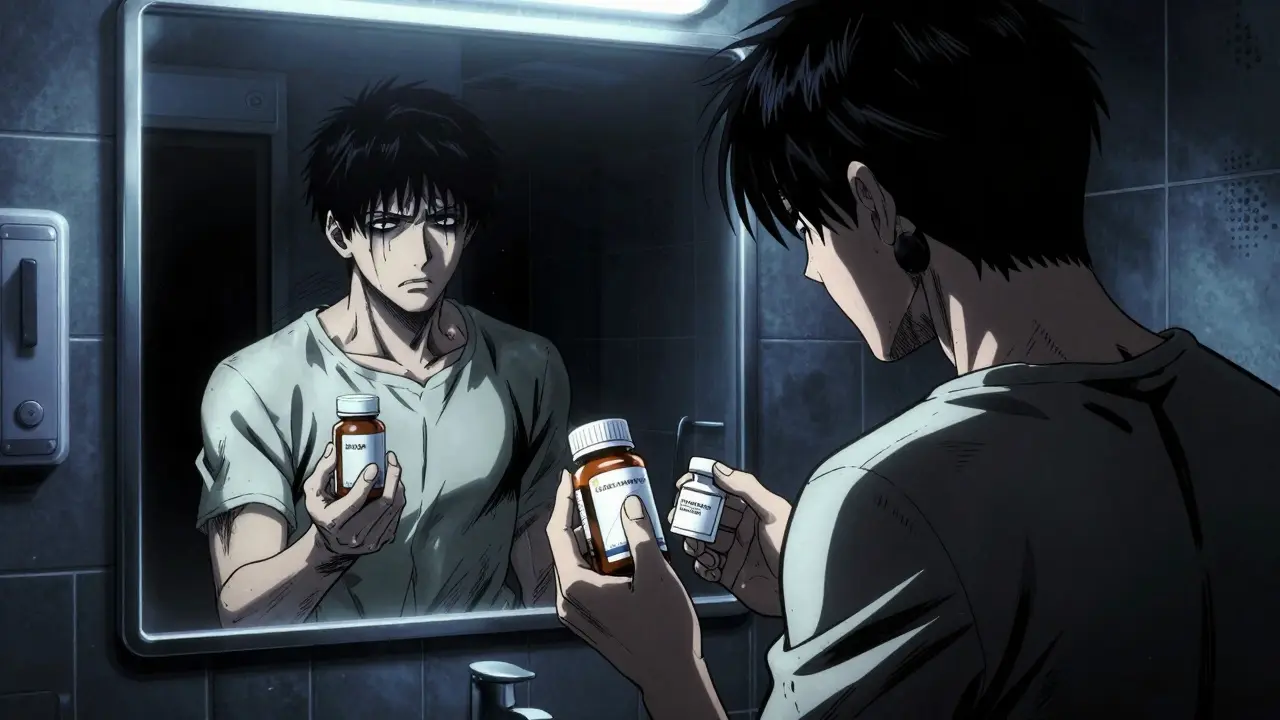
You take your morning pill. It’s the same active ingredient as the expensive brand you took last year. The FDA says it works exactly the same way in your body. Yet, you feel different. Maybe your anxiety isn’t quite controlled, or your thyroid levels seem off. You start wondering: is this cheaper version just... less effective? This doubt is incredibly common. In fact, despite scientific evidence showing that generic medications are chemically identical to their brand-name counterparts, a significant portion of patients and even some doctors believe they are inferior. This perception gap isn't just about feelings; it costs billions in healthcare spending and leads to real health risks when people stop taking their medicine.
The disconnect between what we feel and what science proves is rooted in psychology, marketing, and how our bodies interpret expectations. Understanding why generics *seem* less effective requires looking past the bottle label and into the complex interaction between drug chemistry and human belief systems.
The Science of Bioequivalence: What the Data Actually Says
To understand the perception gap, we first need to look at the reality. When a brand-name drug’s patent expires, other companies can manufacture generic versions. But they can’t just copy the formula blindly. They must prove bioequivalence, which means the generic delivers the same amount of active ingredient into your bloodstream within the same timeframe as the brand-name drug.
The U.S. Food and Drug Administration (FDA) sets strict standards for this. A generic must show a pharmacokinetic profile within 80% to 125% of the brand-name drug’s performance. While that 20% range might sound wide on paper, it is statistically insignificant for most medications. For example, if you take a 100mg dose of a brand-name statin, the generic will deliver between 80mg and 125mg equivalent exposure. Your body processes this difference so smoothly that it rarely impacts therapeutic outcomes. This standard was established by the Hatch-Waxman Act in 1984, creating the modern pathway for generic approval.
Manufacturing standards are also identical. Both brand and generic facilities must follow Current Good Manufacturing Practices (cGMP). The pills may look different-different colors, shapes, or inactive ingredients like fillers and binders-but the active medicinal component is the same. Despite this, a 2016 FDA report noted that foreign manufacturing facilities received more inspectional observations than domestic ones, which subtly fuels public suspicion about quality control, even though the final products meet the same rigorous safety benchmarks.
The Power of the Nocebo Effect
If the science is solid, why do so many people report worse results with generics? The answer often lies in the nocebo effect. Unlike the placebo effect, where positive expectations improve outcomes, the nocebo effect occurs when negative expectations cause adverse symptoms or reduced efficacy.
Your brain is powerful. If you believe a cheaper pill is "lesser," your nervous system can actually manifest physical sensations that align with that belief. A 2023 study published in JAMA Network Open highlighted this starkly: patients who were told generics were "less effective" showed 41% worse adherence rates compared to those informed they were equally effective. Their bodies didn't change; their minds did. This psychological phenomenon explains why some patients feel their blood pressure spikes or their mood dips after switching to a generic, even when blood tests show stable drug levels.
This effect is amplified by subtle cues. A smaller, differently colored pill can subconsciously signal "budget option" rather than "medical equivalent." When you pay $5 instead of $50, part of your brain registers that savings as a trade-off in quality, regardless of the chemical reality.

Marketing and the Myth of Superiority
Brand-name pharmaceutical companies have spent decades building trust through massive advertising campaigns. They invest heavily in making their drugs feel premium, reliable, and scientifically advanced. When patents expire, these companies don’t just disappear. They actively work to maintain market share by exploiting perception gaps.
A 2021 investigation by STAT News revealed that brand manufacturers spend approximately $1.8 billion annually on "product differentiation" campaigns. These ads rarely make false claims but often use imagery and messaging that implies superior quality or innovation. They remind you of the original research, the clinical trials, and the "proven" track record of the brand. Meanwhile, generics are marketed primarily on price. This creates a mental association: Brand = Quality/Trust, Generic = Savings/Risk.
This marketing asymmetry affects not just patients but healthcare providers too. A survey found that 11% of physicians express negative perceptions about generic efficacy, and 27% believe generics cause more adverse effects. When a doctor hesitates to prescribe a generic, or spends extra time reassuring a patient, that hesitation reinforces the idea that there is something to worry about.
Demographic Disparities in Trust
The perception gap isn't evenly distributed across all populations. Research shows significant disparities based on race, geography, and socioeconomic status. According to a 2015 national survey published in the Journal of General Internal Medicine, non-Caucasian patients were significantly more skeptical of generic equivalence than Caucasian patients (43% vs. 29%). They were also more likely to request brand-name drugs.
Rural populations, particularly in regions like Alabama's Black Belt, have documented strong beliefs that generics are "less potent," "require higher doses," or are "for poor people." These perceptions directly contradict FDA requirements but stem from historical mistrust in medical institutions and limited access to clear, culturally relevant health education. When a community lacks consistent engagement with healthcare providers who explain the science behind generics, myths fill the void.
These disparities matter because they affect health equity. If certain groups are systematically denied the cost-saving benefits of generics due to unfounded fears, they end up paying more for the same care, or worse, stopping treatment altogether. Addressing this requires targeted education that respects cultural contexts and builds trust through transparent communication.
| Attribute | Brand-Name Drug | Generic Medication |
|---|---|---|
| Active Ingredient | Identical | Identical |
| Bioequivalence Range | N/A (Reference) | 80%-125% of Brand |
| Cost | High (Patent Protected) | 80-85% Lower |
| Regulatory Approval | FDA Approved | FDA Approved (Bioequivalence Required) |
| Inactive Ingredients | Proprietary Formula | May Differ (Fillers/Dyes) |
| Public Perception | High Trust | Mixed/Skeptical |

The Real Cost of Doubt: Adherence and Health Outcomes
When perception clashes with reality, the consequences are tangible. Medication non-adherence is a major public health crisis, and generic skepticism is a key driver. A 2019 study in Research in Social and Administrative Pharmacy found that 22% of patients who perceived generics as inferior discontinued their medication prematurely. Compare that to only 8% of patients with neutral perceptions.
Consider levothyroxine, a common thyroid medication. Some patients switch brands and report feeling fatigued or gaining weight. While the active ingredient is identical, slight variations in inactive fillers can affect absorption in sensitive individuals. However, for most people, the issue is psychological. If you stop taking your thyroid medication because you think the generic "doesn't work," your hormone levels drop, and your symptoms return. The problem wasn't the drug; it was the decision to stop taking it.
Healthcare providers spend an average of 3.2 minutes per prescription addressing these concerns. In low-income areas, primary care physicians report spending up to 15% of consultation time discussing generic substitutions. This drains resources that could be used for actual medical care. The economic stakes are huge: eliminating perception barriers could save an additional $5.9 billion annually in healthcare costs, according to Harvard Medical School analysis.
Bridging the Gap: Communication and Education
So, how do we close this gap? The solution isn't just better science; it's better communication. Dr. William Shrank, Chief Medical Officer at UnitedHealth Group, led a study showing that patient communication by healthcare providers is the strongest predictor of generic medication use. It outweighs cost, efficacy, or safety perceptions.
Effective strategies include:
- Demonstrating Identity: Showing patients the identical active ingredient list improves acceptance by 87%. Visual aids help demystify the process.
- Providing Documentation: Sharing FDA equivalence documentation boosts confidence by 76%. Patients want proof, not just promises.
- Addressing the Nocebo Directly: Explaining that expectations can influence outcomes improves adherence by 68%. Normalizing the conversation reduces anxiety.
The FDA has launched initiatives like the "It's the Same Medicine" campaign, reaching 27 million people since 2019. However, recall accuracy remains low at 19%, indicating that current messaging isn't sticking. Future efforts, like the planned "Equivalence Explorer" tool, aim to provide interactive data on specific drug switches. Additionally, the American Medical Association adopted mandatory generic perception training in continuing medical education in 2023, recognizing that doctors play a pivotal role in shaping patient attitudes.
For individuals, the best approach is open dialogue with your pharmacist or doctor. Ask questions. Understand that while inactive ingredients may differ, the therapeutic effect should remain consistent. If you experience issues, don't assume the generic is faulty-discuss potential interactions or absorption differences. Often, a simple adjustment or reassurance resolves the concern.
The reality is clear: generics are safe, effective, and essential for affordable healthcare. The perception that they are inferior is a barrier built on psychology and marketing, not science. By understanding the nocebo effect and trusting the rigorous regulatory standards, we can embrace generics without fear, saving money and improving health outcomes for everyone.
Are generic medications really the same as brand-name drugs?
Yes. Generic medications contain the exact same active ingredient, strength, dosage form, and route of administration as brand-name drugs. They must demonstrate bioequivalence, meaning they deliver the same amount of active ingredient into your bloodstream within the same timeframe. The FDA strictly regulates this process to ensure safety and efficacy.
Why do I feel different when I switch to a generic?
You might feel different due to the nocebo effect, where negative expectations lead to perceived side effects or reduced efficacy. Alternatively, slight differences in inactive ingredients (like fillers or dyes) can affect absorption in rare cases. However, for most people, the active ingredient works identically. Discuss any changes with your doctor to rule out other causes.
Is it safe to switch between brand and generic versions?
In most cases, yes. The FDA considers them therapeutically equivalent. However, for narrow therapeutic index drugs (like warfarin or levothyroxine), some doctors prefer consistency to avoid minor fluctuations. Always consult your healthcare provider before making changes, especially for critical medications.
Do generic drugs have fewer side effects?
Generic drugs have the same potential side effects as brand-name drugs because they contain the same active ingredient. Any difference in side effects is usually due to individual sensitivity to inactive ingredients or psychological factors like the nocebo effect, not the medication itself.
How much cheaper are generic medications?
On average, generic medications cost 80-85% less than brand-name equivalents. This significant savings helps reduce overall healthcare costs and makes essential treatments more accessible to millions of people.
What is the Hatch-Waxman Act?
The Hatch-Waxman Act, passed in 1984, created the modern legal framework for generic drug approval in the United States. It streamlined the process for generic manufacturers to prove bioequivalence without repeating costly clinical trials, encouraging competition and lowering drug prices.
Can I ask my doctor for a brand-name drug instead?
You can always discuss your preferences with your doctor. However, insurance plans often require generic substitution to control costs. If you insist on a brand-name drug, you may face higher copays or out-of-pocket expenses. Your doctor can help weigh the pros and cons based on your specific health needs.
Are generic drugs manufactured under the same quality standards?
Yes. All generic drug manufacturers must adhere to the same Current Good Manufacturing Practices (cGMP) as brand-name companies. The FDA inspects facilities regularly to ensure compliance, regardless of whether they produce brand or generic products.