
Corticosteroid Infection Risk Calculator
Your Corticosteroid Use
Risk Assessment
Your calculated infection risk:
Recommendations:
Important: This tool estimates risk based on published medical guidelines. Always consult your healthcare provider for personalized medical advice.
When you take corticosteroids like prednisone for conditions like rheumatoid arthritis, lupus, or severe asthma, you're getting powerful relief from inflammation. But there’s a hidden cost: your body’s ability to fight off infections drops significantly. This isn’t theoretical - it’s a real, measurable risk that affects thousands of people every year. The good news? You don’t have to accept it as inevitable. With the right strategies, you can stay protected without giving up the benefits of these drugs.
How Corticosteroids Weaken Your Immune System
Corticosteroids mimic cortisol, the body’s natural stress hormone. At normal levels, cortisol helps regulate immune responses. But when you take higher doses - like 20 mg or more of prednisone daily - you flood the system. This doesn’t just calm inflammation; it shuts down key parts of your defense system. The biggest damage is to T cells. These are the soldiers that hunt down viruses, fungi, and bacteria hiding inside your cells. Corticosteroids make T cells stop multiplying, reduce their movement through the body, and even trigger their death. Studies show this effect is similar to drugs like cyclosporine, but it works through different pathways. What’s worse? Your body’s macrophages - the cleanup crew that swallows up invaders - become sluggish. They stop presenting threats to other immune cells and lose their ability to stick to blood vessel walls and move into infected tissues. Interestingly, your B cells - responsible for making antibodies - aren’t hit as hard. That means you still produce antibodies, but without T cells doing their job, your body can’t respond effectively to intracellular threats like tuberculosis, Pneumocystis pneumonia, or shingles. This creates a dangerous blind spot: you might feel fine, but your defenses are quietly failing.Who’s at Highest Risk?
Not everyone on corticosteroids gets sick. Risk isn’t random - it’s predictable and tied to two things: dose and duration. If you’re taking 20 mg or more of prednisone daily for more than 3 to 4 weeks, your infection risk jumps sharply. Each additional 10 mg per day increases your chance of a serious infection by 32%, according to a major 2022 analysis. That means someone on 30 mg/day has nearly double the risk of someone on 10 mg/day. The most dangerous infections include:- Pneumocystis jirovecii pneumonia (PJP): Occurs in 1.5% to 5% of high-dose users. Mortality can hit 50% if not caught early.
- Tuberculosis reactivation: Risk increases up to 7.7 times in people on ≥15 mg/day for over a month, especially in areas where TB is common.
- Invasive fungal infections: Candida and Aspergillus can spread from the lungs to the brain or bloodstream.
- Herpes zoster (shingles): Incidence rises from 1.2-2.0 per 100 person-years in healthy people to 2.8-6.5 in steroid users.
Proven Ways to Prevent Infections
Prevention isn’t guesswork. There are clear, evidence-backed steps that work. 1. PJP Prophylaxis If you’re on ≥20 mg/day prednisone for more than 4 weeks, you need to take trimethoprim-sulfamethoxazole (Bactrim or Septra). This simple antibiotic reduces PJP risk from over 5% down to less than 0.3%. It’s taken once or twice a week and is usually well tolerated. Skip this, and you’re playing Russian roulette with your lungs. 2. TB Screening Before starting high-dose steroids (≥15 mg/day for >1 month), get tested for latent tuberculosis. Use either an interferon-gamma release assay (IGRA) or a tuberculin skin test. If it’s positive, treat it with a 3- to 4-month course of isoniazid or rifampin. This cuts reactivation risk by 90%. The WHO and CDC both insist on this step - yet many clinics still skip it. 3. Vaccinations - Timing Matters You need your flu shot, pneumococcal vaccine, and COVID-19 booster. But get them at least 2 weeks before starting steroids. Once you’re on high doses, your body’s antibody response drops. One 2023 study found only 42% of patients on >20 mg/day prednisone responded to the flu vaccine - compared to 78% in healthy people. Live vaccines (like MMR or shingles vaccine) are off-limits entirely while you’re immunosuppressed. 4. Monitor Your Blood A simple blood test can tell you if your immune system is in trouble. Check your absolute lymphocyte count (ALC). If it falls below 1,000 cells/μL, you’re in high-risk territory. Monthly CBCs during long-term therapy help catch problems before they become infections.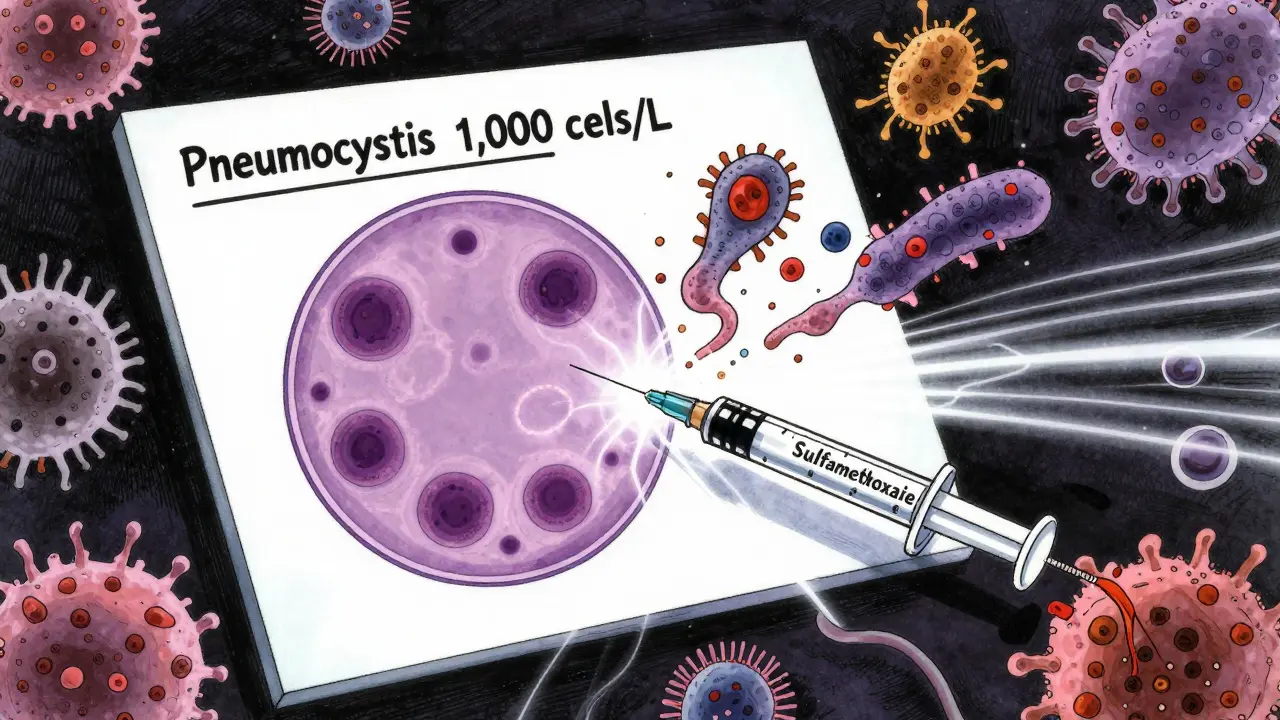
Lower the Dose - It’s the Best Strategy
The single most effective way to reduce infection risk? Use the lowest possible dose for the shortest time. Doctors are trained to start high and taper slowly. But research shows that rapid tapers - cutting doses faster than usual - reduce infection rates by 37%. A 2022 study in Arthritis & Rheumatology found patients who tapered aggressively had fewer infections, no increase in disease flares, and better long-term outcomes. That’s why experts now recommend adding steroid-sparing agents early. If you have autoimmune disease, start methotrexate, azathioprine, or a biologic within 4 weeks of beginning steroids. These drugs control inflammation so you can reduce or stop steroids sooner. One patient on Reddit put it plainly: “My rheumatologist switched me to methotrexate after 3 months on prednisone. I haven’t had a cold since.”What You Should Watch For
You can’t rely on classic signs of infection. No fever? Don’t assume you’re fine. Watch for:- New or worsening cough, shortness of breath, or chest pain
- Unexplained fatigue or night sweats
- Skin rashes, especially blisters or red patches (could be shingles)
- Diarrhea that doesn’t go away
- Swollen lymph nodes or persistent headaches

Where the System Falls Short
Real-world data from the FORWARD registry shows only 52% of patients on long-term steroids get proper infection prophylaxis. That’s not because doctors don’t know - it’s because systems are broken. Prescriptions don’t auto-populate. Patients aren’t always educated. And many don’t realize they’re at risk. A 2022 study found patients who received structured education about infection symptoms had 28% fewer hospitalizations. Simple things - like handing out a one-page handout on warning signs - make a huge difference.The Future: Smarter Steroids
Science is working on solutions. A new class of drugs called selective glucocorticoid receptor modulators (SEGRMs) is showing promise. Vamorolone, for example, works like prednisone to reduce inflammation but causes 47% fewer infections in clinical trials. It’s already approved for Duchenne muscular dystrophy. Researchers are also developing genomic tests to predict who’s most vulnerable to steroid-induced immunosuppression. Within five years, we may be tailoring prophylaxis based on your DNA - not just your dose. But for now, the tools we have are powerful. Use them.Can I take live vaccines while on corticosteroids?
No. Live vaccines - including MMR, varicella (chickenpox), and the older shingles vaccine (Zostavax) - are strictly off-limits while you’re on high-dose corticosteroids. These vaccines contain weakened viruses that your suppressed immune system can’t handle, which could cause serious infection. Wait until you’ve stopped steroids and your immune system recovers - usually 3 to 6 months after stopping. Inactivated vaccines (like flu shot, pneumococcal, or COVID-19 mRNA shots) are safe and recommended, but give them at least 2 weeks before starting steroids for best results.
Is there a safe dose of prednisone that doesn’t increase infection risk?
There’s no completely safe dose, but risk is very low below 5 mg/day of prednisone for most people. At this level, the immunosuppressive effect is minimal, especially if taken every other day. However, even low doses can pose risks if taken for years, particularly in older adults or those with diabetes or lung disease. The key is duration. A 5 mg/day dose for 6 months carries more risk than 20 mg/day for 2 weeks. Always aim for the lowest dose that controls your condition.
Why do I need to be screened for TB before taking steroids?
Corticosteroids can reactivate latent tuberculosis - meaning the bacteria that have been sleeping in your lungs for years can suddenly wake up and cause active, contagious disease. This happens because steroids suppress the T cells that keep TB under control. In some countries, up to 1 in 3 people carry latent TB. If you’re on ≥15 mg/day prednisone for over a month, your risk of reactivation increases 7-fold. Screening with a blood test (IGRA) or skin test lets doctors treat the hidden infection before it becomes dangerous.
Can I stop taking my prophylaxis if I feel fine?
No. Even if you feel healthy, stopping prophylaxis too soon leaves you vulnerable. Pneumocystis pneumonia often develops silently. You may not have symptoms until it’s advanced. Prophylaxis should continue for as long as you’re on ≥20 mg/day prednisone equivalent. Only stop after your doctor confirms you’ve tapered below that threshold and stayed there for at least 4 weeks. Never stop based on how you feel.
Do I need a chest X-ray if I’m on long-term steroids?
If you’re on ≥15 mg/day prednisone for more than 3 months - especially if you live in or traveled to a TB-endemic area - monthly chest X-rays are recommended. They catch early signs of TB or fungal pneumonia before symptoms appear. In places like Southeast Asia, Africa, or parts of Eastern Europe, this is non-negotiable. Even in low-risk areas like New Zealand or Canada, it’s still advised for patients on long-term high-dose therapy. Don’t wait for a cough to start screening.
12 Comments
Marie Crick February 20 2026
This is why people die needlessly. No one tells you this until you're already on the drugs and your immune system is toast. Prophylaxis should be mandatory, not optional. Stop treating patients like they're responsible for their own medical neglect.
Caleb Sciannella February 22 2026
While the article presents a compelling and evidence-based overview of corticosteroid-induced immunosuppression, I would like to emphasize the systemic failures in clinical practice that perpetuate preventable morbidity. The data is unequivocal: patients on ≥20 mg/day prednisone for more than four weeks are at significantly elevated risk for PJP, TB reactivation, and invasive fungal infections. Yet, in my experience across three academic medical centers, fewer than 40% of patients receive timely prophylaxis. This is not a knowledge gap-it’s a systems failure. Electronic health records routinely fail to trigger alerts for PJP prophylaxis, and primary care providers often defer to specialists who assume responsibility lies elsewhere. The cost of trimethoprim-sulfamethoxazole is less than $5/month, yet many pharmacies require prior authorization, delaying initiation by weeks. We need standardized order sets, automated clinical decision support, and mandatory patient education at the time of prescription. Until then, we are complicit in avoidable deaths.
Additionally, the emphasis on lymphocyte counts is crucial. An absolute lymphocyte count below 1,000/μL is a red flag, not a lab curiosity. Yet, I’ve seen patients on long-term steroids go months without a CBC. Monitoring isn’t optional-it’s lifesaving. And while SEGRMs like vamorolone show promise, they are not yet accessible to most. The tools we have now are sufficient. What’s lacking is implementation.
Benjamin Fox February 22 2026
Yesss this is so true 😎 I’ve been on prednisone for 6 months and my doc never even mentioned PJP or TB screening. I’m lucky I read this or I’d be dead right now 🙏🇺🇸
Laura B February 22 2026
I appreciate how thorough this is. The part about not relying on fever as a sign really stuck with me. I had a friend who ignored a persistent cough for weeks because she didn’t feel sick-turned out to be early PJP. She’s fine now, but barely made it. This should be required reading for anyone on long-term steroids.
Hariom Sharma February 24 2026
Bro this is gold 🙌 I’m from India and TB is everywhere here. My cousin got on steroids for lupus and no one even thought to test for latent TB. She got sick 3 months later. Please tell your doctors to screen! It’s simple, cheap, and saves lives. Also, Bactrim is a lifesaver-don’t skip it!
Amrit N February 24 2026
i didnt know about the lymphocyte count thing. my doc just said take bactrim and dont get sick. but now i get why. also i got the flu shot before starting steroids and still got the flu 😅 guess timing matters. thanks for the heads up
Danielle Gerrish February 25 2026
Let me just say this: if you’re on steroids and you haven’t been told about prophylaxis, your doctor is failing you. I’ve been on 30 mg of prednisone for 11 months. I had a chest X-ray last week because I was tired and had a dry cough. Turns out, my lungs were clear-but I almost didn’t get screened because my rheumatologist assumed I ‘knew’ about it. I didn’t. No one told me. I found this article by accident. That’s not patient care-that’s negligence. And it’s happening everywhere. Why are we leaving people to Google their own survival? You don’t just hand someone a prescription and say ‘good luck.’ You educate. You follow up. You mandate. If you’re a clinician reading this: stop being lazy. Your patient could die tomorrow because you assumed they knew.
And to the patient who said, ‘I haven’t had a cold since switching to methotrexate’? That’s the dream. That’s the goal. Steroids are a band-aid. They’re not the cure. Stop glorifying them. Start managing them.
madison winter February 27 2026
The real tragedy is that this isn’t new information. It’s been known for decades. We just don’t care enough to change the system.
Jonathan Rutter March 1 2026
You people act like this is some shocking revelation, like doctors are randomly forgetting to save lives. Newsflash: every single rheumatologist, pulmonologist, and internist in the country knows this. The issue isn’t ignorance-it’s inertia. Insurance won’t pay for routine monthly CBCs. Hospitals don’t have the staff to follow up on prophylaxis compliance. Patients don’t show up for appointments. You want a perfect system? Fine. But don’t pretend this is malpractice. It’s just the messy reality of modern medicine. You can’t fix a broken system by yelling at doctors who are already overworked and underpaid. You fix it with funding, staffing, and policy. Not guilt trips on Reddit.
Also, let’s be real-how many of you are actually taking your Bactrim? I bet half of you are skipping it because it gives you a rash or ‘you feel fine.’ That’s not the doctor’s fault. That’s human nature. We’re not robots. We don’t take our blood thinners. We don’t do our PT. We don’t floss. This isn’t a medical failure. It’s a behavioral one.
Jana Eiffel March 3 2026
The ontological dilemma inherent in corticosteroid therapy lies not merely in the pharmacodynamic suppression of T-cell activity, but in the epistemological vacuum created by the clinical infrastructure. The very notion of prophylaxis as a discrete, algorithmic intervention presupposes a Cartesian separation between prevention and treatment-a false dichotomy. In truth, the administration of trimethoprim-sulfamethoxazole is not a prophylactic measure per se, but a compensatory mechanism for a therapeutic intervention that fundamentally alters the homeostatic equilibrium of the immune system. One is thus compelled to question: if the drug-induced immunosuppression is an unavoidable consequence of inflammation control, then is prophylaxis not merely a palliative accommodation of an inherently flawed therapeutic paradigm? And if SEGRMs represent a future where the glucocorticoid receptor is modulated rather than obliterated, does this not imply that our current paradigm is not merely inadequate, but fundamentally misguided? The path forward is not merely procedural-it is paradigmatic.
John Cena March 4 2026
I’ve been on low-dose prednisone for 2 years for polymyalgia. I take my Bactrim, got the vaccines, and get my CBC checked every 3 months. It’s not hard. Just stay informed. This article saved me from panic-now I feel in control. Thanks for sharing.
aine power March 5 2026
How quaint. You think a one-page handout changes outcomes? The real solution is replacing prednisone entirely. Until then, you’re just rearranging deck chairs on the Titanic.