
Imagine reaching for your coffee mug, only to find your hand trembling uncontrollably. Or try buttoning a shirt, but your fingers move so slowly that the task feels impossible. For over one million Americans, this isn’t a hypothetical scenario-it’s their daily reality. Parkinson’s disease is a progressive neurodegenerative disorder characterized by the loss of dopamine-producing neurons in the substantia nigra region of the brain. First described by James Parkinson in 1817, it remains one of the most challenging chronic conditions to manage. But understanding it doesn’t have to be overwhelming.
This guide cuts through the medical jargon. We’ll break down the core motor symptoms, explain how medications work (and why they change over time), and offer practical strategies for navigating daily life. Whether you’re newly diagnosed or supporting a loved one, this information is designed to help you take control.
The Four Cardinal Motor Symptoms
To diagnose Parkinson’s, doctors look for specific physical signs. You don’t need to experience all of them, but bradykinesia-slowness of movement-is always present. According to Dr. Alberto J. Espay of the University of Cincinnati, bradykinesia has 95% specificity for diagnosis when properly assessed. Here are the four main motor symptoms:
- Tremor: This is often the first sign people notice. It’s usually a “pill-rolling” tremor between the thumb and forefinger, occurring at rest. About 70% of patients present with this symptom initially, though it affects 70-90% during the course of the disease. Interestingly, the tremor often stops when you start moving voluntarily.
- Rigidity: Your muscles feel stiff or resistant. There are two types: cogwheel rigidity (alternating stiffness and relaxation) seen in 85% of cases, and lead-pipe rigidity (constant resistance) in 15%. This stiffness can cause pain and limit range of motion.
- Bradykinesia: Beyond just slow movement, this includes reduced facial expression (hypomimia), decreased blinking, and trouble with fine motor tasks like writing or eating. It’s the hallmark feature that distinguishes Parkinson’s from other tremor disorders.
- Postural Instability: Balance problems typically emerge later, after 5-10 years of disease duration. This significantly increases fall risk, with approximately 68% of patients falling at least once annually.
Other Common Motor Challenges
Beyond the cardinal symptoms, several other motor issues impact quality of life. Understanding these helps in planning adaptations:
- Gait Changes: Step length decreases by 25-35%, and walking speed drops by 30-40%. Decreased arm swing affects bilateral coordination in 75% of patients, contributing to balance issues.
- Speech Issues: Hypophonia (soft voice) occurs in 89% of patients, with volume decreasing by 5-10 decibels on average. Dysarthria (slurred speech) affects 74%, making conversation difficult in noisy settings.
- Micrographia: Handwriting becomes progressively smaller, affecting 45-60% of patients. This is a classic early sign that many people recognize before formal diagnosis.
- Dysphagia: Difficulty swallowing affects 35% of early-stage and up to 80% of advanced-stage patients. This is serious because aspiration pneumonia accounts for 70% of Parkinson’s-related deaths.
- Dystonia: Abnormal muscle tone causing twisting or spasms, particularly common in young-onset Parkinson’s (15-20% of patients).
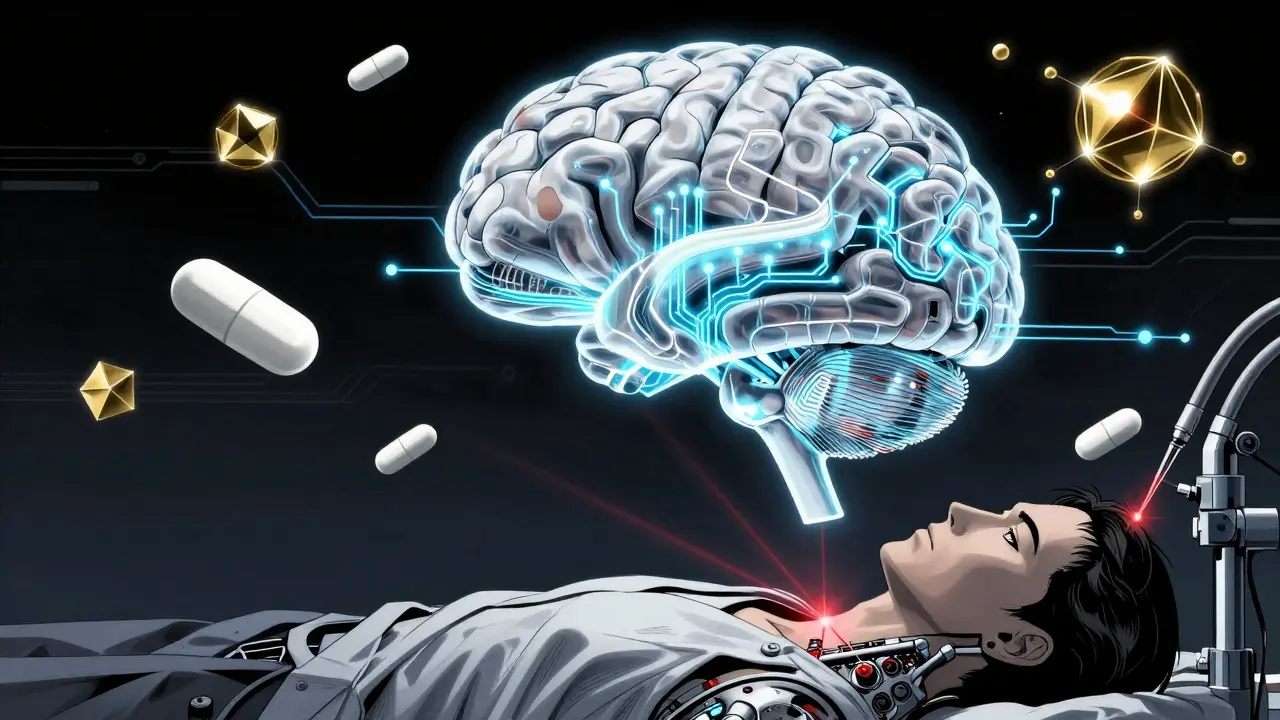
Medications: How They Work and What to Expect
Current treatment focuses on managing symptoms rather than stopping disease progression. The Michael J. Fox Foundation notes that no medication has yet demonstrated disease-modifying effects in large-scale trials. However, symptom control is highly effective.
| Medication Type | How It Works | Effectiveness | Key Considerations |
|---|---|---|---|
| Levodopa (L-DOPA) | Converts to dopamine in the brain | 70-80% initial symptom control | Gold standard since 1967; 50% develop motor fluctuations/dyskinesias after 5 years |
| Dopamine Agonists | Mimics dopamine action directly | 50-60% symptom control in early stage | Used in younger patients to delay Levodopa complications; introduced in 1990s |
| Deep Brain Stimulation (DBS) | Electrical stimulation of brain circuits | Effective when medications fail | Surgical option; ~30% of patients require this after 10 years |
Levodopa remains the gold standard. Arvid Carlsson’s 1957 discovery of dopamine’s role in motor control (earning him the 2000 Nobel Prize) paved the way for this therapy. However, long-term use brings challenges. After five years, up to half of patients experience motor fluctuations-periods where medication wears off unexpectedly-and dyskinesias (involuntary movements).
For younger patients, doctors often start with dopamine agonists like pramipexole or ropinirole. These provide moderate symptom control while delaying Levodopa-related side effects. As the disease progresses, combination therapies become necessary to maintain stability.
Navigating Daily Living: Practical Strategies
Living with Parkinson’s means adapting routines. The Mayo Clinic documents that simple tasks become significantly harder: dressing takes 2.3 times longer, and buttoning a shirt takes 3.1 times longer compared to age-matched controls. Here’s how to cope:
Movement and Exercise
Physical therapy isn’t optional-it’s essential. Studies show that 12 weeks of targeted exercise improves walking speed by 15-20% and reduces fall risk by 30%. Focus on activities that challenge balance and coordination, such as tai chi, boxing drills, or dance classes specifically designed for Parkinson’s patients.
Home Modifications
Prevent falls by removing tripping hazards like loose rugs. Install grab bars in bathrooms, use non-slip mats in the shower, and ensure adequate lighting throughout your home. Keep frequently used items within easy reach to minimize bending or stretching.
Communication Adjustments
If your voice has softened, practice speaking louder and pausing between sentences. Use visual aids or written notes in group settings if needed. Speech therapy can teach techniques to improve projection and clarity.
Eating and Swallowing
Since dysphagia is common, eat small, frequent meals. Sit upright while eating and avoid talking during meals. If swallowing becomes difficult, consult a speech-language pathologist for safe swallowing strategies. Nutritional support may be necessary to prevent weight loss.
Sleep and Rest
Akathisia (restlessness) affects 15-25% of patients, causing sleep disturbances. Establish a consistent bedtime routine, limit caffeine in the afternoon, and consider relaxation techniques before bed. Discuss sleep issues with your doctor, as medication timing adjustments might help.

Understanding Disease Progression
Parkinson’s progresses slowly, typically over 5-20 years. The Hoehn and Yahr scale describes five stages:
- Stage 1: Unilateral symptoms (one side of the body). Minimal impact on daily life.
- Stage 2: Bilateral symptoms (both sides). Posture changes begin.
- Stage 3: Mid-stage. Balance impairment, slower movements, increased fall risk.
- Stage 4: Severe disability. Requires assistance for daily activities.
- Stage 5: Wheelchair or bed-bound. Significant cognitive and motor decline.
Early diagnosis is crucial. The American Academy of Family Physicians emphasizes that persistent asymmetry and excellent response to Levodopa are supportive diagnostic features. Don’t wait until symptoms severely impact your life-seek evaluation from a neurologist specializing in movement disorders.
Looking Ahead: Research and Hope
While current treatments manage symptoms, research continues. The Michael J. Fox Foundation highlights ongoing studies targeting alpha-synuclein, the protein clumps associated with Parkinson’s. Though no disease-modifying therapy exists yet, clinical trials offer hope for future breakthroughs. Participating in research or staying informed about new developments empowers you to make proactive decisions about your care.
Remember, Parkinson’s affects everyone differently. Some experience mild tremors for decades, while others progress more rapidly. Work closely with your healthcare team to tailor treatments to your unique needs. With the right support, you can maintain independence and quality of life for years to come.
What is the most common first symptom of Parkinson's disease?
The most common presenting symptom is a resting tremor, often described as a 'pill-rolling' motion between the thumb and forefinger. It typically begins unilaterally (on one side) and occurs in about 70% of cases at diagnosis. However, not everyone experiences tremor first; some may notice stiffness or slowness of movement instead.
Can Parkinson's disease be cured?
Currently, there is no cure for Parkinson's disease. Treatments focus on managing symptoms and improving quality of life. While medications like Levodopa effectively control motor symptoms initially, they do not stop the underlying neurodegeneration. Research into disease-modifying therapies continues, but none have been approved yet.
How long does it take for Parkinson's to progress to severe stages?
Progression varies widely among individuals. On average, motor symptoms develop slowly over 5-20 years. The Hoehn and Yahr scale outlines five stages, from unilateral symptoms to significant disability. Factors like age at onset, genetics, and adherence to treatment influence progression speed. Early intervention can help maintain function longer.
What are the side effects of long-term Levodopa use?
After five years of Levodopa treatment, up to 50% of patients develop motor fluctuations (periods where medication wears off) and dyskinesias (involuntary, erratic movements). Other potential side effects include nausea, dizziness, and hallucinations in some cases. Doctors often adjust dosages or add other medications to mitigate these effects.
Is exercise really beneficial for Parkinson's patients?
Yes, absolutely. Physical therapy and targeted exercise programs have proven benefits. Studies show that 12 weeks of specialized exercise can improve walking speed by 15-20% and reduce fall risk by 30%. Activities like tai chi, boxing, and dance are particularly effective because they challenge balance, coordination, and strength simultaneously.
When should I see a specialist for Parkinson's?
If you experience persistent tremors, stiffness, or slowness of movement, especially if asymmetric (worse on one side), consult a neurologist. Early diagnosis allows for timely intervention. Specialists in movement disorders can confirm diagnosis using criteria like bradykinesia plus tremor or rigidity, and assess response to Levodopa.
How does Parkinson's affect speech and swallowing?
Speech difficulties include hypophonia (soft voice) in 89% of patients and dysarthria (slurred speech) in 74%. Voice volume typically decreases by 5-10 decibels. Swallowing issues (dysphagia) occur in 35% of early-stage and up to 80% of advanced-stage patients, increasing the risk of aspiration pneumonia, which is a leading cause of death in Parkinson's.
What is Deep Brain Stimulation (DBS)?
DBS is a surgical procedure where electrodes are implanted in specific brain areas to deliver electrical impulses. It’s considered when medications become insufficient, typically after 10 years of disease duration. About 30% of patients benefit from DBS, which can significantly reduce motor fluctuations and improve quality of life. It’s not a cure but a powerful management tool.