Topical Steroid Risk & Recovery Calculator
Select the options that best describe your current or past treatment.
Ready to Calculate
Enter your details to see your estimated risk level and recovery guidance.
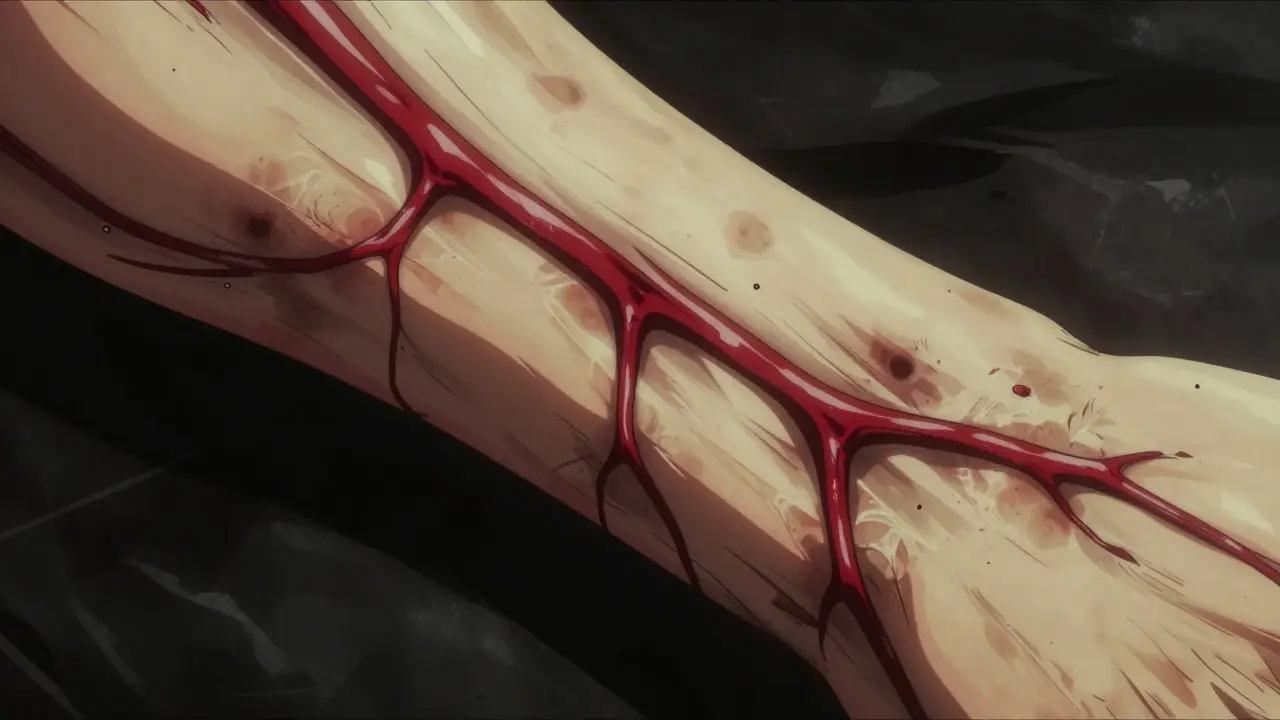
Imagine a cream that clears up eczema or psoriasis in days. It works like magic. But what if that same magic slowly thins your skin until it looks translucent, bruises easily, and burns when you touch water? This is the reality for many people who rely on topical corticosteroids is a class of anti-inflammatory medications applied to the skin to treat conditions like eczema, psoriasis, and dermatitis. Also known as steroid creams, they are among the most prescribed treatments worldwide, yet their long-term risks often go unnoticed until damage occurs.
Skin atrophy isn’t just a cosmetic issue; it’s a structural failure of your body’s largest organ. When you apply these potent drugs repeatedly, you aren’t just calming inflammation-you’re telling your skin cells to stop building themselves. The result? A fragile barrier that lets bacteria in and moisture out. Let’s look at exactly how this happens, why infections follow, and how to protect your skin while still getting the relief you need.
How Steroid Creams Thin Your Skin
To understand the risk, we have to look under the microscope. Your skin has two main layers involved here: the epidermis (the outer shield) and the dermis (the supportive inner layer). Skin atrophy is the thinning of the epidermis and dermis caused by prolonged exposure to glucocorticoids, leading to loss of elasticity and barrier function.
When you apply a topical steroid, it binds to receptors in your skin cells. This stops the production of inflammatory chemicals, which is great for stopping an itch. But it also hits the brakes on cell division. Keratinocytes, the cells that make up the bulk of your epidermis, stop multiplying. Meanwhile, fibroblasts in the dermis stop making collagen and elastin-the proteins that give skin its strength and bounce.
The science is clear on this mechanism. Research published in the Journal of the European Academy of Dermatology and Venereology shows that glucocorticoids suppress the synthesis of extracellular matrix proteins. Without new collagen, the dermis shrinks. Without new keratinocytes, the epidermis flattens. Within just three days of using a high-potency steroid, studies show measurable changes in the stratum corneum (the topmost layer of dead skin cells). You might not see it yet, but the foundation is cracking.
This isn’t just theory. Clinical data indicates that approximately 17% of long-term users develop visible atrophy. Other common signs include striae (stretch marks) in 7.2% of cases and purpura (easy bruising) in nearly 3%. These numbers come from a meta-analysis of over 8,000 patients, highlighting that this is a widespread, documented consequence of treatment, not a rare anomaly.
The Hidden Danger: Barrier Breakdown and Infections
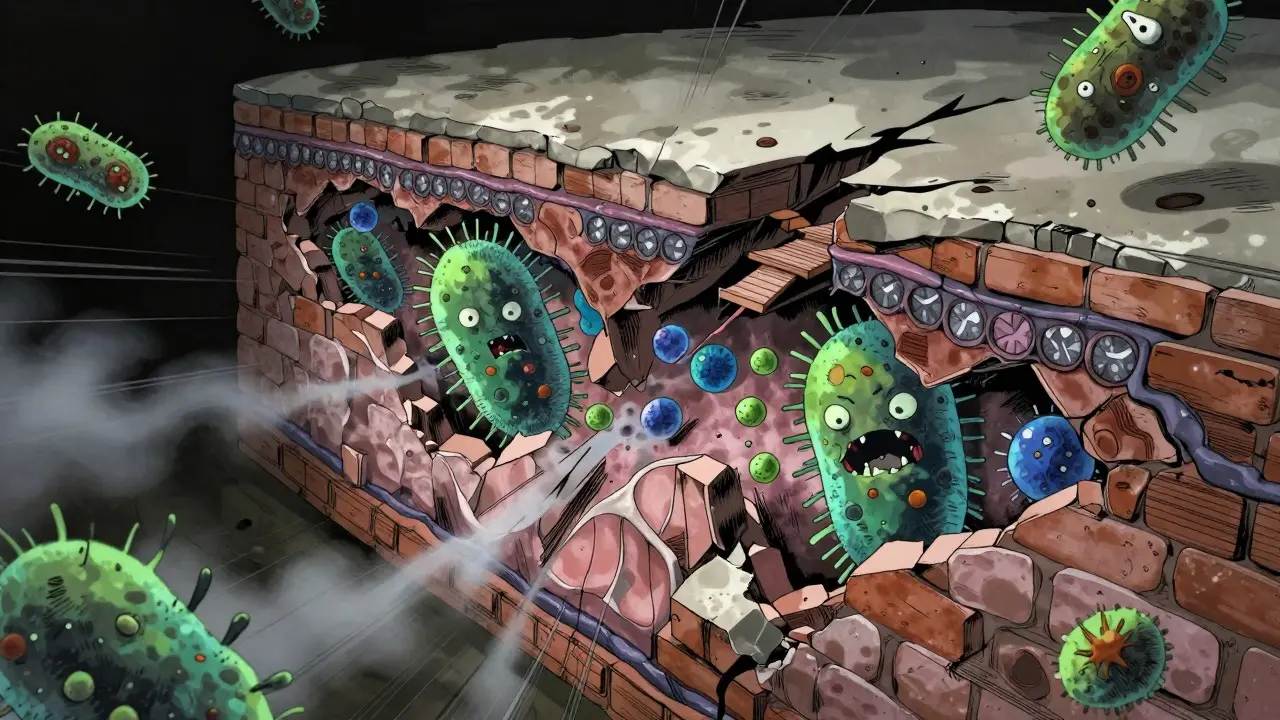
Thinning skin is bad enough, but the real trouble starts when your skin barrier fails. Think of your skin like a brick wall. The cells are the bricks, and lipids (fats) are the mortar holding them together. Topical steroids disrupt the production of these lipids-specifically ceramides, cholesterol, and fatty acids.
When the mortar dissolves, the wall becomes porous. This leads to increased transepidermal water loss (TEWL). Your skin dries out rapidly, becoming tight and itchy. But more importantly, that porous wall lets pathogens in. Bacteria like Staphylococcus aureus, fungi, and viruses can penetrate deeper than usual, leading to secondary infections that are harder to treat because the immune response in that area is suppressed by the steroid itself.
You might notice small pustules, crusting, or a worsening rash that doesn’t respond to the cream anymore. This is often mistaken for a flare-up of the original condition, so people apply more steroid. This creates a vicious cycle: more steroid equals thinner skin, which equals more infection, which equals more itching, which demands more steroid.
Risk Factors: Who Is Most Vulnerable?
Not everyone who uses steroid cream will develop severe atrophy. Risk depends on three main factors: potency, duration, and location.
| Factor | High Risk | Lower Risk |
|---|---|---|
| Potency Class | Class I-IV (Super-high to High) | Class V-VII (Low to Very Low) |
| Application Area | Face, groin, armpits, eyelids | Palms, soles, thick skin areas |
| Duration | Continuous use > 2 weeks | Short bursts (3-5 days) |
| Patient Age | Children, elderly | Healthy adults |
Skin on your face and in skin folds (intertriginous areas) is naturally thinner and absorbs medication much faster. Using a strong steroid here is like using a sledgehammer to crack a nut. Children are particularly vulnerable because their skin-to-body-weight ratio is higher, meaning they absorb more drug systemically, and their skin structure is still developing.
Even inhaled corticosteroids, used for asthma, can contribute to this. A study involving adult subjects showed that even low doses (400 mcg/day) significantly reduced collagen precursors in the skin after six weeks. If you’re using both inhaled and topical steroids, your cumulative risk rises.
Recognizing the Signs Early
Catching atrophy early means you can reverse some of the damage. What should you look for?
- Translucency: You can see blood vessels or dark spots through the skin more clearly than before.
- Telangiectasia: Tiny, spider-like red veins appear on the surface.
- Fragility: Skin tears or bruises with minor bumps that wouldn’t normally cause harm.
- Stretch Marks: Purple or silver lines (striae) appear on the abdomen, thighs, or breasts.
- Texture Changes: Skin feels paper-thin, wrinkled, or crepe-like.
If you notice any of these, do not ignore them. Continuing to apply the steroid will only accelerate the process. Permanent damage, like deep striae, cannot be reversed, but early epidermal thinning can heal if you stop the insult.
Navigating Withdrawal and Recovery
Stopping suddenly after long-term use can trigger Topical Steroid Withdrawal (TSW) is a severe rebound reaction characterized by intense burning, redness, and oozing when discontinuing long-term topical steroid use.
This condition, sometimes called "red skin syndrome," is terrifying for patients. The skin becomes inflamed, hot, and incredibly painful. Community reports suggest average recovery times of over eight months. The key to managing this is patience and barrier support, not more steroids.
Dermatologists recommend a gradual taper rather than cold turkey if you’ve been using high-potency steroids for more than two weeks. Switch to a lower potency class for a week, then switch to a non-steroidal alternative like a calcineurin inhibitor (e.g., tacrolimus) or a PDE4 inhibitor (e.g., crisaborole). These drugs reduce inflammation without thinning the skin.

Repairing the Damage: Practical Steps
Once you’ve stopped the offending agent, focus shifts to rebuilding. Your skin needs raw materials to create new collagen and restore the lipid barrier.
- Restore Lipids: Use moisturizers containing ceramides, cholesterol, and free fatty acids. Studies show a 3:1:1 molar ratio mimics natural skin lipids and improves barrier function by nearly 70% in eight weeks.
- Sun Protection: UV rays degrade collagen further. Since your skin is already thin, sun damage compounds the atrophy. Use broad-spectrum SPF 50+ daily. Data suggests this can reduce additional collagen degradation by over 40%.
- Gentle Cleansing: Avoid hot water and harsh soaps. Use lukewarm water and fragrance-free, soap-free cleansers to prevent stripping remaining oils.
- Avoid Irritants: Stop using retinoids, alpha-hydroxy acids, or physical scrubs until the barrier heals. These exfoliants are too aggressive for atrophic skin.
New research is exploring "dual-soft" glucocorticoids that maintain anti-inflammatory effects while sparing collagen synthesis. While these aren’t widely available yet, they represent the future of safer topical therapy. For now, the best strategy is conservative use: lowest potency, shortest duration, and strict monitoring.
Frequently Asked Questions
Is skin atrophy from steroid cream permanent?
It depends on the depth of the damage. Epidermal thinning (outer layer) is often reversible within weeks to months after stopping the steroid. However, dermal atrophy involving significant collagen loss or striae (stretch marks) is usually permanent. Early intervention offers the best chance for full recovery.
How long does it take for skin to recover after stopping topical steroids?
Recovery varies widely. Mild cases may see improvement in 4-6 weeks. Severe cases involving Topical Steroid Withdrawal (TSW) can take 6 to 12 months or longer. The duration of prior steroid use directly correlates with the length of the withdrawal phase.
Can I use hydrocortisone safely long-term?
Hydrocortisone is a low-potency (Class VII) steroid, making it safer than stronger options. However, long-term daily use on thin skin areas (like the face) can still cause atrophy. It is generally recommended for short-term use (up to 2 weeks) unless directed otherwise by a doctor.
What are safe alternatives to topical steroids for chronic eczema?
Non-steroidal options include topical calcineurin inhibitors (tacrolimus, pimecrolimus), PDE4 inhibitors (crisaborole), and JAK inhibitors (ruxolitinib). These medications control inflammation without causing skin thinning, making them suitable for sensitive areas and long-term management.
Does sun exposure worsen steroid-induced skin atrophy?
Yes. Ultraviolet (UV) radiation breaks down collagen and elastin. Since steroids already inhibit collagen production, sun exposure accelerates the thinning process. Daily use of high-SPF sunscreen is critical for protecting compromised skin during recovery.