Liver Injury Pattern Classifier (R-Ratio Calculator)
Enter Lab Values
Input your peak enzyme levels and the laboratory's upper limit of normal (ULN).
Analysis Results
Calculating...
R-Value: -
- ALT Multiplier: -
- ALP Multiplier: -
Enter your lab values to determine the pattern of liver injury.
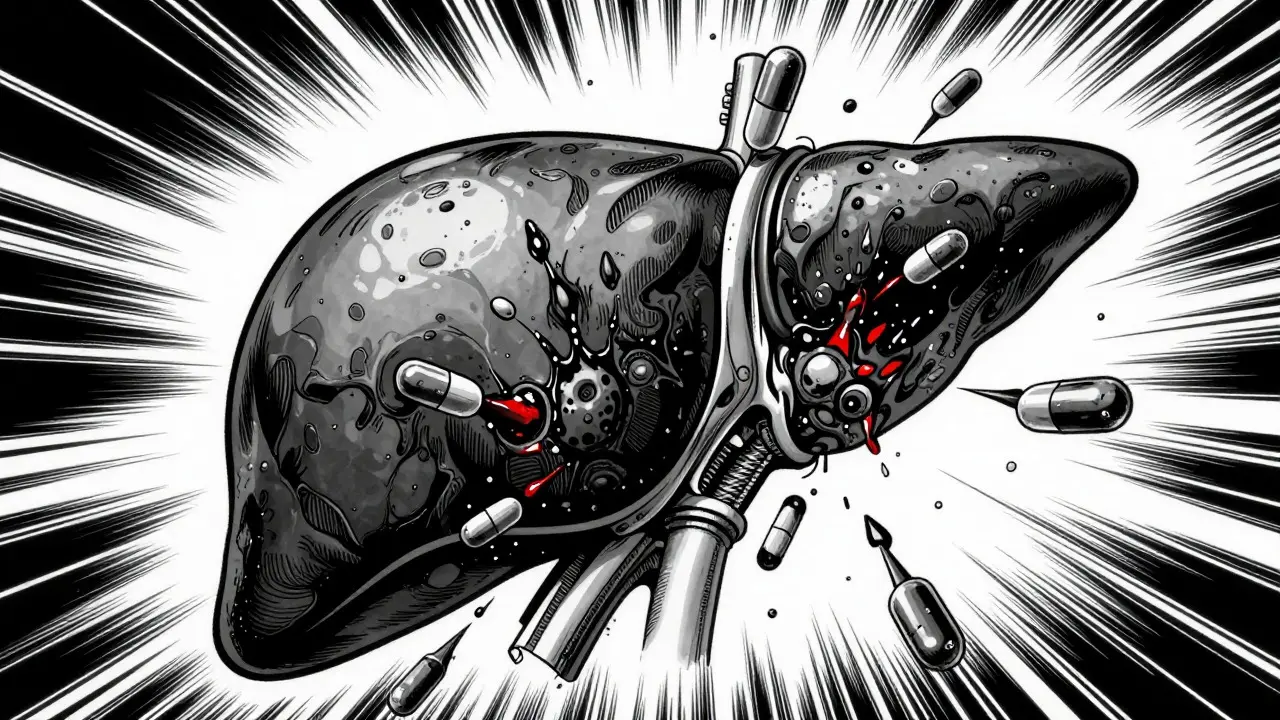
Your body relies on antibiotics to fight off serious infections, but sometimes the cure comes with a hidden cost. One of the most significant side effects is antibiotic-related liver injury, which occurs when these medications damage liver cells or bile ducts. This condition, medically known as drug-induced liver injury (DILI), affects thousands of patients annually. It isn't just a minor bump in blood tests; it can lead to severe hepatitis or cholestasis, requiring immediate medical attention and potentially causing long-term health issues.
Understanding how antibiotics impact your liver is crucial for both patients and healthcare providers. With antibiotics being the most commonly prescribed medication class in the United States, the risk of exposure is widespread. Recent data indicates that antibiotics account for approximately 64% of all drug-induced liver injury cases in intensive care settings. Knowing the signs, risks, and mechanisms behind this injury can help you protect your health while undergoing necessary treatment.
How Antibiotics Damage the Liver
The liver acts as your body’s primary filter, processing toxins and metabolizing drugs. When you take an antibiotic, the liver works hard to break it down. However, some antibiotics or their byproducts can be toxic to liver cells. The damage typically happens through two main pathways: direct toxicity to liver cells (hepatocytes) or interference with bile flow.
At a molecular level, several mechanisms are at play. First, there is mitochondrial dysfunction. Mitochondria are the powerhouses of your cells, and when antibiotics inhibit mitochondrial fatty acid oxidation, liver cells lose energy and begin to die. Second, reactive oxygen species increase, causing oxidative stress that damages cell structures. Third, some antibiotics form reactive metabolites-chemical byproducts that bind to liver proteins, triggering an immune response that attacks the liver tissue.
Gut microbiota also plays a surprising role. Antibiotics disrupt the balance of bacteria in your gut, leading to dysbiosis. This loss of beneficial bacteria weakens the intestinal barrier, allowing harmful substances to enter the bloodstream and reach the liver. Research shows that a decrease in specific bacteria, such as Faecalibacterium prausnitzii, correlates with a 3.7-fold increased risk of liver injury. This connection between the gut and the liver highlights why preserving gut health during antibiotic therapy is essential.
Hepatitis vs. Cholestasis: Two Distinct Patterns
Not all liver injuries look the same. Doctors classify antibiotic-related liver injury into two primary patterns based on blood test results: hepatocellular injury (hepatitis) and cholestatic injury (cholestasis). Understanding the difference helps in diagnosing the cause and determining the severity.
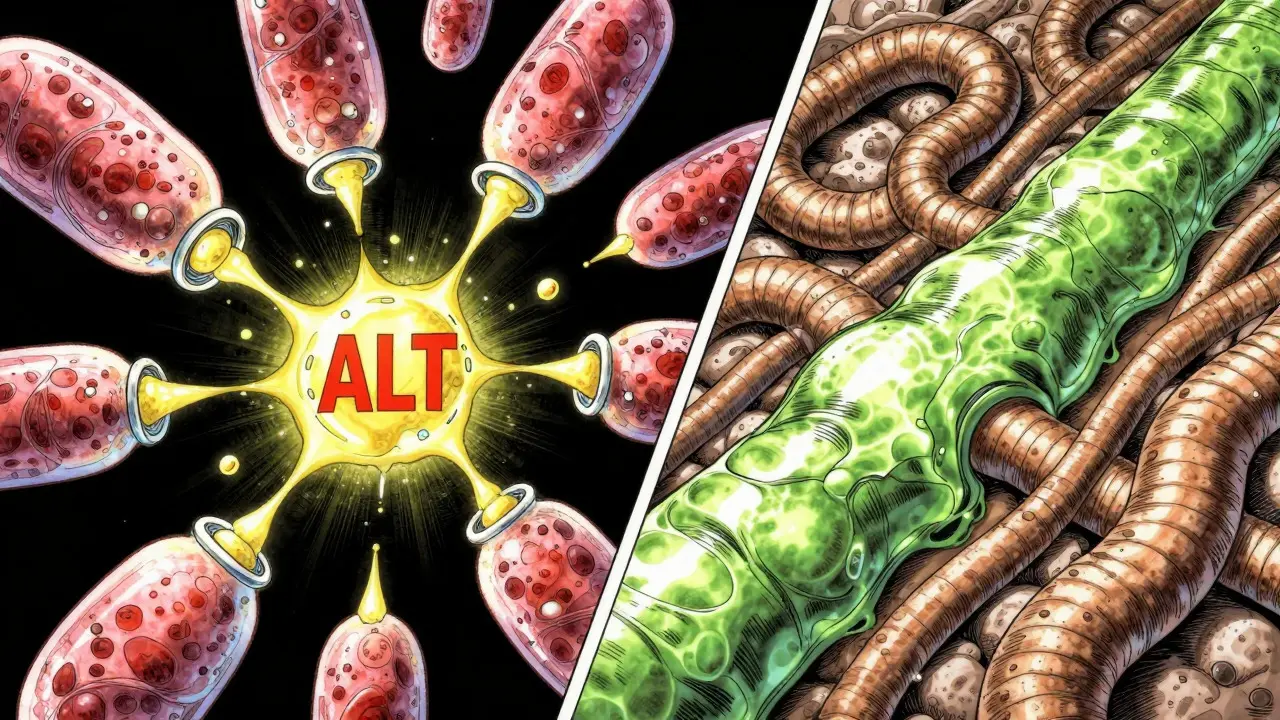
Hepatocellular injury involves direct damage to liver cells. In this case, enzymes like alanine aminotransferase (ALT) leak into the blood because the cell membranes are broken. You would see a predominant elevation of ALT levels. This pattern often presents with symptoms like fatigue, nausea, and abdominal pain.
Cholestatic injury, on the other hand, affects the bile ducts. Bile gets backed up instead of flowing into the intestines. This leads to elevated alkaline phosphatase (ALP) and bilirubin levels. Symptoms here include jaundice (yellowing of the skin and eyes), itching, and dark urine. Some antibiotics cause a mixed pattern, where both ALT and ALP are elevated.
To determine the pattern, doctors use the R-ratio formula: [peak ALT / upper limit of normal] divided by [peak ALP / upper limit of normal]. An R-value greater than 5 indicates hepatocellular injury. An R-value less than 2 suggests cholestasis. Values between 2 and 5 indicate a mixed injury. This calculation is critical for guiding treatment decisions.
| Feature | Hepatocellular Injury (Hepatitis) | Cholestatic Injury (Cholestasis) |
|---|---|---|
| Primary Target | Liver cells (Hepatocytes) | Bile ducts and flow |
| Key Lab Marker | Elevated ALT (>5x ULN) | Elevated ALP (>2x ULN) |
| R-Ratio | > 5 | < 2 |
| Common Symptoms | Fatigue, nausea, abdominal pain | Jaundice, itching, dark urine |
| Example Antibiotic | Isoniazid (with Rifampin) | Amoxicillin-clavulanate |
High-Risk Antibiotics and Their Profiles
Not all antibiotics carry the same risk. Some classes are notorious for causing liver injury, while others are generally safer. Identifying these high-risk drugs is vital for clinicians prescribing them and for patients monitoring their health.
Amoxicillin-clavulanate is the most common culprit. It has the highest population-attributable risk among antibiotics, with an estimated incidence of 15-20 cases per 100,000 prescriptions. Most cases present as cholestatic injury. The onset is usually delayed, appearing 1 to 6 weeks after starting the medication. This delay makes it tricky to link the symptom to the drug without careful history-taking.
Fluoroquinolones, such as ciprofloxacin and levofloxacin, pose a different risk. They tend to cause mixed or hepatocellular injury and can act faster, with symptoms appearing within 1 to 2 weeks. While the incidence is lower (1-3 cases per 100,000), the speed of onset requires quick clinical intervention.
In hospital settings, particularly ICUs, broad-spectrum antibiotics like Piperacillin-tazobactam and Meropenem are frequently used. Studies show that receiving Piperacillin-tazobactam for seven days or more increases the risk of liver injury significantly. For instance, one study reported a 28.7% incidence of liver injury in patients on this combination for extended periods, compared to 12.3% for Meropenem. Interestingly, Meropenem-induced injury shows a gender disparity, affecting males 2.4 times more frequently than females.
Other notable mentions include Nitrofurantoin and Trimethoprim-sulfamethoxazole, which fall into the moderate-risk category. Long-term use of Nitrofurantoin, especially for urinary tract infection prophylaxis, can lead to chronic liver damage resembling autoimmune hepatitis.
Risk Factors and Who Is Most Vulnerable
While anyone can experience antibiotic-related liver injury, certain factors increase your susceptibility. Age is a significant factor; older adults process drugs more slowly and may have reduced liver reserve. Pre-existing liver conditions, such as viral hepatitis or fatty liver disease, also raise the risk.
Sepsis is another critical risk factor. Patients with sepsis are already under physiological stress, and their livers are vulnerable to hypoxic injury. Adding antibiotics to this mix increases the risk of liver injury by 1.8-fold. Distinguishing whether the liver damage is from the infection itself or the antibiotic is a major challenge in critical care.
Genetics also play a role. Emerging research highlights associations with human leukocyte antigen (HLA) types. Certain genetic markers make individuals more prone to idiosyncratic reactions, where the immune system mistakenly attacks liver cells triggered by the drug. This suggests that personalized medicine could eventually help predict who is at risk before prescribing.
Duration of therapy matters too. Taking antibiotics for longer than necessary increases exposure time. A course of seven days or more has been shown to increase the incidence of liver injury by 3.2-fold compared to shorter courses. This underscores the importance of completing only the prescribed duration and not self-medicating.
Diagnosis and Monitoring Protocols
Early detection is key to preventing severe liver damage. If you are prescribed a high-risk antibiotic, your doctor should order baseline liver function tests (LFTs) before you start. These tests measure ALT, AST, ALP, and bilirubin levels.
For high-risk drugs like amoxicillin-clavulanate, repeat testing is recommended at 1 to 2 weeks. If you are in the ICU or taking broad-spectrum antibiotics for more than seven days, weekly monitoring is advisable. Do not wait for symptoms to appear; enzyme elevations often occur before you feel sick.
When interpreting results, doctors follow specific thresholds. Hepatocellular injury is defined as ALT greater than 5 times the upper limit of normal (ULN). Cholestatic injury is defined as ALP greater than 2 times ULN. Mixed injury involves ALT greater than 3 times ULN along with total bilirubin greater than 2 times ULN.
Differentiating antibiotic-induced injury from other causes is difficult, especially in critically ill patients. Other conditions like congestive hepatopathy, ischemic hepatitis, or worsening infection can mimic DILI. Clinicians must rule out these alternatives through imaging, viral panels, and clinical assessment.

Treatment and Management Strategies
The cornerstone of treating antibiotic-related liver injury is stopping the offending drug. Once the antibiotic is discontinued, liver enzymes often return to normal within weeks to months. However, recovery depends on the severity of the initial injury.
In mild cases, supportive care is sufficient. This includes hydration, avoiding alcohol, and steering clear of other liver-toxic substances like acetaminophen. For moderate to severe cases, hospitalization may be required to monitor for acute liver failure.
There is no specific antidote for most antibiotic-induced liver injuries. Corticosteroids are sometimes used if an autoimmune-like reaction is suspected, particularly with nitrofurantoin. Ursodeoxycholic acid may help in cholestatic cases by improving bile flow, though evidence for its efficacy is mixed.
If liver failure develops, patients may need evaluation for liver transplantation. This is rare but possible in severe cases of acute hepatitis. Early referral to a hepatologist can improve outcomes by ensuring specialized care and timely decision-making.
Prevention and Future Directions
Preventing antibiotic-related liver injury starts with prudent prescribing. Doctors should choose the narrowest spectrum antibiotic effective for the infection and limit the duration to what is clinically necessary. Avoiding unnecessary antibiotics reduces overall exposure risk.
Patient education is equally important. You should know which antibiotics you are taking and watch for warning signs like yellowing skin, dark urine, or persistent nausea. Report these symptoms immediately rather than waiting for your next scheduled appointment.
Future directions in this field are promising. Researchers are developing microbiome-based risk assessment panels to predict susceptibility before treatment begins. Clinical trials are investigating probiotics to mitigate gut dysbiosis and protect the liver. Pharmacogenomics aims to identify genetic markers for personalized antibiotic selection, potentially reducing incidence by 30-40% in the coming years.
Regulatory bodies like the FDA and EMA continue to update guidelines. The EMA recently updated recommendations for monitoring newer beta-lactam/beta-lactamase inhibitor combinations. Staying informed about these updates ensures that both clinicians and patients benefit from the latest safety standards.
What are the first signs of antibiotic-induced liver damage?
Early signs can be subtle or absent. Common symptoms include fatigue, nausea, loss of appetite, and abdominal discomfort. More specific signs include jaundice (yellowing of the skin or eyes), dark urine, pale stools, and intense itching. Often, the first indication is an abnormal liver enzyme level found on routine blood tests.
Which antibiotic is most likely to cause liver problems?
Amoxicillin-clavulanate is the most common cause of antibiotic-related liver injury, particularly cholestasis. Other high-risk antibiotics include fluoroquinolones (like ciprofloxacin), nitrofurantoin, and broad-spectrum agents like piperacillin-tazobactam used in hospitals.
How long does it take for liver enzymes to normalize after stopping the antibiotic?
Recovery varies by individual and severity. In mild cases, liver enzymes may return to normal within a few weeks. For more severe cholestatic injury, it can take several months for bilirubin and ALP levels to fully normalize. Regular monitoring is essential to track progress.
Can antibiotic-induced liver injury be permanent?
In most cases, the injury is reversible once the drug is stopped. However, severe cases can lead to chronic liver disease, cirrhosis, or acute liver failure requiring transplantation. Prompt recognition and discontinuation of the offending drug are critical to preventing permanent damage.
Should I avoid all antibiotics if I have a history of liver disease?
Not necessarily. Many antibiotics are safe for people with liver disease. However, your doctor will choose medications carefully, adjust doses if needed, and monitor your liver function more closely. Always inform your healthcare provider about any history of liver problems before starting new medications.
What is the R-ratio and why is it important?
The R-ratio is a calculation used to classify the type of liver injury. It compares the elevation of ALT (liver cell enzyme) to ALP (bile duct enzyme). An R-value >5 indicates hepatocellular injury, <2 indicates cholestatic injury, and 2-5 indicates mixed injury. This helps doctors determine the mechanism of damage and guide treatment.
14 Comments
Marc-Alexandre Rizzo August 13 2026
It is fascinating how the gut microbiome acts as a silent partner in liver health, isn't it?
We often think of the liver as an isolated fortress, but this article beautifully illustrates its connection to the intestinal barrier. The mention of Faecalibacterium prausnitzii really highlights the delicate balance we maintain daily. It makes one wonder if probiotics should be standard protocol alongside antibiotic prescriptions. We need to start viewing our bodies as interconnected ecosystems rather than separate compartments.
Simon-Pierre Bouchard August 14 2026
Oh great, another reason to hate medicine.
So let me get this straight, I take a pill to kill bacteria, and now my liver decides to throw a tantrum because it lost its best friends in the gut? Typical. Everything is connected now. First it was the mind-body connection, then the gut-brain axis, and now the gut-liver highway. I just want to get better without turning into a biology experiment. But sure, keep telling us that the 'cure' might be worse than the disease. Thanks for nothing.
Saher Ghattas August 15 2026
The mainstream narrative ignores the fact that these antibiotics are designed to disrupt homeostasis.
Look at the R-ratio formula. It’s a convenient metric for doctors to categorize damage they caused. The real issue is the suppression of natural immune responses by pharmaceutical interventions. They want you to believe it's 'idiosyncratic' or genetic, but it’s actually the result of chronic exposure to synthetic compounds that your ancient biology never evolved to process. Wake up. The liver injury is just the tip of the iceberg of systemic toxicity.
Ella Mentry August 17 2026
I literally cannot believe people still don't know this!
My cousin had cholestasis from amoxicillin-clavulanate and she was so stupid she didn't read the leaflet. She thought yellow skin was just 'summer glow'. Can you imagine? So lazy. You have to monitor your own body or you deserve what happens. It’s not hard to look up ALT levels. Why do we have to spoon-feed everyone basic survival skills? It’s exhausting being around people who treat their health like a lottery ticket.
Lilith Stepanyan August 18 2026
This analysis is superficial at best.
You focus heavily on the mechanism of mitochondrial dysfunction but fail to address the socioeconomic implications of ICU-acquired DILI. Patients in intensive care are already vulnerable, and adding Piperacillin-tazobactam to the mix creates a perfect storm of morbidity. The data regarding Meropenem affecting males 2.4 times more frequently is statistically significant yet clinically underutilized. We need targeted pharmacogenomic screening before broad-spectrum administration in critical care settings. Without this, we are merely treating symptoms rather than preventing the cascade of hepatic failure.
Josh Atkinson August 19 2026
Hey folks! :)
Just wanted to drop by and say that this info is super important for all of us out there trying to stay healthy. It’s wild how something as simple as an antibiotic can mess with your liver enzymes like ALT and ALP. I always tell my friends to watch out for that dark urine thingy because it’s a big red flag. Don’t ignore it! Your liver is working hard for you, so give it some love. Stay safe and keep those blood tests regular! :D
Tegan Morey August 19 2026
Hey everyone, thanks for sharing this.
I found the part about the gut microbiota really interesting. It’s crazy how much our internal ecosystem matters. If you’re taking antibiotics, maybe try eating some yogurt or fermented foods to help keep things balanced? Just a small tip from someone who learned the hard way. Hope this helps anyone feeling worried about their meds!
charlie student August 20 2026
There is a strange beauty in the fragility of our biological systems.
We trust these chemical interventions implicitly, yet they hold the power to unravel the very machinery that sustains us. The mitochondria, those tiny powerhouses, faltering under the weight of synthetic oxidation inhibitors. It reminds me of how quickly order can descend into chaos when equilibrium is disturbed. Perhaps we should approach medication with more reverence and less convenience. The liver suffers in silence until it screams through jaundice and pain.
Gary Browne August 21 2026
My uncle died from liver failure after a routine UTI treatment.
No one warned him about Nitrofurantoin. He took it for months as prophylaxis. By the time they realized his autoimmune markers were spiking, it was too late. This article mentions it briefly, but it needs to be shouted from the rooftops. Long-term use is a death sentence for some people. Doctors prescribe it like candy. Be careful out there.
Christina Thygesen August 22 2026
i feel like we dont talk enough about how scary this is
my friend got sick and her eyes turned yellow and she was so scared
it wasnt just nausea it was like her whole body was shutting down
please listen to your body if something feels off go to the doctor
do not wait
Minal Aditi August 23 2026
Oh, please.
As if stopping the drug fixes everything. The philosophical implication here is that we are slaves to our biochemistry. We ingest poison to cure infection and then blame the poison for the side effects. It’s a cycle of dependency. The 'recovery' is just the body cleaning up the mess we made. How empowering. Truly. We are just bags of chemicals reacting to other chemicals. No soul, no will, just ALT levels and R-ratios. Boring.
Diane Nash August 24 2026
It is imperative that we acknowledge the severity of Drug-Induced Liver Injury (DILI) in modern clinical practice.
The statistical evidence provided regarding Amoxicillin-clavulanate is particularly alarming. With an incidence of 15-20 cases per 100,000 prescriptions, the risk is not negligible. Healthcare providers must adhere strictly to monitoring protocols. The delay in onset, ranging from one to six weeks, necessitates vigilant follow-up. Patient education is not merely beneficial; it is a clinical obligation. We must prioritize prudent prescribing to mitigate these adverse outcomes.
Alli Crumley August 25 2026
Let’s decode the jargon shall we?
When you see 'hepatocellular injury' it means your liver cells are popping like balloons. ALT leaking into the blood is basically your liver crying for help. And cholestasis? That’s bile backup city. Yuck. The R-ratio is just a math trick to tell which type of cry it is. >5 means cell death, <2 means duct clog. Simple. Stop overcomplicating it with fancy words. Your liver doesn’t care about your vocabulary it cares about survival. :)
Marc H August 26 2026
Brilliantly tragic.
Here we are, marveling at our ability to synthesize life-saving compounds, only to be humbled by the collateral damage inflicted upon our own filtration systems. The irony is palpable. We fight infection with fire and burn down the house. And who pays the price? The humble hepatocyte. A true tragedy of modern medicine. One almost wants to applaud the resilience of the human body for enduring such self-inflicted wounds. Riveting stuff.