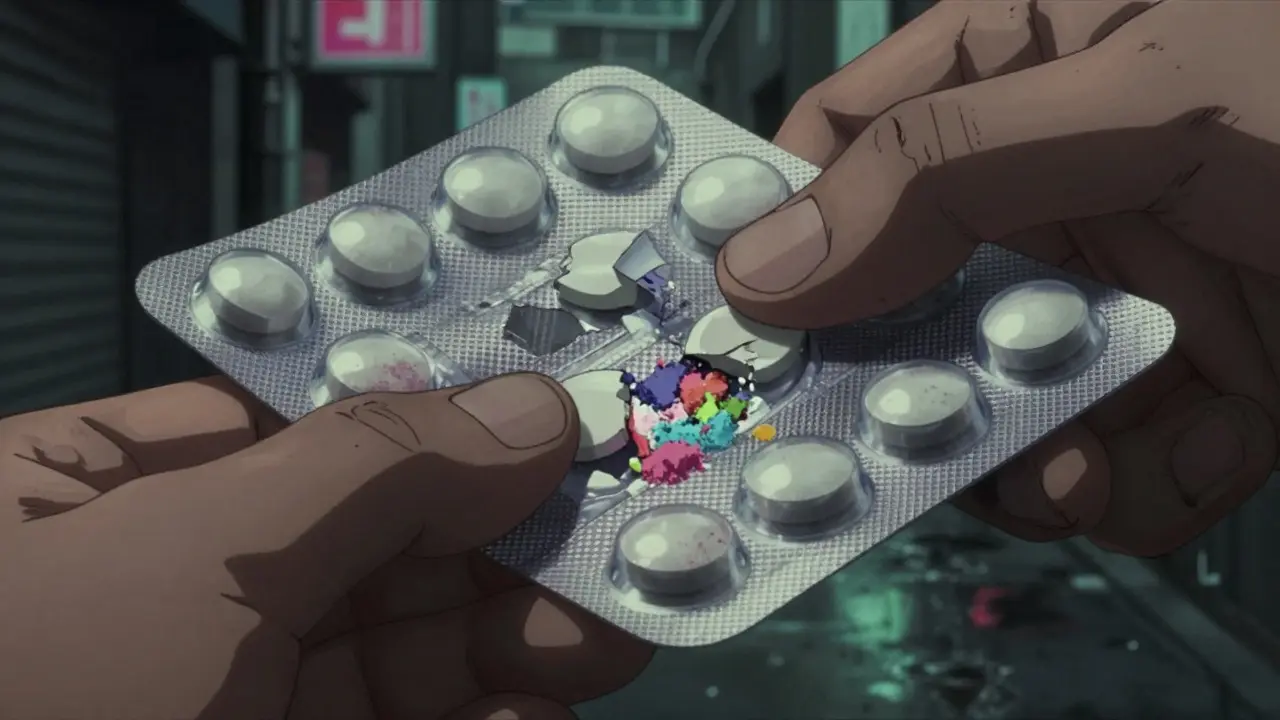
You trust that the pill in your hand works. You take it because a doctor prescribed it, or because you bought it from a place that looks like a pharmacy. But what if that pill is just colored chalk? Or worse, what if it contains industrial chemicals instead of medicine?
This isn’t a conspiracy theory. It’s a global crisis. In 2024, authorities uncovered over 6,400 incidents of pharmaceutical counterfeiting across 136 countries. By March 2025, Interpol seized more than 50 million doses of fake drugs during Operation Pangea XVI. The problem hits hardest with counterfeit generics, which are falsified versions of off-patent drugs that mimic authentic medications but contain incorrect ingredients, insufficient active pharmaceutical ingredients (API), or dangerous substitutes. Unlike legitimate generics, which undergo rigorous testing to prove they work exactly like brand-name drugs, fakes enter the supply chain through illegal channels with zero quality control.
If you buy meds online, order them from overseas, or even pick them up at a local shop in certain regions, you need to know how to protect yourself. Here is how to spot the red flags and keep your health safe.
The High Cost of Cheap Pills
Why do people buy fake meds? Usually, it’s price. Legitimate generic drugs cost about 80% to 85% less than their brand-name equivalents. Counterfeiters exploit this by selling fakes for 30% to 50% below the price of real generics. If a box of antibiotics costs $10 at your local pharmacy, a scammer might sell an identical-looking box for $3 on social media.
That discount comes with a deadly risk. A study published in The American Journal of Tropical Medicine and Hygiene found that nearly half (52.8%) of counterfeit medicines detected in supply chains contained no active ingredient at all. Others contained dangerous substitutes. In some African regions, the World Health Organization (WHO) estimates that up to 70% of medicines may be falsified. Even in high-income countries, the threat is rising. In August 2025, an Iowa pharmacy was fined $25,000 for selling fake Ozempic, proving that these scams aren’t limited to remote markets-they infiltrate legitimate retail channels too.
The financial toll is staggering. The WHO estimates that substandard and falsified medicines cost low- and middle-income countries approximately US$30.5 billion annually. This isn’t just lost revenue; it’s money spent on treatments that don’t work, leading to hospitalizations and long-term health damage.
What Drugs Are Most Likely to Be Fake?
Criminals target drugs that are high-demand, small in size, and expensive. They also target conditions where patients might not immediately notice a lack of effect, or where the psychological benefit masks the physical failure.
| Drug Category | Why It’s Targeted | Common Examples |
|---|---|---|
| Lifestyle Pharmaceuticals | High demand, often purchased discreetly online without prescriptions. | Erectile dysfunction drugs, steroids, weight-loss injections (e.g., semaglutide/Ozempic). |
| Antibiotics | Frequent use, critical for treating infections. Substandard doses drive antimicrobial resistance. | Amoxicillin, Azithromycin, Ciprofloxacin. |
| Painkillers | High volume sales, immediate relief expected. | Ibuprofen, Paracetamol, Opioids. |
| Psychotropics | Chronic use, subtle effects hard to verify instantly. | Anti-anxiety meds, antidepressants. |
| Oncology Biologics | Extremely high value per dose. | Yervoy, Opdivo (detected in Colombia in May 2025). |
In 2025, U.S. Customs and Border Protection specifically intercepted counterfeit versions of Ozempic, Botox, and dermal fillers entering from Asia. The surge in weight-loss drug counterfeits is particularly alarming. Between September 2023 and January 2025, 2,465 bulk foreign shipments of semaglutide or tirzepatide entered the U.S. for inspection. Of those, 239 came from unregistered entities, and 195 were improperly allowed into the country despite legal prohibitions.
How to Spot a Counterfeit Generic
You don’t need a lab coat to check your meds. Start with your eyes. Counterfeiters often rush production, leading to sloppy packaging.
- Check the Spelling: Look for misspellings on the label, box, or insert. “Pharmaceutical” spelled wrong is a major red flag.
- Inspect the Logo: Compare the manufacturer’s logo on your box with images online. Is it blurry? Off-center? Slightly different colors?
- Examine the Pill: Break the seal and look at the tablet. Is the color uneven? Is the texture crumbly? Does it smell strange? Real pills have consistent manufacturing standards.
- Verify the Code: Many legitimate drugs have a National Drug Code (NDC) or a QR code. Scan it. Does it lead to the manufacturer’s official site? Or does it go nowhere?
For high-risk medications like Ozempic, use manufacturer-specific tools. Novo Nordisk’s “Verify Your Pen” system saw 2.1 million authentications in Q3 2025 alone. It’s free, takes seconds, and can save your life.
The Danger of Online Pharmacies
The internet made buying meds easy, but it also removed the gatekeepers. Dr. Margaret A. Hamburg, former FDA Commissioner, warned in July 2025 that 50% of medicines sold online by pharmacy websites that hide their physical street address are fake. Furthermore, 89% of illegal online pharmacies don’t require prescriptions.
If a website asks for your credit card before talking to a doctor, run. Legitimate online pharmacies display the VIPPS (Verified Internet Pharmacy Practice Sites) seal. They require a valid prescription from a licensed provider. They have a physical address listed and a phone number you can call.
User experiences highlight the danger. On Reddit, users reported buying “Canadian” Ozempic online only to find no blood sugar improvement after three months. One user noted the packaging looked identical to the genuine product, but the therapeutic effect was absent. This is the hallmark of sophisticated counterfeits: they look real, but they do nothing-or worse, they harm you.
Verification Tools and Resources
Technology is fighting back. Apps like TrueMed allow users to scan barcodes and verify authenticity. As of November 2025, it held a 4.7-star rating on Google Play, with users praising its effectiveness for verifying sensitive medications. Blockchain verification systems have reduced counterfeit incidence by 22% in pilot programs across 15 countries since 2023.
However, access is uneven. While 78% of major pharmaceutical companies implement track-and-trace systems, only 32% of pharmacies in low-income countries have access to verification tools. If you’re traveling or living in a region with weak oversight, rely on multiple checks: packaging, source reputation, and digital verification.
If you suspect you have a fake med, report it. Use the FDA’s MedWatch program, Pfizer’s Anti-Counterfeiting Hotline (1-800-593-5685), or the International Medical Products Anti-Counterfeiting Taskforce (IMPACT) portal. Reporting helps authorities shut down networks. In 2024, IMPACT processed over 12,000 consumer reports, directly contributing to seizures and arrests.
Why This Matters Beyond Your Wallet
Fake meds aren’t just a personal inconvenience. They fuel criminal organizations. The illicit pharmaceutical trade is estimated at $200 billion globally. Criminals use profits from fake painkillers to fund other violent crimes. Additionally, substandard antibiotics contribute to antimicrobial resistance. When you take a fake antibiotic that doesn’t kill the bacteria, you create superbugs. The Review on Antimicrobial Resistance estimates 10 million annual deaths by 2050 could be linked to ineffective treatments, including counterfeits.
Protecting yourself is part of a larger defense. Buy from licensed sources. Check your pills. Report suspicious activity. Your health depends on it.
How can I tell if my generic medication is fake?
Look for spelling errors on the packaging, inconsistent logos, or unusual pill color/texture. Verify the National Drug Code (NDC) on the manufacturer’s website. For specific drugs like Ozempic, use the company’s verification app. If the price seems too good to be true (e.g., 50% cheaper than local pharmacies), it likely is.
Are online pharmacies safe for buying generic drugs?
Only if they are verified. Look for the VIPPS seal. Ensure they require a valid prescription and provide a physical address and phone number. Avoid sites that sell controlled substances without a prescription or hide their location. 89% of illegal online pharmacies do not require prescriptions.
What are the risks of taking counterfeit antibiotics?
Counterfeit antibiotics may contain no active ingredient or the wrong amount. This fails to treat the infection, allowing it to worsen. More critically, it contributes to antimicrobial resistance, creating “superbugs” that are harder to kill. This poses a severe public health risk globally.
Who makes the most counterfeit drugs?
Criminal networks operate globally, often sourcing materials from Asia and distributing via social media and dark web markets. Interpol’s Operation Pangea XVI dismantled 123 such groups in 2025. These are not rogue individuals but organized syndicates using pharmaceutical-grade equipment.
How do I report suspected fake medications?
In the U.S., use the FDA’s MedWatch program. Globally, contact the International Medical Products Anti-Counterfeiting Taskforce (IMPACT). You can also call manufacturer hotlines like Pfizer’s Anti-Counterfeiting Hotline. Keep the packaging and any remaining pills as evidence.