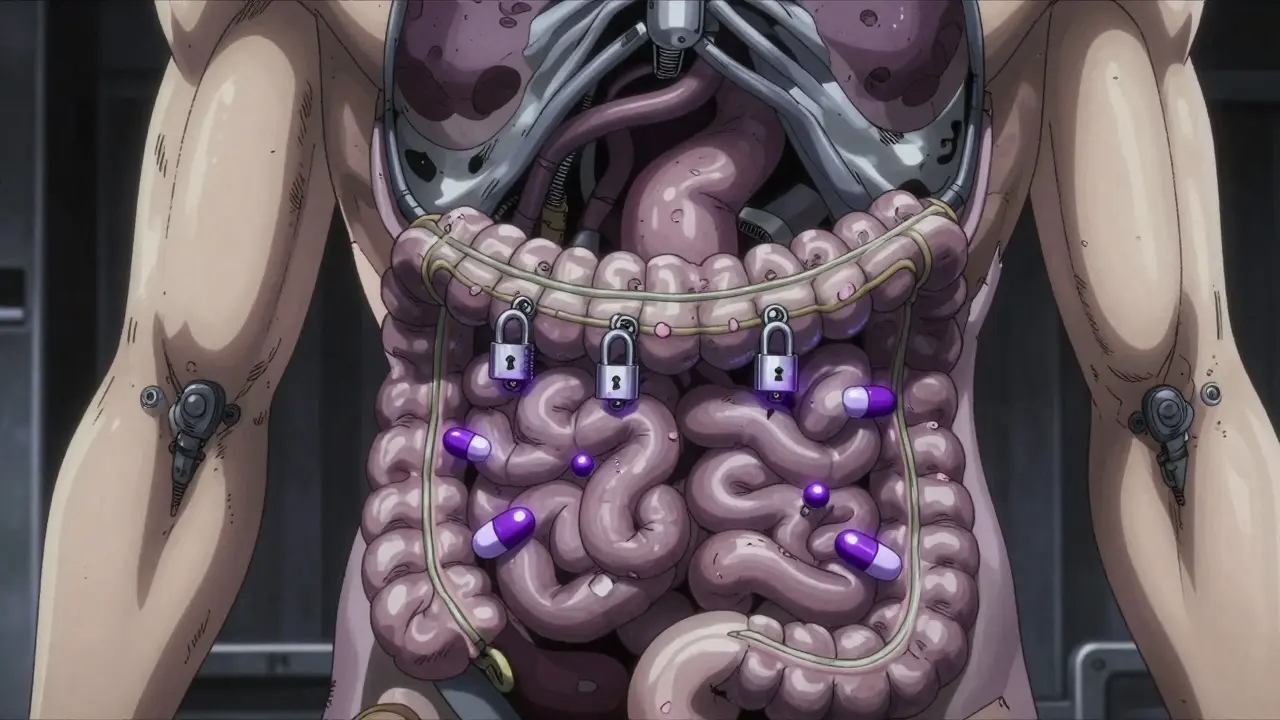
If you or a loved one are taking chronic opioid medications for pain, you've likely noticed a frustrating side effect: the bathroom becomes a place of stress. While nausea or dizziness from these drugs often fade as your body adjusts, the gut doesn't get that luxury. For many, Opioid-Induced Constipation is a persistent gastrointestinal condition caused by the activation of mu-opioid receptors in the gut, which slows down digestion and increases water absorption from the stool. It isn't just a minor annoyance; it's a clinical condition that affects anywhere from 40% to 95% of people on long-term opioid therapy.
The real danger here isn't just the discomfort. When bowel movements stop, people often do something drastic: they lower their pain medication dose or stop taking it entirely just to get things moving again. This leaves their pain unmanaged, creating a vicious cycle. The goal is simple: maintain your pain control while keeping your digestive system functioning. But doing that requires a different strategy than treating the kind of constipation you get from eating too little fruit.
The Basics: Why Your Gut Stops Working
Standard constipation is often about lifestyle-maybe you're dehydrated or not moving enough. OIC is a mechanical failure. Opioids bind to receptors in the enteric nervous system, essentially hitting the "pause" button on your intestinal muscles. This reduces the secretions from your gallbladder and pancreas and slows the transit time of food. Because the waste sits in your colon longer, your body absorbs more water, leaving the stool hard, dry, and nearly impossible to pass.
This is why the usual advice to "just eat more fiber" can actually backfire. In a healthy gut, fiber helps things move. In an opioid-slowed gut, fiber can't move forward. It just sits there and ferments, leading to intense bloating, gas, and in severe cases, a fecaloma-a hard mass of stool that can block the bowel completely. If you're dealing with OIC, be very careful with high-fiber supplements unless your doctor specifically clears them.
First-Line Prevention: Starting the Right Way
The best way to handle OIC is to stop it before it starts. If you're starting a new pain regimen, your doctor should establish a "baseline" of how often you go. This usually involves tools like the Bristol Stool Form Scale, which helps categorize stool consistency to determine if you're already leaning toward constipation.
Proactive management usually begins with over-the-counter options. These are generally split into two categories:
- Osmotic Laxatives: These draw water into the colon to soften the stool. Polyethylene glycol (often sold as Miralax) is a gold standard here, typically used at 17-34g daily.
- Stimulant Laxatives: These "kick" the muscles of the gut to force a contraction. Common examples include bisacodyl (5-15mg daily) or senna (8.6-17.2mg daily).
Many people find that a combination of both-one to soften and one to move-works best. However, conventional laxatives only work for about 25-50% of OIC patients. Because the opioid is physically blocking the receptors, a simple "push" from a stimulant often isn't enough to overcome the chemical blockade.
Prescription Options: When OTCs Fail
When standard laxatives don't work, it's time to move to medications that actually address the opioid receptors in the gut. The most effective of these are PAMORAs, or Peripherally Acting mu-Opioid Receptor Antagonists. These are clever drugs: they block the opioid receptors in your intestines so you can have a bowel movement, but they don't cross the blood-brain barrier. This means they don't block the pain-relieving effects of your medication in your brain.
| Medication | Type | Common Use Case | Key Trade-off |
|---|---|---|---|
| Methylnaltrexone (Relistor) | PAMORA | Palliative care / Advanced illness | Rapid relief but often requires injection |
| Naloxegol (Movantik) | PAMORA | Chronic non-cancer pain | Oral tablet; better for long-term use |
| Naldemedine (Symcorza) | PAMORA | Broad chronic pain (including pediatric) | High efficacy; some reports of abdominal pain |
| Lubiprostone (Amitiza) | Chloride Channel Activator | Chronic constipation/OIC | Increases fluid secretion; risk of nausea |
Lubiprostone works differently; instead of blocking receptors, it activates chloride channels to pump more water into the intestines. While effective, it's known to cause nausea in about 30% of users and can interact poorly with diuretics, potentially causing a drop in potassium levels (hypokalemia).
The Reality of Treatment: Costs and Side Effects
If you're looking into these prescriptions, be prepared for a bit of a struggle with insurance. PAMORAs can be expensive, often costing between $500 and $1,200 per month. Because of this, many insurance companies require "step therapy," meaning you must prove that you've tried and failed with cheaper options like polyethylene glycol before they will cover the high-cost prescriptions.
Patient experiences vary wildly. Some report that methylnaltrexone works within four hours, providing an incredible sense of relief. Others struggle with injection-site reactions or find the cost prohibitive. It often takes a "trial-and-error" period to find the right balance. If a medication causes too much abdominal cramping or nausea, don't just quit-talk to your provider about adjusting the dose or switching the agent.
A Practical Checklist for Management
Whether you are just starting opioid therapy or have been on it for years, follow this framework to stay on top of your gut health:
- Establish a Baseline: Track your bowel movements for a week before starting new meds. Use a scale to note consistency and frequency.
- Start Low and Go Slow: Begin a prophylactic (preventative) laxative at the same time you start your opioid. Don't wait for the constipation to happen.
- Monitor Weekly: Check in with your bowel habits once a week. If you notice a trend toward hardness or lower frequency, increase your laxative dose by 25-50% every few days until the issue is resolved.
- Hydrate Constantly: Osmotic laxatives need water to work. If you're dehydrated, they can't draw water into the colon, and the medication will fail.
- Avoid Fiber Overload: Unless instructed otherwise, avoid jumping to 30g+ of fiber daily if you are feeling blocked, as this may increase bloating and gas.
Will the constipation go away on its own as I get used to the opioids?
Unlike nausea or vomiting, which usually disappear after a few weeks of treatment, OIC does not improve over time. It persists as long as you are taking the medication because the opioid receptors in the gut remain blocked. This is why long-term management is necessary.
Can I take a PAMORA if I am worried about my pain medication stopping?
Yes. PAMORAs like naloxegol and naldemedine are designed to be "peripherally acting." They are too large to cross the blood-brain barrier in significant amounts, meaning they block the receptors in your gut without blocking the receptors in your brain that manage your pain.
Why is Miralax (polyethylene glycol) recommended over fiber?
Miralax is an osmotic laxative that draws water into the stool to make it softer and easier to pass. Fiber requires active gut motility to move through the system. Since opioids slow that movement to a crawl, fiber can get stuck and cause fermentation, which leads to painful bloating and flatulence.
What should I do if I've tried everything and still can't go?
If you have failed both OTC laxatives and a prescription PAMORA, you should consult a gastroenterologist. You may need a more aggressive bowel cleanse or a different class of medication, such as a chloride channel activator like lubiprostone. Always report new abdominal pain or vomiting immediately, as these can be signs of a bowel obstruction.
Are there any risks with using stimulant laxatives long-term?
While stimulants like senna and bisacodyl are effective, some patients experience cramping. The key is to use them in a balanced rotation with osmotic laxatives to keep the bowel regular without becoming overly dependent on a single harsh stimulant.
Next Steps and Troubleshooting
If you are a patient currently struggling with OIC, your first step is to document your "transit time." Keep a simple diary of when you eat and when you have a bowel movement. Take this data to your doctor to prove that your current regimen isn't working; this often helps speed up the insurance approval process for PAMORAs.
If you are a caregiver, watch for "red flags" such as a rigid abdomen, fever, or an inability to pass gas. These are not typical OIC symptoms but can indicate a surgical emergency like a bowel obstruction. If you see these, skip the laxatives and head to the emergency room.
For those who find that their pain is well-controlled but their quality of life is plummeting due to gut issues, remember that OIC is a medical condition, not a side effect you just have to "live with." There is a clear ladder of treatment from simple sugars to high-tech receptor antagonists-don't stop at the first step if it isn't working.
11 Comments
Joshua Nicholson April 16 2026
pretty much just a fancy way of saying your gut stops working lol
Randall Barker April 17 2026
The absolute tragedy of modern medicine is how we trade one biological shackle for another. We seek the euphoria or the relief of the opioid, yet we ignore the systemic decay of our natural rhythms. It is a moral failure of the pharmaceutical complex to sell the cure while burying the side effects in fine print. People just want a quick fix and forget that the body demands a holistic equilibrium that no pill can ever truly replace. We are merely treating symptoms of a broken relationship with our own biology, pretending that a PAMORA is a solution when it is actually just another chemical patch on a leaking dam of health.
Autumn Bridwell April 17 2026
OH MY GOD I can't believe people actually deal with this!! My cousin went through something so similar and it was a total nightmare, she was literally screaming in pain and the doctors just kept telling her to drink more water like it was some kind of magic potion!! It is absolutely traumatizing to feel like your own body is betraying you in the worst way possible!!
Cheryl C April 19 2026
USA made meds are the best anyway 🇺🇸🇺🇸 just get the stuff and stop complainin about the cost!! it works great for me 💊✨
Richard Moore April 19 2026
I totally agree that the step therapy process is a nightmare 🙄 but it is the only way the system works right now. Glad to see some actual medical data here instead of just anecdotes! 👍
Rob Schlautman April 21 2026
i dont see why anyone would be surprised that fiber doesnt work when the muscles are literally paused it seems like common sense to me but then again most people just follow whatever the first google result says without thinking for two seconds about the actual mechanics of the human body which is why we end up with people taking handfuls of psyllium husk and wondering why they feel like a balloon about to pop in the middle of a grocery store
Rock Stone April 23 2026
Just keep your head up everyone. It's all about finding that right rhythm and not letting the side effects get you down. You got this!
Bonnie Piersall April 24 2026
This is a total game-changer for anyone stuck in that wretched cycle of pain and blockage. It's absolutely vital to tackle this with a proactive mindset rather than waiting for the storm to hit. Keep your fluids high and your patience higher, folks!
Ben Ferguson April 24 2026
It is truly fascinating how different healthcare systems across the globe handle this, but in our current landscape, the sheer complexity of insurance approvals makes the process feel like an Odyssey of bureaucratic despair! I remember a time when the physician's word was law, but now we must navigate these treacherous waters of "step therapy" and prior authorizations just to achieve the most basic of human functions, which is truly a dramatic testament to the inefficiency of our modern administrative state!
Michael Lewis April 24 2026
Stay disciplined with the hydration! If you aren't drinking water, those osmotic laxatives are just expensive dust in your colon. Get after it and keep that gut moving!
Anna BB April 26 2026
I think it's just so important to be gentle with ourselves... when our bodies are struggling... the mental toll is just as heavy as the physical one... doesn't it feel like we're all just trying our best to find a balance in a world that wants us to be perfect???